


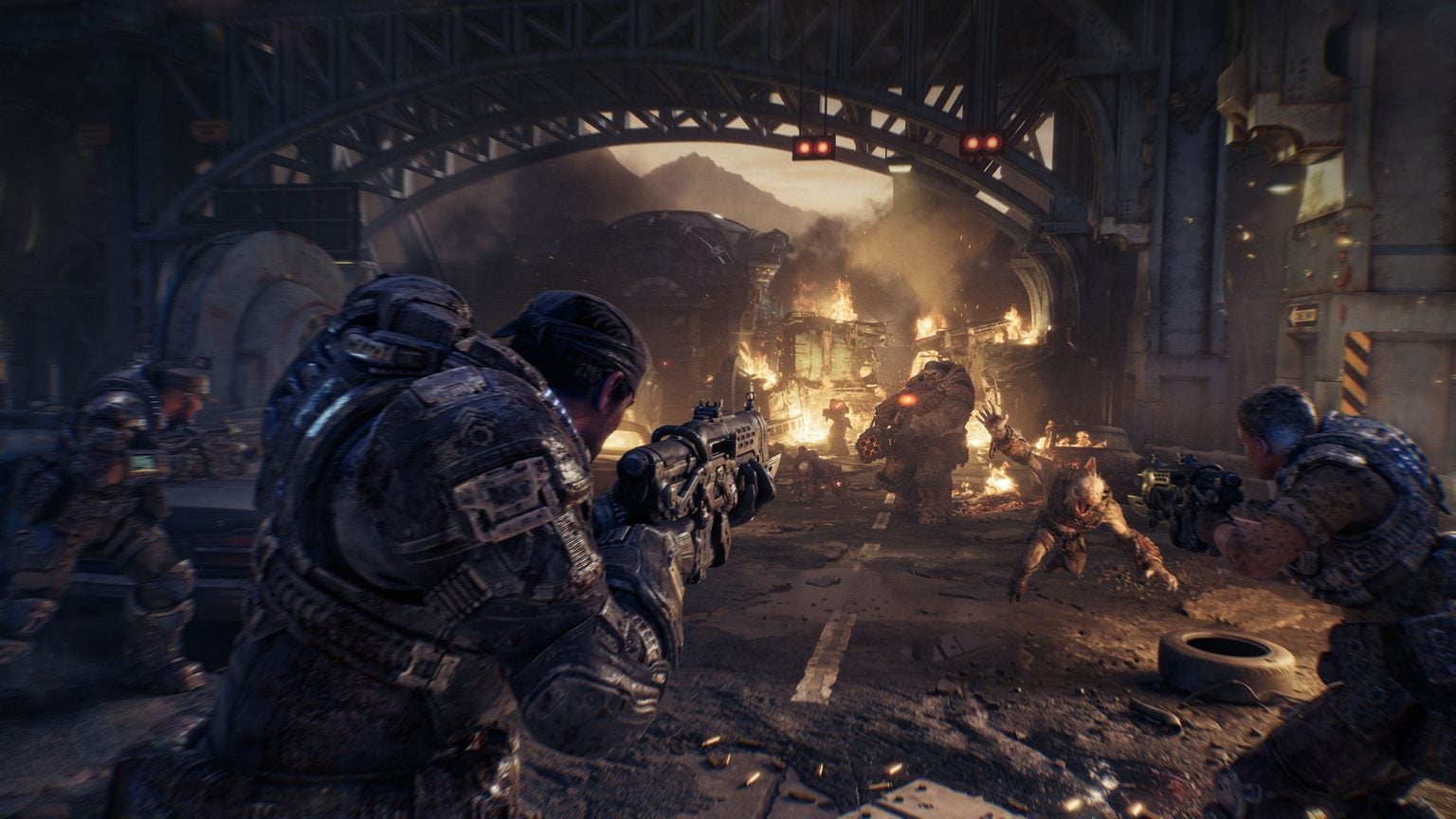
I played the entire Gears of War: E-Day campaign and its multiplayer modes on the Xbox Series S, and it’s impressive what developer The Coalition was able to get running on the weaker of the two six-year-old boxes. It turns out that the developers used a clever bit of engineering to make it all work. The result allowed the studio to “avoid really lowering the quality of the game” on Series S.
The process was explained in a recent deep dive by Digital Foundry on the tech powering Gears of War: E-Day. As the report explains, data is processed by the CPU and then kicked to RAM if it can’t fit. If the space in RAM runs out as well, you start to run into trouble. The Series S only has 10GB of RAM compared to the 16GB on the Series X. Normally, developers handle this gap by noticeably downgrading the Series S version. The Coalition took a different approach.
Here’s the explanation from Digital Foundry:
The Coalition’s system lets the game use the NVMe drive as random access memory, giving the streaming system enough to room to load and hold the complex city data. Memory that isn’t being actively accessed is stored on disk, and what’s needed at that moment is moved into system RAM. It’s similar to paged virtual memory, with one important difference: it only covers specific subsets of memory that the team has decided won’t slow the game down if they have to come back from the drive. The benefit is that, in exchange for a couple of gigabytes of storage on the SSD, you can gain about a gigabyte of usable system memory.
The team used “advanced heuristics” to optimize which things were sent to the SSD and which things were kept in memory to limit the slowdown this process would cause. As a result, the only major feature cut from the Series S version was Lumen reflections. According to studio technical director Kate Rayner, this allowed The Coalition to make sure Series S users like me didn’t get a stripped-back version of Gears of War: E-Day‘s stunningly detailed world.
And it mostly works. The game doesn’t feel like a visual downgrade on the weaker console in the same way certain other blockbusters have in recent years, though performance mileage can vary. As Digital Foundry notes, things can get especially rocky on Series S at different points, and I’ve experienced a fair bit of framerate chugging during certain action cutscenes and during the transitions between different chapters. Not the worst trade-off for a Series S I bought for $300 back in 2020.