


From the moment Exodus was first revealed, it has been pretty evident what kind of game Archetype Entertainment is going for here. It’s a big-budget sci-fi action RPG with clear roots in the studio’s BioWare history, a heavy emphasis on choice and consequence, and one of the more ambitious narrative mechanics I’ve seen in a while with time dilation. At the same time, though, actually figuring out which side of Exodus matters most hasn’t been nearly as easy. Depending on which trailer you’ve watched, you could probably walk away thinking this is either a story-heavy RPG with some action attached to it or a flashy action game that just happens to have dialogue choices.
After recently going hands-on with Exodus, I don’t think either description gets it quite right. The demo I played had plenty of cinematic storytelling and some surprisingly difficult choices, but I spent just as much time shooting my way through enemies and experimenting with different abilities. That balance is something Archetype has noticed players aren’t expecting either, because when I asked Game Director Chris King about the biggest misunderstanding surrounding Exodus right now, he pointed directly at the impressions people have gotten from watching the game rather than playing it.
Exodus’ Trailers Have Left Players With Two Very Different Impressions
One of my favorite questions to ask developers is what they think people misunderstand most about their game, because the answer usually says just as much about the way a game has been marketed as it does about the game itself. In Exodus‘ case, King tells GameRant the interesting part is that people seem to be misunderstanding it in opposite ways:
It’s sort of interesting when we’ve done a couple of events like this and we’ve talked to people. I feel like people may not have a full understanding of the game. Some of the discussions I’ve had have been like, “Oh, I didn’t realize the story was going to be interesting. All the videos that came out, it just seemed like an action game,” or there’s other people that have played it that they’re like, “Oh, this gameplay is really fun. I thought this was going to be a really cool story game and the gameplay was passable.”
Exodus has had trailers that show almost nothing but combat, alien creatures, and all the spectacle that naturally comes with hopping between planets in a massive sci-fi universe. If that’s most of what you’ve seen, it isn’t difficult to imagine the story serving primarily as the sesame seed bun that holds the gameplay together.
Then there’s the other side of it. Archetype Entertainment was founded by developers with some serious RPG history behind them, and Exodus has spent plenty of time talking about companions, relationships, difficult decisions, and the way time dilation can cause those decisions to echo years into the future. Looking at the game through that lens, I could just as easily understand someone assuming the action is there because an RPG of this scale needs combat, but the story is what you’re really showing up for. After playing it, though, neither side felt secondary to me.
Exodus Doesn’t Want Players Choosing Between Story and Gameplay
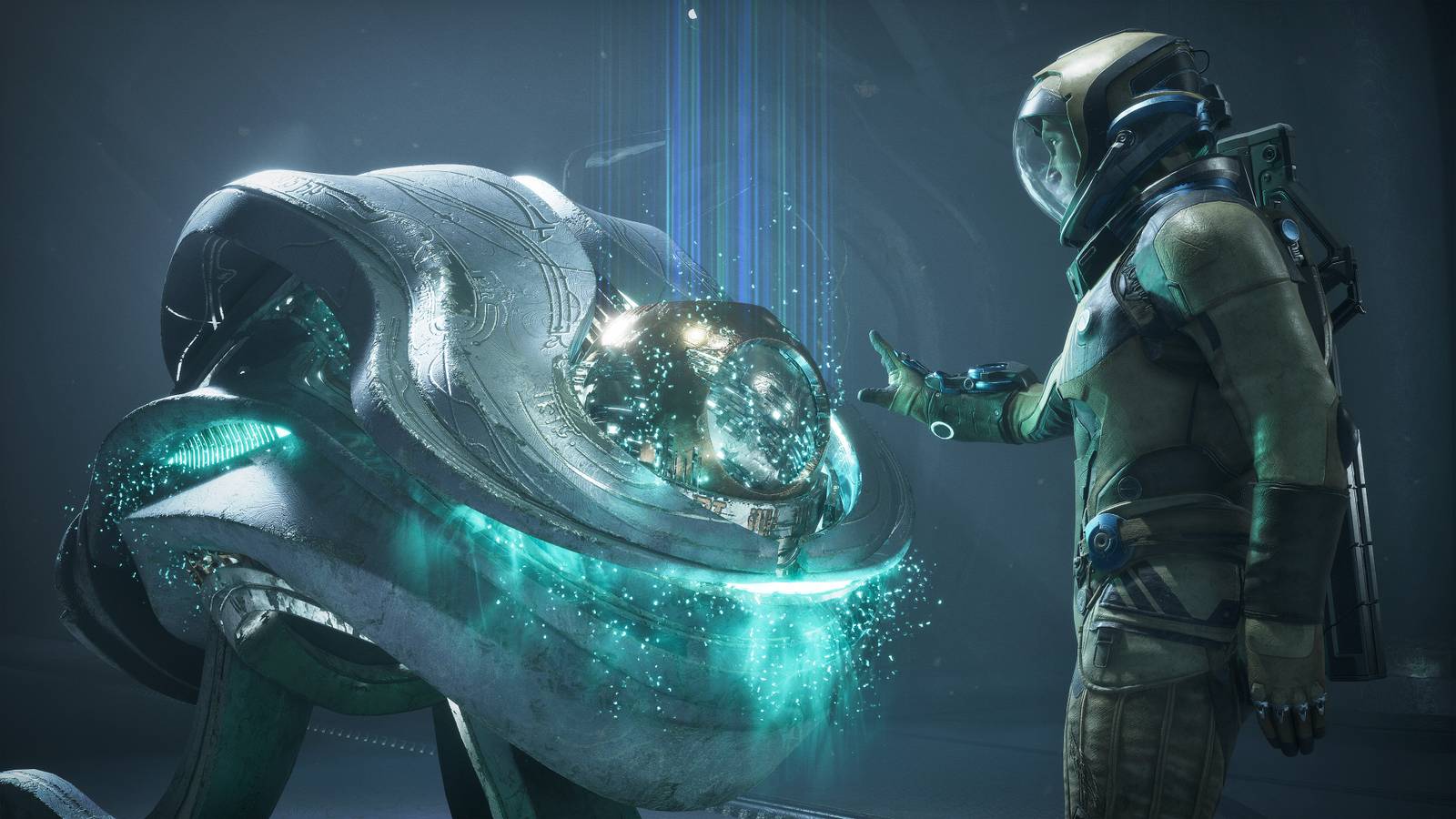
My preview of Exodus took place on Khonsu, an orbital platform where I spent plenty of time fighting enemies, but the combat never felt like something I was simply getting through so I could reach the next conversation. Shooting felt good, abilities were useful enough that I was constantly looking for different ways to combine them, and Precognition let me scan enemies and figure out their weaknesses before deciding how I wanted to approach them. It felt like Archetype had spent just as much time thinking about how Exodus should play from one encounter to the next as it had thinking about what those encounters meant for the larger story.

Then I reached some of the choices the preview put in front of me, and suddenly the other half of the game became just as obvious. Exodus has what Archetype calls its Oath system, where major decisions can push Jun toward either Paladin or Immortal depending on how he approaches his Celestial heritage. Those choices aren’t simply good or evil either, and some of them can affect how companions respond to you or even feed into other parts of the game. There was a pretty significant choice waiting for me at the end of the preview, and I spent much longer thinking about it than I probably should have.
According to King, getting players to understand that Exodus is trying to deliver both of those things at a high level is really what Archetype is still trying to communicate:
I think it’s maybe just connecting the dots on all those things and understanding that we’re trying to make something where everything’s kind of high fidelity. Really awesome cinematics, really awesome story, a ton of choices that allow you to impact it, really tight moment-to-moment gameplay. That’s probably the biggest thing I’ve seen thus far.
“Connecting the dots” is probably the best way to put it because none of these individual pieces have been secrets. Archetype has shown off Exodus‘ combat. It has talked extensively about time dilation and choice. We’ve seen the cinematics, companions, creatures, and worlds. The misunderstanding seems to come from trying to figure out which one of those things Exodus actually wants to hang its hat on when the answer appears to be all of them.

There was even a weird little moment during my preview that summed that up better than I expected. I had just spent a good portion of the mission dealing with some fairly serious circumstances and choices, only to wander off the path and find one of the strange Kay frogs scattered around Khonsu. The one I found sounded like a kid and started telling me about the history of the area, and it ended up being one of my favorite moments of the entire preview. King actually brought up that same contrast later when I asked what he hopes players take away from Exodus:
I hope they’re super excited because it’s like a brand-new action RPG where you’re gonna get to go into space and, you know, explore these crazy planets, meet these crazy creatures. We all sort of have sci-fi franchises that people love, but this is like a new one that has sort of an interesting mix of ingredients. So I hope it’s that kind of magic. You know, it’s like when you were playing, some of the choices and stuff you face seem really, really serious, but then you’re talking to these really crazy Kay frogs, and you know, they’re sort of whimsical, so it’s kind of that mix.
That mix is probably going to continue making Exodus difficult to sum up in a two-minute trailer, but after playing it, I think that’s a pretty good problem to have. I don’t want the combat to feel like something I tolerate because I’m invested in the story, and I don’t want the story to become background noise because I’m having too much fun fighting things. If Archetype can actually deliver on the balance King is talking about, the biggest surprise waiting for people who have only watched Exodus from the outside might be that whichever version of the game they think they’re getting is only half of it.

- Released
-
April 7, 2027
- Developer(s)
-
Archetype Entertainment
- Publisher(s)
-
Wizards of the Coast
- Number of Players
-
Single-player
- Steam Deck Compatibility
-
Unknown