





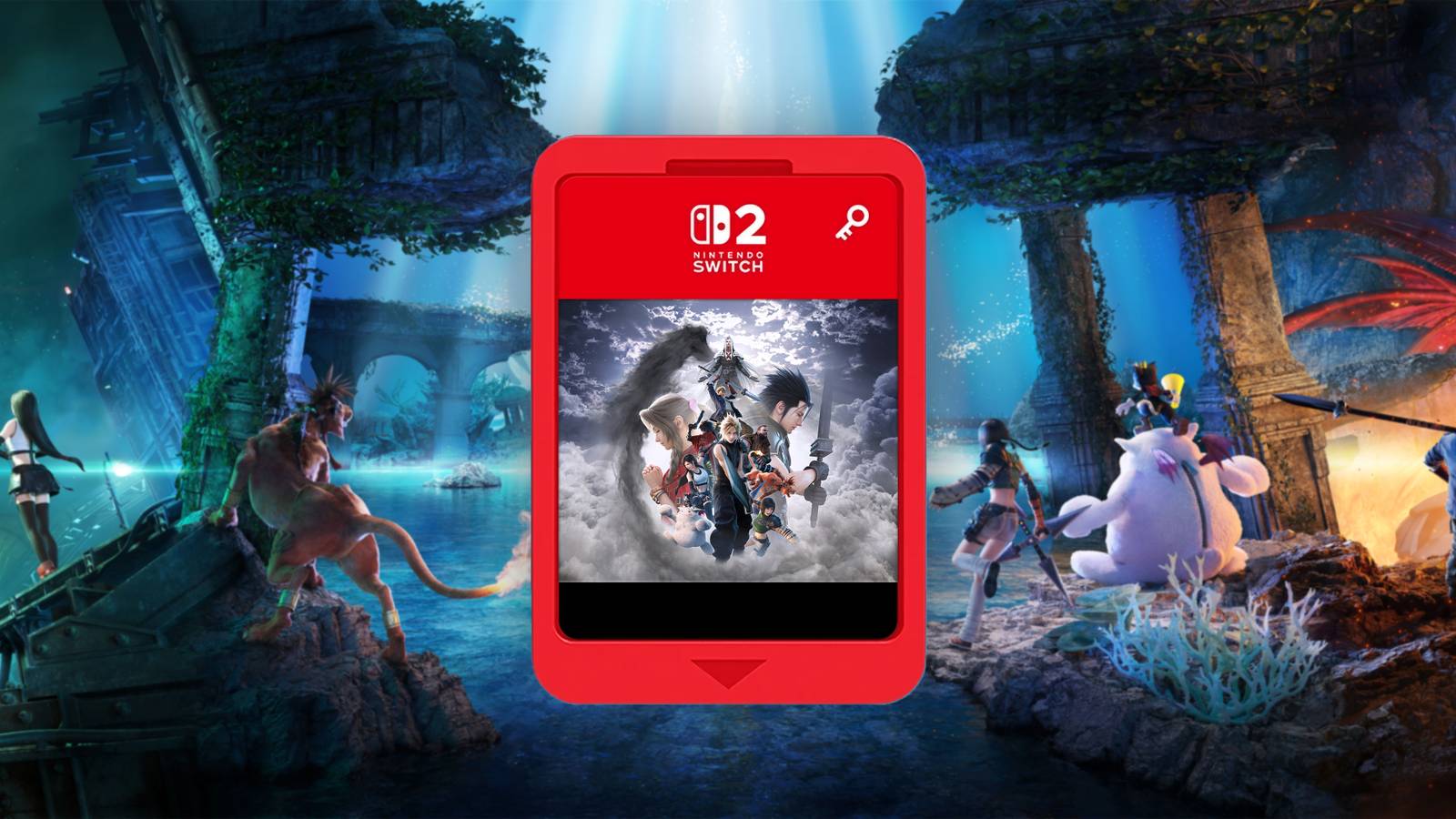
I’ll admit I don’t buy physical games at all anymore. Call me part of the problem, but it’s where I’m at in life. There was once a time when I actually preferred physical games and thought their value still outweighed the convenience of downloading a game from my chair or couch, but at this point, having become primarily a PC gamer and someone with far less time on his hands, I’ve gone fully digital. Perhaps you think that trivializes my stance on physical games, but it doesn’t, simply because I still see the value in them, even if they’re not prioritized in my personal value system. So, when I step back and look at the situation with Nintendo Switch 2 game-key cards, especially as a die-hard Nintendo fan, I find myself constantly perplexed at why they even exist in the first place. Don’t get me wrong, I actually understand the logic behind why they do, but when games like Final Fantasy 7 Revelation come along with a file size that is massive enough to eat up over half of the Switch 2’s internal storage while still requiring the game-key card to be inserted to play it, I’m left wondering who this format is really supposed to benefit.
Again, game-key cards aren’t entirely pointless. They exist as a sort of middle ground for games that are too large or otherwise impractical to put entirely on a Switch 2 cartridge. Rather than putting a download code in a box and calling it a day, the game-key card itself acts as the license, which means it can still be lent to someone else, traded in, or resold like a traditional physical game. The actual game is downloaded to the Switch 2’s storage, and the card then has to remain inserted whenever you want to play it. I understand the logic there, especially as games continue getting bigger, but that last part is where the whole thing starts losing me. And with Final Fantasy 7 Revelation set to take up an absolutely enormous amount of space on the Switch 2, it’s becoming much harder for me to ignore just how strange that compromise really is.
Final Fantasy 7 Revelation Makes the Game-Key Card Problem Impossible to Ignore
This is where Final Fantasy 7 Revelation really starts making the whole game-key card situation difficult for me to get behind, because its Switch 2 file size is expected to land at around 130 GB. The Switch 2 only has 256 GB of internal storage, so we’re talking about one game potentially taking up more than half of it. Sure, microSD Express cards exist, but if I buy a physical copy of FF7 Revelation and then have to clear out a huge chunk of my console just to install it, I can’t help but wonder what exactly the physical copy saved me from.
Of course, this is also where I have to admit that Revelation is probably one of the best examples of why game-key cards exist in the first place. The game itself isn’t stored on the card, so Nintendo and Square Enix don’t have to worry about squeezing something this large onto a traditional cartridge. Games are getting bigger, cartridges have their limits, and I’d much rather get the full version of FF7 Revelation on Switch 2 than some compromised version that exists solely because everything had to fit onto one card.
This is where Final Fantasy 7 Revelation really starts making the whole game-key card situation difficult for me to get behind, because its Switch 2 file size is expected to land at around 130 GB.
Where things start getting weird, though, is after the game has already been downloaded. Even with all of Final Fantasy 7 Revelation sitting on the Switch 2 or a microSD Express card, the game-key card still has to be inserted whenever you want to play it. If I buy FF7 Revelation digitally on the Switch 2, I download the whole thing and launch it whenever I want. If I buy it physically, I download the whole thing and still have to put the card in before I can play. Obviously, I can lend that card to someone, trade it in, or resell it later, and those are real benefits. But outside of those benefits, I’m essentially taking on the baggage of digital ownership while still dealing with one of the biggest inconveniences of physical ownership.
Final Fantasy 7 Revelation Makes Game-Key Cards Feel Like the Worst of Both Worlds
And that’s honestly really where Final Fantasy 7 Revelation loses me on the whole game-key card idea. One of the things physical games have always had going for them is that the game is actually on the thing you bought. You put the cartridge in, and there it is. Maybe there’s a patch waiting for you, but at least the cartridge itself still contains the game. A game-key card, on the other hand, is essentially a physical key telling the Switch 2 that you’re allowed to access something you’ve already downloaded somewhere else.


Put the consoles in the correct order.
Again, I get why Nintendo and publishers would want this option. If a game is too large or too impractical to put on a standard cartridge, a game-key card keeps a physical version on store shelves while still letting players lend, trade, or resell it. That’s not nothing. But FF7 Revelation is such an extreme example that it almost makes the whole compromise work against itself. The bigger these games get, the easier it is to understand why publishers want game-key cards, but the harder it becomes to ignore what physical players are giving up in exchange.
Maybe that tradeoff is worth it for some people, and I’m certainly not going to tell anyone they’re wrong for feeling that way. But for me, if I’m already downloading the entire game and surrendering that much storage to it, I’d rather not have to worry about keeping a card in the console, too. Final Fantasy 7 Revelation may be exactly why game-key cards need to exist, but it’s also exactly why I have such a hard time believing they’re the future physical games deserve.


- Released
-
April 8, 2027
- Prequel(s)
-
Final Fantasy VII Remake, Final Fantasy VII Rebirth