




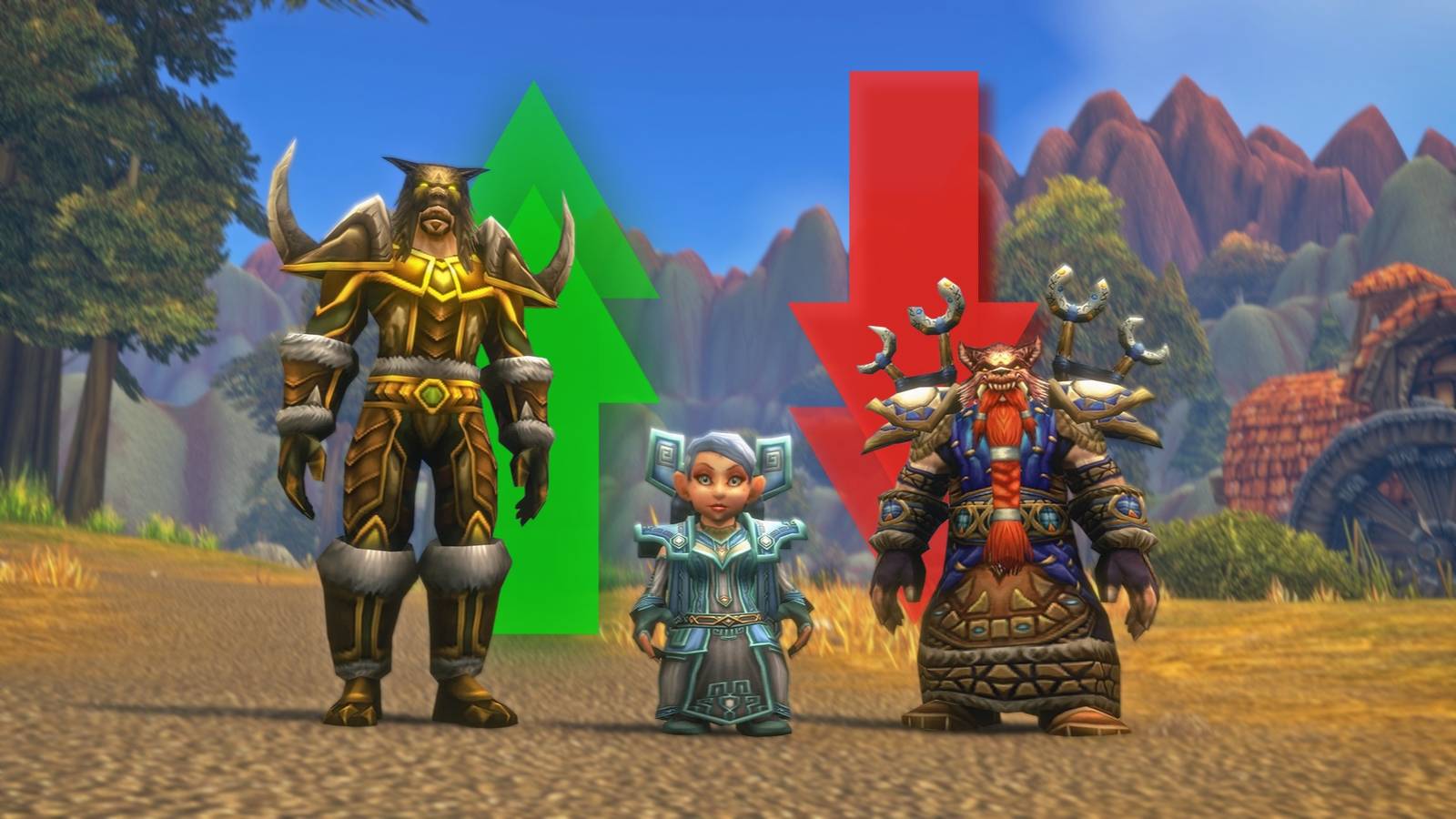
Though the launch of World of Warcraft: Forever is only days away on November 4, Blizzard still seems to be rearranging the furniture ahead of all the expected company. It seems focused on the small stuff, too, as its October 26 racial tuning pass halved the Human crit, cut brand-new passives for Dwarves and Orcs, and walked Blood Fury’s cooldown back to where it started, all after the beta had already closed. Players were already arguing over the best race for every class in WoW: Forever, and that argument just got more fuel, even though nobody has truly set foot in its launch version of Azeroth yet.
To be clear, Blizzard deserves credit for listening to feedback, and the goal of giving every race a reason to matter is a good one. There’s just a bit of a pacing problem, considering the goals of a “Classic Plus” game like Forever, as every back-to-back rewrite of racials, talents, and abilities teaches players to treat Forever like retail: as a set of numbers to solve. That’s the same mindset that eventually made both retail and 2019’s Classic WoW feel less-than-adventurous over time.
A Moving Target Before Forever’s Launch Day
For context, Forever‘s racials were announced at BlizzCon as a clean set of four per race, with changes like some old weapon specializations rebuilt into crit bonuses tied to the matching weapon type. Though that rework came after a real problem, as weapon skill was widely considered melee’s strongest stat in Classic WoW, the October 15 beta patch notes then swapped those specializations for flat modifiers like Ruthless for Humans, Earth Fury for Dwarves, and Savage for Orcs. Now, the October 26 pass has changed things again, removing Earth Fury and Savage outright while cutting Ruthless from 2% to 1% crit.

Rearrange the movies into the correct US release order.
Sign in to claim your place on
the leaderboard!
Naturally, tweaking things is largely the point of a beta, but I want to be clear that these racials are only the most visible examples of a pace problem. That same October 15 patch retouched every class in the game; Paladin Consecration lost more than half its per-tick scaling, Shadow Word: Death’s cooldown went up while Devouring Plague’s dropped from a minute to 24 seconds, and Ice Lance’s bonus against frozen targets fell from 300% to 200%. Many of the most recent Forever racial changes were apparently due to beta player feedback—and that’s great—but the quick cadence of these changes also shows exactly how a game turns into a moving target before it even launches.
There’s just a bit of a pacing problem, considering the goals of a “Classic Plus” game like Forever, as every back-to-back rewrite of racials, talents, and abilities teaches players to treat Forever like retail: as a set of numbers to solve.
None of these changes are huge on their own; plenty of them come down to a single percentage point. But fractional differences are exactly the kind that most meta-theorycrafting runs on, and there’s an argument to be made that meta-theorycrafting goes against the spirit of a game like WoW Forever. Several people were being guided by racial tier lists days before the beta even opened; you might not be able to force a tiger to lose its stripes in that sense, but every tuning pass restarts this conversation and once again makes character creation a math problem instead of the fantasy it ought to be.

Anyone who has spent real time in retail WoW knows the expectation this creates, because “meta” classes and talents there are always one patch away from changing. I remember the Death Knight experience heading into Shadowlands, when Breath of Sindragosa builds were king—everyone knew a change was coming, and players built their characters around a nerf that hadn’t happened yet. By then, the class fantasy was fully out the window, and all that was left was the meta.
Of course, opting out of all meta-worship and playing for fun was always an option, but that was always more theoretical than factual. Particularly because, in an MMO like WoW, other players can keep you out of content entirely if your character doesn’t match their idea of what’s on-meta. Some players enjoy that stuff—and I actually empathize with that more than I don’t—but regardless of who you are, every balance pass redraws that line, and the players who picked a race or spec because they liked it are the ones who pay for it.
By then, the class fantasy was fully out the window, and all that was left was the meta.
Yet Classic WoW was frozen on the original game’s final patch in 2019, and it still got min-maxed into the ground, so maybe this is all a bit redundant. That said, I get the sense that some things in vanilla (things that simply were) had as much to do with how people played as how often Blizzard patched. Players showed up to Classic with fifteen years of data and a culture built around using it; Forever‘s reimagined Azeroth was supposed to be the version nobody had figured out yet, but constant tuning hands that same culture a fresh set of numbers to chew on.
Considering WoW Forever’s Pillars, Maybe Some Things Should Just Be
-
 Image via Blizzard, Josh Drechsler
-
 Image via Blizzard, Josh Drechsler
-
 Image via Blizzard, Josh Drechsler
Again, pre-launch is exactly when this sort of tuning should happen, and some amount of optimization is inevitable in any MMO, Forever included. But chasing the spirit of the original game in a new way might mean letting that “play the most optimal way possible” mindset take a backseat, and that responsibility sits with players as much as it does with Blizzard. That probably won’t fly for everyone — the culture around WoW has changed enough since 2004 that it would be naive to expect otherwise — but it wouldn’t be a crime to let the launch patch breathe a bit.
The real test starts on November 4, when Blizzard can either keep re-tuning in response to every round of feedback or let races and classes settle long enough to become part of who the player character is. I’m optimistic, either way, as Blizzard’s announcement for Forever pitched a game where “the journey matters as much as the destination.” I just really hope that journey doesn’t end up feeling like balancing a spreadsheet too early.


- Released
-
November 4, 2026
- Multiplayer
-
Online Multiplayer, Online Co-Op
- Number of Players
-
Single-player
- PC Release Date
-
November 4, 2026