



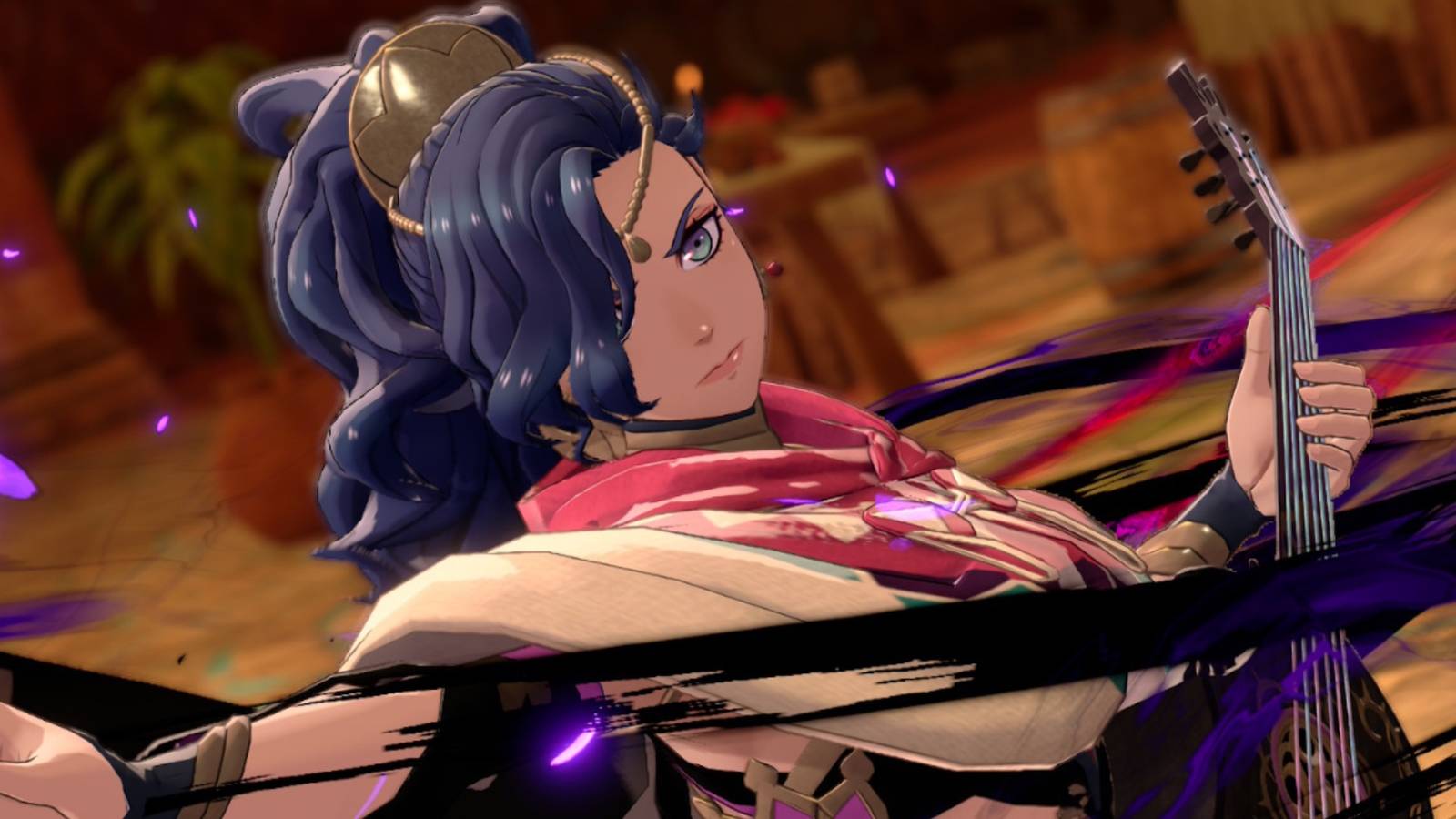
One of the biggest changes Fire Emblem: Fortune’s Weave has from its predecessor, Three Houses, is its approach to the main protagonists and their stories. Instead of having to stick to one path and narrative for a single playthrough, Fire Emblem: Fortune’s Weave allows players to jump back and forth between the four protagonists before taking on the role of the fifth true main protagonist, Eshmel. It adds a more dynamic layer to Fortune’s Weave‘s storytelling that also streamlines the overall game, since players don’t have to start up a new playthrough in order to experience every path’s arc.
This approach to Fire Emblem: Fortune’s Weave‘s main protagonists also expands the game’s runtime by a significant amount compared to Three Houses. Granted, Three Houses had plenty of content to revel in, but Fortune’s Weave has taken in-game content to the next level, thanks to not having to go through multiple playthroughs. Going bigger than the game that came before isn’t anything new, but Fortune’s Weave and Three Houses present fascinating examples of how two kinds of game design approaches can completely change what the overall experience is like.
Because of How It Handles Its Four Protagonists, a Completionist Fire Emblem: Fortune’s Weave Run Is Double the Size of a Three Houses Run
Of course, play time is going to vary from player to player, but Nintendo Life recently published a rundown of how long it took to complete Fire Emblem: Fortune’s Weave‘s main story while also revealing how long a completionist run might take fans. The completionist run is clearly much longer than the main story, but just sticking to the main story alone is still going to require dozens of hours of dedication from players. JRPGs with long runtimes definitely aren’t anything new. However, it’s wild to see the difference between Fortune’s Weave and Three Houses.

Rearrange the covers into the correct US release order.
Rearrange the covers into the correct US release order.
Easy (5)Medium (7)Hard (10)
Fire Emblem: Fortune’s Weave’s Main Story and Completionist Hours
- Main Story: 80–100 hours
- Completionist: 150 hours or more
This 80–100 hour mark takes all life paths into account while also leaving some room for an average amount of side content. According to Nintendo Life, taking three heroes into the endgame will take around 80 hours, but bringing all four into the final act will get players closer to 100 hours. Fire Emblem: Fortune’s Weave‘s gameplay can be stretched even further, though, when it comes to players who are trying to experience every single thing that the game has to offer. Players aiming to get 100% are looking at investing over 150 hours to achieve this goal.

To really put things into perspective, Nintendo Life revealed that Fire Emblem: Three Houses‘ main story and side content took 76 hours. The shorter timeline makes perfect sense, considering that players are resigned to one character. Fire Emblem: Three Houses‘ characters all have their own branching storylines that can make multiple playthroughs worth it for many fans, but these two opposing methods raise an interesting question about which one is ultimately the better formula.
Fortune’s Weave and Three Houses Prove That What Actually Makes a Game “Big” Isn’t Always So Black and White
Looking at the runtime difference between Fortune’s Weave and Three Houses makes it look like the former is obviously the winner. However, playing through all four routes in Three Houses can sometimes be even longer than a Fortune’s Weave completionist run. Fortune’s Weave simply feels larger because it doesn’t block off content for future playthroughs. The Fire Emblem games got a big bump in runtime once Three Houses hit the scene, and it has been fascinating to see how Fortune’s Weave is already shaking up how that kind of length is approached.
Both Fortune’s Weave and Three Houses’ Approach to Storytelling Have Pros and Cons
The best part about how Fortune’s Weave handles its protagonists is that players don’t have to sideline other lore points and can focus on just a single storyline. Fans are able to experience everything at once, which is a big plus for gamers who may not have the time or patience to play through the same game multiple times. However, this can also make Fortune’s Weave feel daunting. On the flip side, Three Houses compartmentalizing its story via multiple playthroughs can feel easier to manage. Ultimately, it’s up to a player’s preference. The Fire Emblem: Fortune’s Weave reviews have been overwhelmingly positive, though, so it’s clear that this new story formula has worked.
Which path actually makes a game feel “bigger” is subjective, but Fortune’s Weave‘s approach is better at giving players that grandiose feeling. Even if a game that requires multiple runs can technically take longer, multiple protagonist paths in one sitting creates a greater sense of expansiveness. Three Houses feels more like chapters, which can get in the way of the story’s pacing, while Fortune’s Weave feels more like an epic, intertwining tale. Fortune’s Weave‘s characters and story being handled in this way keeps everything going at a much more satisfying pace in the long run. There are going to be plenty of players who prefer Three Houses‘ multiple playthroughs, and that’s perfectly fine. When it comes to the question of what actually makes a game feel big, though, Fortune’s Weave‘s formula nails it.

- Released
-
September 17, 2026
- ESRB
-
Teen / Fantasy Violence, Mild Language, Suggestive Themes, Use of Alcohol, In-Game Purchases
- Publisher(s)
-
Nintendo