




Grand Theft Auto 6 is inching closer to its long-awaited release date, and hype is circulating just as much as one might have expected. Rockstar’s overdue return to the gaming industry (GTA 6 will be the company’s first new game in eight years) has been preceded by some flashy trailers, impressive visuals, and an undeniable element of “cool,” so hopes are high, to say the least.
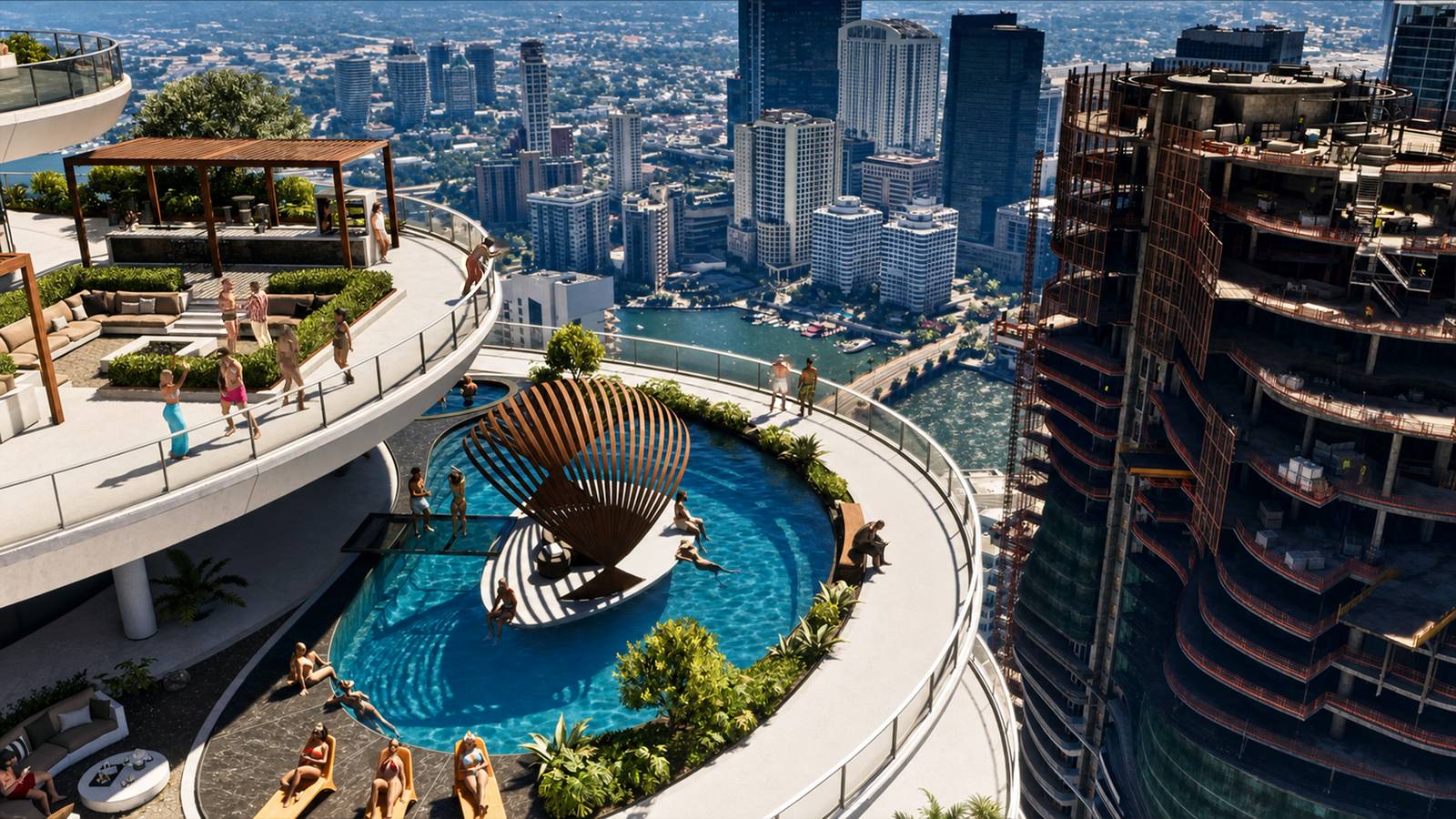
Among GTA 6‘s many alluring aspects is its new-and-improved rendition of Vice City, a setting we haven’t seen since the PlayStation 2. Vice City is heavily inspired by Miami, to the point where it’s basically the real-world city in all but name. This is what GTA does: Liberty City is an analog to New York City, Los Santos is an analog to Los Angeles, and so on. I’ve already praised what appears to be a brutal authenticity in GTA 6‘s heightened version of Miami, which promises to be one of the densest, most intricately detailed urban settings that gaming has ever seen. And while I’m sure GTA 6‘s map will be big, I’m pleasantly surprised by how little size has factored into the discussion so far. This is a far cry from the open-world landscape of the 2010s, when gamers and developers seemed to prize map size above all else.
Grand Theft Auto 6 Could Make Open-Worlds About More Than Just Scope
When I think back to some of the most beloved open-world games of the past decade or so, it’s hard to argue that their strengths lie primarily in map size or number of activities. Rather, the best open-world games are the ones that present players with a setting that they don’t want to leave, and that generally comes down to one thing: intentionality. Skyrim isn’t a great open world because it’s sprawling, but because it looks, sounds, and behaves like a unique, Norse-inspired high-fantasy realm.
Skyrim is a good example on multiple levels here, since it has often been used as the benchmark for open-world scope. Many 2010s open-world games were positively discussed with terminology like “even bigger than Skyrim.”
It makes sense why audiences would be awed by a huge map, but after suffering through a deluge of honestly forgettable AAA open-world titles over the past decade, it’s becoming clear that it’s relatively easy to make a big, time-consuming map. Gamers have seen countless small, medium, and massive open-world games by this point, and size is almost never the defining factor in whether any of them are actually good, memorable, or innovative.
If you doubt this, just take a look at the Yakuza franchise. None of these games is perfect, but you’d be laughed out of a room of its fans for criticizing its map size. The Yakuza, Judgment, and Like a Dragon games all feature small, detailed worlds full of personality, as a rule, and the result is a growing, beloved, profitable 20-year franchise with an intensely loyal and growing fanbase. GTA 6 is certainly no Yakuza in this regard—I’m sure it’s map will be sizable, especially beyond the limits of Vice City proper—but it could pull some of the same tricks. That is, GTA 6 could break ground with detail, atmosphere, and personality, rather than square mileage.
What GTA 6 Can and Should Focus On Instead of Sheer Map Size

The graphical arms race has slowed down quite a bit in recent years, at least as far as the average layperson is concerned. While there have been great advancements made in ray tracing and path tracing, and current-gen games definitely look better than last-gen ones, the generational gap is smaller than ever. Moreover, it’s been proven that photorealism isn’t a prerequisite for a mainstream game’s success, nor is it an aegis against failure.

Guess the games from the emojis.
Guess the games from the emojis.
Easy (120s)Medium (90s)Hard (60s)
In response, developers should leverage new and emerging technology for other, more specific areas related to immersion or mechanics. In the case of GTA 6, this could mean making an open-world that pushes the envelope with these features, among others:
- Crowd density and behavior
- Number of accessible buildings
- Urban level design and general secrets
- Detailed verticality (e.g. skyscrapers with several floors
- Environmental destructibility
Put another way, I’m personally hoping that GTA 6‘s innovations in world design are about more than just visuals and scale. Creating a setting that’s pulsating with personality, interactivity and believability ought to be the top priority, and based on what we’ve seen so far, it looks like that is indeed the case. This is exciting in its own right, but it’s even more so when you think about what it could mean for gaming more generally.
For better or worse, Grand Theft Auto is a franchise that tends to set the standard for other open-world games, specifically those set in cities or the present day. Developers and (perhaps more importantly) investors see the runaway success of GTA and want to replicate it. As such, we can only hope that GTA 6 sends out good lessons, as it were, about what the most important aspects of an open-world are.



- Released
-
November 19, 2026
- ESRB
-
Rating Pending – Likely Mature 17+