





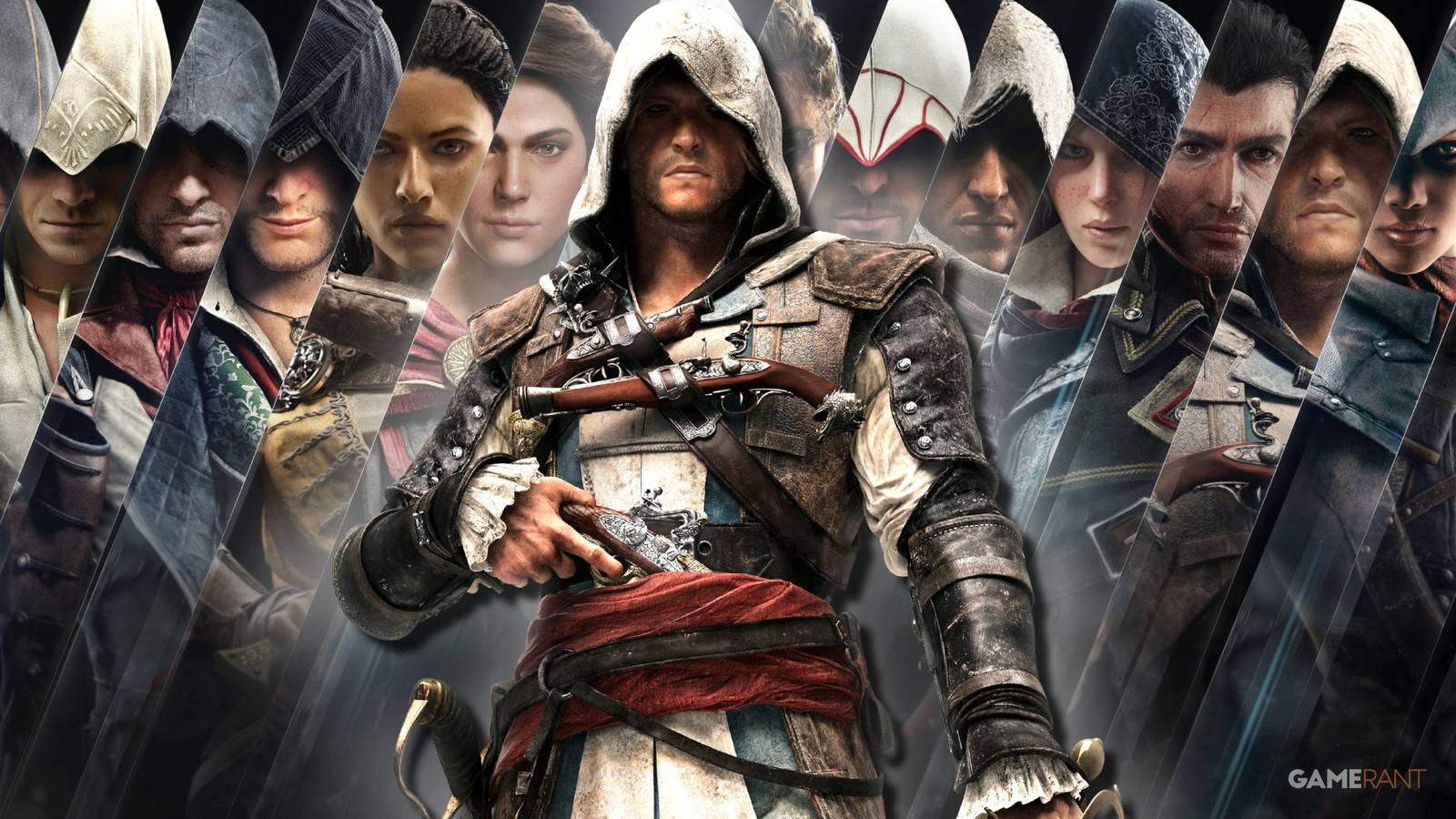
The moment Assassin’s Creed Black Flag Resynced was first officially announced, I set out to do the only reasonable thing a lifelong fan with too much time on their hands could: replay every mainline game in the series back to back over the course of several months. The original plan was simple—to arrive at the remake equipped with the whole series fresh in the mind—but somewhere around the middle of this venture, I realized I had the spine of a ranking, and, given the title of this piece, I think it’s clear I leaned into that impulse. So, ahead of the release of Assassin’s Creed Black Flag Resynced on July 9, here is every mainline Assassin’s Creed game, ranked.
Please note that this article contains spoilers for the entire Assassin’s Creed series.
Objectivity may be a fiction in rankings like this, but rigor is not, and there was a method to my madness. I tried forgetting my existing biases as I dove into each game, holding them to a new, consistent set of standards; occasionally, that meant ranking a game I love beneath one I find a bit more tedious. There’s a short explainer on the scaffolding here for any diehard fans who might want to argue with the methodology, but as a diehard myself, I’d hold that some of these Assassin’s Creed games are radically different, quality-wise.
The Best-Selling Games Developed By Ubisoft (& How Much They Sold)
Ubisoft is known for making some of the biggest titles in the industry. But which were the company’s highest-selling games?
14
Assassin’s Creed Valhalla
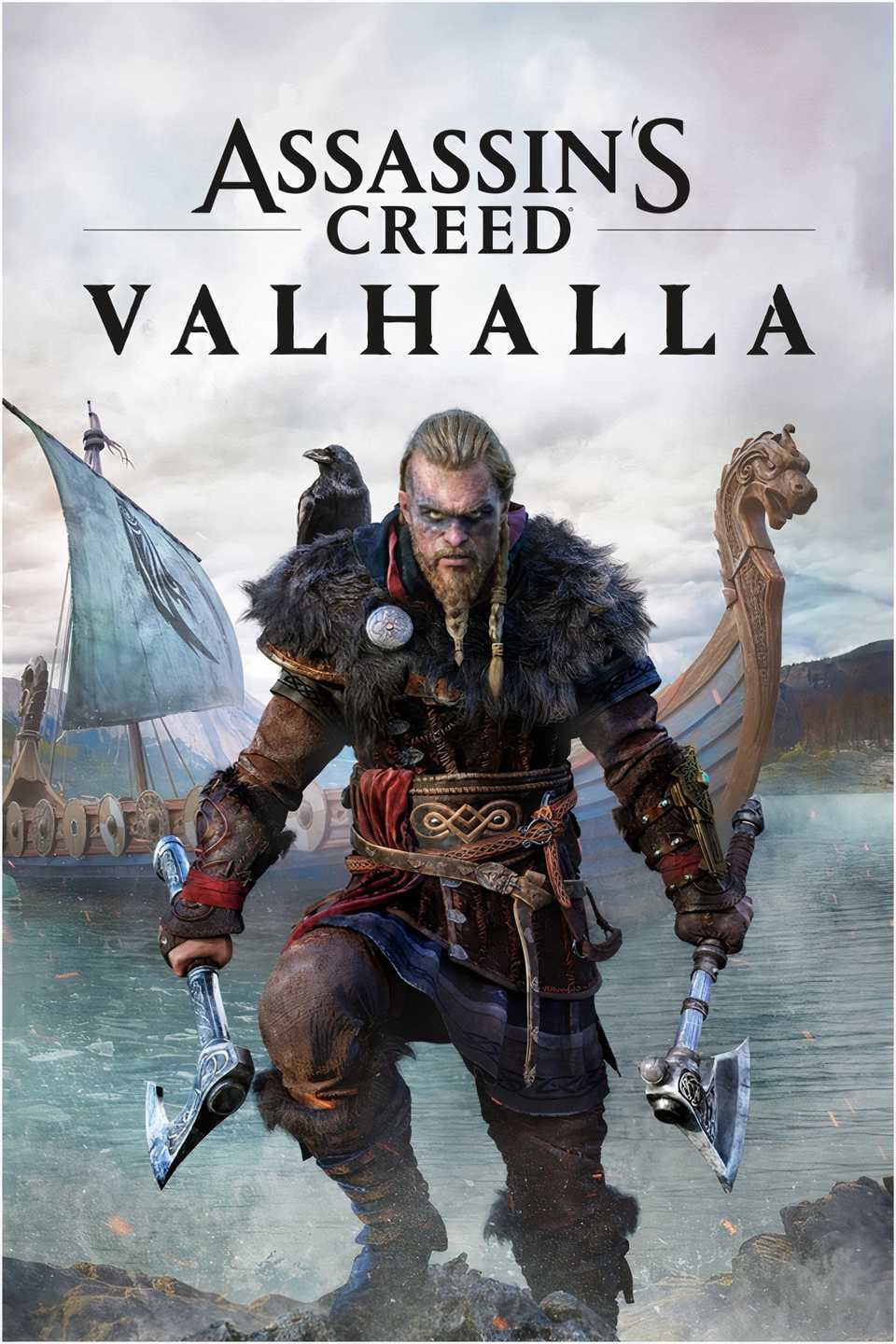
This game wastes more than enough time, so I will not: there is a competent Viking game buried inside Valhalla, maybe even a six-out-of-ten one, but it is entombed beneath so much filler content—in the worst sense of the word—and Isu shark-jumping that excavating it feels like a second job. Everything the other RPG Assassin’s Creed games stumble with, Valhalla stumbles with worse: the bloat is more aggressive and unambitious, the creed-less story more inert, the gameplay loop more uninspired. But what drags it all the way to the floor is the cynicism around its edges—Ubisoft’s false promises, the predatory in-game spending, the padding sold as generosity—by the time you account for all the muck Ubisoft builds around it, Valhalla itself is almost beside the point.

Assassin’s Creed Valhalla


9/10
- Released
-
November 10, 2020
- ESRB
-
M for Mature: Blood and Gore, Intense Violence, Partial Nudity, Sexual Themes, Strong Language, Use of Drugs and Alcohol
13
Assassin’s Creed Mirage
Assassin’s Creed Mirage‘s most offensive quality is that it swings for the status quo and bunts it nonetheless. It takes no meaningful steps forward with its gameplay (bar an anime-esque instant kill move that trivializes content), reaches for nothing inspired in its incredible setting of Baghdad, and delivers fifteen to twenty hours of mostly unordered fan service that evaporates from the mind the moment it ends. The stealth is fine, though not particularly better than its predecessors despite its recency, and the return to an older structure is certainly welcome on paper. But “welcome on paper” is clearly the ceiling here, and I actually think that might be the most damning thing about Mirage; it tried nothing, so there is nothing to forgive and nothing to celebrate.
12
Assassin’s Creed Odyssey
Assassin’s Creed Odyssey is a beautiful game, and in another life—one where it wore a different name and carried none of this franchise’s baggage—it might have been an incredible choice-driven mythology game in its own way. Instead, it labors under obligations it cannot meet by being stapled to a series whose identity it actively sidesteps with zero verticality for parkour and overvalued Isu lore. The actual story is just more of modern Ubisoft’s “tasks in any order” dead weight outside its introductory and ending hours (which are quite good), the runtime is padded to the horizon, and the combat is decent, but the microtransactions are not.
Though Origins‘ commercial success is likely the original sin that gave Ubisoft permission to over-indulge in each of its worst impulses, Odyssey does not hold up on its own merits. It’s not unambitious despite the egregious bloat, just corrupted by Ubisoft’s worst impulses, yet despite all of that, it still isn’t as bad as Valhalla. You take the win where it lies, I guess.

Assassin’s Creed Odyssey
- Released
-
October 15, 2018
- ESRB
-
M for Mature: Blood and Gore, Intense Violence, Sexual Themes, Strong Language
11
Assassin’s Creed Shadows
Given its intense focus on one core pillar of gameplay, I’d argue that Assassin’s Creed Shadows has the best stealth in the franchise, full stop. And by the virtue of its modernity, it’s also wrapped in production values—art, audio, music—that the series has yet to top, despite some horrible NPC animation. It’s even admirable that the dual-protagonist structure commits more meaningfully to the mechanical differences between its two leads, which is more than Syndicate ever managed with its twins.
Yet so much of the game is either mediocre (like virtually all of Yasuke’s gameplay, or the uninspiring story that’s largely unrelated to the Assassin vs. Templar conflict) or, ironically, lives in fear of the long shadow the series had already cast. The prime example is that Shadows gutted the modern-day narrative in favor of text logs, trading the connective tissue of the entire series for a spattering of words in the menus. They could be interesting words at times, and the franchises’ modern-day segments have never been particularly close to perfect, but replacing the format wholesale rather than fixing it feels like a spineless abdication of the series’ own lore.
10
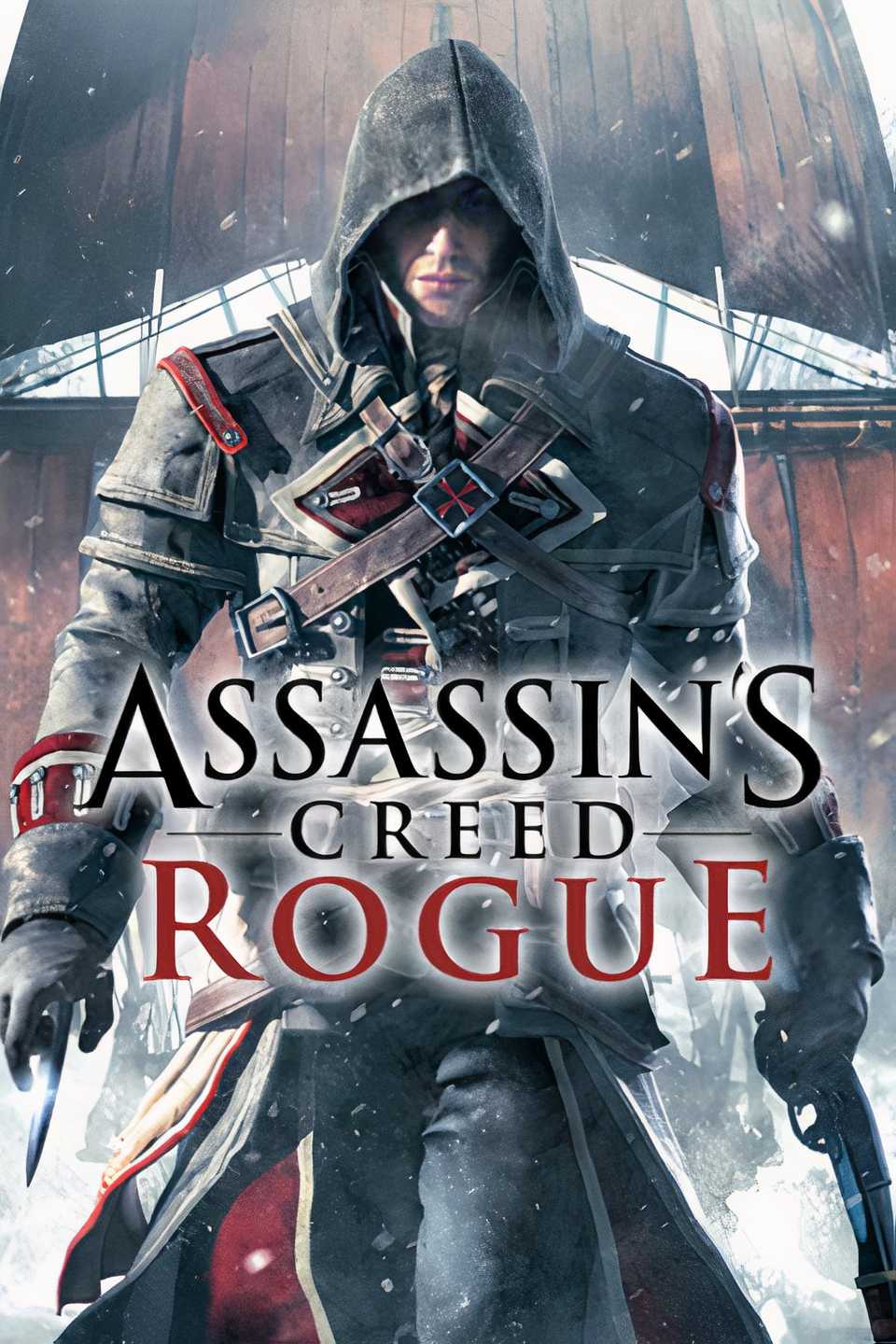
Assassin’s Creed Rogue
Assassin’s Creed Rogue ranks above Shadows because it actually seems to care about Assassin’s Creed as an artifact of gaming culture, and that outweighs its weaker production value by a huge margin. Playing as a Templar, watching the Assassin order from the other side of the conflict, is a premise this title should be celebrated for mining. It fumbles the execution—the locales vaguely feel like retreads, and it mangles the established logic of the Assassins in ways that are simply incorrect rather than interesting—but it engages, nonetheless.
Who’s That Character?

Identify the silhouettes before time runs out.
A game that trips over itself in an attempt to take the series’ mythology seriously and actually tie-in to core beats of other AC entries still ranks above one that replaces the mythology with tangential reading material. It’s also no small thing that Rogue has some of the best alternate outfits in the series. Seriously—the gameplay and narrative may never truly stand out beyond a very cool Assassin enemy type, but Shay Cormac always did through his fits alone.
Assassin’s Creed Rogue
6/10
- Released
-
November 11, 2014
- ESRB
-
M For Mature 17+ due to Blood, Strong Language, Violence
9
Assassin’s Creed Syndicate
Assassin’s Creed Syndicate is a divisively odd duck in retrospect, given the disdain people had for it at release, which almost reads as naivety these days (indeed, it can get worse). Yet to my mind, it clears a low bar honestly: it has strong stealth—arguably the second-best in the series—and combat that holds up incredibly well for a pre-RPG entry, despite looking a bit silly sometimes. It may work harder to further write off the modern-day narrative in gameplay, but Syndicate makes up for that in practice with sections set during the First World War that tell an Isu story just as capably.
Yet Syndicate softens its own impact in a number of ways: first, by handing the player a portable grapple gun that guts the traversal the franchise is built on. That’s sort of a no-brainer—much like the shallow gang system—but even more egregiously, Syndicate‘s story is as bland as they come, and its twin protagonists are never truly engaging on either the gameplay or narrative fronts. The game’s cardinal sin, though, is taking what could’ve been the franchise’s most interesting setting and cheapening it through flat caricatures of historical figures and very little introspection into what made the Industrial Revolution such a kinetic time in history.
8
Assassin’s Creed
By far, the original Assassin’s Creed was the hardest game on this list to place, because almost everything that makes it remarkable lives in theory and almost everything that makes it a chore lives in practice. As a piece of gaming canon, it is revolutionary, and its narrative remains one of the most intellectually ambitious the series has produced, set in a place and time that’s deeply contentious to this day. It rings true as a historical game from an era when that designation carried real weight, but it hasn’t aged gracefully, and that’s worth remembering anytime revisionists say its gameplay is deeper than it actually is: the mission structure is repetitive to the point of self-parody, and you can’t even assassinate enemies from hay carts.
What’s That Weapon?

Identify the silhouettes before time runs out.
Identify the silhouettes before time runs out.
Easy (7.5s)Medium (5.0s)Hard (2.5s)Permadeath (2.5s)
I went back and forth on this one because, in comparison to, say, Valhalla, the lack of features alone in this 2007 game will almost certainly draw fire toward its ranking. But my framework rewards ambition over polish everywhere else on this list, and it would be dishonest to abandon that principle the moment a game gets old. Ambition on Assassin’s Creed‘s scale remains a rare thing, and it certainly outranks the games that carry more content across narrower horizons.

Assassin’s Creed
- Released
-
November 14, 2007
- ESRB
-
M For Mature 17+ Due To Blood, Strong Language, Violence
- Engine
-
anvilnext, havok, scimitar



7
Assassin’s Creed Origins
Assassin’s Creed Origins is a good game that I hold partly responsible for a great many bad or mediocre ones. The gameplay and narrative are strong, the latter being perhaps one of the strongest in this series, and Ptolemaic Egypt is one of the series’ finest settings, so on its own terms, Origins earns this spot honestly. The trouble is everything it sets in motion.
The near-total abandonment of deep stealth was fine as a lark, but the success of that framework and the rewards it earned despite the aggressive monetization became templates that Ubisoft would use to build its worst excesses. Origins deserves real scorn for what it enabled, but credit for what it is, so though it earns this spot begrudgingly in 2026, the only fair thing is to say both out loud.

Assassin’s Creed Origins
- Released
-
October 27, 2017
- ESRB
-
M for Mature: Blood and Gore, Drug Reference, Intense Violence, Nudity, Sexual Content, Strong Language, Use of Alcohol
6
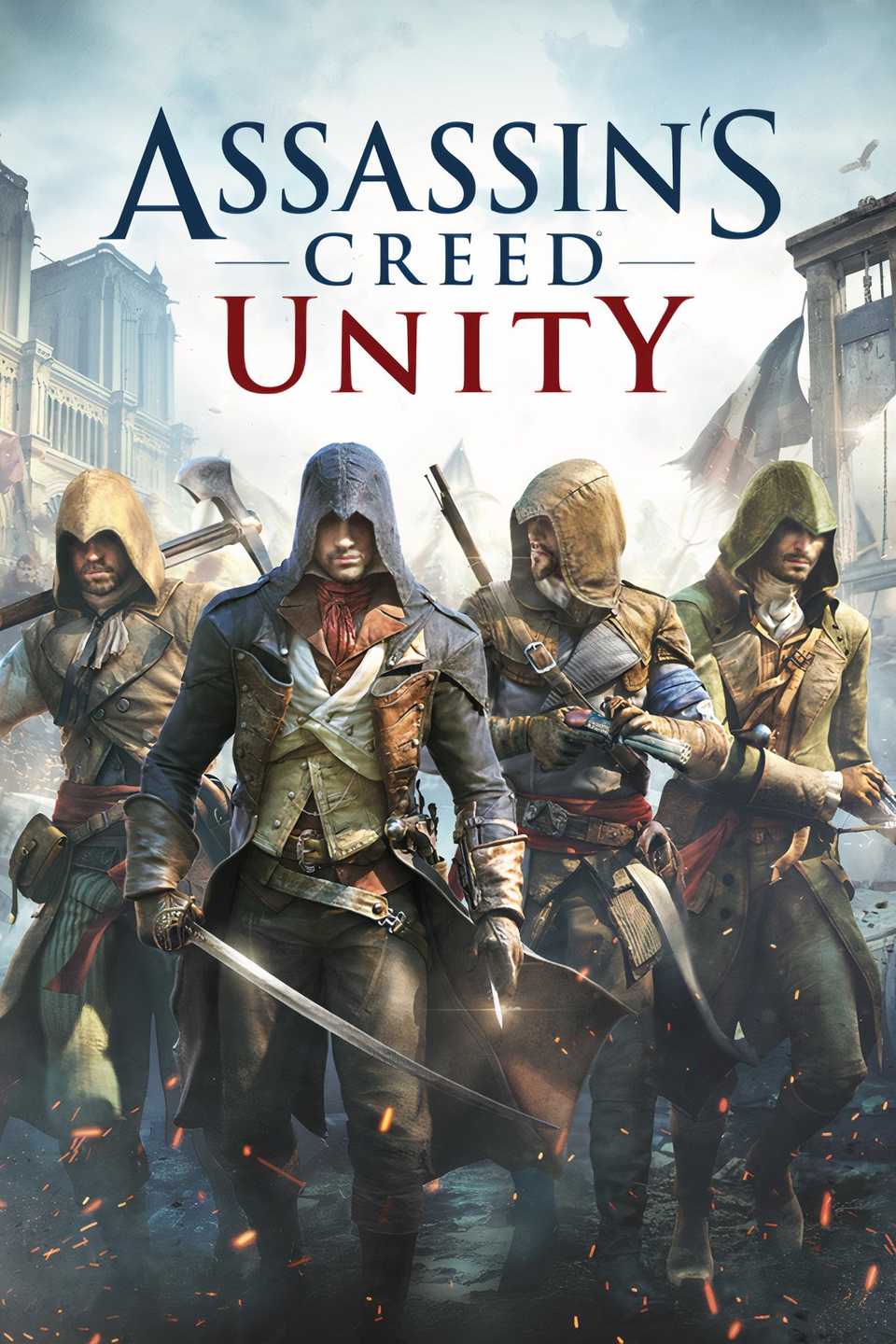
Assassin’s Creed Unity
As I see it, Assassin’s Creed Unity is the great tragedy of the series, a “could have been revolutionary” entry that arrived broken and got buried before anyone could litigate the merits of what it was reaching for versus where it failed. The form-fitting customization and buildcrafting, the co-op missions, the visceral animation reworks to parkour and combat—these were great ideas and efforts that shipped inside a catastrophically buggy launch product. Even now, Revolutionary Paris remains the single best setting the franchise has ever rendered, and all these years later, when most of its flaws are now fixed, Unity still stands visually and aurally unmatched by anything else here.
And it truly stings as a fan, because in the triage that followed Unity‘s release, Ubisoft abandoned nearly every ambitious mechanic Unity introduced, bar the one thing nobody asked for: microtransactions. Those, alongside the consistently duller approach to narrative in this franchise, arguably begin in earnest right here, and that got buried indiscriminately before it could be called out incisively. Ultimately, though, Unity‘s modern rehabilitation is well-earned, and so is a measure of grief for the games that could have been after the fact.
Assassin’s Creed Unity
6/10
- Released
-
November 11, 2014
- ESRB
-
M for Mature: Blood and Gore, Intense Violence, Sexual Themes, Strong Language, Use of Alcohol
5
Assassin’s Creed Brotherhood
Plenty of people will tell you Assassin’s Creed Brotherhood has the best gameplay in this era of the franchise, and I totally understand the argument, even as I counter it: no hookblade. On a more serious note, though, the only real problem with Brotherhood is the story, which—despite my sincere love for this game—is hugely, totally broken at a structural level. The central conceit of Brotherhood‘s gameplay asks you to liberate a Rome the Borgias have supposedly left shuttered and ruined, which makes no sense, because the Borgias’ entire goal is to hold and consolidate power from that exact seat.
Given that I last played this game in my early teens, I hadn’t noticed that Brotherhood truly never makes sense from a narrative perspective; that the beats of this story are either retreads or totally ludo-narratively dissonant. Ezio’s arc is a simple re-tread of the “burden of leadership” track from Assassin’s Creed 2, and Machiavelli is misrepresented so badly that it renders one of Brotherhood‘s central narrative mysteries totally dead in the water—it genuinely seems like his character is entirely based around the term “Machiavellian” rather than the actual person. Brotherhood‘s polish in every other regard (including its now-defunct multiplayer) makes this narrative incoherence pretty confounding, but I must give proper credit: the fact that the game itself works as well as it does is a small miracle, given that it began life as an expansion, but even still, a game this confident in the hand has no excuse for being this careless on the page.

Assassin’s Creed Brotherhood
- Released
-
November 16, 2010
- ESRB
-
M // Blood, Sexual Themes, Strong Language, Violence
- Engine
-
Anvil
- Multiplayer
-
Online Multiplayer