





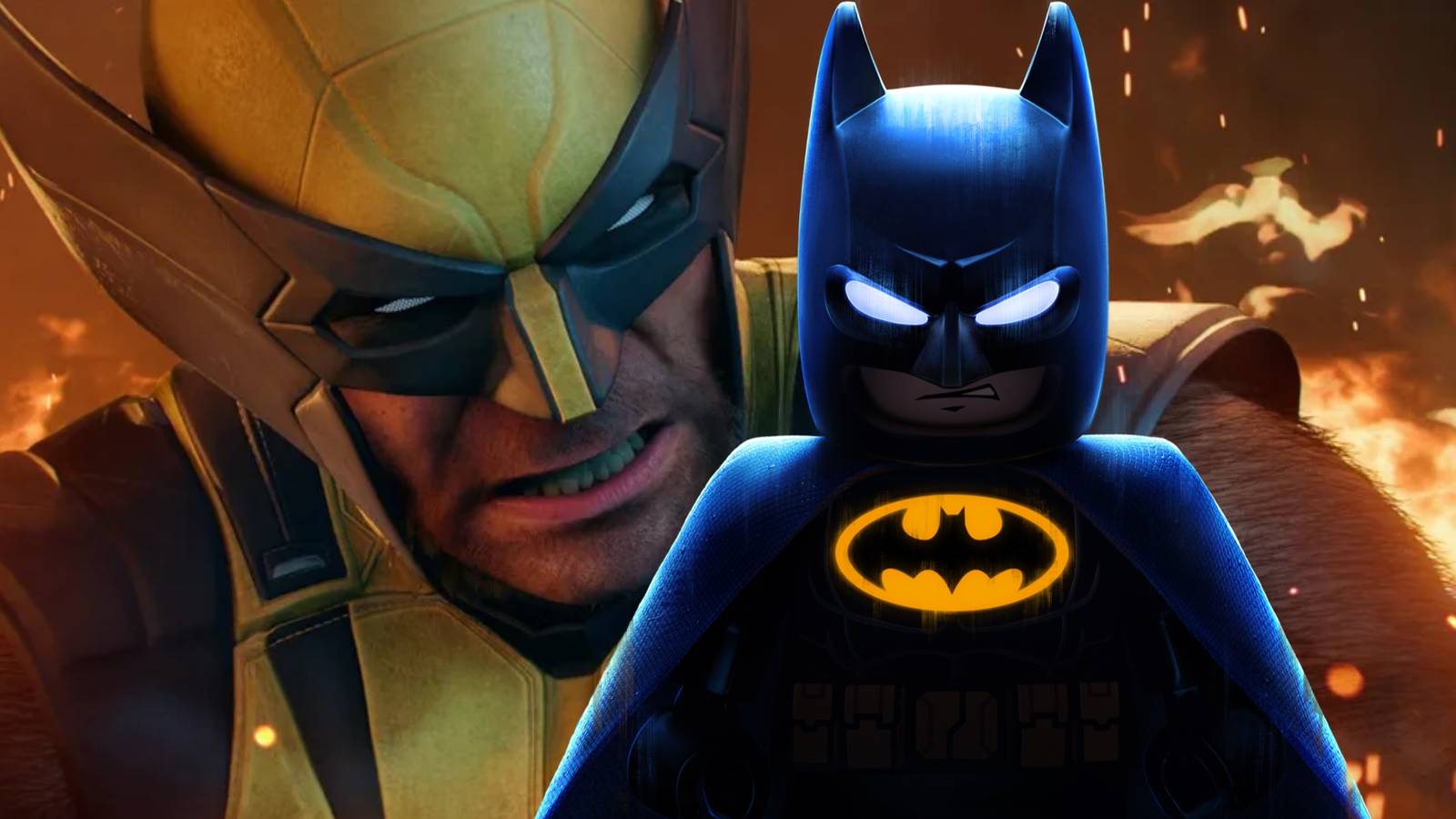
Marvel’s Wolverine is the latest superhero game to hit the scene, and it has ignited a lot of debate. Even before the game launched, Marvel’s Wolverine was embroiled in controversy and discourse. Between the gameplay leaks, character design, and the final product, people have had a lot to say about Insomniac’s newest Marvel Comics adaptation. Insomniac struck gold with Marvel’s Spider-Man, but Marvel’s Wolverine is an attempt to make something new that stands on its own. There are several ways that Insomniac has done this, but the most obvious is through its linear world design. This was a big risk after Marvel’s Spider-Man, and it’s the complete antithesis of 2026’s other big superhero game: LEGO Batman: Legacy of the Dark Knight.
Marvel’s Spider-Man isn’t the only superhero-based series that showcased how good of a fit open-world design can be for these kinds of adaptations. The Arkham series and even games like Infamous that aren’t under the Marvel and DC umbrella have been strong arguments for open-world design being the ideal formula for superhero titles. However, Marvel’s Wolverine is a reminder that open-world superhero games need to look at the hero as the starting point instead of simply following a game design trend.
Marvel’s Wolverine and LEGO Batman: Legacy of the Dark Knight Understand That Superhero World Design Starts With the Hero
There are a lot of controversial Marvel’s Wolverine features, especially with the game’s level design. The game has been criticized for holding a player’s hand too much, which has been pretty valid. Marvel’s Wolverine does indeed have a lot of signifiers to help guide players a little too much, but that isn’t the point. This isn’t a deep dive into the “yellow paint” debate; it’s a look at how linear and open-world games make a superhero experience feel true to the character.

Put the consoles in the correct order.
After you take away all the in-game flashing symbols and the infamous scent trail mechanic, Marvel’s Wolverine is still very much a strictly linear world even without the guides. Marvel’s Wolverine‘s world design is a far cry from Marvel’s Spider-Man‘s open world, which is bound to disappoint some who were so accustomed to exploring as they please as Peter Parker or Miles Morales. Open-world design simply doesn’t make sense for a character like Wolverine, though. What makes Logan so intriguing is his story, which makes a linear setting the perfect base to build a Wolverine tale from.
Just as Spider-Man web-slinging through New York City wouldn’t be as satisfying within a linear narrative, Wolverine’s abilities make an open-world adaptation incredibly hard to nail. Marvel’s Wolverine‘s combat has been criticized as being repetitive, but Logan only has his claws at his disposal, which automatically puts a cap on gameplay possibilities.
Marvel’s Wolverine is a reminder that open-world superhero games need to look at the hero as the starting point instead of simply following a game design trend.
Batman may not actually wield superhuman abilities, but he has a vast arsenal of weapons and tools at his disposal that an open-world formula is able to highlight much more effectively. LEGO Batman: Legacy of the Dark Knight‘s gameplay is completely built around what best suits Bruce Wayne’s iconic gadget lineup, like the Batmobile and Batclaw. Between Batman and Wolverine, one is clearly a better fit for an open world.
Batman and Wolverine Are Two Different Kinds of Superhero Fantasies
It’s fascinating to look at just how different LEGO Batman: Legacy of the Dark Knight and Marvel’s Wolverine are. These games released only a few months apart, but the developers opted for completely opposite paths. I understand some gamers’ desire for Marvel’s Wolverine to also be set in an open world after Marvel’s Spider-Man did that so well, but the Wolverine fantasy isn’t built around freedom; It’s built around animalistic brutality. Despite the added drama that has continued to surround the game, Marvel’s Wolverine‘s sales are strong, so Insomniac has clearly done something right when it comes to crafting a Wolverine fantasy, even if not everyone agrees.
Marvel’s Wolverine‘s critic scores have been a more mixed bag than many expected, but the player reviews on PlayStation have been overwhelmingly positive.
Where Wolverine is a character that allows players to let loose and hack and slash through enemies in a bloody rage, the Batman fantasy is all about being Gotham’s guardian, which means that he has to be aware of every corner in the city. Batman and Spider-Man are incredibly similar in this way, so it only makes sense for the two heroes to be played in an open world. Wolverine’s backstory and how he deals with his anger are too easy to gloss over in a sprawling open world that’s the size of LEGO Batman: Legacy of the Dark Knight.
The Next Big Superhero Game Shake-Up Is a Mystery
LEGO Batman: Legacy of the Dark Knight and Marvel’s Wolverine coming out in the same year have given 2026 a fun DC vs. Marvel moment, but the biggest question now is which game will arrive next. There are several upcoming superhero games in the pipeline that are seemingly stuck in limbo at the moment. Arkane’s Blade game, Marvel 1943: Rise of Hydra, EA Motive’s Iron Man game, and even Insomniac’s third Marvel’s Spider-Man entry are all possible titles to follow up Marvel’s Wolverine. That’s a heavy Marvel lineup, but DC could come out swinging when it’s least expected.
A new Injustice 3 leak has been making the rounds, as Warner Bros. is hosting a mysterious play test for an unannounced game. This is far from confirmation that Injustice 3 is on the way, so expectations should be kept in check. However, that would definitely be a big shake-up, if true. It may not be part of the linear vs. open-world debate, but it would potentially give DC Comics another big win after the success of LEGO Batman: Legacy of the Dark Knight. When it comes to the other aforementioned games, Marvel’s Spider-Man 3 having an open world is practically a given, but Blade and Marvel 1943: Rise of Hydra‘s world designs are more mysterious, especially after such long bouts of silence.
This year has proven that superhero games don’t benefit simply from trend-chasing. Open-world games have been more popular in recent years, and while it works wonders for LEGO Batman: Legacy of the Dark Knight, I’m glad that Insomniac Games realized that Wolverine is a character that needs a tighter structure to successfully breathe life into the claw-wielding fantasy that he presents. The linear vs. open-world debate isn’t going to stop any time soon, but it ultimately depends on what kind of world best suits a character and their story.




- Released
-
September 15, 2026
- ESRB
-
Mature 17+ / Blood and Gore, Drug Reference, Intense Violence, Partial Nudity, Strong Language, In-Game Purchases
- Publisher(s)
-
Sony Interactive Entertainment