




Modders have had their hands on a leaked early version of Nvidia’s DLSS 5 for a few days now, testing the generative AI upscaling tool on a variety of games, and the reactions to the results contain everything from overawed glazing to barely contained disgust.
Announced back in March to a mountain of backlash, the tool renders games with a ridiculous degree of graphical realism, making characters look more like “real people,” the original artistic intent be damned. And some of the results look very damning indeed, bordering on nightmare fuel.
NVIDIA gotta cancel DLSS 5 while they still can bro just tried it with Halo and what is this shit 😭
Actual nightmare fuel like we don’t need this pic.twitter.com/W9UD2HtNNh
— WreckedElk (@WreckedelkJr) August 30, 2026
It struggles to understand that she’s COMPLETELY blue, including her face pic.twitter.com/7Z7m8SSF46
— WreckedElk (@WreckedelkJr) August 30, 2026
DLSS 5 just leaked and … Yeah … 🤮
All artistic intent is gone. It looks so uncanny and gross. pic.twitter.com/PHYDWwaMSc— Kaizen ✦ 3D Artist 🎨 (@Kaizen_3D) August 28, 2026
Even without the use of genAI, the quest for “realism” in games often produces results that look technically impressive but artistically generic. That generic-ness gets worse when it gets run through tech that, by design, can only produce results based on the millions of existing images it has stolen…err, been trained on.
“These DLSS 5 models keep putting the same face types on people,” a user wrote on Reddit. “It’s stripping away the actual characters faces from these games in favor of generic hyper-realistic filters trained on marketing studio photography.”
Even in games that seemingly hew close to photo-realism, like The Last of Us, DLSS 5 isn’t necessarily an improvement.
One of the first things you learn on the Character Art team at Naughty Dog is that the art style is NOT photo-realism. The textures are hand-painted instead of relying on photos, specifically to achieve a controlled, authored look – because the Art Direction was never ‘reality’. https://t.co/IUtINGNDMC
— Del (@TheCartelDel) August 28, 2026
A lot of people, however, are impressed by what the technology can do, especially for games that feature real-life people like NBA2K27 —ironically the game from which the leak came. But what about games with extremely specific, stylized art styles like JRPGs? Hahahahaha, fuck.
It’s okay, DLSS 5 Miqo’te is not real, it can’t hurt you
DLSS 5 Miqo’te: pic.twitter.com/c5TNCTqEHL— Seyren (@Seyren) August 30, 2026
bad news everyone i found out how to triple pass it
now introducing: manmade horrors beyond your comprehension https://t.co/BcAQtvnckr pic.twitter.com/dfgmIZ1kpi
— jo (@hatty__) August 30, 2026
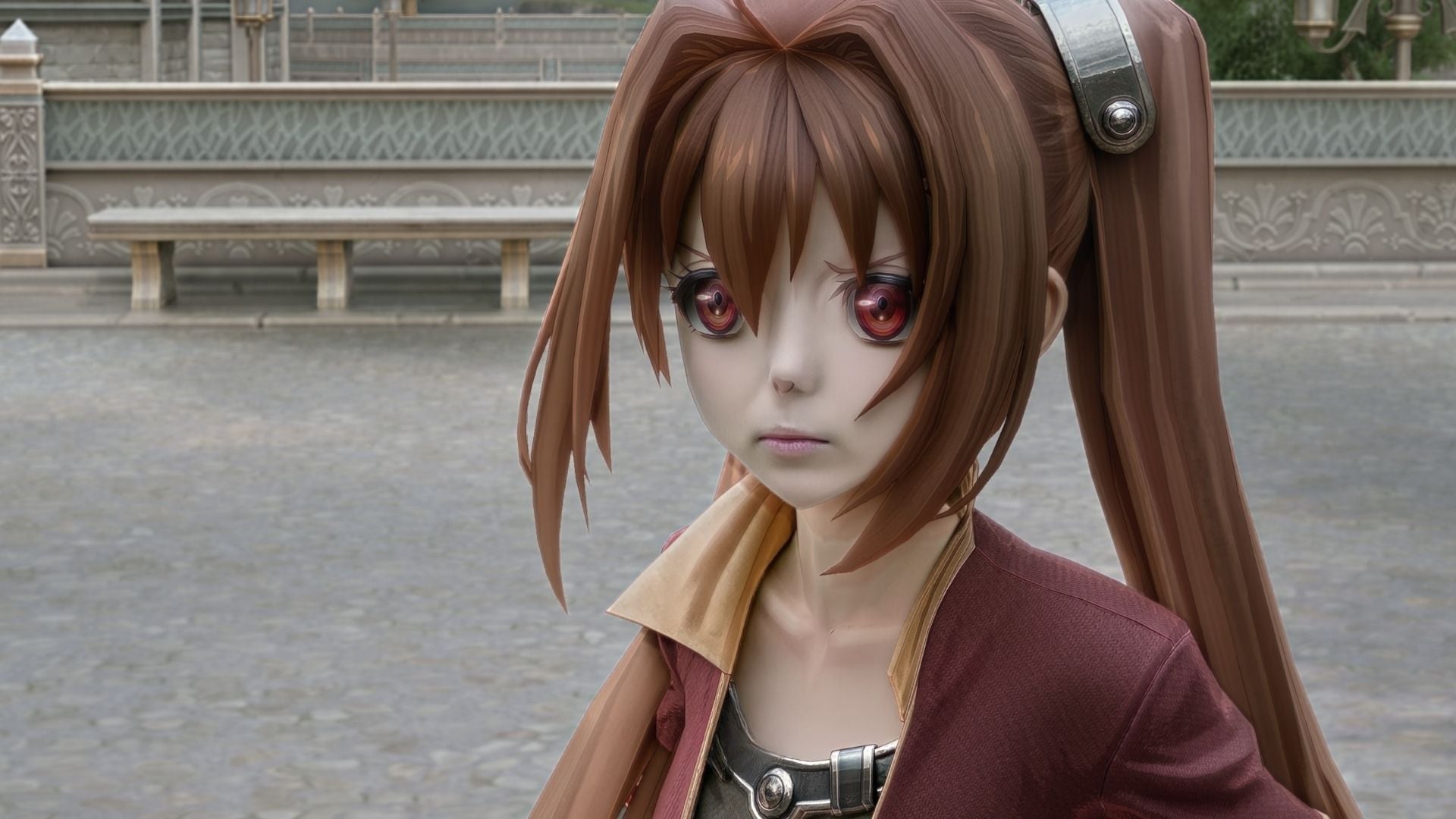
A video of DLSS 5 running on The Legend of Heroes: Trails in the Sky SC looks like the game was done by the same people who made The Annoying Orange.
its not pretty https://t.co/6RpGaCdG5V
— jo (@hatty__) August 30, 2026
The same stink of de-stylization is there, like in this video of the tech working in Kingdom Hearts 3. Sora, Donald, and Goofy have been drained of all color while Riku has been dropped in an uncanny valley so deep not even Kotaku writer Kenneth Shepard would go back for him.
Even the brands couldn’t help but get their licks in like this tweet from Razer.
— R Λ Z Ξ R (@Razer) August 31, 2026
No matter what the game filtered through DLSS 5 looks like, it almost universally results in a dramatic drop in game performance. Some modders have said it cuts framerates in half.
I tried DLSS 5 in Jedi Survivor, and yup, the visuals do look noticeably different. It also cut my performance by more than 50%. 💀…#DLSS5 #JediSurvivor pic.twitter.com/tX6iHvnsut
— NieamArt (BleeeGMV) (@NieamArt) August 28, 2026
Side by side comparison of the New DLSS 5 in Marvel’s Spider-Man 2 pic.twitter.com/BBS5KTVW1I
— dvesf (@dvesf_yt) August 28, 2026
Here is my tests
But fps drops like 60-70% from 130’s to 70’s
The dlss 5 eats the fps like cake https://t.co/FS2YKCuu8l
— Fawaz 🏜️ (@NamelessVillain) August 31, 2026
DLSS 5 isn’t officially slated for release until sometime in fall 2026, but if this is what Nvidia Jensen Huang says is the “most significant breakthrough in computer graphics,” he can keep it.