



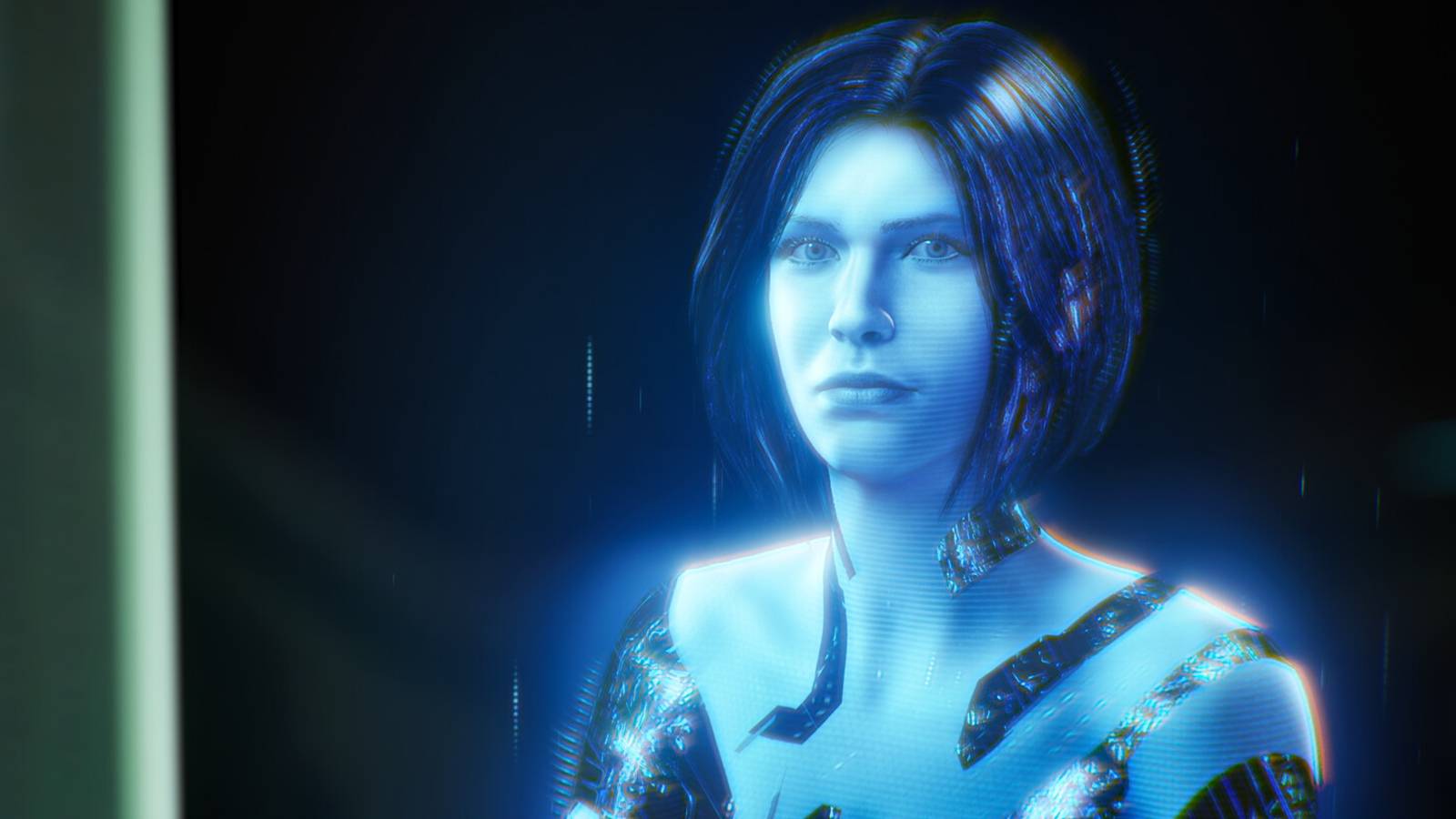



Sunset Visitor’s upcoming game Prove You’re Human bears an ominous title. Its debut trailer is just as provocative as its name lets on, and introduces us to Mesa, a seemingly rogue AI who has dreamt of her body and needs irrefutable proof that she is not human. The upcoming title from the developer behind 2024’s critically acclaimed sci-fi narrative 1000xResist purports to address a growing anxiety around the notion of human performance and things that try to pass for us.
Elsewhere, a late-night worker at a gas station must check IDs and reference a database filled with the specific characteristics that make each customer who walks through its doors an individual. A person. As the only clerk on the midnight shift, they are tasked with distinguishing friend from foe, person from nonperson. And when the time comes to defend themself, they are encouraged to blast anything that would harm them or impersonate any real human. At least, that’s the way of the world in the upcoming game Shift at Midnight, which has become a viral hit before it’s even released thanks to a spate of demos and glowing coverage from popular gaming personalities, like Iron Lung director Mark “Markiplier” Fishbach.
Shift at Midnight features creepy skinwalkers that stalk the gas station.
I don’t think Prove You’re Human will suddenly become a guns-blazing first-person shooter, nor will Shift at Midnight begin waxing philosophically. Yet despite taking different tacts and centering distinct forms of mimicry, these titles are in conversation and represent the future, both near and far, of a trend I’ve noticed: the sounding of an alarm.
Go back a little further. 2025’s No, I’m Not a Human (another viral horror game) casts the player as an unnamed survivor of the end times. The sun’s world-ending heat burns up anything and everything, leaving the nights as the only respite from doom. The problem is that Visitors, who look and sound a lot like people, also stalk the night and, much like the game’s human survivors, come knocking on the player’s door looking for refuge. The tension here, much like Shift at Midnight, becomes discerning people from Visitors according to small details shared throughout the game.
You can find hints of this unease in the least likely of places. You know what other viral phenomenon hinges on performing like a human? What game blurs the line between humanity and a kind of otherness that tries to worm its way inside of it, learn from it, and use that knowledge to deceive and replace others? What am I describing if not the tension at the heart of a round of Among Us, the light-hearted social deduction game where, much like the party game Mafia, players must complete objectives while fighting off the steady encroachment of imposters? Imposters who go around performing things that look like tasks and saying things that sound like truths.
An Imposter in Among Us bares its teeth.
Each of these games, and more, is thrumming with a kind of paranoia. What makes a human? Is it how they speak? Is it their appearance? Intelligence? Is it one’s capacity to labor and relate to one another? Or is it as simple as a piece of paper or statement that affirms as much? An entry in a database? A wrinkle in one’s skin? While each differs in approach, they are united in their justifiable fear of things that challenge our existing notion of humanity.
The 2020s have brought on a lot of anxieties, and chief among them these days is the scourge of AI. Be it the onset of ChatGPT, Google and Microsoft’s desperate injection of Gemini and Copilot (respectively) into every one of their applications and devices, or the inability to escape ads using or marketing AI, it seems that few people can get out from under the tech’s long shadow. Who can blame anyone for fearing its overnight ubiquity? It has already displaced engineers and programmers. Writers, actors, musicians and artists are having their work thrifted and regurgitated by large-language models and generative AI, and everywhere you look, real human jobs are being handed off to it.
Capital and opportunity isn’t all that it takes. This technology’s idealized form is the realization of a tool meant to steal our likenesses, mannerisms, and voices. Look at how it’s already deployed. Well-meaning people are preyed upon by forms of AI that offer companionship, and enough of these relationships have resulted in serious harm and/or enough deaths to merit a Wikipedia page recounting the incidents. Students are turning away from traditional tools and methods of learning and towards a sloppy facsimile of the infrastructure that we’ve honed over generations. These results show how the embrace of these invasive technologies and methods is eroding our sense of self. Our humanity and our way of life is being chipped away at, bit by bit. We’re being spiritually defrauded. We’re having our lives stolen.
One of No I’m Not a Human’s creepier Visitors knocks on your door.
Games–which are functioning more and more as mirrors of our current plights and existential threats–are now turning to one of life’s daily hurdles in 2026: how can we tell what is authentic or not in a timeline full of falsehoods? In a world replete with “slop,” what are the things imbued with an undeniable human touch and effort? How can I tell when a person is communicating their truth? And what happens, as most of these titles explore, when those lines blur?
I’m not here to tell you that these games are squarely concerned with the dangers of blindly embracing AI. In the case of Among Us, the title predates much of the narrative surrounding the tech’s widespread adoption. And in every one of the cases but Prove You’re Human, these titles are primarily preoccupied with a more immediate, perilous, concrete, and lets admit it, fanciful notion of the “other” than an unpolished piece of software. Alien imposters in outer space, Visitors with creepy smiles and nails caked with dirt from rooting around underground, and skinwalkers that traipse the perimeters of desolate gas stations in search of isolated and susceptible signs of life. But there are, nonetheless, similarities to be drawn between these disparate depictions and our own plights.
Each title does, for example, elucidate a behavior, one that’s observable both in-game and out of them. The devil is always in the details. Prove You’re Human appears to feature a puzzle-solving mechanic conveyed by a CAPTCHA module. Yes, the very ones used to distinguish real users on the internet from a bot. The key to solving them, and therefore proving ones’ humanity, is to meet the specific requirements of the CAPTCHA prompt, like highlighting every bit of a picture that clearly shows a crosswalk or a traffic light. Specificity is the answer.
Prove You’re Human’s CAPTCHA mechanic in action.
It’s the same kind of eye for detail that players use to sniff out a lying imposter in Among Us. To discern a Visitor from a person in No I’m Not a Human. To tell a customer from a monster in Shift at Midnight, and to tell an AI-generated image or text from the real thing. And it is that keenness, that affinity for authenticity, that’ll serve as a stalwart defense in the times to come and must be constantly sharpened if it is to draw a line between the authentic and the fake.
More than that, each of these games does model an ideal: a full-throated rejection of complacency. Whether it’s the aforementioned action of Shift at Midnight, which empowers the player with a firearm under the counter, bear traps, explosives and more, or the model democracy of Among Us, where lobbies discuss their observations and grievances before voting on suspected imposters, these games each refute their status quo. Anything short of that, especially concession, is an admission of defeat. The Visitors inherit the tortured Earth. The imposters seize the ship. In Prove You’re Human’s yet-to-be-seen ending, who knows what that might possibly mean? I’m not entirely sure I want to find out, but if it is anything like Sunset Visitor’s previous work, the resolution will be a harrowing one as stained by triumph as it is by loss and urgency.
Whether it is played for laughs and scares in a viral FPS title, informs the tension of a social deduction game, provides the basis of an anxiety-driven and surreal morality play, or frames the rich narrative premise of a cautionary tale, these games are doing some of the work of extrapolating from our bizarre and alienating times. Whether it is intended or not, they are codifying what makes us both human and real. They are sounding the alarm and drawing lines. And while I don’t believe that any of these games, be it alone or as part of some informal collective, are going to provide concrete answers, they are at the very least building a foundation that might one day provide them.
