









As a longtime Final Fantasy fan of nearly three decades, I’m always on the lookout for another great JRPG to sink my teeth into. They can be a bit hit or miss, though, and, for myself, that largely depends on the story and characters. A JRPG can have great, innovative gameplay, but if the context surrounding it feels dead and meaningless, I find it difficult to get invested. Fortunately, that’s something that Final Fantasy has, historically, executed very well, and its anime cousin Tales Of—another great JRPG love of mine—has done the same. That’s ultimately why Artisan Studios’ Lost Hellden is now on my Steam wishlist, especially given the team of artists they’ve put together for the game’s development.
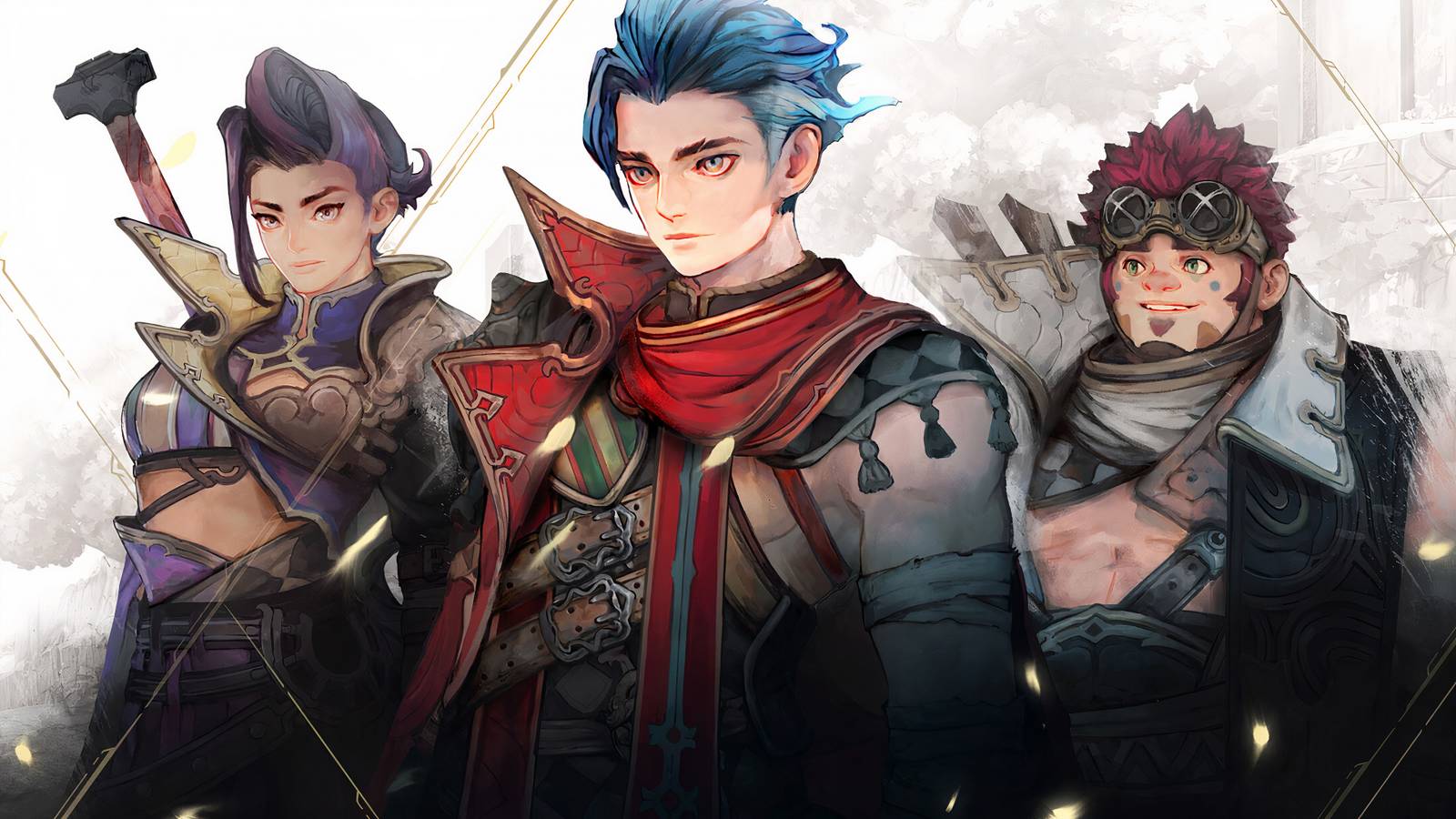
Currently slated for a 2026 release on Steam, Lost Hellden is an upcoming action JRPG with some major Final Fantasy meets Tales Of vibes. In paying homage to the golden era of PS1 JRPGs, it allows players to play inside a living painting, where a gorgeous, anime oil painting-inspired world awaits them. With involvement from some of the industry’s best JRPG talent—like Hitoshi Sakimoto (Final Fantasy 12, Final Fantasy Tactics, Valkyria Chronicles) and Takeshi Oga (Gravity Rush)—it already sounds like a promising entry for the genre, but even a small glimpse of its story and gameplay are where that sentiment really starts to take hold. Needless to say, as a massive fan of Final Fantasy, Tales Of, and all things JRPG, I am personally already sold on it, even if it is just nostalgia fueling those hunger pangs.
JRPG Fans Don’t Want to Miss Out on May 28’s New Event
Taylor Hoyt’s Indie Quest is back on May 28, bringing a wave of indie JRPG trailers, brand-new reveals, and host of surprises in tow.
Lost Hellden Feels Like a Love Letter to JRPGs like Final Fantasy and Tales Of
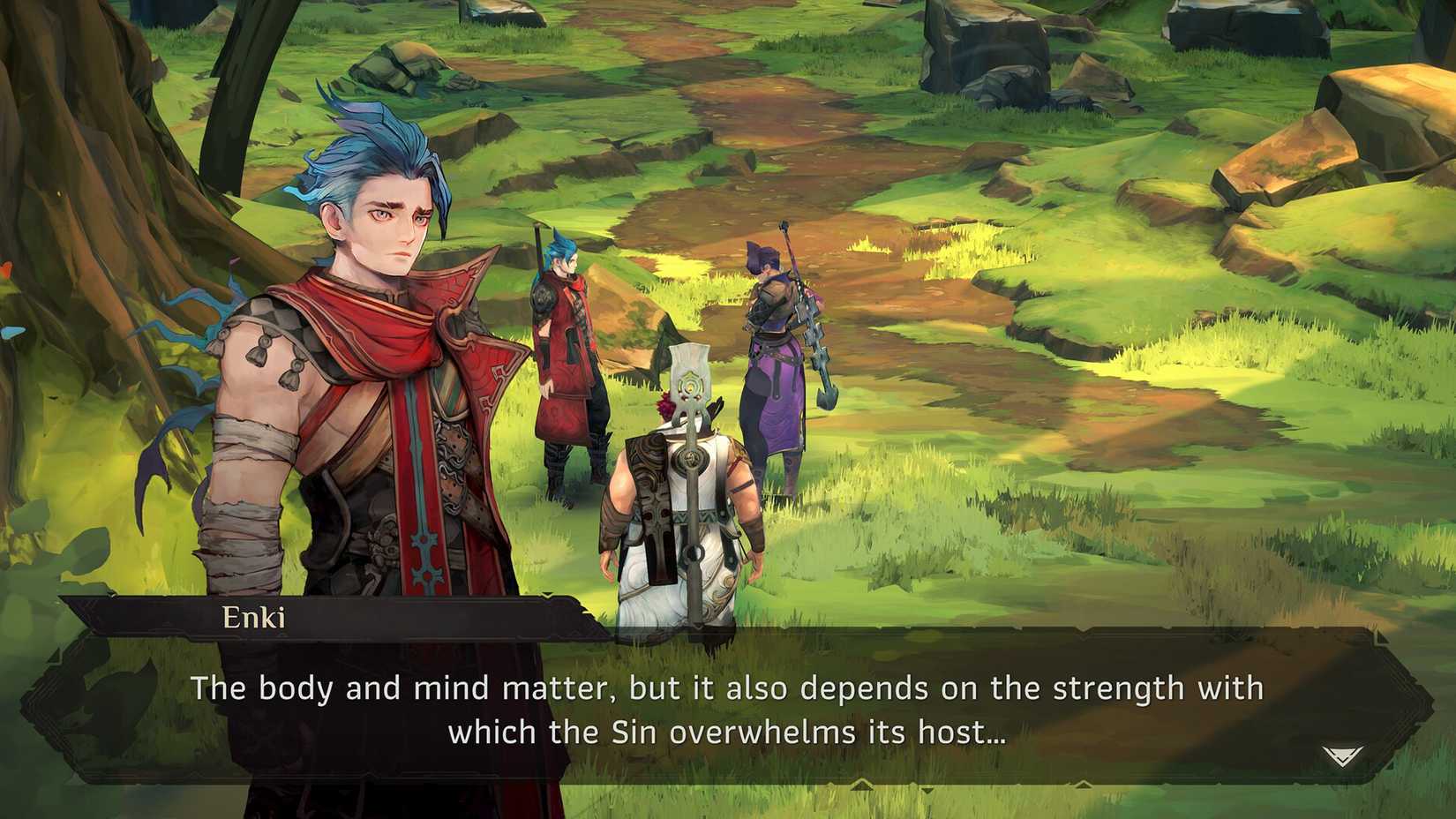
Lost Hellden takes place in Era, a world governed by the religion of Unio, where every person is bound to one of the Seven Deadly Sins and taught that resisting those urges will earn them eternity in the sacred land of Hellden. Those who give in, however, suffer a fate worse than death, which makes the birth of twins Cyphel and Leht especially troubling when the binding ritual fails. Cyphel is born without sin, while Leht is bound to all seven, forcing both children to be hidden away in the Unio Temple and raised as Arkhons, defenders of the faith.
Years later, Leht escapes in an attempt to overcome the burden placed on him, and Cyphel is forced to leave the only home he has ever known to find his brother. What begins as a personal search soon pulls him into a wider conflict filled with monsters, rebels, and celestial conspiracy, shaping Lost Hellden into a story about family, fate, and the difficult process of discovering who someone is beyond what the world has told them to be.

Lost Hellden Sounds Like the JRPGs of Old
Lost Hellden‘s premise feels very much in line with the PS1 golden era of JRPGs, particularly games like Final Fantasy 7 and Chrono Cross. PS1-era JRPGs loved stories where a character’s identity, origin, or destiny turned out to be tied to the world’s hidden structure. Final Fantasy 7 sends Cloud after Sephiroth and the truth, with Square Enix’s current character profile even making that journey out to be one that leads him to defy destiny itself. Chrono Cross sees Serge discovering an alternate reality where he died as a child and trying to uncover why the two worlds diverged, which gives it a similar “personal mystery becomes cosmic problem” shape.
Lost Hellden features full English and Japanese voice acting as well, which could take its storytelling up a few notches if it delivers.
Lost Hellden appears to be working from that same playbook, with Cyphel’s search for Leht gradually pulling him into a conflict that is much bigger than his family. It’s a clean, dramatic premise with a very PS1-style promise underneath it, because you can almost already sense that the truth of Cyphel and Leht’s condition probably says something much darker about Era itself. However, within the context of its story and world, Lost Hellden has some great-looking gameplay I can’t wait to experience firsthand—specifically, its combat and exploration.
Lost Hellden’s Key Gameplay Features
- EIGHT HEROES – A highly customizable party journeys through Era and beyond.
- CHARACTER BUILDS – Jobs, skill trees, abilities, and equipment shape progression.
- PHASED COMBAT – System that balances real-time and turn-based mechanics.
- PARTY STRATEGY – Timing, positioning, elements, and team commands matter.
- DYNAMIC WORLD – Weather affects combat, NPCs, and locations.
- HEXAKEN MINIGAME – An in-world card activity adds optional side content.
For starters, Lost Hellden features eight “highly customizable” characters that players can fine-tune to ensure they succeed in battle. With a “multi-layered job system, ability tree, and a wide range of equipment options” that each character can take advantage of, it almost feels closer to a structure like Fire Emblem‘s than Final Fantasy‘s, as modern mainline Final Fantasy games have been moving away from the open-ended character customization that defined many of the older entries.
Lost Hellden’s Character Customization Goes Deep
While the full extent of Lost Hellden‘s character customization isn’t completely clear yet, the handful of images shown in the gameplay trailer make the ability tree (Ascension Tree) look like a smaller version of Final Fantasy 10‘s Sphere Grid. There, players can unlock various abilities to use, as well as Support Abilities, which appear to be passive buffs. These abilities can then be equipped and set to key/button shortcuts for quick use during combat.
Every character in the game can be equipped with one weapon, one armor piece, and two accessories as well, each of which influences how effective a character is in eight different stats, and a variety of elemental affinities and status immunities. Finally, characters in Lost Hellden can have an active Base Job that determines what abilities are available in their Ascension Tree, and an Advanced Job that can take that customization further—though unlocking it comes with special requirements.
Lost Hellden’s Combat Balances Real-Time Action and Turn-Based Mechanics
Of course, all of that customization will eventually need to be put to use, and that’s where Lost Hellden‘s combat comes in. Within two distinct phases—Action and Reaction—players can take advantage of the game’s balance of real-time action and turn-based combat mechanics to conquer their foes. The game’s combat in general also resembles the Linear Motion Battle System of the Tales Of series, as Lost Hellden‘s battles take place in a separate arena where players can move around in real time.
During the game’s Action Phase of combat, players can move and change characters freely, all while performing basic attacks and executing abilities. In this phase, enemies will react to the player’s actions, but they won’t retaliate. Players can also open the menu and play Lost Hellden like a classic turn-based game, or they can put the controller down altogether by issuing Team Orders.
One of the more fundamental aspects of Lost Hellden‘s combat sees players exploiting enemy weaknesses in order to Pressure them, temporarily paralyzing them and increasing the amount of damage they take—similarly to how Final Fantasy 7 Rebirth‘s combat system works.
Once the player’s actions have been exhausted during the Action Phase, the Reaction Phase of Lost Hellden‘s combat begins. In this phase, enemies can attack the party, but players still have full control over each character’s defensive maneuvers if they wish. While they can’t attack and use abilities freely, they can parry, dodge, and counterattack in response to the enemies’ actions. The system overall seems to be a great way of ensuring fans of real-time combat and turn-based mechanics get the best of both worlds.
Lost Hellden’s Dynamic Weather and Card-Based Mini-Game Are Added Bonuses
Finally, Lost Hellden features a dynamic weather system that can impact the world in various ways. While it hasn’t been outlined in explicit detail, according to the game’s Steam page, the weather system can impact “battle, NPCs, and locations.” Considering its tie to combat and the implementation of elemental affinities in Lost Hellden, it’s safe to assume that something like rain might affect water or electric-based attacks and abilities.

Lost Hellden also features a tactical card-based mini-game called Hexaken, which should undoubtedly appeal to fans of Final Fantasy 7 Rebirth‘s immensely popular Queen’s Blood mini-game. The game’s rules haven’t been explained yet, but it should nonetheless be a decent side activity for players when they’re not downing foes in combat or progressing through Lost Hellden‘s mature story.
Lost Hellden Is the JRPG to Keep an Eye On for Final Fantasy, Tales Of Fans

At this point, I don’t need Lost Hellden to reinvent the JRPG to be excited about it. Honestly, part of its appeal is that it seems to understand what made so many of the genre’s older classics stick with me in the first place: a strange world, a dramatic premise, a customizable party, and combat that gives me more to think about than simply mashing through encounters.
Maybe Lost Hellden ultimately ends up being more familiar than revolutionary, but if Artisan Studios can deliver on even a good portion of what it’s shown so far, I have a feeling my Steam wishlist may have just made room for one of 2026’s most promising JRPGs. Steam currently lists it for a 2026 release and describes it as an action JRPG with a hand-painted 3D art style, a vast world, and a phased battle system blending turn-based and real-time combat.
Lost Hellden launches on Steam in 2026.


