



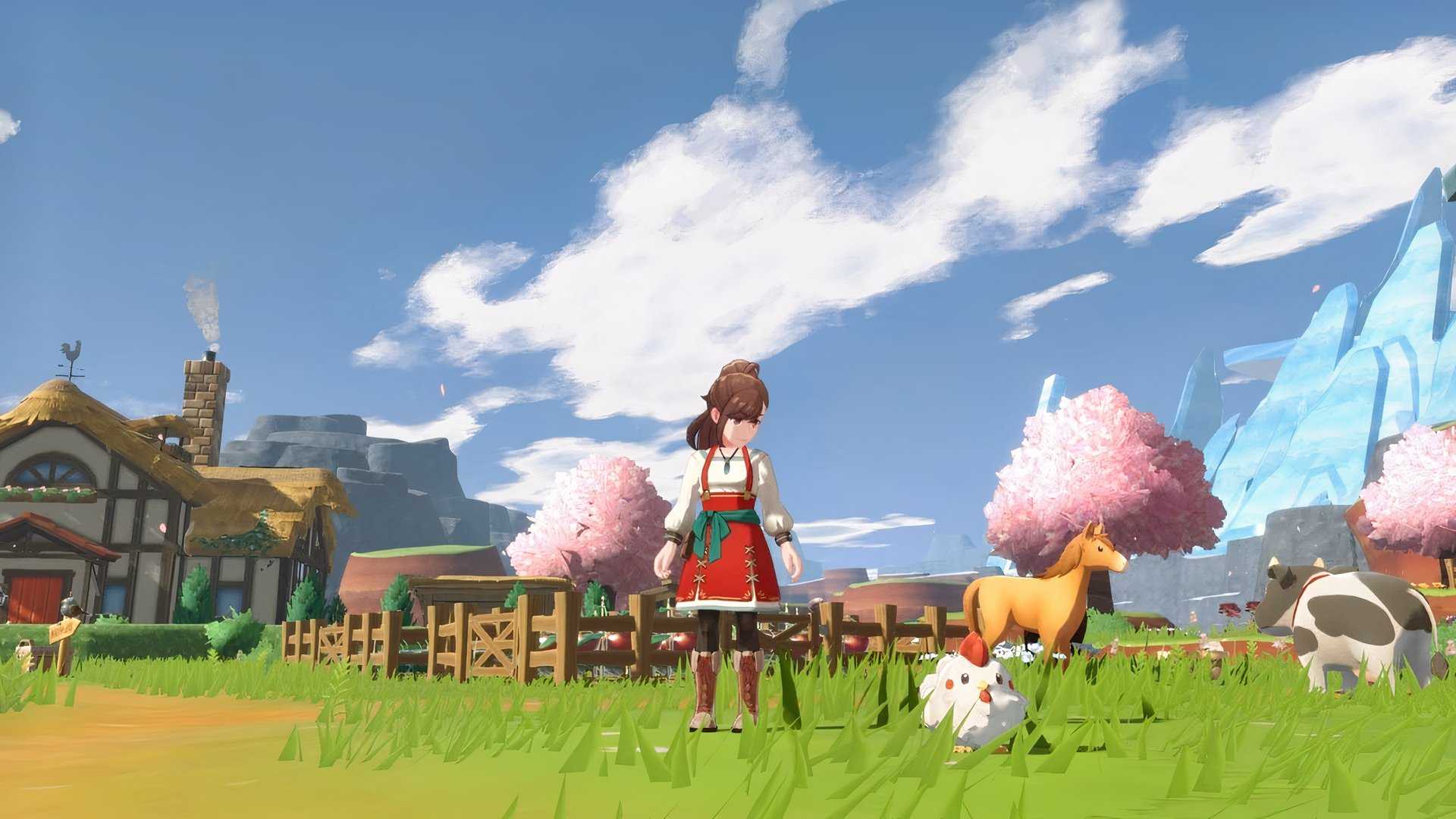
Natsume’s latest addition to the Harvest Moon franchise, titled Harvest Moon: Echoes of Teradea, is set to release October 15, 2026 on a slew of consoles, including the Nintendo Switch 2. Harvest Moon: Echoes of Teradea is a farming simulation meets role-playing game famed for its cozy atmosphere and quaint narrative that usually places a character smack-dab in the middle of a little town bracketed by forests and farmland.
The usual goal in these games is to build their farmland, sometimes from the ground up, tend to livestock, grow and sell crops, and interact with the townsfolk of an adjoining village. This time, however, Nastume and developers at IMAGICA GEEQ have gone and flipped the script with this new release, changing the tone with an open-world spin. Many mechanics from past games remain, from fishing to romancing townsfolk, but the open world gives me pause. While I won’t know for sure until the game is released, Harvest Moon: Echoes of Teradea seems like a hollow echo of what Harvest Moon once was, losing that quaint cozy atmosphere in favor of a grand explorative adventure.
Harvest Moon, at Its Core, Is About Making Connections
-
-

-


The latest title is open world, but the concept isn’t new for the franchise. The people at Natsume have been playing around with the concept in more recent Harvest Moon games, including Harvest Moon: The Winds of Anthos from 2023 and Harvest Moon: One World from 2021. Welcomed or not, the shift to an open world changed the perspective of the farm life series to exploring a large world, which was not something the game was originally built upon.
Who’s That Character?

Identify the silhouettes before time runs out.
When I first began playing Harvest Moon, specifically Harvest Moon: Friends of Mineral Town all the way back in 2003, I was excited about the prospect of starting fresh in a tiny village with farmland that was handed down to me from some unknown relative. I eagerly explored my surroundings, but never felt limited by the sandbox or farming simulator style that was whittled down to a few key areas.
Welcomed or not, the shift to an open world changed the perspective of the farm life series to exploring a large world, which was not something the game was originally built upon.
If anything, I was able to better understand my surroundings and create a routine for my little sprite. I’d know where to find my favorite villagers, and my farmland was easy to traverse. Suddenly, I was no stranger to the folks in my town. The small scale allowed for camaraderie by proximity. I’d visit town every day, make connections with all the villagers, attend events, and step outside of myself to embody my character—something I feel all good RPGs should accomplish.
At its most basic form, stripping away all the farming, fishing, and horse training, Harvest Moon is about creating a life for yourself and making connections with the villagers around you. It is my belief that players can’t accomplish that to their full potential when the world is jam-packed or too big. Open worlds are vast, meant to make players feel lost on a scale they can’t possibly begin to conquer, but the world isn’t tight-knit or cozy any longer. Instead, the atmosphere is now rather daunting and expansive. With so much to do and see, from the promised expansive mining to exploring diverse regions, players can and will get lost in the weeds.
While Open Worlds are “Open,” Players’ Destinies are Pre-Determined
Sandbox or sandbox-esque games like Harvest Moon essentially throw out the script, allowing players like myself to build their worlds, break them down, and create connections. I can create attainable goals for myself, relying on imagination to build my world the way I see fit. If I want to have 18 chickens by the end of the first week on my farm, I can do that. If I want to romance my favorite villager, but only after I’ve upgraded my home to accommodate them, that is an option I can do on my own terms. Often, open-world games are fixed with a concrete goal, relying on quests and points on a map to guide the narrative. The freedom is there, but limited to a specific path.
Open-world games also offer a finished map, but tools are not given to make changes to said map. In a standard Harvest Moon title like Harvest Moon: A Wonderful Life or Harvest Moon: Back to Nature, I can change the set surroundings, dig holes, paint and upgrade my house, build larger structures, and even make changes to the town I live beside without many restraints. While open worlds are “open” as far as surroundings go, they can be limiting for those reasons, depending on the title.
Sandbox or sandbox-esque games like Harvest Moon essentially throw out the script, allowing players like myself to build their worlds, break them down, and create connections.
The beauty of OG Harvest Moon games is the sense of adventure and accomplishment gleaned from a tiny world. I built my farm from the ground up with no help. I made a name for myself in the town beside my farm, and I romanced an NPC I really loved after grinding hard to get my affection score up. Small wins contained in a sandbox world feel tangible and real because the scale is smaller and more manageable. I also get to choose my own destiny by how I play my game. That means no forced story to steamroll my creativity or sense of wonder.
I am a longtime fan of Harvest Moon. I can’t say for certain that I know how Harvest Moon: Echoes of Teradea and its open world will play out. I expect a specific vibe from the Natsume franchise, and what it has become is quite different from where it began. Maybe I dislike change, but maybe these changes were made to expand my mind about what a Harvest Moon game can be.
Harvest Moon: Echoes of Teradea, the next entry in the Harvest Moon franchise, is coming to Nintendo Switch 2, Nintendo Switch, PlayStation 5, Xbox Series X|S, and Steam on October 15, 2026.