


The roguelike genre has been seeing an increase in interest lately on Steam thanks to the explosive early access launch of Slay the Spire 2, which has already completely shattered player count records and drawn hundreds of thousands of players back into the deckbuilding gameplay loop established by its predecessor. With that kind of attention focused on the genre, now is as good a time as ever to start looking at other roguelike games that feature a similarly chaotic blend of luck, strategy, and ultimately, long-term replayability. As it turns out, Indieklem’s Another Door is currently slated to launch on Steam this year, and its intriguing approach to the roguelike formula makes it look like it could be a standout addition to Slay the Spire fans’ libraries.
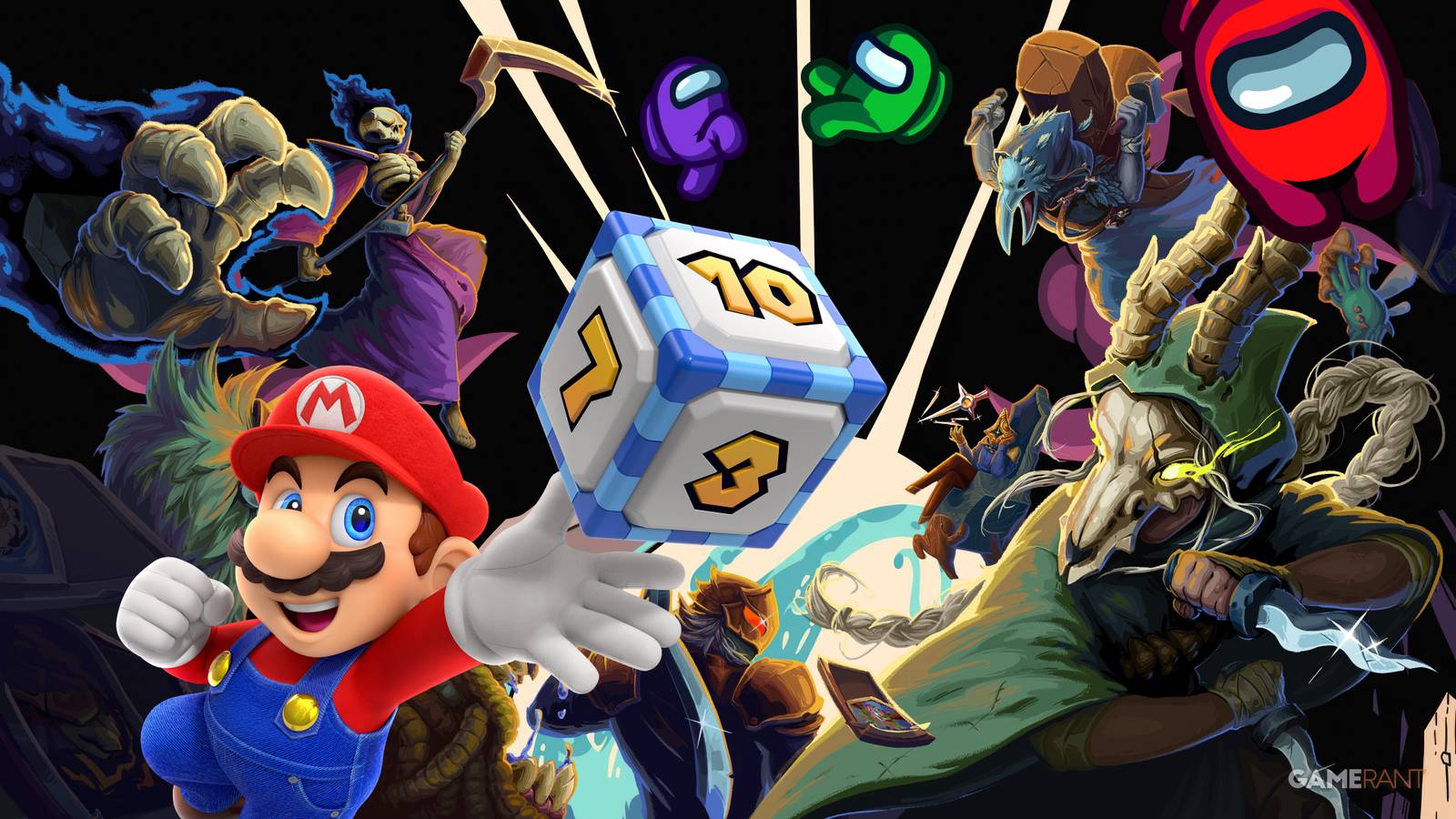
Slay the Spire is the easy comparison though, on account of Another Door‘s roguelike roots, but it also interestingly shares a bit of DNA with party games like Mario Party and Among Us. Now, with Another Door currently planned to arrive on Steam sometime in 2026, that unusual mix of roguelike structure and party-game chaos could make it one of this year’s more interesting upcoming indie releases.
Another Door Brings Social Deduction to Slay the Spire’s Rougelike Loop
Another Door is an upcoming roguelike party game that incorporates bluffing, gambling mechanics, and social deduction into the procedurally generated gameplay typical to the genre. Rather than making success come down to solo strategy, the game puts players in a semi-cooperative adventure where allies can just as easily become enemies depending on how the run unfolds. The result looks like a strange mix of Among Us‘ iconic social deduction, Mario Party‘s party-game unpredictability, and roguelike decision-making that could appeal to fans of several wildly different genres all at once.
Who’s That Character?
Identify the silhouettes before time runs out.

Identify the silhouettes before time runs out.
Easy (7.5s)Medium (5.0s)Hard (2.5s)Permadeath (2.5s)
Another Door’s Features at a Glance
- SEMI-COOPERATIVE ROGUELIKE PARTY GAME – Combines roguelike progression with social, board-game-style multiplayer.
- BLUFFING AND HIDDEN INTENTIONS – Players secretly choose actions and reveal them at key moments.
- COOPERATION OR BETRAYAL – Alliances can help survival, but deception can secure victory.
- RISK-BASED GAMBLING SYSTEM – Decisions revolve around luck, betting, and risk management.
- SUPPORTS UP TO FOUR PLAYERS – Supports multiplayer sessions both locally and online.
- PROCEDURAL RUNS AND EVENTS – Random encounters and effects ensure no two sessions play the same.
- CHOICE-DRIVEN ENCOUNTERS – Every event forces players to make strategic or moral decisions.
- UNIQUE POWERS AND CHAOTIC MODIFIERS – Special abilities and random effects can shift the balance between players.
Another Door’s Namesake Is at the Core of Its Roguelike Gameplay
Another Door is built around a roguelike structure that should feel familiar to fans of games like Slay the Spire, and now, its sequel. Each session plays out as a run where players move forward step by step, encountering enemies, events, and decisions that ultimately decide the outcome of the whole journey. The twist is that those decisions are rarely straightforward. Players will constantly have to choose between whether to push their luck for better rewards or stop while they’re ahead—a hallmark of roguelike design.
The roguelike influence is clearest in Another Door‘s namesake mechanic: its mysterious doors. Rather than following a single path, players are required to choose which doors to open as they move forward, with each one leading to a different encounter, reward, or otherwise unexpected consequence. Some doors might offer valuable resources or helpful abilities, while others could present players with difficult dilemmas or dangerous enemy encounters. That’s the gamble that roguelike fans tend to love, which means they may not want to overlook Another Door as its launch comes closer.
Another Door Thrives on Chaos, Dishonesty, and Manipulation
Even though it’s pretty standard when it comes to its roguelike gameplay, however, Another Door quickly separates itself from other games in the genre by introducing a heavy multiplayer component that makes it less about pure strategy and more about player interaction. The game supports up to four players either online or locally, where friends secretly choose their actions before revealing them all at the same time. This hidden choice system means that even the best strategy can fall apart if someone at the table decides to betray their allies at the worst possible moment. But let’s be honest—betrayal always happens at the worst possible moment.
And, of course, that’s where the influence of Among Us is arguably even more apparent. Rather than merely competing for the highest score or lasting the longest in the game, players in Another Door are encouraged to hide their intentions and manipulate the expectations of the group. With decisions remaining secret until the last possible moment, players are free to bluff, mislead, or even outright lie about their plans while trying to convince others to trust them. When those hidden choices are finally revealed, alliances can dissolve instantaneously, creating the kind of tense social drama that has made deception-driven games like Among Us so popular in recent years.
Your relationships with others can save your skin, or on the contrary, lead to your downfall. Honesty is one option, lying is another. How many betrayals can you accept before ending your friendship?
That’s also where the comparisons to games like Mario Party make sense. Like many party games, Another Door‘s gameplay relies on those unpredictable moments where luck, risk, and other players’ decisions can drastically change the outcome of a round. Players might cooperate just long enough to get past a certain encounter, only to then make a last-second move that shifts everything in their favor. As unfortunate as it is to be on the opposite end of those choices, it’s the exact kind of thing that makes party games so entertaining in group settings, and Another Door is building itself around that same type of chaos and unpredictability.
With Another Door currently scheduled to launch on Steam in 2026, it remains to be seen how well all of these ideas will come together once players finally get their hands on it. Still, the concept alone is intriguing. By combining the roguelike progression of games like Slay the Spire with the social tension of party and deception games like Among Us, Another Door is attempting something that relatively few, if any, roguelike games have explored before. If it manages to balance those elements successfully, it could end up offering Steam players a roguelike experience that feels very different from anything currently dominating the genre.
Another Door is currently slated to launch on Steam in 2026.