





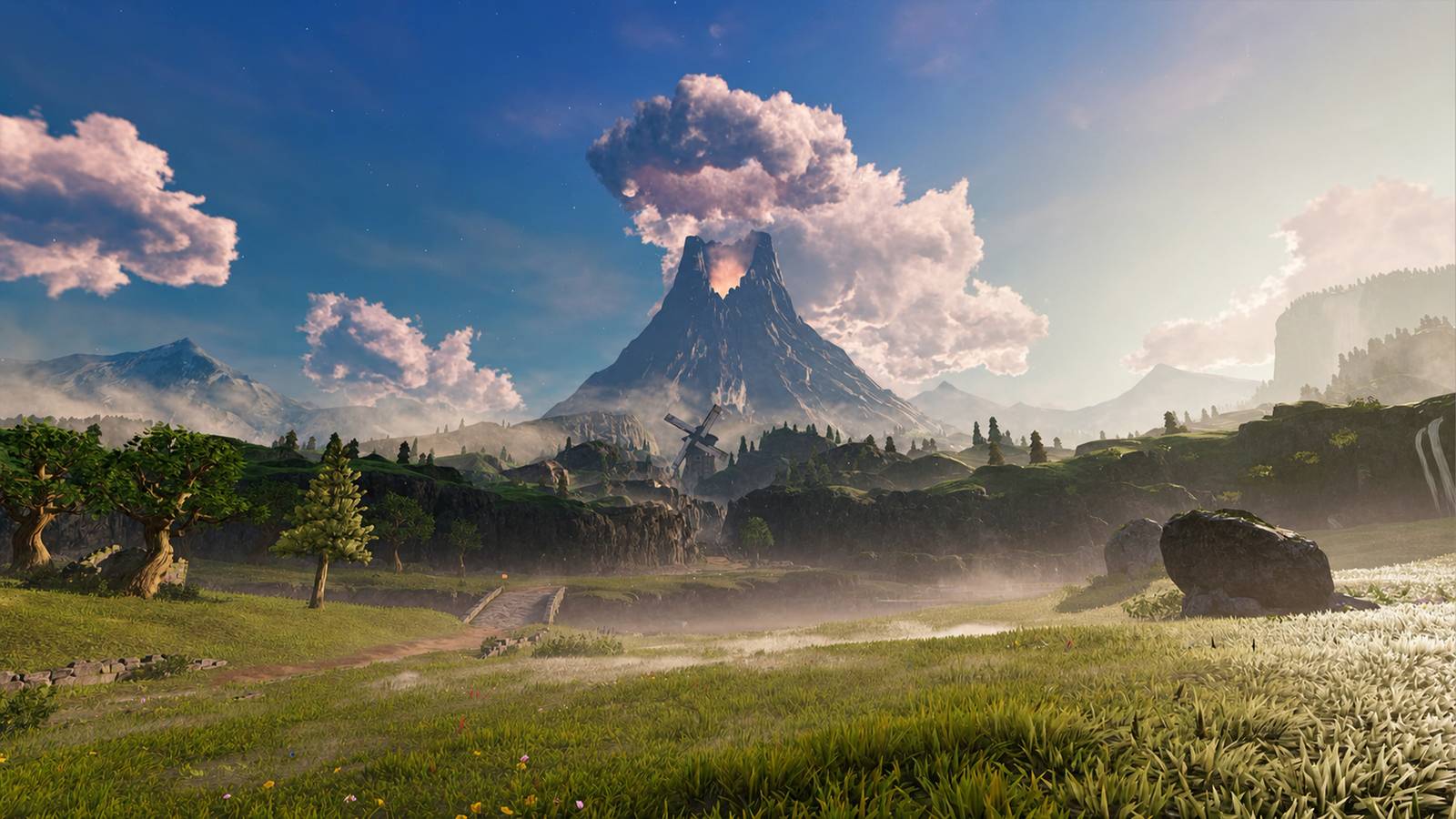
After watching Zelda series producer Eiji Aonuma play through a bit of the upcoming Ocarina of Time remake on Switch 2 during the franchise’s dedicated 40th anniversary Nintendo Direct, all I really want to do right now is play it. If you’re able to ignore the haters who took one glance at it and were immediately disgusted (or so they say) by what they saw, you’ll see a gorgeous reimagining of what is widely considered one of the best video games ever made, and if you’re a dedicated Zelda fan like myself, you’re probably dying to play it as well. A lot of this likely stems from how the footage of the remake made many of us who grew up with the original feel, as we’ve been waiting for a chance to play our favorite Zelda game for the first time again, and the Ocarina of Time remake might finally give us that chance.
It’s not just the considerably improved visuals and performance that are going to contribute to that second chance, though, as the remake also comes with some much-needed quality-of-life improvements that are bound to enhance the experience tenfold. For one thing, the Ocarina of Time remake has improved the N64 classic’s infamous inventory management dramatically, allowing players to select tools and items via a wheel rather than requiring them to open the menu first and manually swap things in and out. However, that is one upgrade I expected to see, since inventory management was already such an issue in the original game. Another quality-of-life improvement, on the other hand, is one I didn’t expect, and it fixes one of Ocarina of Time‘s most annoying exploration problems. In fact, it’s probably one of those fixes that only hardcore fans might recognize, but it nonetheless goes an incredibly long way.
The Ocarina of Time Remake Seems to Have a Longer Day-Night Cycle
Let me start off by saying that I have no way of proving whether the upcoming Ocarina of Time remake actually has a longer day-night cycle, but purely based on what I saw during the 40th anniversary Direct, I’d put money on that being true. To be fair, though, the original game’s day-night cycle was a mere 4 minutes and 2 seconds long, meaning it would only take just over 4 minutes for the sun to go down, and then another 4 minutes for it to come back up again. As such, it wouldn’t take much at all for the remake to have a longer day-night cycle. It really doesn’t have to try that hard to beat 4 minutes.

Put the consoles in the correct order.
Now, to anyone who is unfamiliar with the original N64 game, the remake having a longer day-night cycle might not sound like a very big deal. But trust me—it is. On the Nintendo 64, stepping out into Hyrule Field for the first time felt incredible. It was vast, open, and the heroic soundtrack is enough to make anyone go explore to their heart’s content. The only problem is that the day-night cycle was so short, that it would be dark before you even made it anywhere.

Of course, the world being dark might not sound like too much of a hindrance. After all, it doesn’t even get too dark to see at night in Ocarina of Time. But, first of all, when the sun goes down in this game, dangerous Stalchildren appear in Hyrule Field, and even after you’ve managed to take down the first group, it’s not long before another group appears. It’s more of a slight annoyance than anything else, but it’s enough that you’d much rather explore during the day than at night.
The Original Ocarina of Time Basically Punished You for Exploring Hyrule Field
That isn’t even close to being the half of it, though. One of the main reasons the short day-night cycle in the original Ocarina of Time was such a problem is because the Hyrule Castle Town drawbridge, and therefore the entrance that eventually leads to Hyrule Castle itself, goes up at night, preventing you from getting in. In other words, once night fell, you had no choice but to wait another 4 minutes and 2 seconds if you wanted to get in. Again, waiting a few minutes doesn’t sound like something to sweat bullets over, but once you’ve replayed Ocarina of Time as many times as I once did, it feels like an eternity—and there’s actually a really good reason for that.
In the original game, once you left Kokiri Forest and stepped out onto Hyrule Field for the first time, you were tasked with traveling across Hyrule Field to Hyrule Castle to meet Princess Zelda and receive the next spiritual stone. However, since the day-night cycle was only 4 minutes and 2 seconds long, if you wanted to get to the drawbridge in time before the sun set, you basically had to roll the whole way there, because that was the only way to get Link to move fast enough. Essentially, if you stopped for anything, to look around or explore for a bit, you were basically locking yourself out of Hyrule Castle Town until the next day. Again, maybe a minor inconvenience, but it sure put a damper on exploration nonetheless.
Aonuma even acknowledged players rolling to get across Hyrule Field faster during the preview when he said, “I believe some players even rolled to get around faster.”
The Ocarina of Time remake, on the other hand, seems to have already fixed that issue by lengthening its day-night cycle. Now, I don’t have an exact number for the amount of time that has to pass before the sun goes down in the remake, but purely based on the footage shown while Aonuma was on the sticks, it looked like he had reached the Hyrule Castle Town gates before the sun even reached its midday point. If that’s a true representation of what the actual game will be like, then I’d say I don’t have to worry about rushing my way to Hyrule Castle Town once I’ve emerged from Kokiri Forest.
But a presumably longer day-night cycle isn’t the only way Nintendo appears to be fixing this problem with Ocarina of Time‘s exploration. As shown in the 40th anniversary Direct, Nintendo has added a Dash ability for Link, which allows him to sprint now. In other words, not only is the sun likely to take a bit longer to set in the Ocarina of Time remake, but if you do want to explore a bit before making your way to Hyrule Castle Town, you can sprint there if you happen to be running out of time. Of course, once you get the Sun’s Song, that won’t be an issue, as you can play it on Link’s ocarina and instantly change the time of day. Still, even if the majority of this sounds like a non-issue to you, the Dash function alone fixes the original Ocarina of Time‘s most annoying exploration problem.
And that’s ultimately why I’m so glad Nintendo seems to have addressed this. Having to wait a few minutes for the Hyrule Castle Town drawbridge was never some game-breaking flaw, but it basically punished you for wanting to explore Hyrule Field the first time you stepped into it. Between what appears to be a longer day-night cycle and Link’s new ability to sprint, that shouldn’t be nearly as much of a problem in the remake. Now, when I step out into Hyrule Field for the first time again, I might actually be able to stop and enjoy being there without constantly thinking about that drawbridge going up.


- Released
-
November 5, 2026
- ESRB
-
Everyone 10+ / Animated Blood, Fantasy Violence
- Developer(s)
-
Nintendo
- Publisher(s)
-
Nintendo