

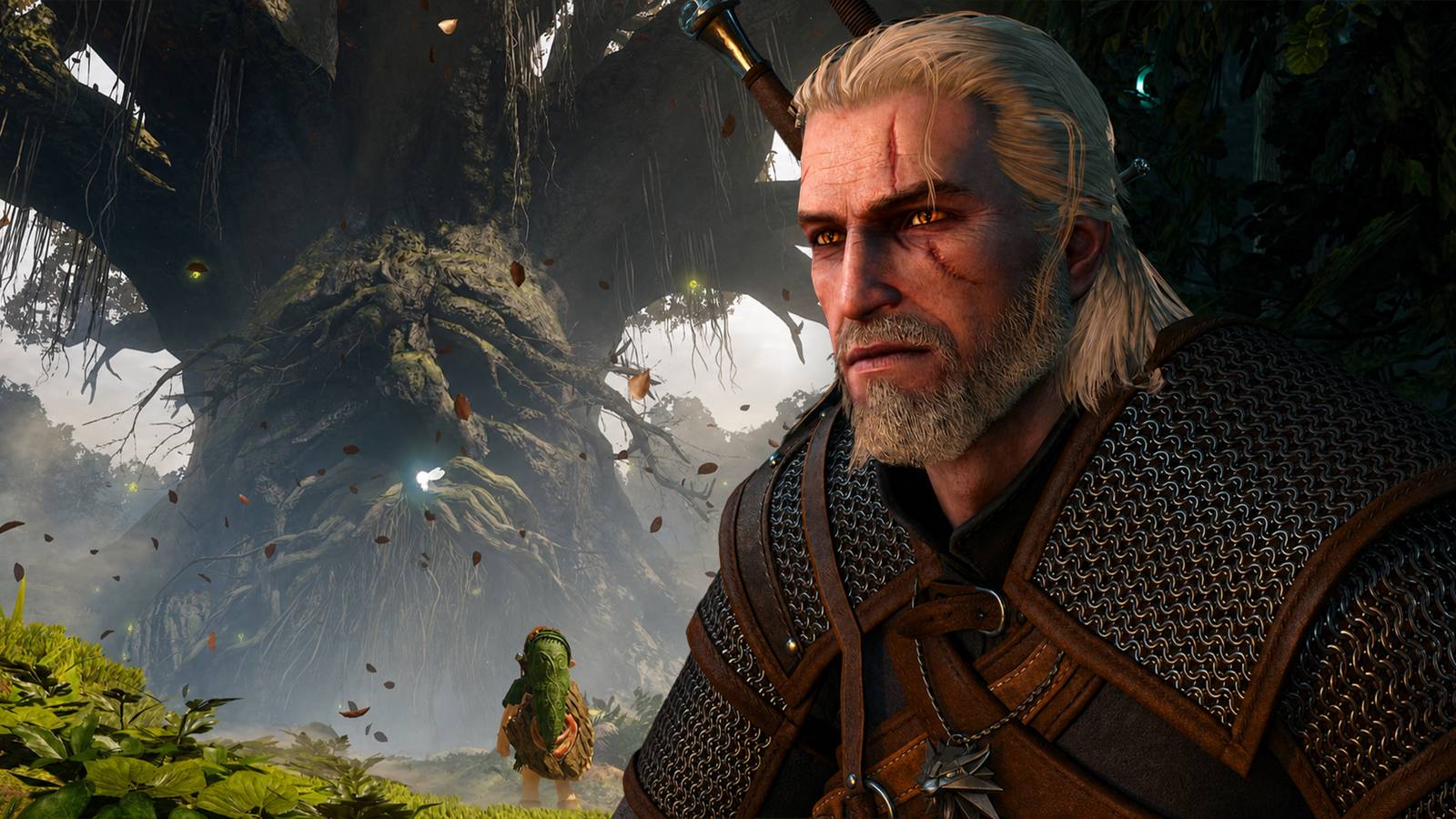
The Witcher 3: Wild Hunt — Remastered and The Legend of Zelda: Ocarina of Time remake are both bringing back two of the most beloved games of all time, but I’ve found myself increasingly confused by what we’re supposed to call them. Obviously, I know one is a remaster and the other is a remake, and there are technical reasons why those labels make sense. But the more I’ve seen of both games, the more I can’t help feeling like their labels are almost backward. Ocarina of Time is being rebuilt from the ground up for Switch 2, whereas The Witcher 3 Remastered is still very much built on top of the game CD Projekt Red released in 2015. Somehow, though, CDPR seems far more willing to mess with what its original game actually did.
That’s not to say Nintendo isn’t changing Ocarina of Time, because it obviously is. This is still a massive visual overhaul with new character models, fully voiced cutscenes, expanded dialogue, modern camera controls, manual jumping, sprinting, a continuous day-night cycle, and plenty of other improvements the N64 game never had. At the same time, Nintendo has been surprisingly careful about changing what sits underneath all of that. CDPR, meanwhile, seems to have looked at The Witcher 3 and decided being one of the most acclaimed RPGs ever made doesn’t mean everything about it needs to be left alone. The result is a remaster that is starting to sound more willing to rethink its original game than a remake of something that came out almost 30 years ago.
The Witcher 3 Remastered Doesn’t Seem Interested in Treating the Original Like a Museum Piece
The biggest thing that caught my attention about The Witcher 3 Remastered wasn’t the improved lighting or textures. Those are obviously important when you’re trying to bring an 11-year-old game forward, but they’re also exactly what I would expect from something with “Remastered” in the title. What I didn’t necessarily expect was CDPR completely redesigning the game’s skill system with reworked skill trees, new perks, new abilities, and changes aimed at giving players more flexibility when building their Geralt.

Put the consoles in the correct order.
That’s a pretty significant part of The Witcher 3 to start pulling apart. Anyone who has spent a lot of time with the game knows how much its progression influences the way Geralt evolves over dozens of hours, so changing that isn’t just making an old menu look prettier. CDPR is effectively reconsidering how one of the game’s core RPG systems works, which is already more than I would normally expect from a remaster.
What I didn’t necessarily expect was CDPR completely redesigning the game’s skill system with reworked skill trees, new perks, new abilities, and changes aimed at giving players more flexibility when building their Geralt.
Combat is getting similar treatment. Geralt has new and reworked animations designed to make closing the distance between enemies feel smoother, the camera can adapt depending on how many enemies he’s fighting, and monster behavior is being updated as well. Movement and traversal are being improved, Roach is getting changes to how she handles, and even enemy pathfinding is part of what CDPR has been willing to revisit.
I don’t think any of that suddenly makes this a remake instead, and I’m not really interested in arguing over where the technical line between the two terms should be drawn. What interests me more is how comfortable CDPR seems to be admitting that The Witcher 3 can still be improved. In a recent interview with PC Gamer, CDPR vice president of narration Marcin Blacha said the game isn’t a “monument” or something “untouchable,” and I think that says a lot about the philosophy behind this whole project.
The Witcher 3 is still going to be The Witcher 3. CDPR isn’t rewriting Geralt’s story or replacing Velen with some completely different version of itself. But it also doesn’t seem afraid of looking at a mechanic that was good enough in 2015 and deciding it could be better in 2026. For a game with “Remastered” in its name, that’s a surprisingly loose grip on the past.
Ocarina of Time Remake Seems Much More Interested in Preserving What Was Already There
Nintendo has almost the opposite problem with Ocarina of Time. The original game is nearly three decades old, so there is obviously a much larger technological gap for the remake to bridge. The difference between the N64 game and what Nintendo has shown on Switch 2 is enormous, especially visually, and there are plenty of changes I’m genuinely excited about. Being able to manually jump and sprint might sound ridiculous to anyone who didn’t grow up rolling across Hyrule Field every few seconds, but I’m absolutely going to appreciate both of those additions.
The Witcher 3 is still going to be The Witcher 3…but it also doesn’t seem afraid of looking at a mechanic that was good enough in 2015 and deciding it could be better in 2026.
The free camera is another big one, especially in places like Castle Town where the original game relied on fixed angles, and I’m interested to see how much the continuous day-night cycle changes the way Hyrule feels now that time doesn’t simply stop in certain areas. Threads of Time should also make it easier for players to figure out where they’re going, while expanded dialogue and full voice acting are going to make this version of Hyrule feel very different from the one I grew up with.
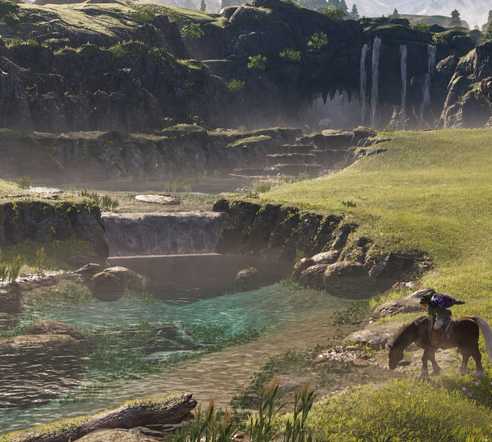
But underneath those changes, Nintendo seems determined to keep as much of Ocarina of Time intact as possible. Firstly, based on the footage we’ve been shown so far, it looks like the original game’s dungeons are still pretty much the same in the remake. But we’ve also already seen recognizable versions of areas like Kokiri Forest and the Great Deku Tree, and Nintendo has even deliberately retained loading transitions between major areas because Eiji Aonuma said the team wanted to preserve the intention of the original game.
That particular detail is where this comparison between Ocarina of Time and The Witcher 3 started getting strange for me. Nintendo has rebuilt Ocarina of Time from the ground up on hardware that obviously doesn’t need those same loading screens, but preserving them was apparently important enough to override the temptation to make Hyrule more seamless. Meanwhile, CDPR is over there redesigning skill trees in a remaster.
Again, I don’t necessarily think either studio has the wrong idea. I’ve already written about how conflicted I am over how faithful the Ocarina of Time remake appears to be, because I’ve played the original more times than I can remember. Part of me wants Nintendo to surprise me with redesigned dungeons and bigger changes to combat. Another part of me knows I would probably complain if the remake started changing too much of what made the original one of my favorite games in the first place.
Nintendo seems determined to keep as much of Ocarina of Time intact as possible.
Still, seeing these two projects side by side makes the difference between a “remake” and a “remaster” feel stranger than it normally does. Ocarina of Time is replacing almost everything I can see and hear while protecting much of the game underneath it. The Witcher 3 Remastered is preserving the game I remember looking at while being much more comfortable changing how parts of it actually work.
Maybe that’s why their labels feel backward to me. Not because Nintendo secretly made a remaster or CDPR secretly made a remake, but because the project with “Remastered” in its title seems to be asking more questions about what should be changed. Nintendo appears to be asking how much of Ocarina of Time it can preserve while still making it feel modern. CDPR seems more willing to ask whether everything about The Witcher 3 deserves to be preserved in the first place. For two games supposedly sitting on opposite sides of the remake-remaster line, they’ve somehow ended up making that line harder to see than ever.
-

The Legend of Zelda: Ocarina of Time
Systems
- Released
-
November 5, 2026
- ESRB
-
Everyone 10+ / Animated Blood, Fantasy Violence
- Developer(s)
-
Nintendo
- Publisher(s)
-
Nintendo
- Number of Players
-
Single-player
- Nintendo Switch 2 Release Date
-
November 5, 2026
-

The Witcher 3: Wild Hunt – Remastered
- Released
-
September 29, 2026
- ESRB
-
Mature 17+ / Blood and Gore, Crude Humor, Intense Violence, Nudity, Sexual Content, Strong Language, Use of Drugs and Alcohol
- Number of Players
-
Single-player
- Steam Deck Compatibility
-
Verified
- PC Release Date
-
September 29, 2026