


Regardless of what anyone says about the way young Link looks, The Legend of Zelda: Ocarina of Time remake is, without a doubt, the best-looking Zelda game ever made. As a long-time Zelda fan, I understand that art style, presentation, and atmosphere are more important than raw visual fidelity, but I still know a good-looking game when I see one—and the Ocarina of Time remake is certainly that. The amount of detail baked into just about every aspect of it is insane to me, as this is about the closest we’ve been to realism in a Zelda game since it began in 1986. This is, of course, thanks to the Switch 2’s unprecedented power, which, despite not being quite enough to compete with Xbox or PlayStation in that regard, is rather impressive for a Nintendo console. But that also means the games it receives have the potential to be much larger in file size, even if they aren’t larger in pure square mileage.
One such case is, as expected, the Zelda: Ocarina of Time remake. Until the next Zelda game launches and potentially challenges it, the upcoming Switch 2 remake of Ocarina of Time is now the largest mainline entry to date in terms of file size. The crazy thing is that it didn’t have to be that large, especially considering the open worlds of Breath of the Wild and Tears of the Kingdom are far larger and more complex than Ocarina of Time‘s Hyrule, and yet it has officially beaten both of those entries in that arena—not by much, mind you, but it has beaten them nonetheless. Now, even though all I can think about is playing the remake once it arrives on November 5, 2026, I’m still thinking about the next mainline Zelda game and what it might look like, now that Ocarina of Time has defined a new set of possibilities, simply with its file size.
Ocarina of Time Remake’s File Size Sets a New Baseline for Zelda on Switch 2
While it’s not the largest Switch 2 game by file size, the Ocarina of Time remake is officially the largest mainline entry in the Legend of Zelda series to date. Of course, this isn’t counting Hyrule Warriors: Age of Imprisonment, which clocks in at 43.5 GB, but it is a spin-off with lengthy pre-rendered cinematics that comprise the bulk of its file size. In fact, some of Age of Imprisonment‘s cutscenes last for as long as 10 minutes, which I can’t see happening in the upcoming Ocarina of Time remake unless they’ve extensively changed some of the original game’s cutscenes. Regardless, the remake is larger than the Switch 2 versions of both Breath of the Wild and Tears of the Kingdom, which could be a sign of where the series is headed next.
Put the consoles in the correct order.
How Ocarina of Time’s File Size Compares to BotW and TotK
- Ocarina of Time (2026) – 24.54 GB
- Breath of the Wild (Switch 2) – 24.1 GB
- Tears of the Kingdom (Switch 2) – 20.1 GB
The most interesting thing about those numbers is that Tears of the Kingdom is actually smaller than Breath of the Wild on Switch 2, despite having the Sky Islands, the Depths, and considerably more to do. That’s not how things stood on the original Switch, where Tears of the Kingdom was the larger download. The difference could come down to how the games’ assets are stored or compressed, or how much was changed for their Switch 2 upgrades. Nintendo hasn’t given us a detailed explanation, but it shows just how little file size can tell us about a game’s actual scope.
While it’s not the largest Switch 2 game by file size, the Ocarina of Time remake is officially the largest mainline entry in the Legend of Zelda series to date.
As for why the Ocarina of Time remake takes up even more space, I think the answer is probably right there in front of us. Just look at it. The character models, environments, and lighting are on another level compared to what we’ve seen from the series before, and all of that extra detail has to be stored somewhere. Throw in the orchestral soundtrack, voice acting, and expanded cinematics, and that 24.54 GB figure absolutely makes sense. We still don’t know exactly how much space each of those things occupies, but I doubt its relatively small world is the deciding factor.

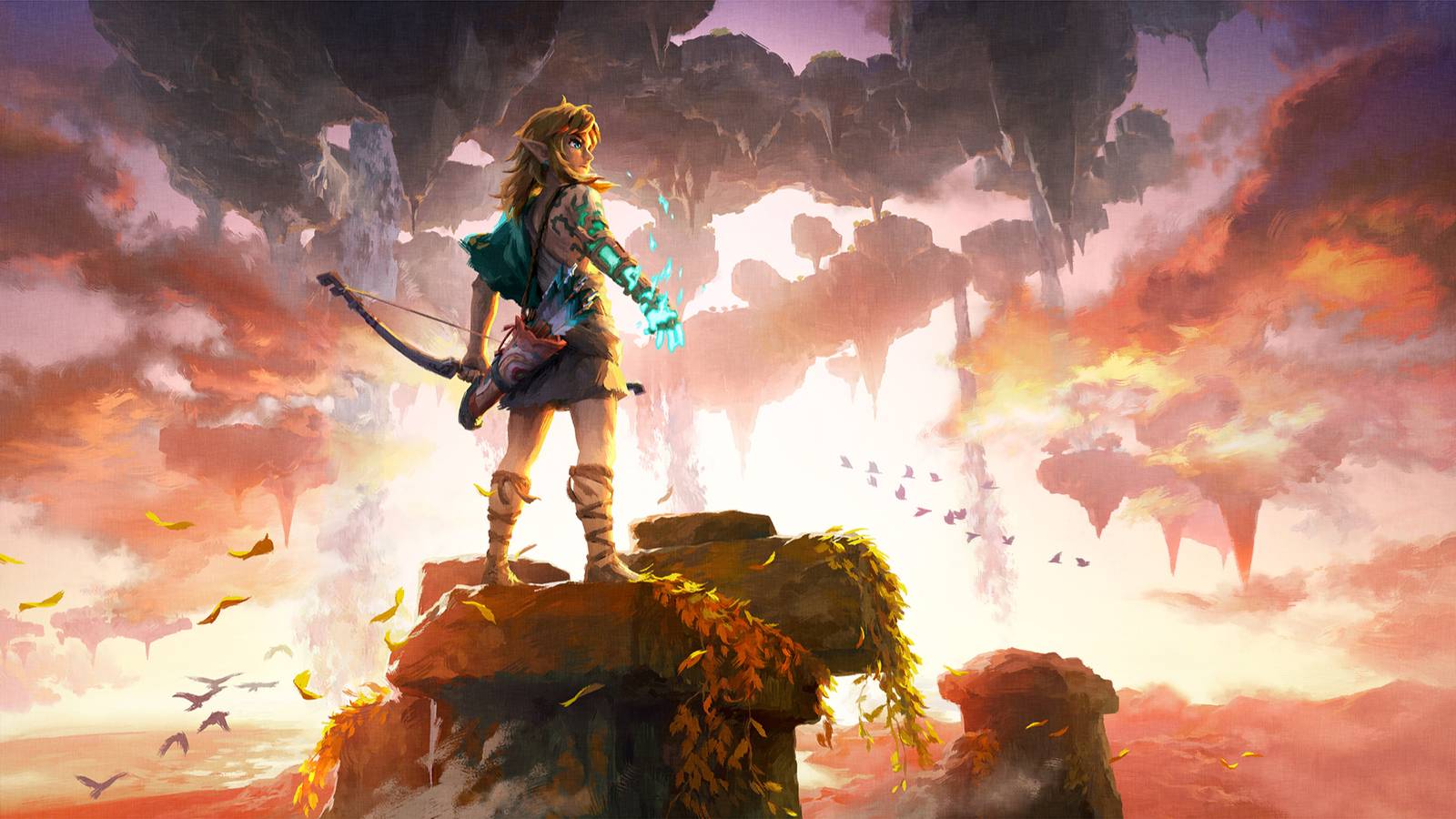
What really gets me thinking is that Ocarina of Time is still a much smaller adventure than either of the last two major 3D Zelda games. Nintendo has taken that world and given it a level of visual detail I never would have expected from the series just a few years ago. So, what happens when Nintendo starts building an entirely new Hyrule with that same ambition? I’m not suggesting the next game is going to have a map as big as Tears of the Kingdom with the remake’s visuals layered over it, but I certainly can’t rule out the possibility anymore.
Ocarina of Time’s Remake Has Me Thinking About Zelda’s Next Big Leap

I don’t necessarily want the next Zelda game to look exactly like this remake, either. I love the art style of Breath of the Wild and Tears of the Kingdom, and I wouldn’t trade what makes those games look so distinct just for more realistic textures. But I’d be lying if I said I wasn’t interested in seeing Nintendo combine their open-ended exploration with the kind of detail it’s putting into Ocarina of Time. Imagine wandering through a Hyrule that feels every bit as expansive as those games, only with more intricate towns, denser forests, and dungeons that make full use of the Switch 2’s hardware.
Now, a larger file size doesn’t guarantee any of that, and I’m not expecting the next Zelda game to be some enormous download simply because Ocarina of Time is. For all I know, Nintendo could make something even more ambitious and manage to keep it smaller. Still, I think this remake has changed my expectations a bit. If Nintendo can make a nearly 30-year-old game look this good on Switch 2, I can’t help but wonder what it could do with an entirely new one, built from the beginning with the console in mind.

- Released
-
November 5, 2026
- ESRB
-
Everyone 10+ / Animated Blood, Fantasy Violence
- Developer(s)
-
Nintendo
- Publisher(s)
-
Nintendo