







When I was a very little kid, I went to Disneyland with my parents. I don’t remember much about that trip. But I remember visiting Minnie Mouse’s house in the newly built ToonTown, and I remember my mom explaining a joke to me that we saw inside Minnie’s fridge. There were two wheels of cheese. One was labeled “Gouda” and the other “Not So Gouda.” Once I understood it, I thought it was hilarious, and (apparently) remembered this tiny, specific, incidental detail forever.
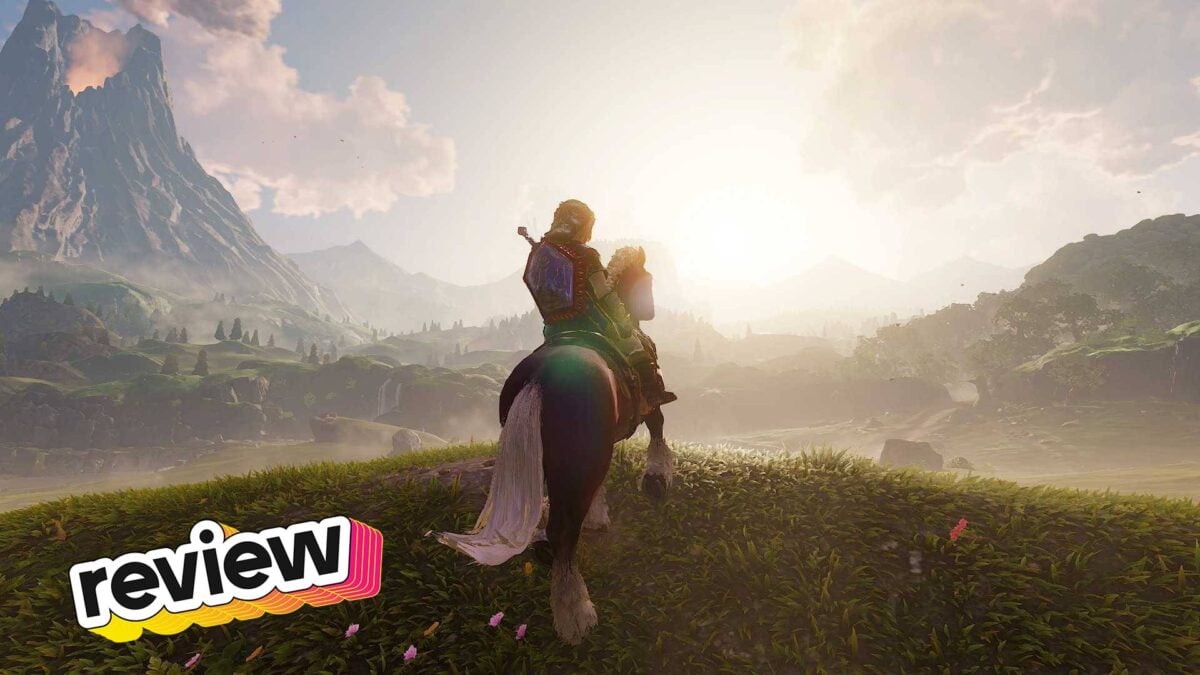
I keep hearing friends and colleagues positively describe The Legend of Zelda: Ocarina of Time remake as a Disney theme park, and I think they’re onto something. Having revisited multiple Disneys fairly recently, I would readily believe that whoever drew up the plans for its reimagination of Castle Town did so after seeing the castle at Tokyo Disney, centered through archways, ablaze with lights, surrounded by colorful towers and European architecture and cobblestone streets.
But it’s more than just that single snapshot. I’m not a Disney fiend, and I didn’t grow up with Ocarina of Time; I played it for the first time this past January. Even so, the Ocarina of Time remake immediately invokes a powerful feeling of nostalgia in me despite me having nothing in particular to be nostalgic about, in the same way Tokyo Disney did the second that curry popcorn smell hit. It’s that feeling of being overwhelmed by the density of detail, the care someone took to ensure that everything, all the way down to the items in the fridge or the slight way Link smiles (or doesn’t) when he receives a Medallion, is exactly correct. In both situations, that inescapable cartoon fantasy magic overtook me, drawing me back in the second anything resembling cynicism tried to pull me away.
Once, Ocarina of Time’s Hyrule was considered vast—as big as a video game world conceivably could be. Now, after the soaring heights and dark depths of Tears of the Kingdom, it comes off as small. Quaint. The whole world is, what, equivalent to maybe one major region in Tears? Two, generously? Look, no matter what people proclaim AI will allow them to do or how fantastic GTA 6 ends up being, I struggle to believe you don’t lose something in the minute details as you make a video game world more and more massive. Eventually, you start copying and pasting trees and grasses. The houses start to look the same. There’s less specificity, less intention. I’m not saying such games have none! There are so many open-world marvels! But there’s a reason the Great Plateau remains one of the most memorable and well-regarded segments of Breath of the Wild so many years later—it’s compact and immaculately designed, down to a microscopic level, in a way that Nintendo or anyone could not have possibly managed for every single corner of the rest of that Hyrule. It takes too long, and you have to have too many people care too much.

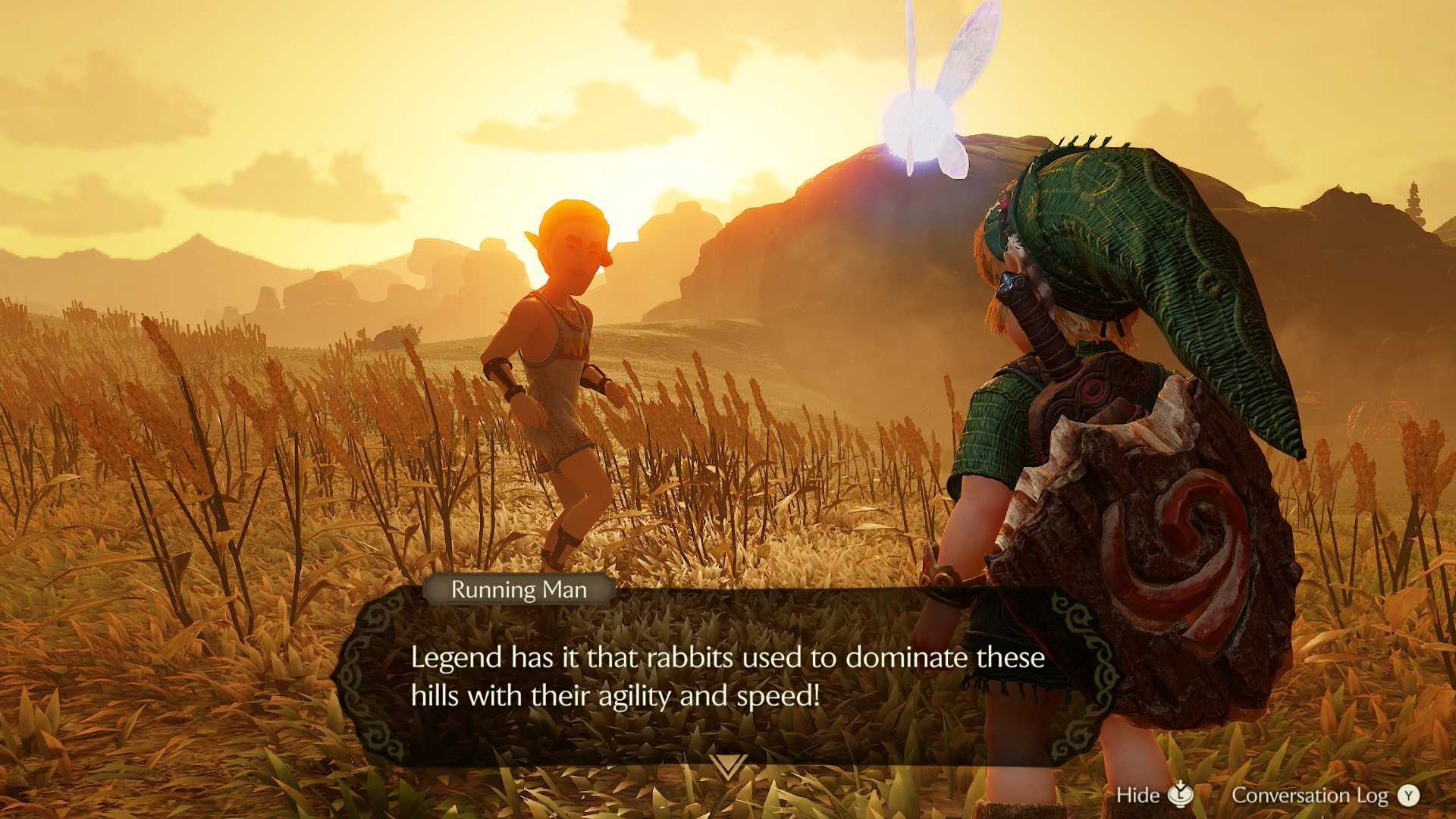
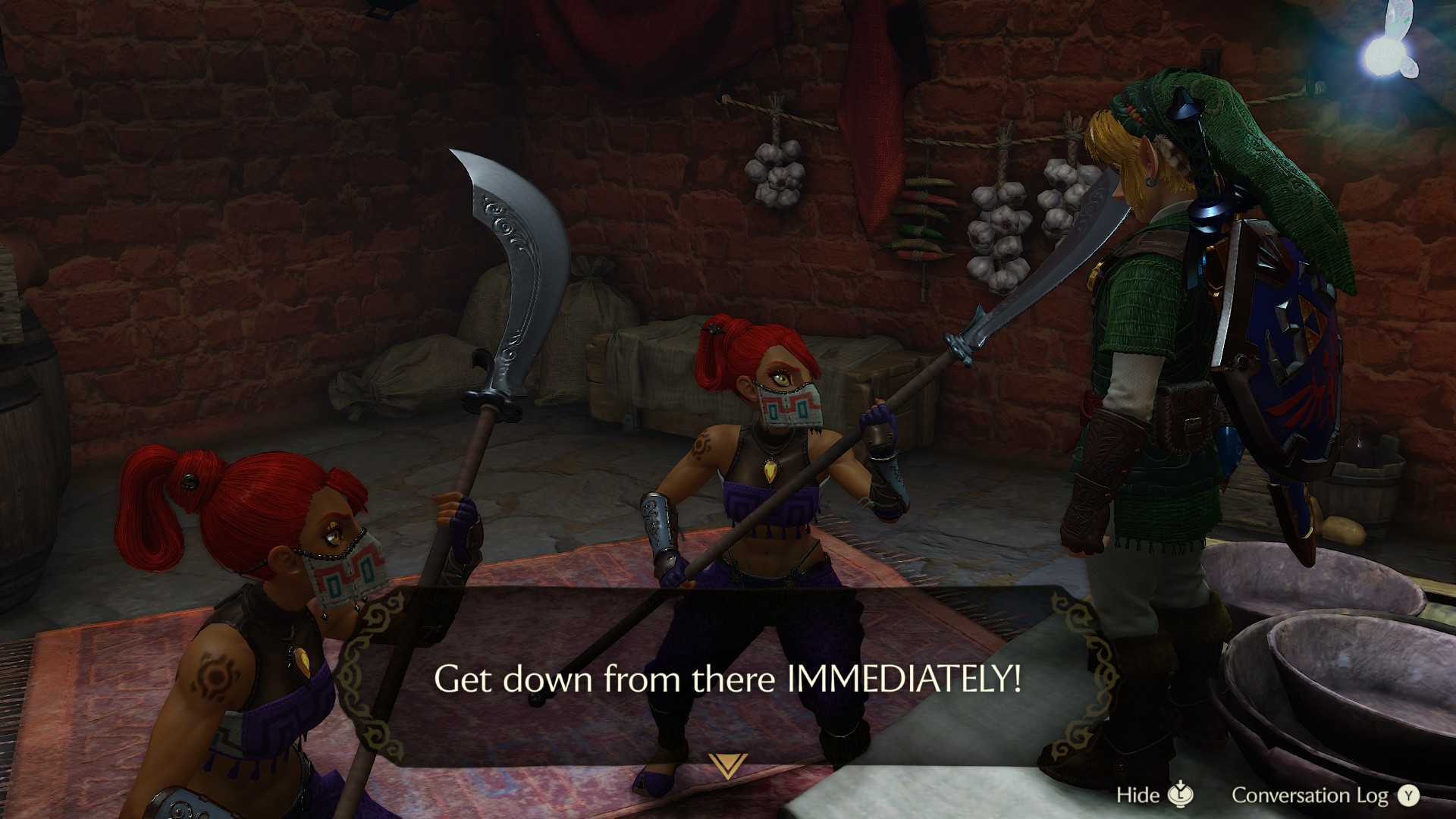
So in returning to a world with such a comparatively small scope after years of stretch, stretch, stretching, Nintendo was able to focus its time, talent, and energy on making Ocarina of Time so deliciously, visually dense. You can feel it, in every last corner, every blade of grass. Castle Town has been transformed from some vague polygons and a few Encarta-ass backdrops to a playground stuffed with detail. Every single house, exterior and interior where available, is remarkably different from the next, its intricacies speaking to the sort of person who might live there. One has an elaborate garden, different pots of flowers carefully arranged just as one’s neighbor might do. Another belongs to a clearly wealthy individual, another place looks a touch shady. I fully believe that Nintendo had a specific character in mind for each one, possibly even characters we will never see.
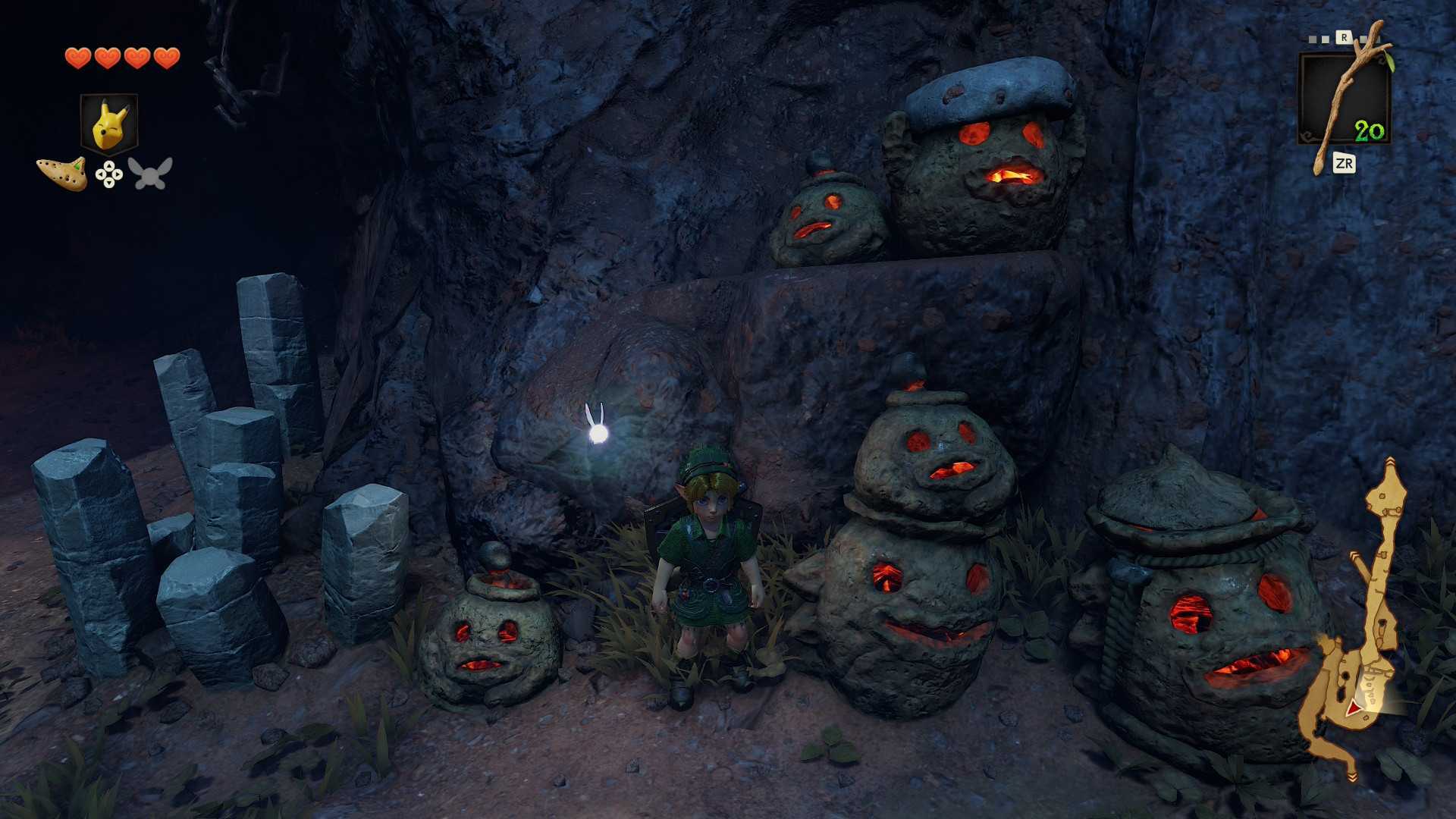
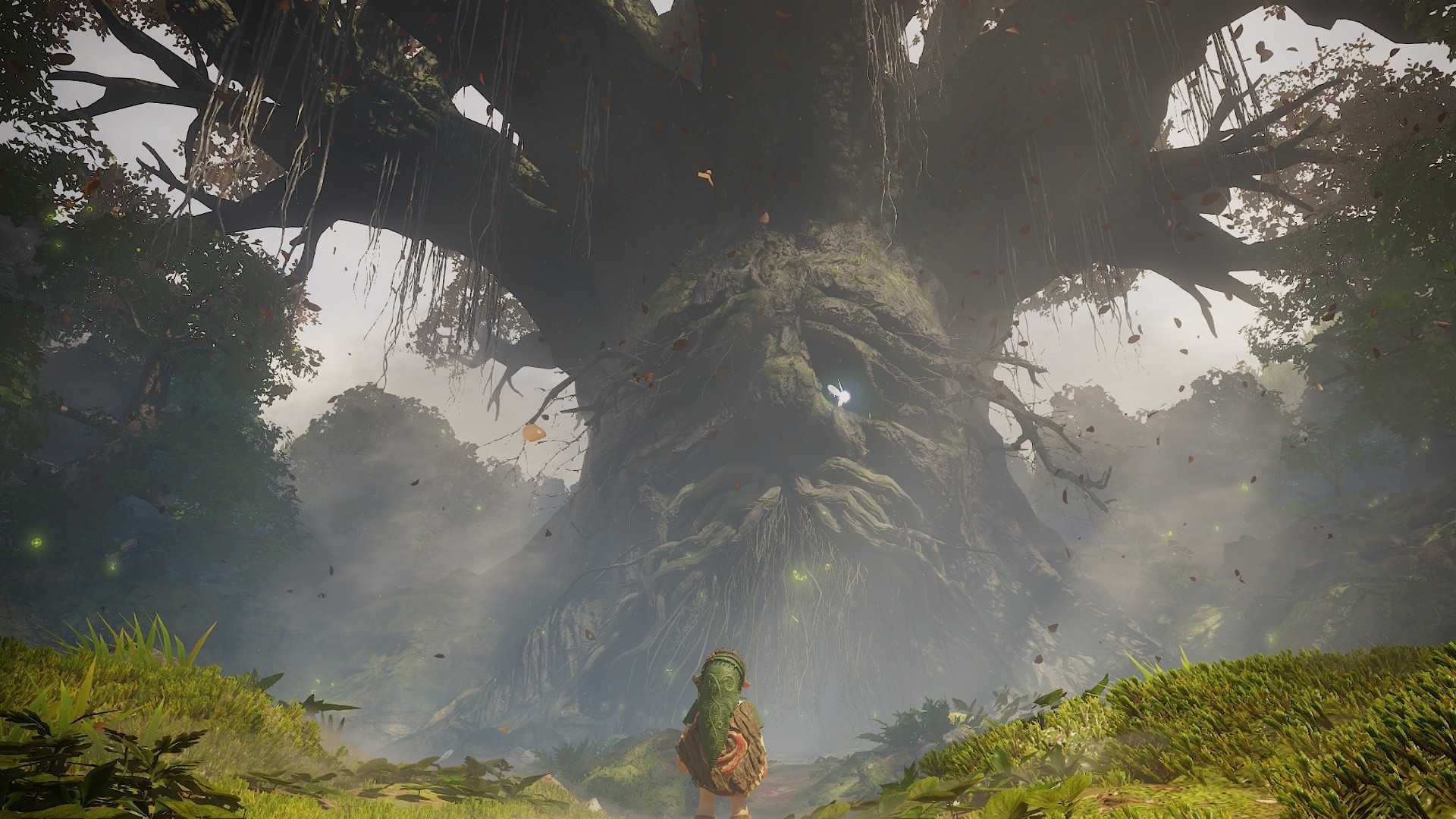
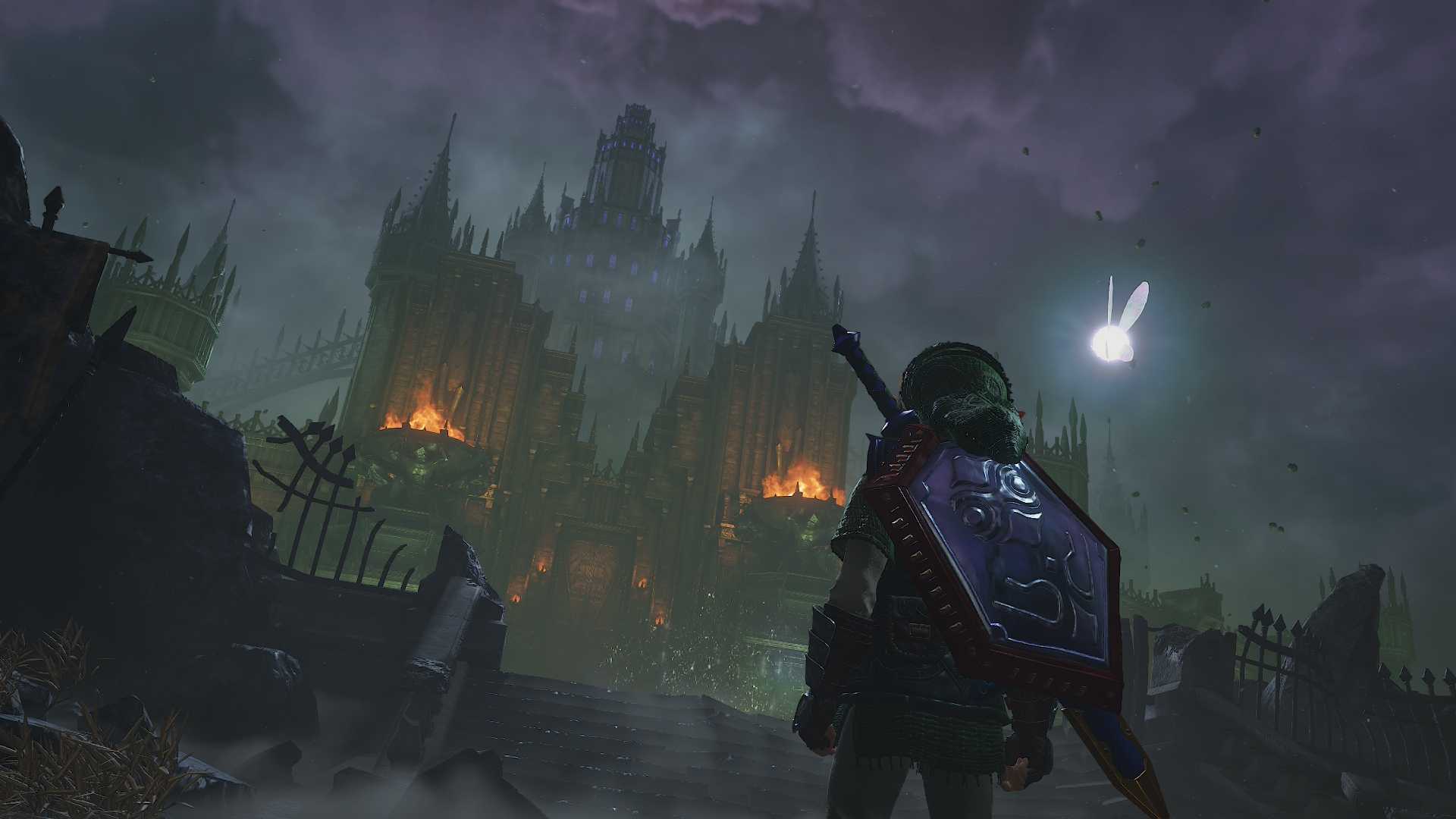
Everything is like this! The individual tree huts in Kokiri Forest! The elaborate embroidery on women’s skirts, the subtle pattern differences on men’s poofy pants! How dungeon mechanisms are now fully operational as coherent little machines instead of magic video game platforms! The directional sound, guiding you, siren-like, through the Lost Woods! The dungeons, fleshed out beyond just solid-colored walls into believable complexes with distinct rooms and themes, as if someone had been using them, at one point, for a real purpose (God, the Forest Temple!). Even the foliage is never, ever uniform, but grows in tufts and swaths varying by how much sunlight its space receives, how close it is to water, what foot traffic might be like. Someone thought about every last blade of grass. I believe this. It’s more than simply saying, “Oh, Ocarina of Time is graphically impressive.” It is that. It’s a genuine, noticeable leap for Nintendo and a shining proof of what the Nintendo Switch 2 is capable of. But more importantly, I believe it to be a testament of what people are capable of when they are given the time, space, energy, and support to really craft something lovingly. The people who made this must love Ocarina of Time. It shows.
The Legend of Zelda: Ocarina of Time
-
Back-of-the-box quote
“I’m the little guy! The baby guy!”
-
Type of game
Zelda
-
Platform
Nintendo Switch 2
-
Played
Over 25 hours for main quest plus all major sidequests (masks, Biggoron Sword) and 60+ Gold Skulltulas. I will not be gathering all 100 thank you.
-
Developer
Nintendo
-
Release Date
November 5, 2026
-
Liked
Gorgeous. Exhorbitant amounts of visual and written detail. Lovely redone soundtrack including excellent new pieces. Appropriately faithful to original material.
-
Disliked
Almost too easy, both because I am an adult now and also because of improved controls. Voice acting and some main story writing a bit juvenile.
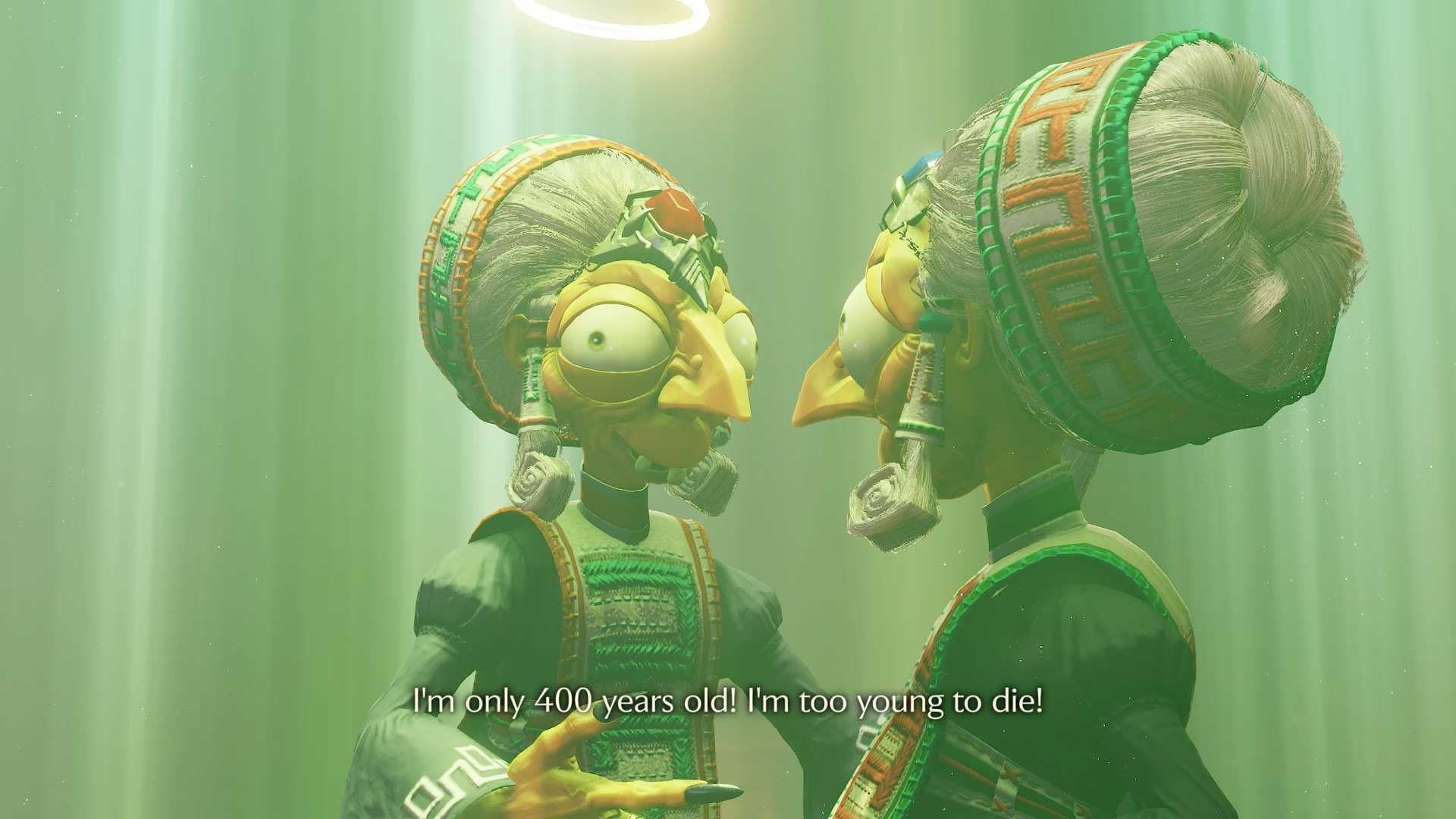
It would be rude of me to imply that this level of attention extended only to what we can see. That same intense commitment to specifics is everywhere. I have particular fondness for how it manifests in all the incidental writing, the little throwaway lines of dialogue with random NPCs around Hyrule. More characters have more dialogue than they ever did (especially if you include the Mask of Truth additions as both child and adult Link), and that dialogue is fleshed out with little jokes, hyperspecific details about characters and the world, and tiny nods to Link’s personality (“Danondorf?”). It’s genuinely entertaining just to talk to people.
And look, not every detail-based decision works for me. I find the English voice direction (and I do think this is an issue of direction, not acting talent) grating. Several performances (Saria, Ruto, Navi, the Great Deku Tree, and Kaepora Gaebora) sound like they’re out of a piece of programming for very young children airing at 9am on PBS. I swapped the voices to Japanese halfway through, which solved it for me because I simply could not understand them anymore—I cannot comment on whether the Japanese performances are actually better or worse. Having gone back and watched some clips of later scenes in English, I believe the worst offenders of these types of conversations are in the first half of the game. I blame much of the early script, which consists of instance after instance of Nintendo clearly being concerned that players new to Ocarina of Time will have no idea what is going on. Everyone insists on sitting Link down and patiently explaining things to him in far more detail than they did in the original, instead of just letting him at it. You may as well have put a giant “HYRULE CASTLE THIS WAY” banner with big arrows and lights up when Link first arrives in Castle Town, the way most of the NPCs were acting. I am willing to admit that my tolerance for the second act might be in part because I just got used to this tone as time went on, and again, from switching the voices. But I do also think that the second half has significantly better writing, and trusts the player more to explore and sort things out for themselves.
Does Ocarina of Time “hold up”? I’ve been asked that a lot this year, on the heels of my January playthrough of the original and now as I work through the remake. I don’t think there’s a holistic answer. I appreciated the original for the groundbreaking design work that it was in its combat, camera, dungeons, and two-sided, then-massive world to explore. In 2026, literally none of it is revelatory anymore. Original Ocarina of Time is a relic now—fun, fascinating, and clever, but still a relic. It’s good that games have evolved since then. But what’s funny about a remake is that it naturally smooths out so many of those edges with its modernity that I think it loses something in the translation. It’s now more obvious than ever that despite its visual density, Hyrule Field is an empty space. There actually isn’t that much to do, a bit like the spaces in Disneyland between theme park rides where all you can do is walk and shop. You can argue that space between dungeons leaves room for contemplation, for slowness, but the practical reality is that most people are just going to start fast-traveling the second they can. Once I learned the songs, I barely went out there again.
And this remake is so buttery. The controls are light and mostly intuitive (the return of the item selection wheel can kiss my ass). Link slides through dungeons gracefully, solving puzzle after puzzle with ease. There’s no fight to lock onto the target you want to hit, no confusion as you putter around a room trying to angle the camera to figure out where a hidden switch is. I’ve seen hundreds of more complex, more interesting, and more challenging dungeon puzzles in video games over the years, including many in later Zelda games. In Ocarina’s, I never died, never struggled. Jabu Jabu went from my least favorite dungeon in the original because of how annoying it was to my least favorite dungeon because of how easy and uneventful it was. Like I said, a theme park ride. On rails. I don’t have an answer for how Nintendo could have bridged that gap without making an entirely new game.
But I think it also gains something here: a refreshed perspective. Despite its ease, despite the fact that Ocarina of Time in remake form is inventing nothing and surprising no one, it is fun. It is beautiful. It is, at times, moving. Even with no nostalgia to speak of, and full knowledge of the game’s plot, I couldn’t help but feel a swell of emotion when I first looked out on Hyrule Field, when Ruto and Saria became sages, and when Zelda revealed herself at last. It’s a testament to the excellence of all the pieces of this remake: its excellent cinematography, pacing, sound, look, feel, all of it, that it can still evoke that in me even when my heart is somewhat hardened against it. The incredible lessons these developers have learned over the years that have allowed them to make bigger and bigger Zelda adventures can also be condensed and focused to great effect.
The old guard has said it is handing this series off to a new generation of Zelda developers, who might use their work on Ocarina of Time as a learning experience that will allow them to do things their seniors never thought of doing. I’m excited to see what comes of that. And maybe I’m a bit relieved, too, to see a game so thoroughly melt away the tension between what is old and what is new. In fantasy worlds like these, there’s nothing stopping us from having it all.
