


Open-world gaming has undergone many permutations over the years, but the genre is still viewed as a desirable target for many AAA developers. Put another way, big, flashy open-world games bring in the bucks, even when they are, broadly speaking, little more than average.
I wouldn’t describe myself as being biased against the open-world genre, but I do think it’s a bit of an oversaturated space. It’s gotten to the point where big developers like Bethesda Game Studios and Ubisoft almost seem to treat open-worlds as a given, or a starting point that can never be changed. Despite this, precious few open-world games actually realize the full potential of their concept, presenting worlds that range from serviceable to outright boring.
When it comes to open-world games that are truly excellent, S-tier, cream of the crop, and so forth, there are really only five.
The Legend of Zelda: Breath of the Wild
A Legendary Franchise Is Reborn

Let’s get an obvious entry out of the way first. The Legend of Zelda: Breath of the Wild came along in 2017 and whipped up a storm within the open-world space, highlighting by virtue of its sheer brilliance the shortcomings of its genre peers. Whereas other open-world games of the time were characterized by excessive hand-holding via waypoints, mini-maps, and the like, Breath of the Wild proved the value of trusting players’ intelligence.
This is to say that the sense of discovery offered by BOTW is primarily player-driven. Stumbling upon a hidden cavern or magical mountaintop haven feels genuinely thrilling because the game never leads you there. It almost feels as though you’re not supposed to see many of Breath of the Wild‘s greatest locations, which makes finding them so much more satisfying.

Click on the game with the higher OpenCritic rating.
Elden Ring
Knocking It Out On the First Try

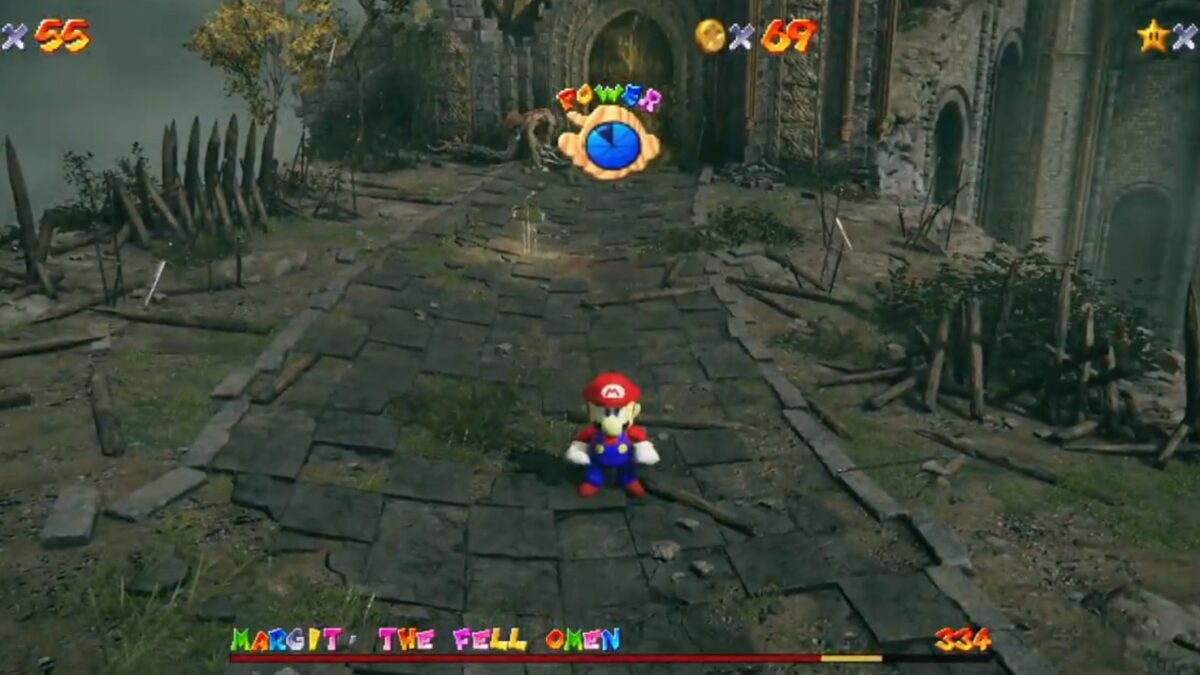
Despite having well over 150 hours logged, there’s a moment from my first few hours with Elden Ring that has long stuck with me. After exploring Limgrave for a bit but before facing the game’s first major boss, I decided to inspect a copse of trees along a cliffside. I figured I would maybe find an item or a stray enemy to slay.
As it turned out, these trees were obscuring a winding path, which I followed until I came upon the stunning, and decidedly not-Limgrave-like, Liurnia of the Lakes. This shortcut to the post-Stormveil zone is well-documented now, but at the time, the sense of genuine discovery and surprise that this reveal evoked convinced me that Elden Ring was something special.
What is especially astonishing is how rich Elden Ring is in such surprises. Just when you think you’ve seen everything the game has to offer, you’ll find a new path, an elevator to an underground realm, or a portal that teleports you to a previously blacked-out section of the map. This is to say nothing of Elden Ring‘s “Shadow of the Erdtree” DLC, which boasts the same environmental richness as the base game.
Indeed, Elden Ring, like Breath of the Wild, actually manages to make its world feel mysterious and unpredictable, but with exceptional combat, lore, and build-crafting systems to boot.
Death Stranding 2: On the Beach
The Total Package
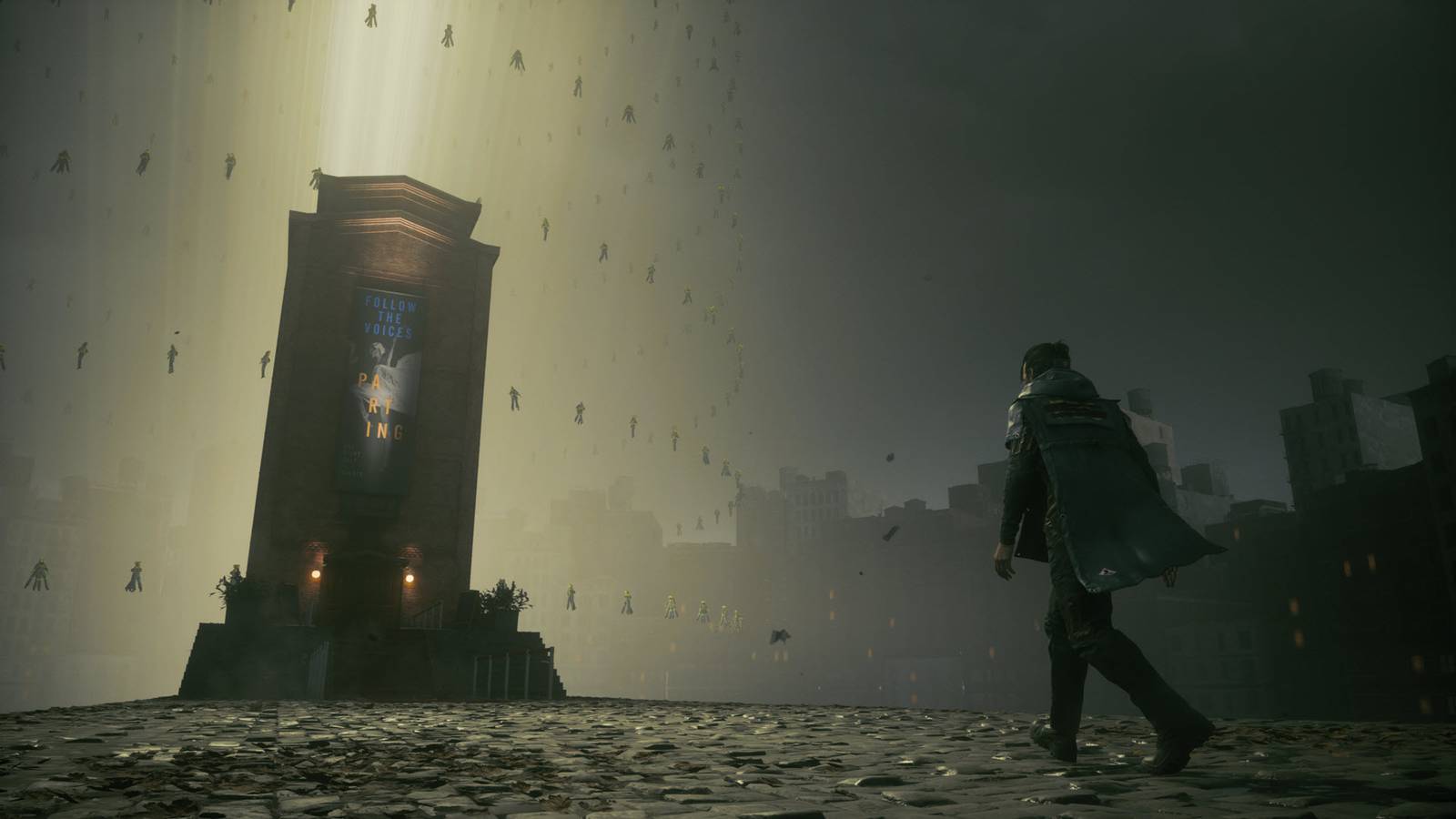
Hideo Kojima has often been criticized for making games that are too “movie-like,” with Metal Gear Solid 4‘s record-breaking cutscene length being an especially cited piece of evidence in favor of this judgment. Even though Death Stranding and its sequel are Kojima’s most star-studded and cinematic projects to date, they manage to counter this criticism through incredibly nuanced and deep gameplay. Hauling packages across inhospitable landscapes, planning routes, assembling the correct loadout, and making various environmental improvements might not be the gameplay loop for everyone, but you certainly can’t call it passive.
In fact, Death Stranding‘s open world is considerably more interactive and engaging than the genre’s average entry, the sort of game that allows the player to simply hop in a car or on a horse and accelerate from one end of the map to the other. Death Stranding‘s sandbox creates friction, which leads to rewarding gameplay. The world itself is a challenge to overcome, whereas it’s often just a pretty diorama in other games.
Death Stranding 2 takes all of these strengths and augments them with new tools, more diverse biomes, and even more groundbreaking visuals. As someone who already considered Death Stranding a masterpiece when it released, and who has played both games for well over 100 hours each, I can confidently say that Death Stranding 2 is basically just a better version of its predecessor. In other words, Death Stranding probably would have been an S-tier open-world game, had it not been overshadowed by its sequel.
The Witcher 3: Wild Hunt
A Bloody Beautiful World

The Witcher 3 released during an era when the biggest and best open-world games were from the GTA, Assassin’s Creed, and Far Cry franchises, and as such, it suffers from many of the same pitfalls. The game is majorly map-marker-driven, little to no thought is given to traversal mechanics, and even its most surprising environments are outdone by the average biome reveal in Elden Ring or Breath of the Wild.
What The Witcher 3 has that other open-world games lack is its impeccable sense of fantasy fulfillment. Part of being a Witcher in Sapowski’s well-established lore is going “on the path,” referring to the Witcher’s duty to travel and kill monsters. Previous Witcher games, while still great, never succeeded quite as well in this respect: they never put the player in the shoes of a Witcher’s daily life in the way that Witcher 3 does.
Being a stunning open-world adventure of epic proportions is a key part of facilitating this experience. And of course, it doesn’t hurt that The Witcher 3 boasts one of the best-written fantasy worlds gaming has ever known.
Red Dead Redemption 2
The Sequel with No Equal
I won’t pretend that Red Dead Redemption 2 is the most mechanically nuanced or inventive game out there. Basically all of its gameplay pillars are outdone by the aforementioned titles, and I’m far from the first to point out shortcomings like restrictive mission design and disappointing city exploration, for example. However, what Red Dead Redemption 2 has that most other video games lack is a genuinely original and affecting story, one within the long-since ubiquitous western genre no less.
Make no mistake, Red Dead Redemption 2‘s open-world supports its storytelling just as much as its cutscenes and dialog do; each component supports the other. Take the game’s exploration of themes like freedom, or its examination of the death of the American frontier. Such musings from characters like Dutch are that much more effective for Red Dead 2‘s world, simply because the open-world makes the player experience freedom, industrialization, and colonialism themselves, within the fantasy that Rockstar has created.
Then there’s Arthur Morgan, who is my pick for the best video game protagonist of all time. While most game leads are meant to be surrogates for the player, Arthur Morgan is complex and well-defined. At the same time, the continuous and solitary nature of Red Dead 2‘s open-world exploration creates a ventriloquist-esque bond between Arthur and the player, which, of course, only makes the story more intimate and heart-rending.
You truly inhabit Arthur Morgan within Rockstar’s fictionalized depiction of the Wild West, and I’m not sure that would land quite the same had Red Dead 2‘s open-world been less lovingly crafted, or had not been open at all.