



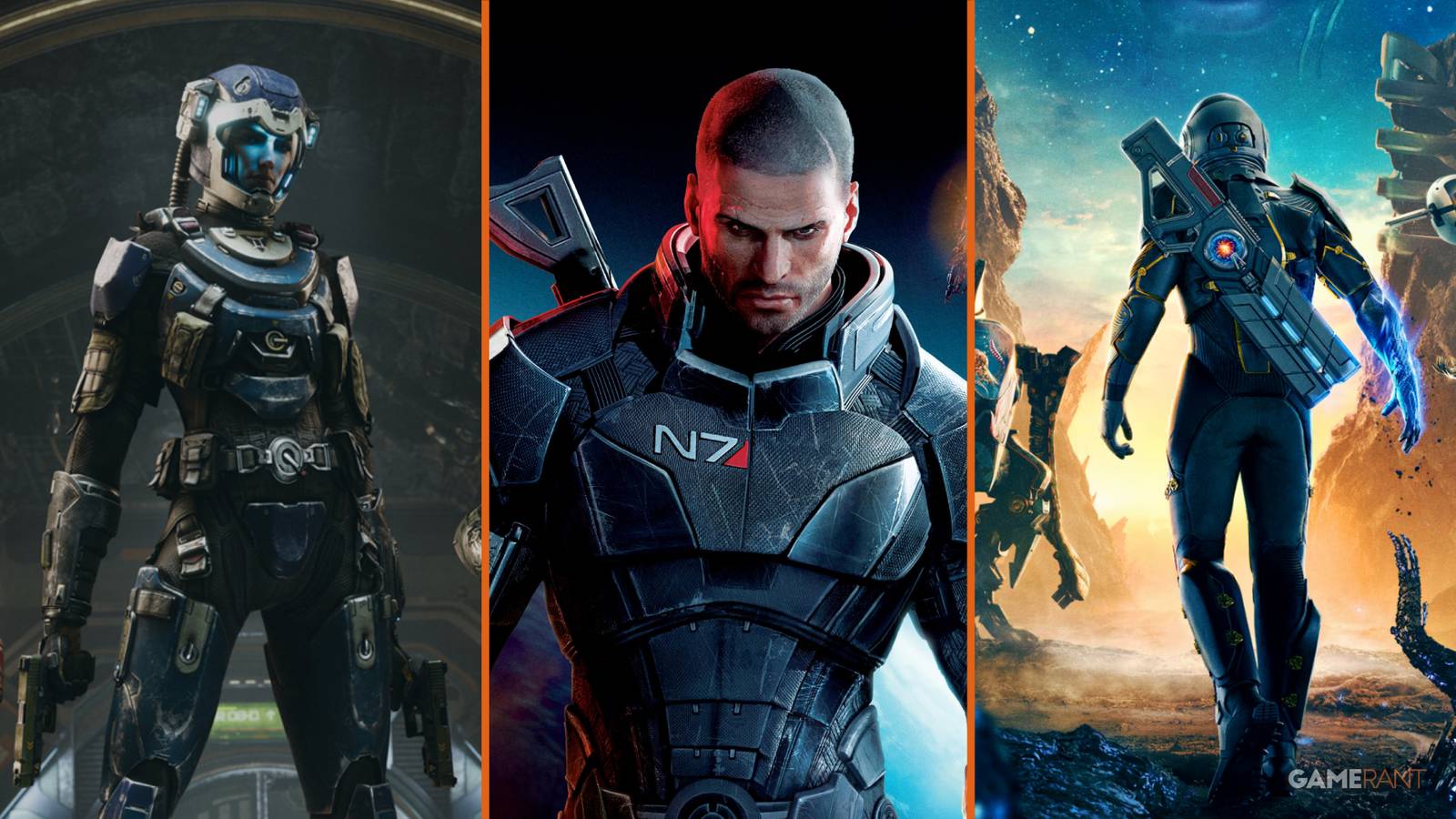
Following recent hands-on gameplay previews and early impressions, a definitive winner has already emerged in the 2027 showdown between Archetype’s Exodus and Owlcat’s The Expanse: Osiris Reborn. Though the space in gaming culture where Mass Effect used to sit has stayed depressingly empty for the better part of a decade, the good news is that these two 2027 releases are openly racing to fill that gap. Both Exodus and The Expanse: Osiris Reborn are third-person sci-fi RPGs about a custom hero, a loyal crew, and a ship players can call home; they arrive within a season of each other, the former in early 2027, the latter that spring. And though there’s still plenty of time to see these games evolve in action, what’s clear already is that they are both chasing the same ghost—the ghost of Mass Effect—and only one is more likely to grab hold of that target.
The Expanse: Osiris Reborn is the closest thing fans have to actually getting another Mass Effect, and that claim might seem strange to certain fans, especially considering Exodus‘ developmental pedigree. That claim may also seem like a shot in the dark given that neither game is actually out, and only one is truly playable to a chosen few. Yet once you actually line these two games up, I’d still say that the obvious question for fans— which game looks like the better Mass Effect-like—really does have an answer already; it’s just a little more complicated than some might expect.
Same Target, Two Different Sci-fi RPG Third-Person Shooters

For context, plenty of sci-fi RPGs over the years have been compared to Mass Effect and have come up short, so it’s notable that both of these carry that influence directly and on purpose. Exodus is built by Archetype Entertainment, a studio stacked with BioWare veterans, and Owlcat has openly named Mass Effect as a core inspiration for Osiris Reborn. The thing is, the overlap between these two games and the franchise that acted as muse runs deeper than a shared genre.

Guess the games from the emojis.
Guess the games from the emojis.
Easy (120s)Medium (90s)Hard (60s)
Both upcoming games intend to hand players a custom protagonist, romanceable crew options, meaningful choices, and squads where two companions fight at your side while the rest support from elsewhere. And yeah, that’s the Mass Effect skeleton, almost joint for joint. But the interesting part is how differently each game dresses these commonalities, and that dressing will make all the difference for fans looking to relive the Mass Effect glory days.
Exodus Has the Background, the Morality, and the Setting
To be fair, first and foremost, the subjective case for Exodus as the truest Mass Effect heir starts with the people behind it. Exodus‘ narrative director, Drew Karpyshyn, was Mass Effect‘s lead writer, and Archetype’s studio head, James Ohlen, was one of the primary architects of Baldur’s Gate and Knights of the Old Republic. They are two people who’ve helped define the BioWare era every one of these games is chasing, and here they’re pouring it into an original sci-fi universe of their own.
Exodus’ Mass Effect-Like Features
- Two active companions in combat, with the wider crew as your social core
- Paladin vs. Immortal morality system that echoes Paragon/Renegade
- Statically named protagonist, otherwise full customization
- Companion relationships and crew-driven storytelling
- Fantastical “Celestial” tech that doubles as traversal and combat tools
- Larger planetary environments rather than one open world
The original setting is a real argument, too, because Mass Effect‘s magic heavily relied on a brand-new rendition of our galaxy, one that came with its own codex and let the player become a core part of it. As an all-new setting 40,000 years in the future, Exodus is doing that same sort of thing, despite it’s many inspirations. So if “Mass Effect-like” means recreating what it felt like to discover a new corner of space for you, Exodus probably mirrors that more faithfully than a licensed game ever could.
While the actual gameplay seems a lot more mobile than its main inspiration, the systems at work in Exodus do a lot of heavy lifting in this argument as well, as one thing Osiris Reborn steers away from is Mass Effect‘s morality system and high sci-fi abilities. Exodus‘ Paladin-or-Immortal morality system very neatly maps onto Paragon and Renegade despite being chosen up front as a Traveller Oath, as it’s wired straight into progression, so that alignment shapes the powers you can upgrade. Those powers— Celestial tech—double as both traversal and arsenal options, and look a lot like Exodus‘ version of Biotics.
Osiris Reborn Has Already Earned a Claim to Mass Effect’s Throne
The funny thing about The Expanse: Osiris Reborn is that its marketing led with the license, not with any sort of BioWare legacy or intentions. Yet most people who’ve previewed Osiris Reborn generally agree with the sentiment that it’s just like Mass Effect. And to its credit, Owlcat hasn’t really fought that so much as leaned into it, openly citing Mass Effect as an influence once the systems were on the table.
Osiris Reborn’s Mass Effect-Like Features
- Third-person cover shooting with a permanent squad (two active, others supporting).
- Totally custom protagonist, but Earther/Martian/Belter background that shapes dialogue, story, and sibling.
- Companion loyalty, romance, and permadeath modeled on ME2‘s suicide mission.
- The Gemini as a Normandy-style base and social hub.
- Hub-based planetary exploration across Ceres, Ganymede, Mars, Luna, and the Belt.
- Faction reputation (Earth/Mars/Belt) in place of a binary morality meter.
- A heavy, deliberate focus on crew interaction and consequence.
In Osiris Reborn, players build a custom merc, pick an Earther, Martian, or Belter background that changes gameplay outcomes, and take two companions into very Mass Effect-esque third-person cover shooting. The ship, the Gemini, works as your between-mission hub the way the Normandy did, right down to how players can wander over to each crew member after a big story beat.
Consequence sits right at the center of the experience, and Owlcat has pointed straight at Mass Effect 2‘s suicide mission as the model it followed. That means that companions, another of the core pillars Osiris Reborn shares with Mass Effect, can be romanced, turn on the player, or die for good. Instead of a Paragon/Renegade meter, your morality is based on the choices you make as the player, alongside your standing with Earth, Mars, and the Belt.
Exodus vs. The Expanse: Osiris Reborn

Line the two up and the shared skeleton is impossible to miss, which is why picking a better Mass Effect-like comes down to fit rather than raw quality. One is chasing the feeling of a new BioWare universe; the other is chasing the feel of BioWare’s actual controller-in-hand feel. Where they split is proof, protagonist, tone, and how far each will stray from the template.
Mass Effect Pedigree
- Exodus has ME‘s lead writer and a foundational BioWare architect on staff
- Osiris Reborn openly cites ME as inspiration
Protagonist
- Exodus – a customizable but fixed “Traveller,” Jun Aslan
- Osiris Reborn – a fully custom merc with a background (Earther/Martian/Belter)
Signature Hook
- Exodus – time dilation and generational consequence, high sci-fi tech, bordering on fantasy
- Osiris Reborn – grounded hard sci-fi built on crew relationships and zero-G combat
Combat
- Exodus – mobile third-person with grappling and force powers
- Osiris Reborn – third-person cover shooting with a tactical slowdown
Progression
- Exodus – RPG growth tied to moral alignment
- Osiris Reborn – more familiar RPG progression
Morality
- Exodus – a Paladin/Immortal split echoing Paragon/Renegade (still fairly binary)
- Osiris Reborn – faction reputation and choice-driven dialogue
Universe
- Exodus – original IP set 40,000 years in the future
- Osiris Reborn – licensed, set alongside the first two Expanse books and seasons
The Expanse: Osiris Reborn Already Looks Like the Better Mass Effect-Like
-
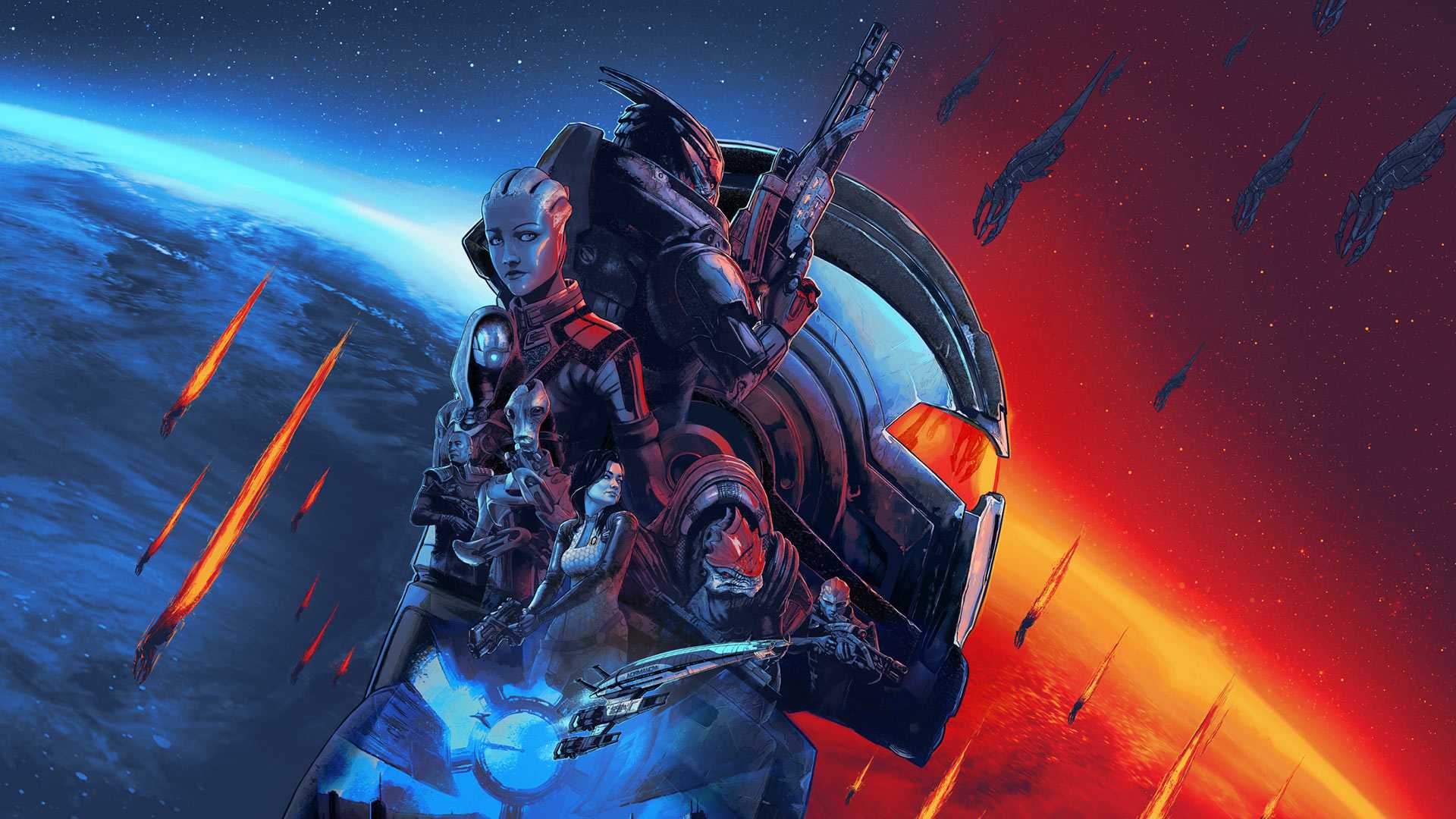 Image via Bioware
 -
 Image credit: Owlcat Games
 -
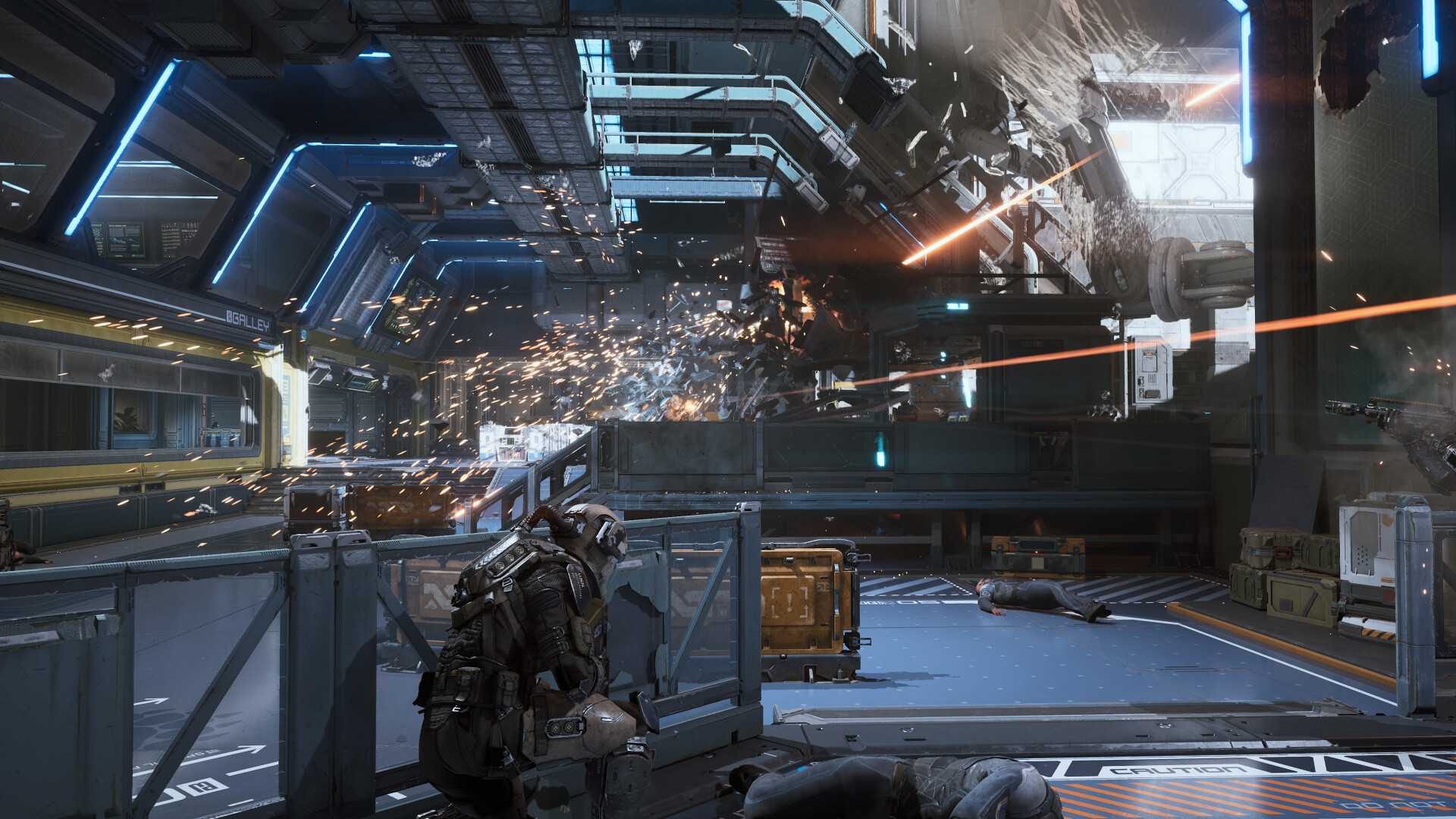
To be frank, I’d say much of this debate comes down to personal wants and needs. But if the question is which one already looks like the closest thing to getting another Mass Effect, the answer right now remains The Expanse: Osiris Reborn. It gets there because people have actually played it, and the consensus already is that it’s not trying to reinvent the wheel.
Most people who’ve previewed Osiris Reborn generally agree with the sentiment that it’s just like Mass Effect.
The fact is, only one of these upcoming games has already been playable. Hands-on previews of The Expanse: Osiris Reborn and a closed beta that opened on April 22, 2026, have confirmed its Mass Effect-ness in practice, while Exodus is still very much reliant on trailers to prove that fact. Nobody has felt Exodus in the hand yet, and because of that it’s tough to edge out the devil you know.

Osiris Reborn is also the closer experience mechanically, at least based on what we know already from gameplay and previews. Intentional cover shooting, a custom origin, romanceable crew, and a ship hub—all of these elements map onto Mass Effect point for point. Exodus might share a lot of that, but the grappling hook and action-oriented movement pull it farther away from the trilogy’s template.
Both Exodus and The Expanse: Osiris Reborn are slated for release in 2027 on PlayStation 5, Xbox Series X/S, and PC. The Expanse: Osiris Reborn arrives in spring 2027 with Day 1 Xbox Game Pass, while Exodus targets early 2027.
It’s tricky in a way, because while retaining the people who made Mass Effect is no guarantee of the best “Mass Effect-like,” Owlcat is making its first third-person action game ever. That makes combat its least-proven muscle, and that’s a real risk. That said, it also means the studio had to look outside its comfort zone for a blueprint—and Owlcat has already admitted that Mass Effect was among the influences here.
Ultimately, the game that’s “closest to Mass Effect” isn’t a trophy I’m trying to hand out. It’s a reference point for those deciding what to get excited about, and it cuts both ways. Mass Effect was beloved for its choices and its dialogue, but the moment-to-moment gameplay has inarguably aged, and at times, Osiris Reborn looks like that same aged design in a gorgeous new coat of paint.
If the question is which one already looks like the closest thing to getting another Mass Effect, the answer right now remains The Expanse: Osiris Reborn.
Exodus doesn’t have that problem so much; its time-dilation hook could reinvent how those crew bonds work entirely, which may make it the more ambitious game in the end. But ambition wasn’t the question, and in terms of the question at hand, I’ve got little doubt fans of the original Mass Effect games are going to be eating well in 2027. Honestly, I can’t imagine many Mass Effect fans aren’t just going to snatch up both.

- Developer(s)
-
Owlcat Games
- Publisher(s)
-
Owlcat Games
- Engine
-
Unreal Engine 5
- Number of Players
-
Single-player
- Steam Deck Compatibility
-
Unknown