



One of the best things about the Pokemon franchise is how it can take a familiar creature and make it feel completely at home in a new region. Introduced in Pokemon Sun and Moon, regional variants give existing Pokemon different appearances and typings based on where they live. Some are amusing twists on designs fans have known for years, while others tell a much bigger story about the world around them.
Some regional variants draw inspiration from environmental changes, local history, and the ways animals adapt to their surroundings. These influences give familiar Pokemon new identities that feel connected to the regions they inhabit. Rather than changing a Pokemon’s appearance for the sake of variety, the best designs use those differences to tell a story and make the world of Pokemon feel more alive.
Galarian Corsola Shows the Power of Environmental Storytelling
Johto’s Corsola is a colorful, cheerful-looking Pokemon, so its Galarian counterpart makes quite an impression. Its pale branches and ghostly appearance look more like the remains of a coral colony than a living creature. The explanation in Pokemon Shield makes that contrast even more striking: sudden climate change wiped out the ancient Corsola that once inhabited Galar’s seas, leaving behind the Ghost-type form seen in the game. Its design tells players that something has gone badly wrong, even before they read a word of its Pokedex entry.

Guess the games from the emojis.
The real-world parallel is difficult to miss. Coral reefs are threatened by rising sea temperatures, and Galarian Corsola turns that environmental damage into something players can encounter in the game. Its Ghost typing reinforces the sense that this Pokemon is a remnant of a lost ecosystem, while its evolution, Cursola, pushes the idea further by depicting a spirit that has outgrown its physical shell. I think Corsola is one of the franchise’s strongest examples of storytelling through design. The game doesn’t need a lengthy cutscene to explain what happened to Galar’s coral. The Pokemon itself tells the story.
Hisuian Zorua and Zoroark Give Tragedy a Face

Hisuian Zorua and Zoroark have a similarly dark history, although their suffering comes from humans rather than environmental change. According to their Pokemon Legends: Arceus Pokedex entries, Zorua were driven out of other regions because people feared their strange illusions. They eventually perished in Hisui’s harsh environment, only to return as Ghost-type Pokemon, fueled by their lingering resentment. Their white fur, red markings, and unsettling expressions make much more sense once players learn what happened to them.
Their Normal/Ghost typing also gives them a different identity from their Unovan counterparts. Hisuian Zoroark is particularly striking, with its flowing white fur and red-tipped features giving it an almost spectral appearance. What I like about these designs is how closely their visual identity follows their history. Their anger and mistrust aren’t arbitrary personality traits added to make them seem mysterious. They have a reason to resent the world around them, and that history gives their designs real weight. Hisui is already a region where the relationship between humans and Pokemon can be uneasy, and these two make that conflict feel personal.
Alolan Exeggutor Makes Adaptation Fun
Not every regional variant needs a tragic backstory. Alolan Exeggutor takes a much more lighthearted approach, turning the familiar Exeggutor into a towering palm-tree Pokemon that looks perfectly suited to Alola’s tropical climate. Its absurdly long neck gives it a silhouette unlike almost anything else in the franchise, while its Grass/Dragon typing separates it from the original Grass/Psychic form. It’s a silly design, but the joke works because it draws on something recognizable about the environment. Nature provides plenty of examples of animals developing features that help them find food or survive in their habitats. A giraffe’s long neck, for instance, lets it reach leaves and shoots high in trees that other animals might struggle to access. Alolan Exeggutor takes a similar idea and pushes it to Pokemon proportions. I appreciate that regional adaptation can be playful rather than tragic.
Galarian Weezing Reflects Britain’s Industrial Past

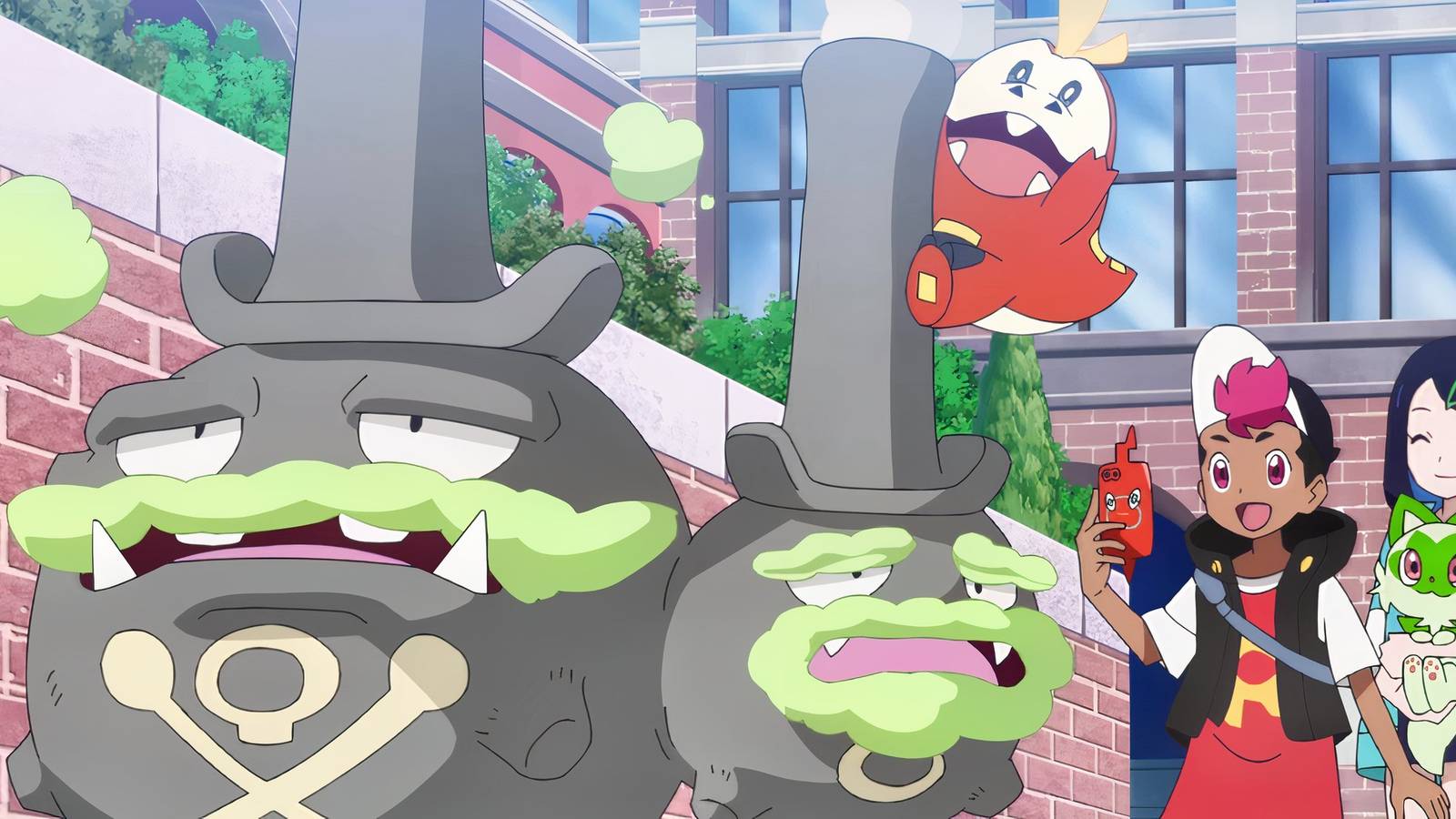
Galarian Weezing looks as though it wandered straight out of an old industrial landscape. Its smokestack-like growths and top-hat-shaped features evoke Britain’s industrial era, while its Poison/Fairy typing gives the familiar pollution-themed Pokemon a surprising new direction. Its Pokedex description explains that it absorbs polluted air and poisonous gases, filtering out the toxins before releasing clean air. That ability fits the design neatly, turning the smokestacks into something functional rather than decorative.
I’m particularly fond of this one because I grew up close to the cooling towers and smokestacks that Galarian Weezing is based on. Those structures were part of the landscape around me, so seeing similar industrial imagery worked into a Pokemon makes the connection to Galar feel especially clear. The region draws heavily on British culture and history, and Galarian Weezing reflects that identity. I also like the irony of a Pokemon associated with pollution becoming a natural air purifier.
Convergent Species Make Pokemon’s Biology More Interesting
Regional variants aren’t the only way the franchise explores how Pokemon relate to their environments. Pokemon Scarlet and Violet introduced convergent species, creatures that resemble existing Pokemon despite being separate species. Wiglett looks remarkably like Diglett, while Toedscool and Toedscruel bring the shapes of Tentacool and Tentacruel to land. There is a real-world parallel in carcinization, the evolutionary process through which several unrelated groups of crustaceans have independently developed crab-like body shapes over millions of years. Similar environmental pressures can lead unrelated organisms toward similar physical forms.
Regional variants are at their best when they reveal something about the world of Pokemon. Galarian Corsola reflects the damage caused by environmental change, Galarian Weezing draws on Britain’s industrial past, and Hisuian Zorua carries a tragic story of loss and resentment. Each example gives an existing Pokemon a new identity while making its region feel more distinctive. Convergent species take this idea further, showing how similar designs can emerge from entirely different origins. These designs do more than refresh familiar faces; they add depth to the world they inhabit.