







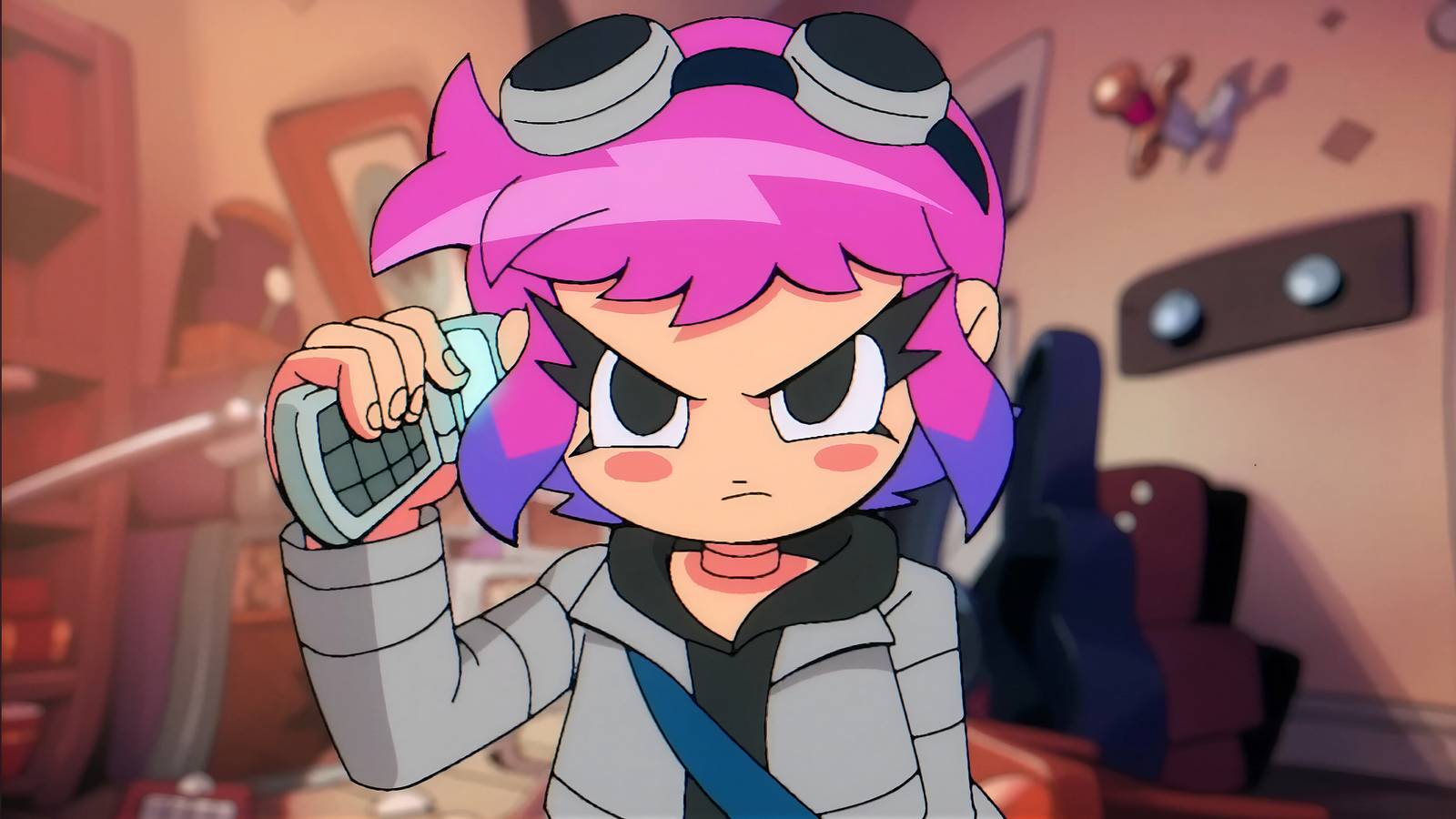
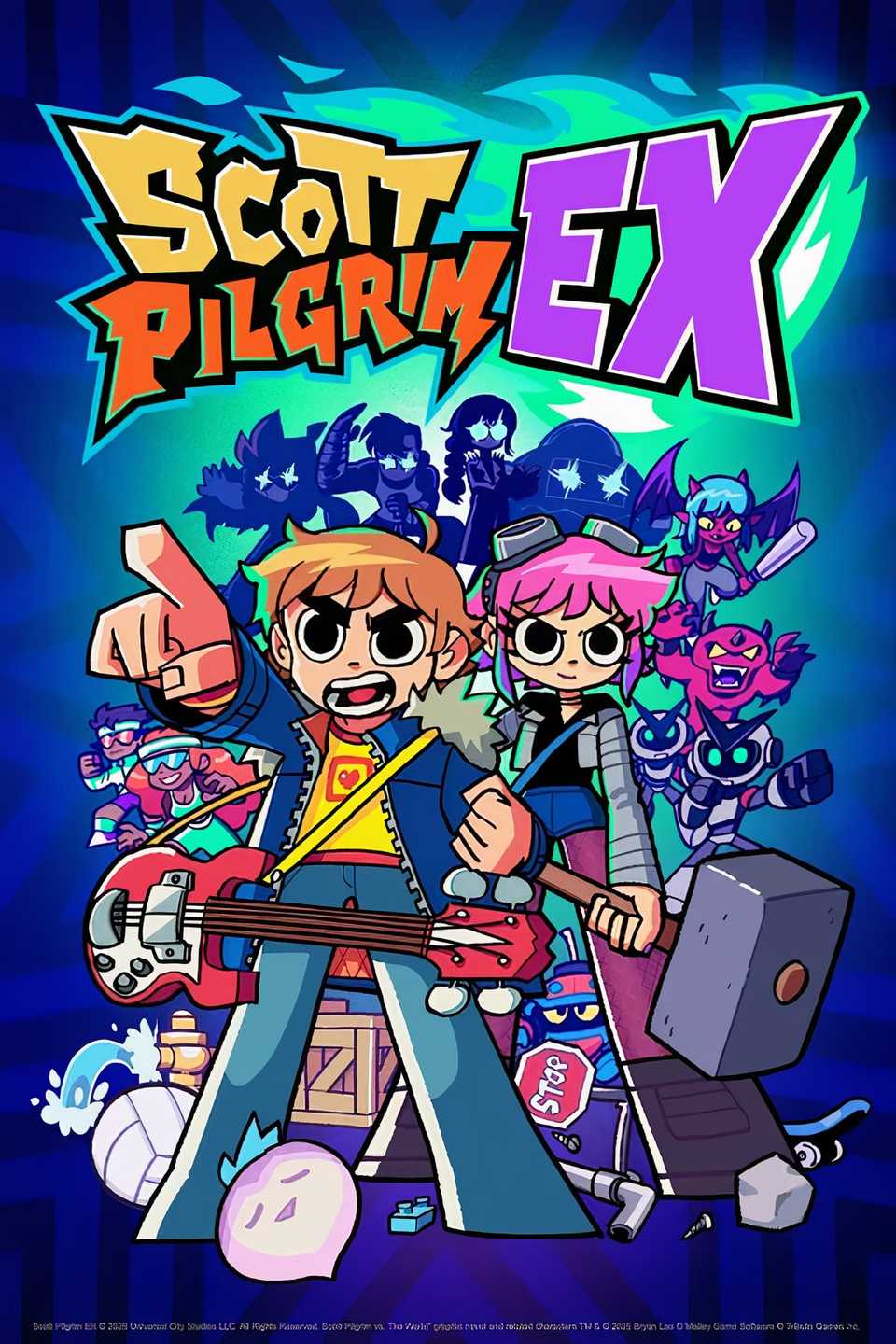
Canon can be a touchy thing, especially in the world of movie and TV adaptations, where die-hard fans of written media are likely to pick up on discrepancies in the adapted work. In many instances, deviating too far from what is considered canon (like the Fallout TV show, for instance), can lead to an adaptation’s negative reception, as it might miss what made the original work in the first place. In other instances, however, it’s not that canon altogether doesn’t matter, but more so that any looseness it entertains is intentionally baked into its identity. That is certainly true of Scott Pilgrim EX and, well, Scott Pilgrim in general, but according to one of its co-writers, that’s what makes it “fun.”
GameRant recently interviewed Scott Pilgrim Takes Off co-writer BenDavid Grabinski about the part he played in bringing Scott Pilgrim EX to life, and while he only functioned as creative consultant for the game, he still had quite a few nuggets to share. For Grabinski, the appeal of the franchise’s flexible canon means every story feeds into the rest like a creative echo, and consistency across each one doesn’t matter as much as tone and brand recognition.
Scott Pilgrim Doesn’t Need to Be Canon to Be Fun
Being a big fan of video games himself, BenDavid Grabinski was excited to get to work on Scott Pilgrim EX alongside people whom he consistently referred to as “brilliant.” However, the writer-director has primarily worked on film and TV throughout his career, making the next Scott Pilgrim game a bit of a different animal for him. At the same time, because the franchise is already so much like a video game in its presentation and tone, translating it into that space wasn’t as difficult as it might be with other tie-in games. Grabinski explained:
“The great thing about being part of Scott Pilgrim is that it is inherently so connected to video games, and I think it lends itself to it in a great way. Brian, from the initial creation, was inspired by it, and it becomes this weird feedback loop of being an anime inspired by video games becomes a movie, then a video game, then an anime, and then now a new video game. And I’m very amused by this vague continuity of how the video games, and the movie and the anime work. People get obsessive over the canon, but if you start to think about that here, your brain’s going to melt.”
Scott Pilgrim is inherently connected to video games not because it is about gaming in a literal sense, but because it is built using video game language. From the way fights are staged like boss encounters to the use of HUD-style visuals, combo effects, and “KO” framing, the series consistently borrows from arcade and fighting game design to influence how readers and viewers experience its story. Even its narrative structure mirrors progression systems, with Scott moving through escalating challenges that resemble levels more than traditional relationship arcs. The result is a story that feels designed with game logic in mind, where action, consequence, and escalation are stylized in a way that naturally lends itself to adaptation across games, film, and animation.
But apart from that, Grabinski mentioned something there that is very true of almost all media, even if it’s not as hard of a truth for something like Scott Pilgrim. “People get obsessive over the canon,” he said, “but if you start to think about that here, your brain’s going to melt.” His reasoning for saying that is because, while various Scott Pilgrim media all reuse the same core characters and ideas, they don’t consistently agree on key events or outcomes. Some stories actively reinterpret or even overwrite others without thinking twice, with some elements treated as true in one story but, in another, never happened. According to Grabinski, though, that’s exactly what makes Scott Pilgrim “fun”:
“I think the fun and unique thing about all the Scott Pilgrim media is that, in a sense, Scott Pilgrim Takes Off is kind of a sequel to the comic, but it’s not literally. All these things kind of follow each other in the same sense that they do in the linear timeline of our real lives. We’re just like, this came out after this, and it would not have been made if we hadn’t made the other stuff.”
That might sound like Grabinski’s definition of continuity merely comes down to which story came after the last. However, what he’s really trying to dig into there is that, when a new story is created, it does consider what happened in the last one, but primarily in a causal and creative way. Essentially, each new Scott Pilgrim story uses the last as a bendable frame of reference, where the boundaries are pliable enough that the creators can actually create rather than simply continue. Grabinski even said during the interview that part of what inspired him to help bring the game to life was a “selfish” desire to play as Robot 01. While that’s not necessarily tied to canon in any way, it does show how flexible Scott Pilgrim is as a franchise, to the point that the hands moving the pieces can almost move them wherever they wish.
Scott Pilgrim EX Is and Isn’t a Sequel to Scott Pilgrim Takes Off
All of that said, people really do still get “obsessive” over canon, and Scott Pilgrim EX isn’t exempt from that kind of scrutiny. Many of the series’ biggest fans are likely to pick the story of EX apart when they start noticing various inconsistencies in its paperwork. So, the question has to be asked—is Scott Pilgrim EX a direct follow-up to the end of Scott Pilgrim Takes Off, Grabinski’s anime that preceded it? The writer-director had an answer:
“I really like the resolution of Scott Pilgrim Takes Off, and I do like the idea that this vaguely follows that thread. It’s really the only way I would say it, to avoid spoilers. The fun of it to me is that a lot of it, if you squint, you kind of connect the dots, and it does feel like it’s a sequel. But also, in this game, I think we’re also implying that he did fight the EXes at one point, and if you follow the timeline of Scott Pilgrim Takes Off, he never did. He just fought Matthew and then lost, and then in the finale, he thinks he’s going to fight him, but instead just fights himself.”
And that’s just it. If players need to “squint” in order to see any connection between Scott Pilgrim EX and Scott Pilgrim Takes Off, then it’s really not meant to be seen that way. After the anime wasn’t renewed for a second season, EX might have been expected to function as a continuation of that story, but it’s really just another step forward in the Scott Pilgrim universe into events that take place after those of the animated show. Even then, Grabinski confirmed how loosely Scott Pilgrim EX relies on the narrative of Takes Off with the example of Scott’s non-existent conflict with the EXes in the show that was somehow established as canon in the video game that followed.
But the co-creator has a humorous diagnosis for that, even if it’s not what hardcore Scott Pilgrim fans might want to hear. It’s not that the team behind Scott Pilgrim EX went into it with the intention of either retconning certain events or tossing others into the mix like they came from some sort of fever dream. Rather, it feels like so many of them are focused on simply having fun with the franchise, that they “forgot” everything that happened before. As Grabinski explained:
“The thing that makes me laugh—and I don’t think it was anyone’s intention—is some of these things feel like they’re made by people who kind of forgot what happened before. Some people may have different ideas about whether or not that’s charming, but I personally think that the playful tone of the Scott Pilgrim universe lends itself to a less literal approach to the modern IP era.”
By “modern IP era,” Grabinski undoubtedly means the current aim of ensuring that every entry in an IP maintains strict continuity so it all fits cleanly into unified canon. This generally also includes managing lore consistency across all forms of media, from games to film and books or comics to TV. One of the main reasons this “modern IP era” has leaned so heavily into continuity like this is, more than likely, because of fans and their unprecedented ability to make their criticism heard through social platforms in the increasingly accessible arena that is the internet. Keeping everything under one canonic umbrella helps curb that criticism, though it’s still impossible to please everyone.
But Grabinski refers to this approach to IPs as “modern” because it wasn’t always this way. During the interview, he referenced Batman, which has gone through countless changes since its inception in 1939. Within that IP, there are certain characteristics that the most dedicated fans expect to see from a story centered around the Caped Crusader, and yet it has still changed drastically over the last 80 years in almost every new iteration that has surfaced. Spider-Man is another IP that has traveled a similar road, and yet it remains popular.
So, rather than seeing continuity as a fixed rulebook that every new entry must obey, Grabinski is pointing to a looser tradition of storytelling where reinvention is part of the franchise’s identity. In that sense, Scott Pilgrim EX exists comfortably alongside everything that came before it, not because it fits perfectly into a single canon, but because it carries the same creative DNA while allowing itself to shift, contradict, and reinterpret as needed. And again, that’s all what makes it “fun,” so it’s worth it—to the creators, anyway.

- Released
-
March 3, 2026
- ESRB
-
Everyone 10+ / Fantasy Violence, Language, Mild Suggestive Themes, Simulated Gambling, Use of Alcohol
- Developer(s)
-
Tribute Games Inc.
- Publisher(s)
-
Tribute Games Inc.
- Multiplayer
-
Local Co-Op, Online Co-Op