









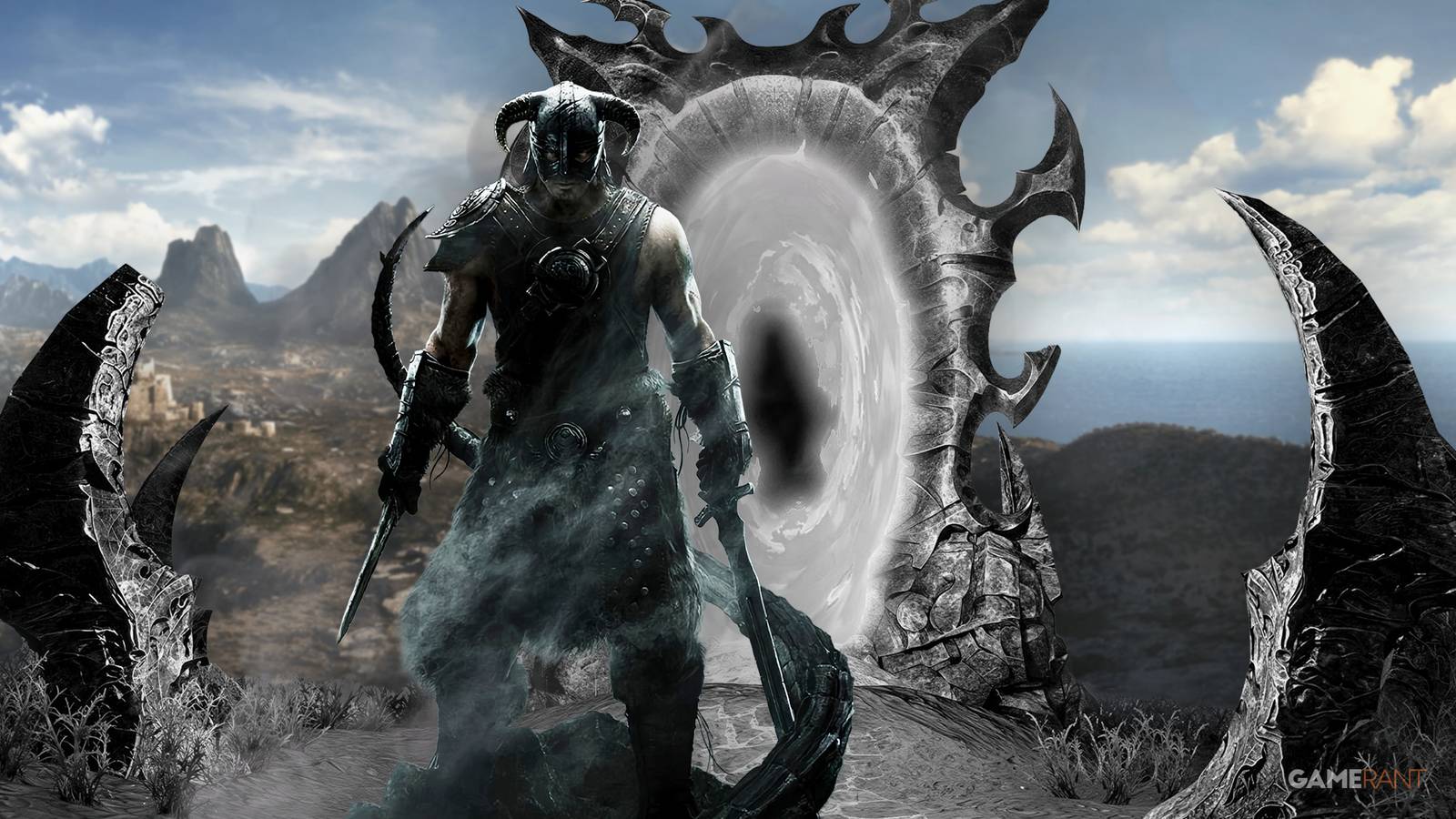
When Skyrim launched in 2011, it changed and refined quite a few features previously established by Oblivion and even Morrowind with a clear vision to make The Elder Scrolls more accessible. Mechanics that once asked players to plan and experiment were either simplified or outright removed in favor of a more approachable experience, and while the changes certainly accomplished their purpose—as evidenced by Skyrim‘s massive popularity in comparison to any entry before it—that doesn’t necessarily make them objectively good. As such, The Elder Scrolls 6 now has a chance to revive said features and bring the franchise back to its deeper, more complex role-playing roots.
However, the question isn’t whether The Elder Scrolls 6 can bring those features back, but whether it should. After all, they were removed for a reason in Skyrim, and considering how it became one of the most successful RPGs ever made, Bethesda might not want to attempt backtracking at this point. Nevertheless, in smoothing out many of Oblivion‘s rough edges and opting for a more user-friendly experience, Skyrim robbed players of the same degree of agency they once had—like exchanging an Android for an iPhone or a PC for a Macbook. Spellcrafting, attributes, classes, persuasion, and fame all represent different kinds of player freedom, and each one raises the same question of whether The Elder Scrolls 6 should bring them back, or whether they are better left behind.
Spellcrafting
Verdict: Bring It Back With Balance
This one feels like a given for The Elder Scrolls 6, but it’s still worth mentioning. Oblivion‘s spellcrafting system was built around the idea that if you understood how magic worked, you could actually change how it works. Using spellmaking altars, players could combine spell effects, adjust the magnitude and duration of those spells, and create entirely custom spells suitable to their playstyle.
It was messy, often unbalanced, and sometimes downright game-breaking, but it gave players a level of control over magic that no other Elder Scrolls game has matched. Skyrim, however, removed that system entirely, largely because of how difficult it is to balance and because of how easily custom spells could break the game. In streamlining magic, Skyrim turned it into something more approachable, but also far more limited.
But that’s precisely why fans still talk about Oblivion‘s spellcrafting today. Even years later, discussions about its removal tend to circle back to the same point that losing it meant losing experimentation and one of the clearest expressions of player agency—both of which are arguably vital to the role-playing genre. That’s why it’s one of the strongest candidates for a revival in The Elder Scrolls 6, but only if it comes back with boundaries.
A modern version could limit combinations or gate it behind a mastery system of sorts, preserving creativity while reining in the chaos. Done right, it would give The Elder Scrolls 6 the feeling that your character’s abilities are something you actually had a hand in creating, rather than just something you unlocked.
Attributes
Verdict: Bring It Back in a Lighter Form
Another Oblivion feature Skyrim removed was attributes, which sat at the center of how characters actually functioned. Stats like Strength, Intelligence, Willpower, and Agility directly influenced everything from damage output and carry weight to magicka pools and regeneration.
In theory, it rewarded intentional playstyles, but in practice, it could be opaque and even punishing, encouraging players to micromanage skill gains just to avoid inefficient leveling. Skyrim removed attributes entirely, replacing them with Health, Magicka, and Stamina, thereby reducing menu management and making character growth feel more immediate and intuitive. The result was cleaner and more accessible, but less detailed.
It’s still debated today whether that trade-off was worth it, but attributes are still one of the clearest examples of Skyrim becoming more accessible but simultaneously more shallow. Some players appreciated no longer having to worry about complicated leveling math, while others felt removing attributes robbed them of build identity and long-term planning. That’s exactly why Oblivion‘s attributes should return in The Elder Scrolls 6, though not in their original form.
A modern version doesn’t need to recreate Oblivion‘s complexity or its tendency to punish experimentation, but it could introduce a lighter system that would give players a stronger sense that their character’s identity lies in more than just perks and resource bars. Done carefully, attributes could return as a middle ground, preserving the accessibility Skyrim attained while also giving players a renewed sense that every build is different.
Classes
Verdict: Partial Return
Oblivion‘s class system was designed to give players a clear character identity from the very beginning. At character creation, players could choose from a set of predefined classes or build their own by selecting a specialization, two favored attributes, and seven major skills that would level faster and determine overall progression. Those major skills then directly controlled when you leveled up and how efficiently your character grew. At the same time, Oblivion‘s system was more flexible than it first appeared, since players could still level any skill regardless of their chosen class. That balance between structure and freedom was intentional, but it wasn’t without its issues.
Poor class choices could lead to inefficient leveling or awkward progression, and many players felt punished for experimenting early on. Skyrim removed classes entirely, replacing them with a fully open system where skills improve through use and players build their character organically over time, eliminating the risk of early mistakes but also removing that initial sense of unique character identity.

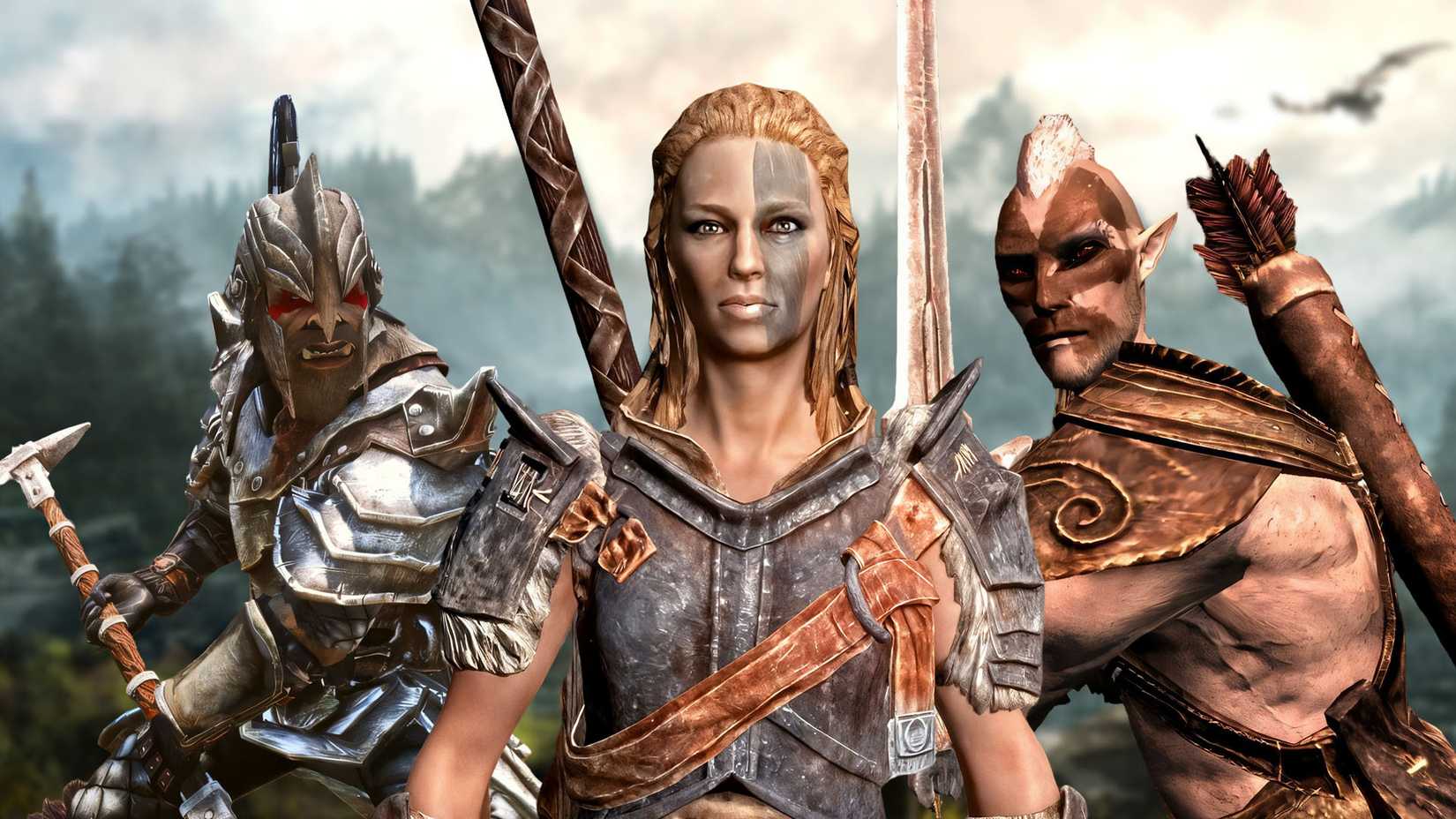
As such, like with Oblivion‘s attributes, whether Skyrim‘s decision to cut classes was a good thing is still up for debate. Some players prefer Skyrim‘s freedom, where nothing locks you into a path and your character evolves naturally. Others argue that removing classes actually flattened the whole experience, making different playthroughs feel repetitive rather quickly because everyone can eventually do everything.
That’s why The Elder Scrolls 6 should consider bringing a proper class system back, though, but only if it modernizes it a bit. A full return to Oblivion‘s class system would likely bring back the same frustrations it once had, especially around inefficient leveling and early-game commitment. A lighter version, on the other hand, something that establishes a starting identity without locking players in permanently, could strike a better balance. Whether through background archetypes, early skill bonuses, or soft class templates, The Elder Scrolls 6 has an opportunity to reintroduce that sense of clear direction while still allowing players to adapt.
Persuasion/Disposition
Verdict: Rework It and Bring It Back
Oblivion‘s persuasion and disposition system turned conversations with NPCs into something players actively participated in rather than something they just clicked through. Every NPC had a visible disposition value that determined how much they liked you, and that score directly affected what they were willing to say, how much they charged you if they were merchants, and even how forgiving guards could be. Raising that value meant playing the persuasion minigame, a rotating wheel of dialogue options like Admire, Joke, Boast, and Coerce, where players had to read facial expressions, predict preferences, and time their choices to maximize gains and minimize losses.
It was awkward, sometimes unintuitive, and often felt like a strange puzzle more than a natural conversation, which is a big part of why Skyrim abandoned it. Instead of a visible, mechanical system, Skyrim implemented simpler speech checks and largely invisible relationship values, which ultimately cut down on any friction players felt in Oblivion and kept dialogue moving at a faster pace.
Who’s That Character?


Identify the silhouettes before time runs out.
Identify the silhouettes before time runs out.
Easy (7.5s)Medium (5.0s)Hard (2.5s)Permadeath (2.5s)
Even so, the underlying idea behind Oblivion‘s persuasion and disposition system is something Skyrim never fully replaced. Players still debate the persuasion wheel itself, but the disposition system actually made conversations feel worth having in a way that Skyrim‘s dialogue rarely does. When an NPC liked you more, it changed how the game responded, adding to its roleplay value. That’s why it’s worth revisiting in The Elder Scrolls 6, albeit in a different form.
The minigame itself can stay gone—that’s the part most players probably agree on. However, the concept of visible, reactive relationships should return. A modern system could track reputation, context, and past actions in a similar way Playground Games’ upcoming Fable reboot aims to do, ensuring that conversations feel like they matter without interrupting the flow.
Fame/Infamy
Verdict: Rework, Revive, But Don’t Replicate
Oblivion‘s Fame and Infamy system was essentially its way of tracking who your character was in the eyes of the world. Every major action either resulted in Fame or Infamy, with Fame earned through heroic deeds like completing major quests or closing Oblivion Gates, and Infamy gained through crimes, murder, or progressing through factions like the Dark Brotherhood and Thieves Guild. These directly influenced how NPCs reacted to you by adjusting their disposition based on their own morality, affecting merchant prices, and even gating access to certain shrines or equipment depending on whether your reputation was good or bad.
However, Skyrim removed Fame and Infamy from the picture, opting instead for a more localized approach where reputation mostly revolves around individual quests or factions rather than a global perception. This decision was likely made to avoid hidden stat tracking and keep player interactions more readable.

Still, Fame and Infamy is one of those systems that feels more important in concept than it ever fully was in execution. In Oblivion, their impact could be subtle, sometimes to the point of feeling negligible, since disposition could be manipulated through other means and only a handful of quests truly cared about your reputation. That’s why it was so easy to cut in Skyrim, but it’s also why it’s worth reconsidering for The Elder Scrolls 6.
A modern version could link reputation to dialogue, faction access, and systemic world reactions without burying it in the background or making it easy to bypass. At its core, Oblivion‘s Fame and Infamy system introduced the idea that the world remembers what you do, even if it didn’t always follow through on that promise. The Elder Scrolls 6 could bring it back, though, and ensure the player’s character has a reputation that actually travels ahead of them and changes how the world responds before they’ve even had a chance to encounter it.




- Released
-
2026
- ESRB
-
m
- Developer(s)
-
Bethesda Game Studios
- Publisher(s)
-
Bethesda Softworks