




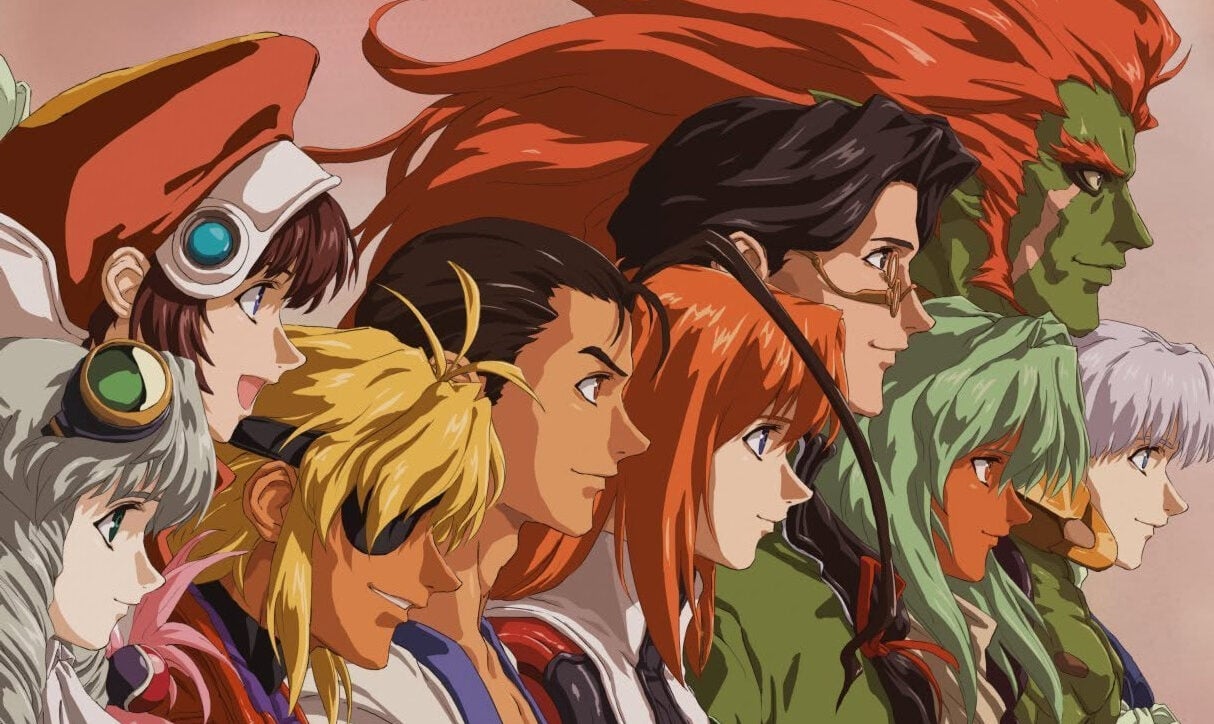
Xenogears might not be the best JRPG on the PS1 due to its format shift in the second half, but it has one of the most thought-provoking stories on the system. The first half still remains one of the most ambitious and complex narratives ever told. I still discover new things with each playthrough and feel I’d have to write a whole book just to describe all of my thoughts on it. Instead, I’ll focus on the sky kingdom of Solaris which comes just before the end of Disc 1 and epitomizes what makes the game so revered among those who’ve had the chance to experience it.
Stars of Tears
Plotwise, there’s a lot going on in Xenogears. In the opening anime, the colony ship called the Eldridge crashes into a planet with the cryptic text, “You shall be as gods” repeating on the screen. Thousands of years later, Kislev and Aveh are at war. The main protagonist, Fei, tries to figure out what all the flashbacks he gets mean while juggling his fractured self that somehow connects with his ability to unleash massive power on his gear. The floating city of Shevat holds many secrets that tie in with the conflict and it’s all somehow connected with a war 500 years ago and the 12 Anima Relics of God. Ethos (a religious group) and Gebler (a secret military faction) are both pulling the strings and causing the land-dwellers or “lambs” to fight each other. Meanwhile some masked stranger named Grahf wants to awaken Fei so they can kill god. There’s so many characters in Xenogears with clashing agendas that whenever I think I’m starting to understand what’s going on, a new twist or character upends everything. It feels like a science fiction-philosophy-psychology-religious buffet with the devs mixing and matching in ways that kept me constantly intrigued.
Director and co-writer, Tetsuya Takahashi paid tribute to many of his favorite works in the game. The Sacred Empire of Solaris is named after the SF classic Soviet film and book that’s about an oceanic planet called Solaris. The planet turns out to be conscious and can physically manifest people’s deepest secrets, kind of like a Silent Hill in space. In Xenogears, Fei learns that Solaris is secretly funding and directing the Ethos and Gebler to exacerbate tensions and keep the lambs in perpetual strife. The party has to make their way up to the kingdom by destroying the Three Surface Gates that hide its existence from the rest of the world.
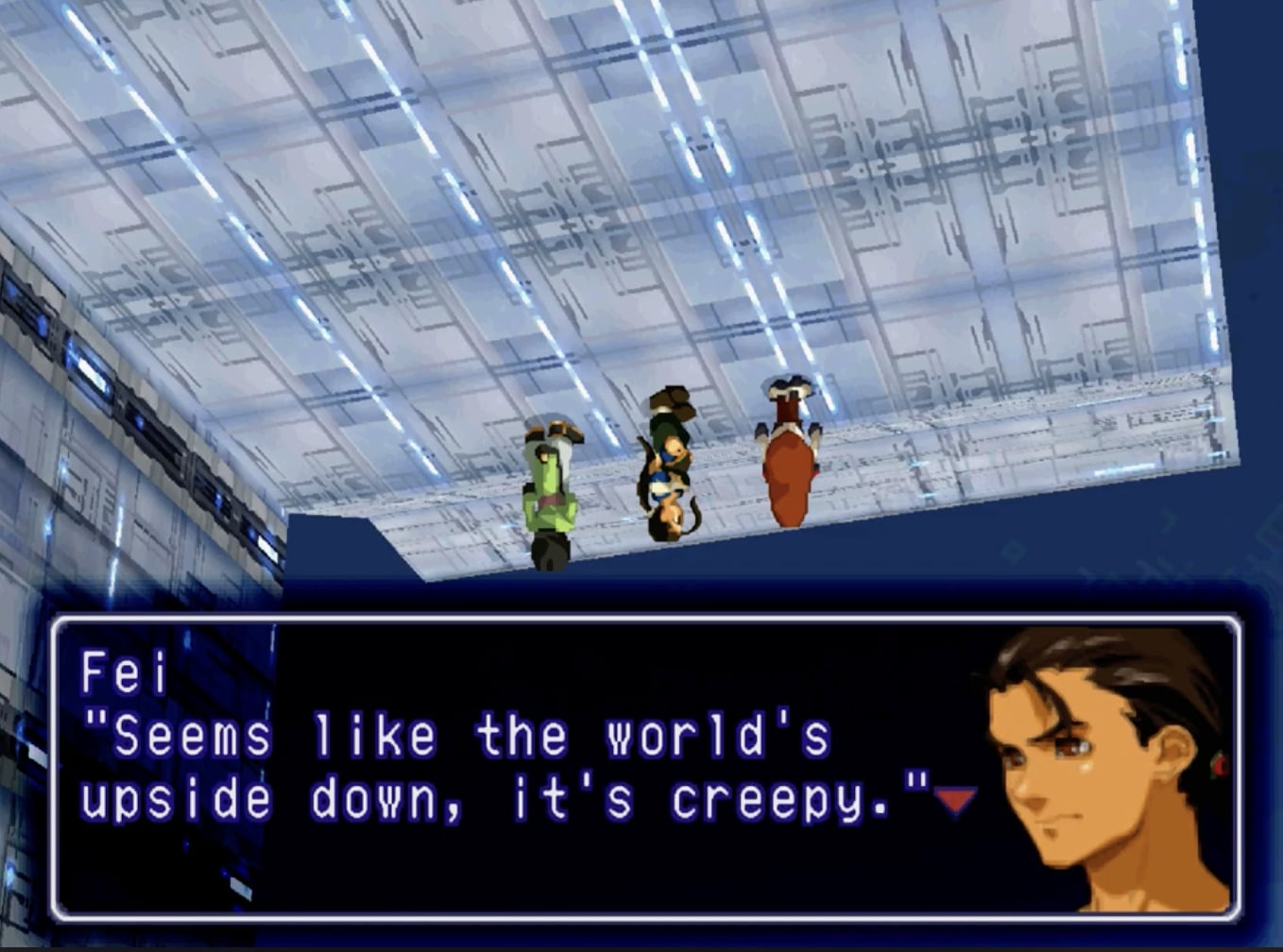
On initially landing in Solaris, the team is physically inverted, walking upside down on the floating city. I took it as foreshadowing that everything they thought they knew was going to be turned upside down, and it is. Fei is split from the group and ends up arriving at 3rd Class F Block, which is the lowest section of the city.
As soon as he emerges from his cell, he hears someone yell, “Something’s wrong with all of you! Working like machines day after day. You have no will! This isn’t living!!’ They’re seized by a security cube, flown over to a giant pit, then dropped down without a warning to their death. No one tries to protest or object to his treatment. Instead, one of the citizens complains, “It’s malcontents like him that get us all punished. It kills me to think that all our work to raise our block’s rank is ruined.”
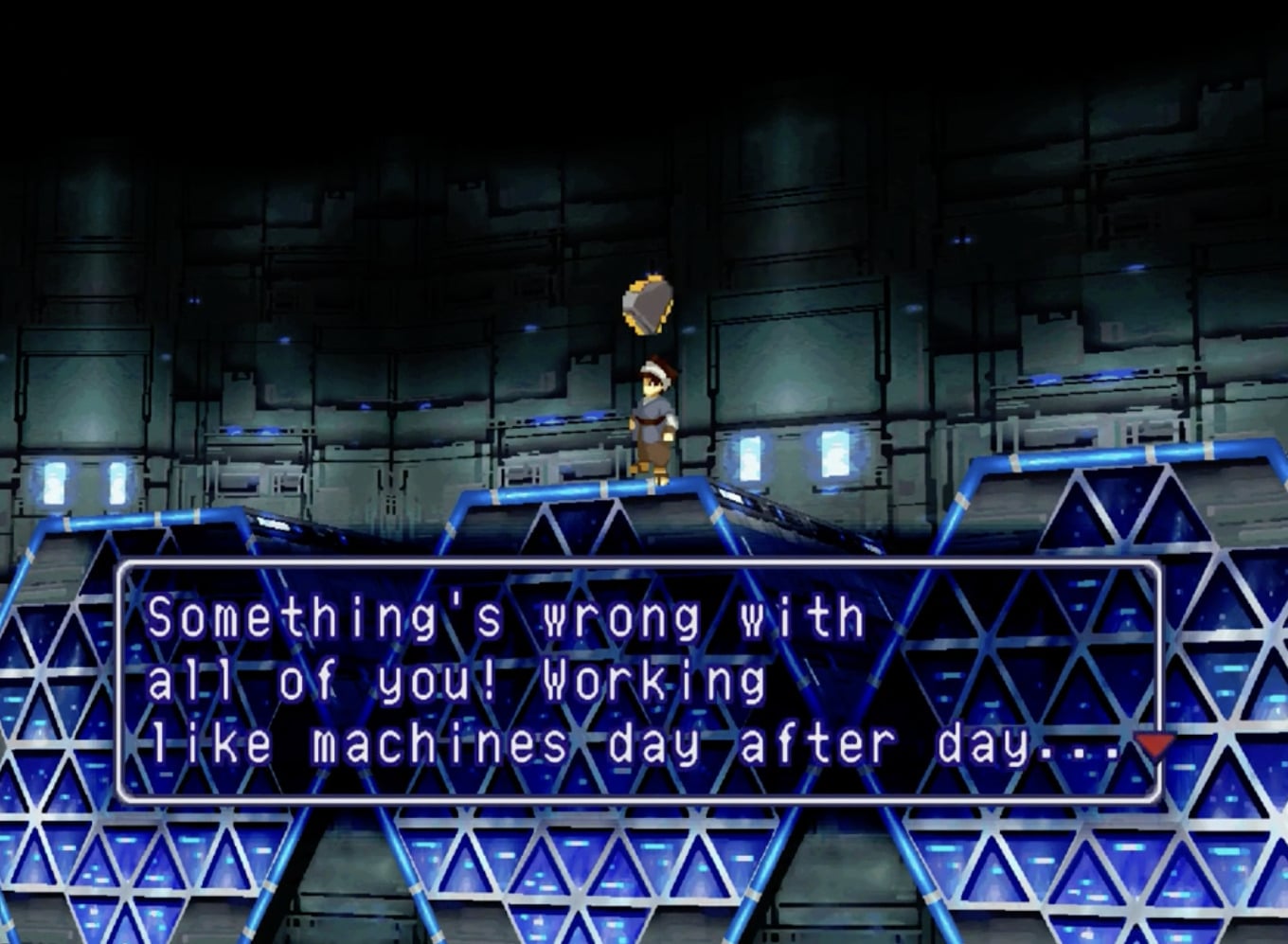
The citizens are split into three separate classes and those in the Honeycomb are in the 3rd, and lowest, class. They focus on staying compliant and alive. Fei meets up with one of his team members, Elly, who reveals that 3rd class citizens are called “Worker Bees,” and provide “manual labor vital to the support of Solaris’ core.” They’re treated as disposable.
In another cell, someone is worried they’ll be “rearranged” and, having no other source of comfort, begs God for support. But his prayers go unanswered. As soon as you leave, the honey comb is removed and “rearranged” as they feared. You later learn that the process involves a mix of “brainwashing and amnesia,” often targeting those who try to escape. Language is just as critical a tool of repression as those Security Cubes. Note that they’re not being “punished” or “imprisoned,” at least in terms of the political/legal lexicon, but “rearranged,” almost like it was a matter of housekeeping or sanitation.
The distinction by class also creates another form of institutionalized control in promising those in 3rd Class a chance to move up the ranks. A 3rd class Solaris citizen can also regard themselves as more valuable than the Surface Dwellers which, as mentioned, they disparagingly call “lambs.”
You eventually meet a man from the surface named Samson who Fei mistakes for a close friend that was killed, Timothy. Timothy’s senseless murder in the early hours of the game was what triggered a mental collapse in Fei and it would appear he’s still haunted by his death. Samson gives Fei a work permit to help him escape to the upper level. But during an ID scan, Timothy gets vaporized. Solaris is merciless.
But why? There are thematic parallels between the sky city and Tiphares from Battle Angel Alita (though I don’t think it’s ever been explicitly stated that Tiphares was an inspiration). In both, the surface is hellish and rife with conflict. In both, this elevated city should be a utopia, especially with all its technological advancements. But despite the abundance, the stratification between the 3rd Class and 1st Class is a wide chasm, bridged by the commercialism of the 2nd class area.
With Elly’s ID, you’re able to enter the 2nd Class district. It’s no coincidence that the classes are segmented by height while security zones prevent intermingling. You physically have to ascend to get to the upper levels. The architecture is being used by the system as a further technique of reinforcing power and control. Arbot Plaza and its surrounding areas in Etrenank are full of shopping stores and holographic advertisements.
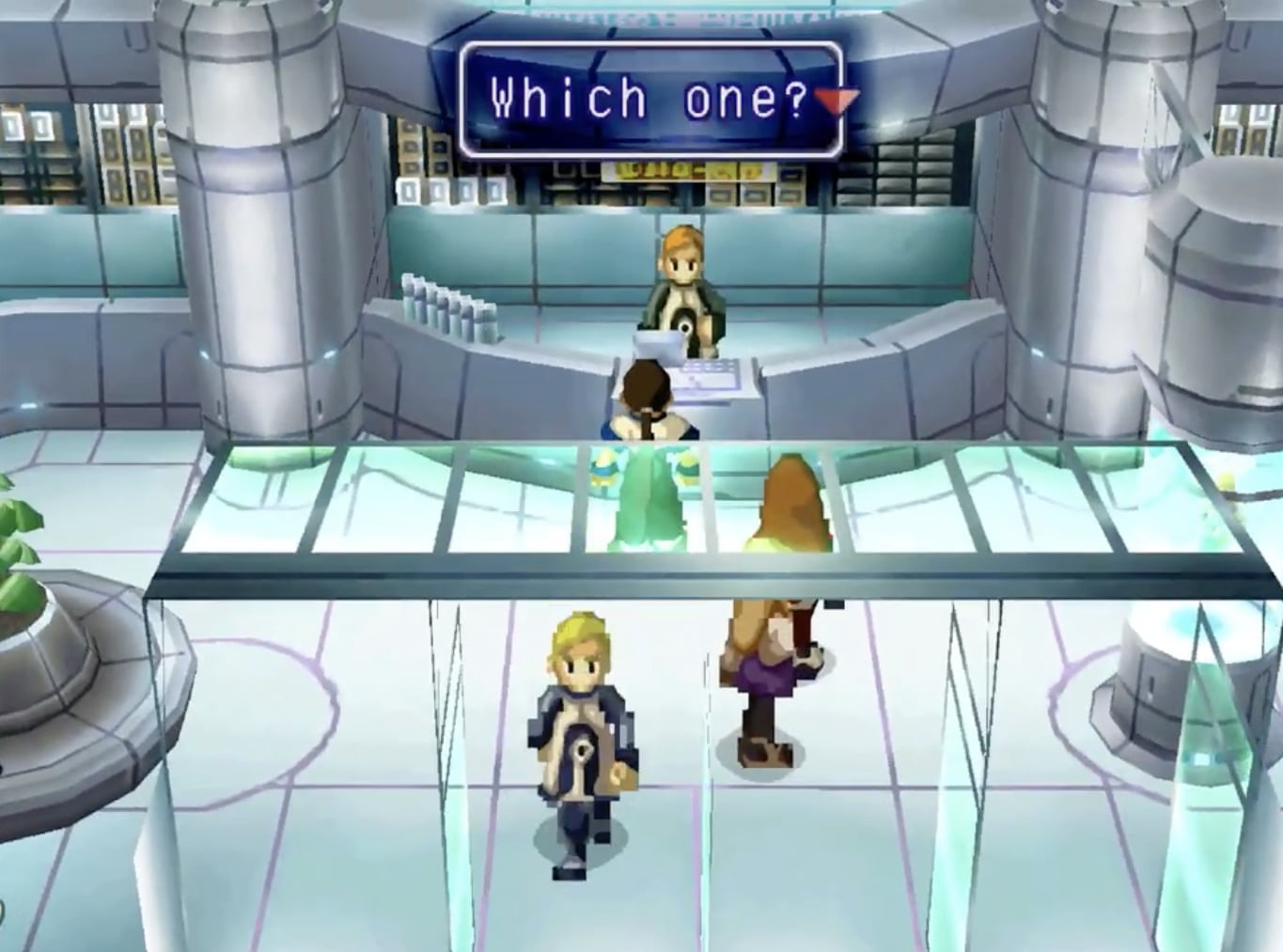
But social customs are also under the supervision of the government. Central Control Bureau arrange marriages for their citizens, proudly stating their motto: “Good matches make good descendants.” Another citizen declares, “There are none of the crimes, disasters or wars like on earth. Science makes everything possible for us.”
Fei learns that saving a game file is sending data to the Control Bureau. A girl plays with her Alloy Imperial Gear toy while yelling, “Purge the Lambs.” A citizen casually notes, “There seems to be a big struggle on the surface. But it has absolutely nothing to do with us.” You find a couple in an apartment having dance practice with their holographic teacher. Someone is even a fan of Tifa from Final Fantasy 7. It’s a paradise in comparison, until you notice the Security Cubes patrolling the sidewalks and the unspoken threat their presence makes clear.
Fei has to make his way to the plaza to watch the Dedication celebration. Your destruction of the gates has threatened the illusion of stability and the Emperor has to calm the masses with a political rally. There’s a smug arrogance to Empires, a disdainful attitude that bread and circuses and a let them eat cake indifference can suppress any discontent.
It’s also backed by religious discourse. Solaris, which is all too familiar with using both military force (in Gebler) and religious orthodoxy (in Ethos) for the purposes of maintaining authority has perfected the ceremonial aesthetics of bullshitting. But the fact that they felt the need to address it also betrays their concern.
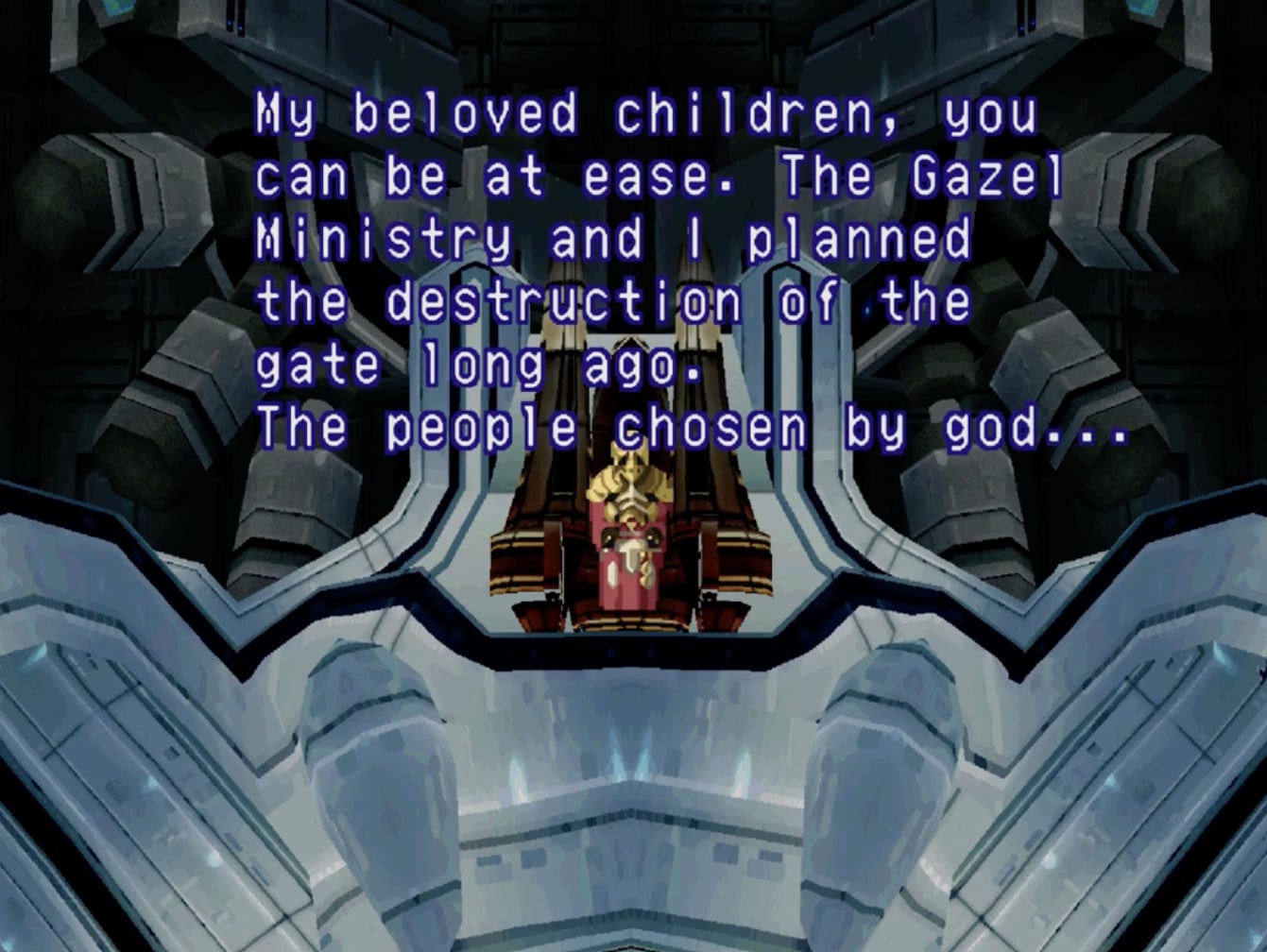
The Emperor refers to the crowd as his “children.” Combined with the earlier message about prearranged marriages, it’s clear they’re trying to replace the family unit with one directed by the government. The emperor lies to the crowd that the destruction of the gates was planned and that the time for their impending immortality has come. He also reveals that they’ve opened the door to Mahanon, “the place where god rests, the source of wisdom and power…. Let’s show stupid beasts, the Lambs our real power.” With ships positioned above, fireworks go off, the masses cheering as they get a magnificent show. A mix of jingoism, marginalization, and spectacle, this sequence gives us more insight into how Solaris has ruled over the world for so long.
Krelian, who’s named after the alien character Karellan from the novel Childhood’s End, shows up to give more assurance to the masses. His intentions are similar to the alien in the book in wanting to guide humanity to a new future, albeit a more sinister one. Elly reveals that Krelian is the real leader of Solaris. His appearance triggers a flashback in Fei. It turns out they somehow knew each other, but it’s still not clear how or when that was, only that it was in the past. One funny thing I noticed is that Fei seems to have worn the exact same clothes back then too. He really likes his getup!
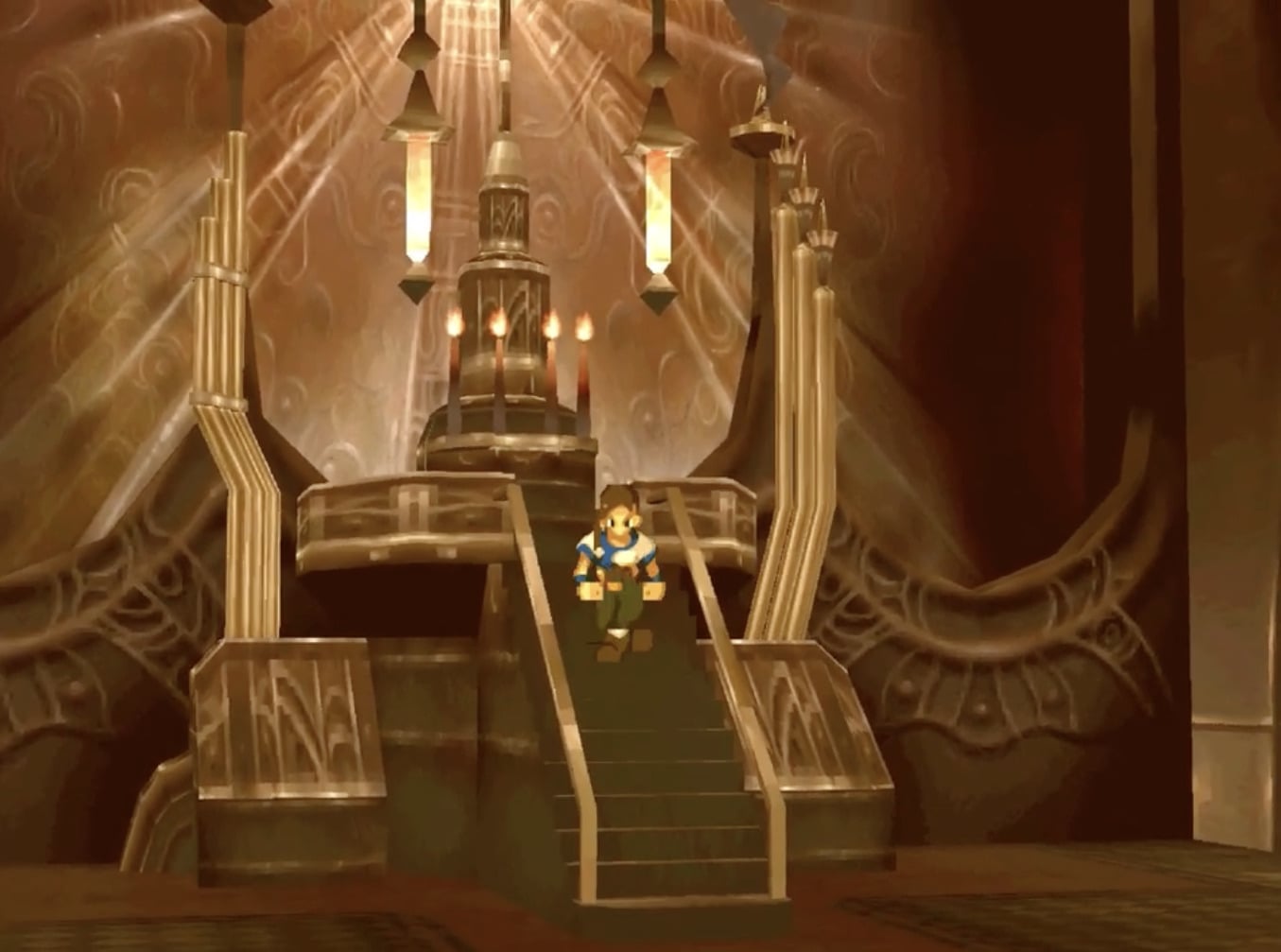
In the present, Krelian reveals that Fei’s friends have been taken captive and will be disposed of in the “Soylent System.” The arbitrariness of their punishment struck me. Does Solaris not have a judicial system? Then it occurred to me that in the opening sequence, the Security Cube just dropped the person without any semblance of a trial. Shortly after the ceremony, Fei ends up attracting the attention of security who then proceed to attack him and Elly. Again, no due process, or even the pretense of one. In many authoritarian structures, the need for order and justice is often used to legitimize repression. In Solaris, the execution of justice is left solely to the Security Cubes who make the determination as they see fit.
It’s not clear if there was any kind of human supervision either. When Elly and Fei escape to the 1st Class/Gazel Citizen level, no cubes follow, nor do any human soldiers arrive. Automated machines determine who lives, who gets rearranged, and who dies. But the citizens of Solaris never question the system or the programming logic behind it. Instead, they attack those who don’t comply with the rules, even if it’s subject to the interpretation of a machine.
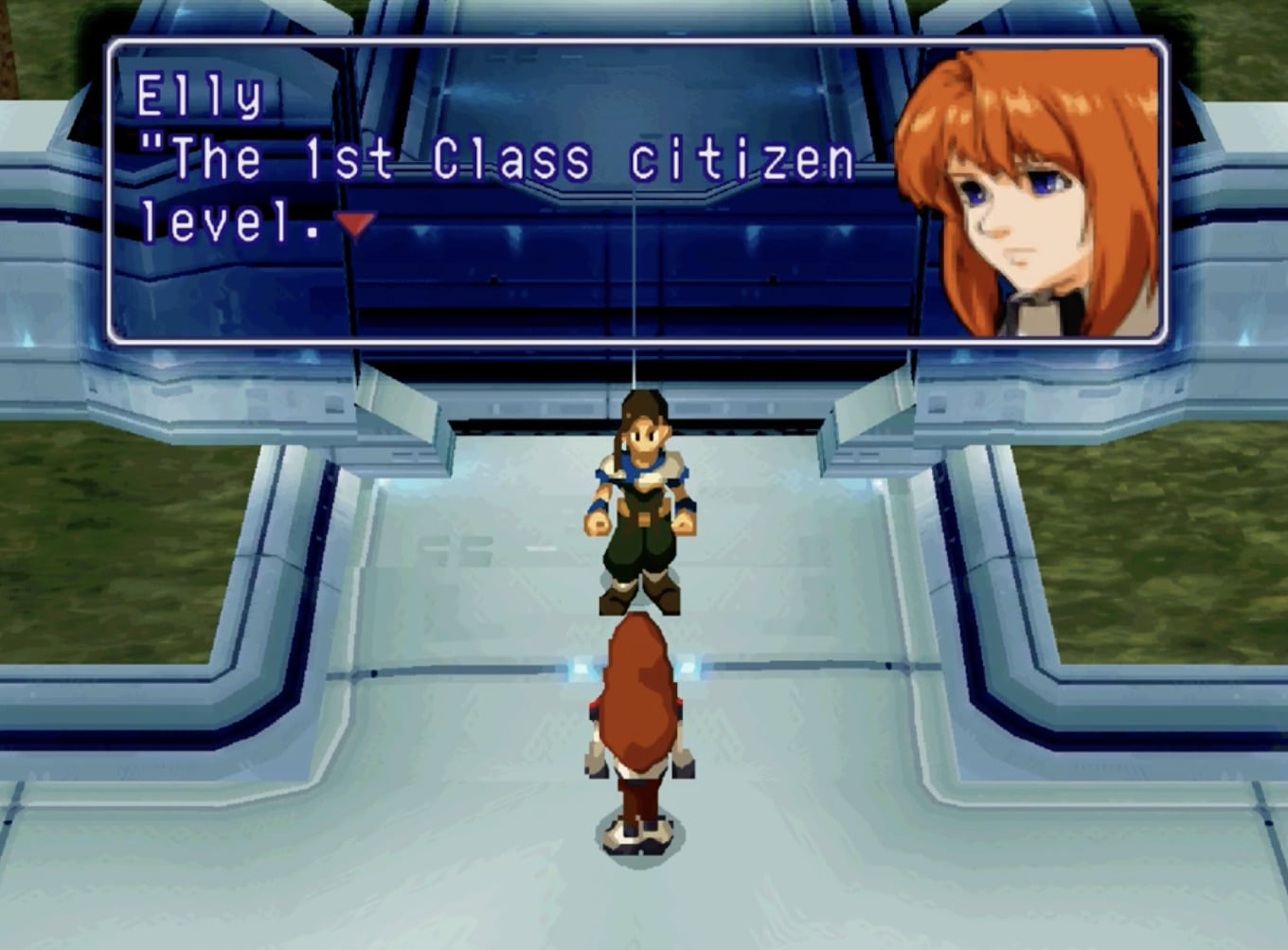
Up in the 1st Class area, Elly invites Fei into her house. Their residence is massive, contrasting with the tiny cells of the Worker Bees and even the bigger apartments of the 2nd Class Citizens. Her mom greets them, but Elly doesn’t want to answer too many questions and takes Fei into her room. He’s in awe as he states, “It must be bigger than the village chief’s!” And in a moment of bathroom sociopolitics, he’s also amazed she has one in her room.
Elly takes a shower and reveals that her parents aren’t really her parents. Most likely, her nanny, a land dweller, was her real mom. Fei also takes a shower and is amazed how good it feels. After they both clean up, they go to her dad’s room and break into his computer. The password is her name backwards. It’s a subtle point, but it shows her dad, Erich, cares for his daughter.
Elly finds out how to break into the palace and rescue their friends thanks to the information on his terminal. Erich, as a Solaris official and former superintendent of the Soylent System, has a lot of access. But then he arrives and doesn’t like seeing the land dweller accompanying his daughter. Family drama ensues and her dad calls security. The sequence ends with Fei voluntarily leaving Elly behind.
It is important to note that the guards who come are human, not the Security Cubes, and they give Erich a warning when he resists their attempt to take Elly away. Even law enforcement is meted out differently based on class. Also, Erich’s biggest fear is being cast down to the 3rd Class, not prison, showing how the hierarchical system coerces those even at the highest tiers.
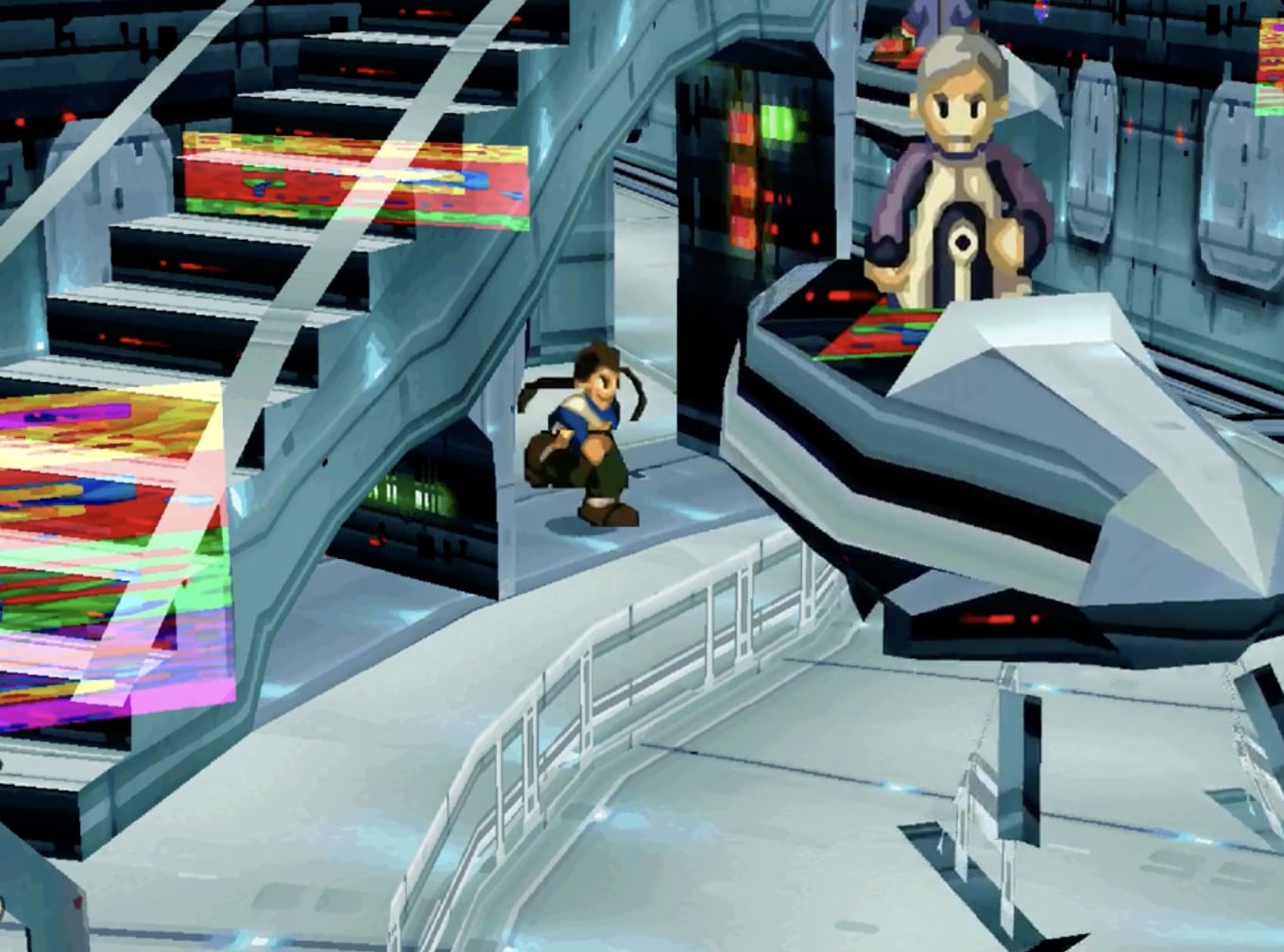
As I descended with Fei down to the 3rd Class area and passed through the 2nd Class Area again, I was surprised that life was proceeding as normal. Even if I couldn’t understand the Solarians without Elly to translate, the Emperor’s performance had been sufficient for the citizens, most still focused on shopping or getting to work in their hover vehicles. At the same time, what options do they have? If they stand up against the madness, they’ll be excised. Better to act like a lamb and pretend like everything is great. At least that’s what every citizen tells themselves as they play their part in the normalization of repression.
Fei meets up with another of his team members, the doctor Citan, who’s been a steadfast companion throughout the game. They also reunite with Elly, who reveals that her parents were arrested. Krelian had ordered her incarceration, but her parents had resisted long enough for her to escape. Although she’s worried about them, she decides to focus on saving their friends with the plan of helping her parents later on.
Bonds of Sea and Fire
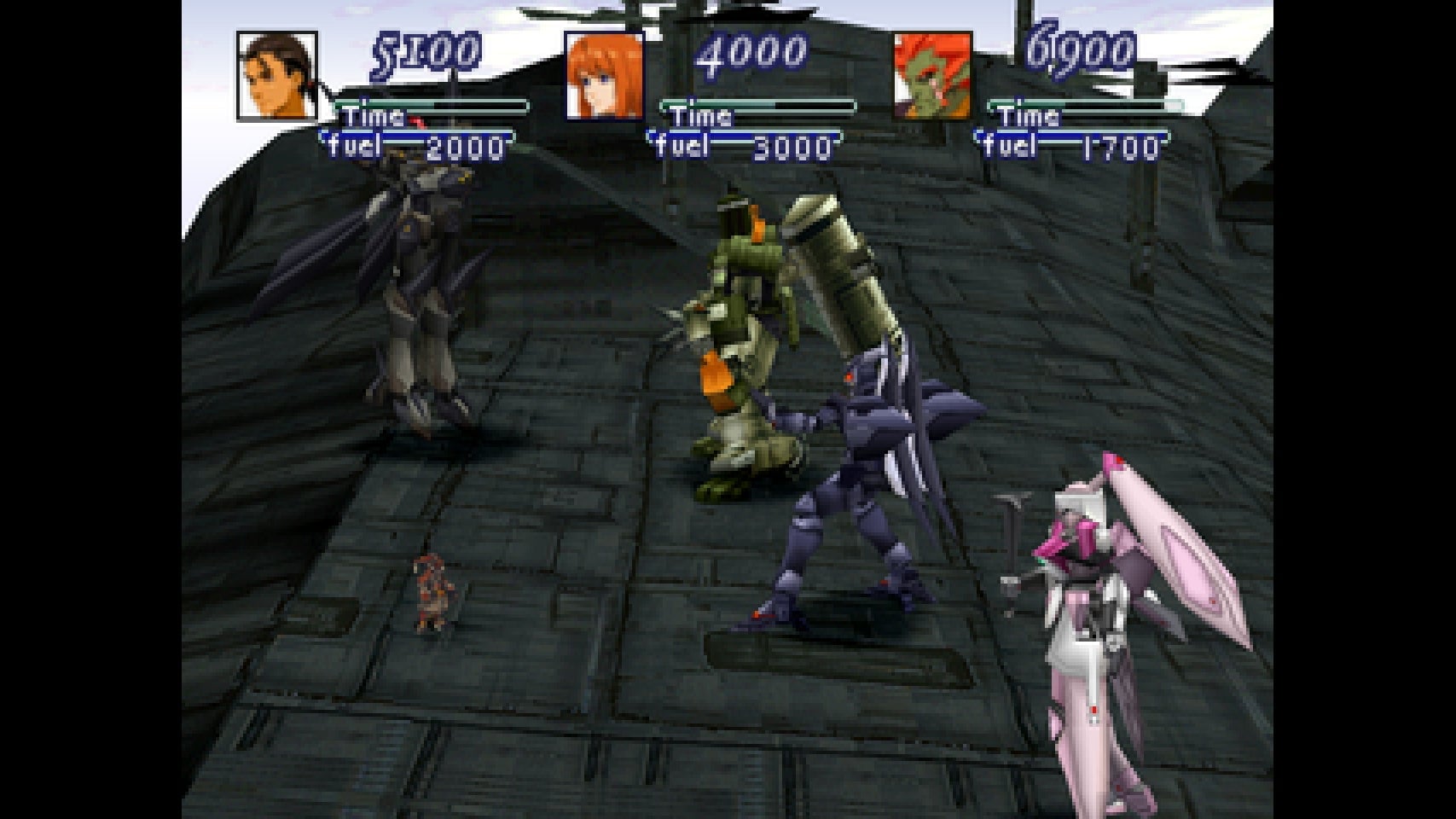
There are a lot of random battles in the next area. Fortunately, I really like the battle system in Xenogears. The combos and deathblows add an arcade element to turn-based combat. You have to chain attacks in a specific order to trigger the deadlier moves. Like many fans have noted, I love how Fei makes grunts during his attacks and yells, “Booyah!” as he executes his final blow. Citan’s martial arts are great (so cool how casually he does the splits) and Elly uses rods and magic in an elegantly smooth fashion. I also love how when the deathblows activate, time slows down as the characters gather energy. Their moves are so quick, they even leave behind an afterimage.
The battle system is similar when you’re fighting in the giant gears. It’s a great feeling when you face an enemy that you struggled with in human form, but can totally crush in the giant suits as they’re tiny in comparison. There are limitations placed by fuel. I don’t know if Neon Genesis Evangelion was an influence (it came out around the same time as Xenogears), but in both, I appreciated the realism that the fuel restrictions added to mecha combat. At the same time, I ran out more times than I’d have liked and it was frustrating. Even with the charger, there wasn’t any easy way to refuel during battle. Then again, this forced me to prepare better by buying better equipment and upgrades (git gud!).
Fei, Citan, and Elly make their way through the garbage dump in Solaris up to the Soylent System factory to find their friends. They find some containers with food. Fei and Elly, who are hungry, decide to gorge themselves. Citan refrains. The noise they make as they eat sounds like a bouncing ball and is kind of funny.
“I wonder what kind of meat this is,” Elly poses later (asked no Castlevania protagonist upon finding meat in the walls).
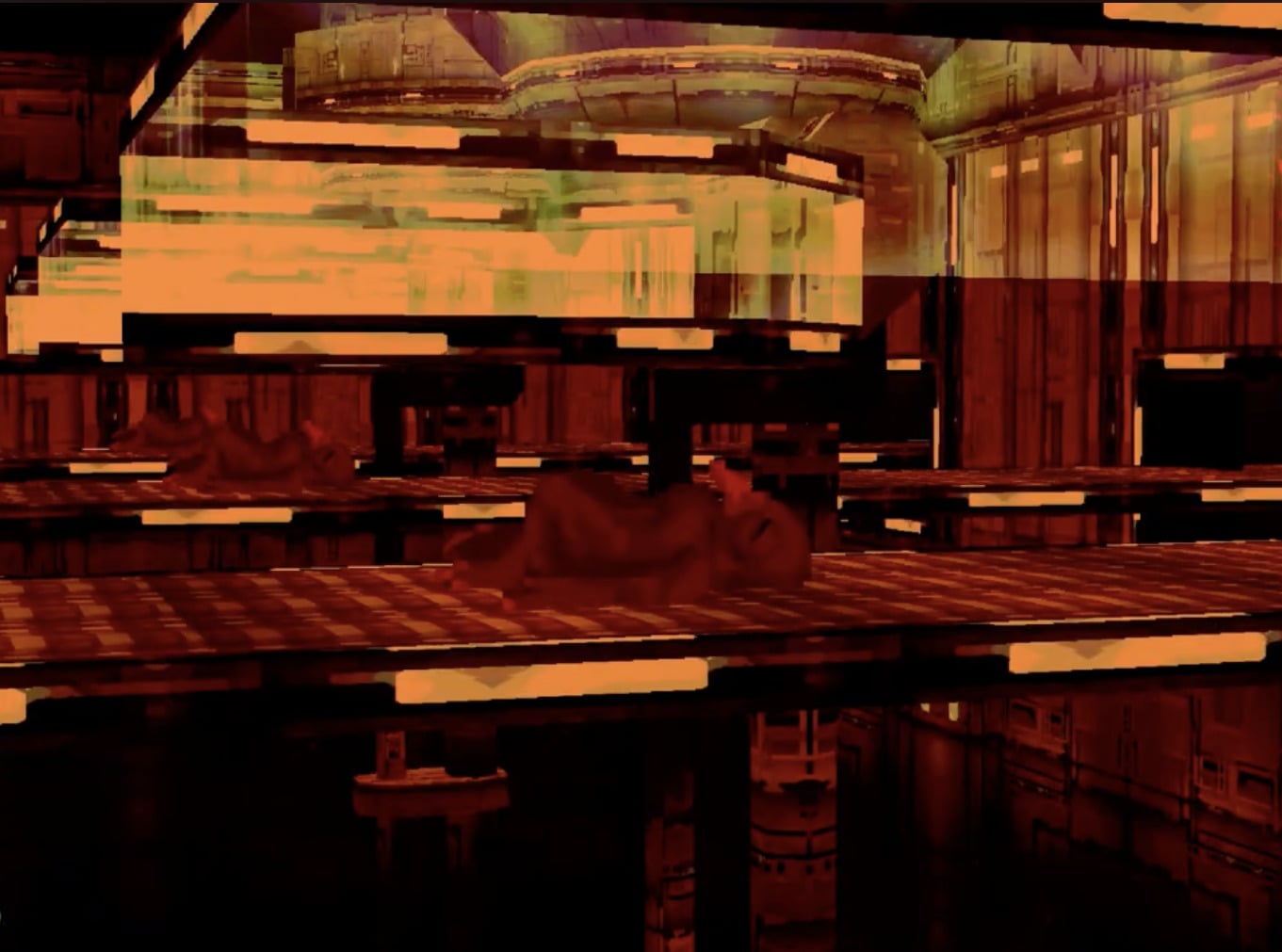
They learn shortly afterwards when they track the source of the conveyor belt and see the remains of bodies being pumped out. “The organism experiment and its disposal facility,” Citan announces. The food they just ate was people.
Bruh, couldn’t you have told them before they ate it? Then again, maybe he just wanted to hammer in the point. This is really fucked up.
Seeing the corpses spat out on a conveyor belt is revolting enough. But their endless number is just as appalling. The food isn’t just there to feed the surface dwellers either. Chemical ingredients are engineered specifically to keep their behavior supplicant and also to maintain their Limiters. On top of that, the experiments in the lab are how the wels you’ve been fighting are created. The food is actually a mix of humans and wels mashed together into canned mystery meat. “To end a person’s life and then consume their flesh,” Citan says. “Is that, permissible…?”
I appreciate a good tribute in any work. But I wish they could have used another name for the system as even general familiarity with the film telegraphs the secret. In the film, Soylent Green, the world’s problems are solved by the eponymous food that’s supposedly made out of plankton. The big reveal at the end of the film is that “Soylent Green is people!” (A side note on Soylent Green. The book that the film was based on, Make Room! Make Room! did not feature the macabre twist about humans. It was the film adaptation that added the cannibalistic reveal).
They exit the factory area by taking a lift almost like they’re emerging from the dregs. In addition to the security drones, the team has to fight the Neo Wels, which are the updated experimental subjects with pulsing veins. One of the most haunting fights is against Dorothy. She’s another subject that has been mutated into a monster. Strangely, physical attacks heal her, while healing items wound her. It’s eerie as I wondered why her physical condition was flipped that way.
Eventually, they come across Solaris’ massive Omnigear. In the adjacent room, there are a bunch of captives being turned into Wels. But they’re not being shown beautiful films and played comforting music like at the clinics of Soylent Green. They’re caged, their humanity slipping away. One of them warns you not to release him as he knows he’s mutating.
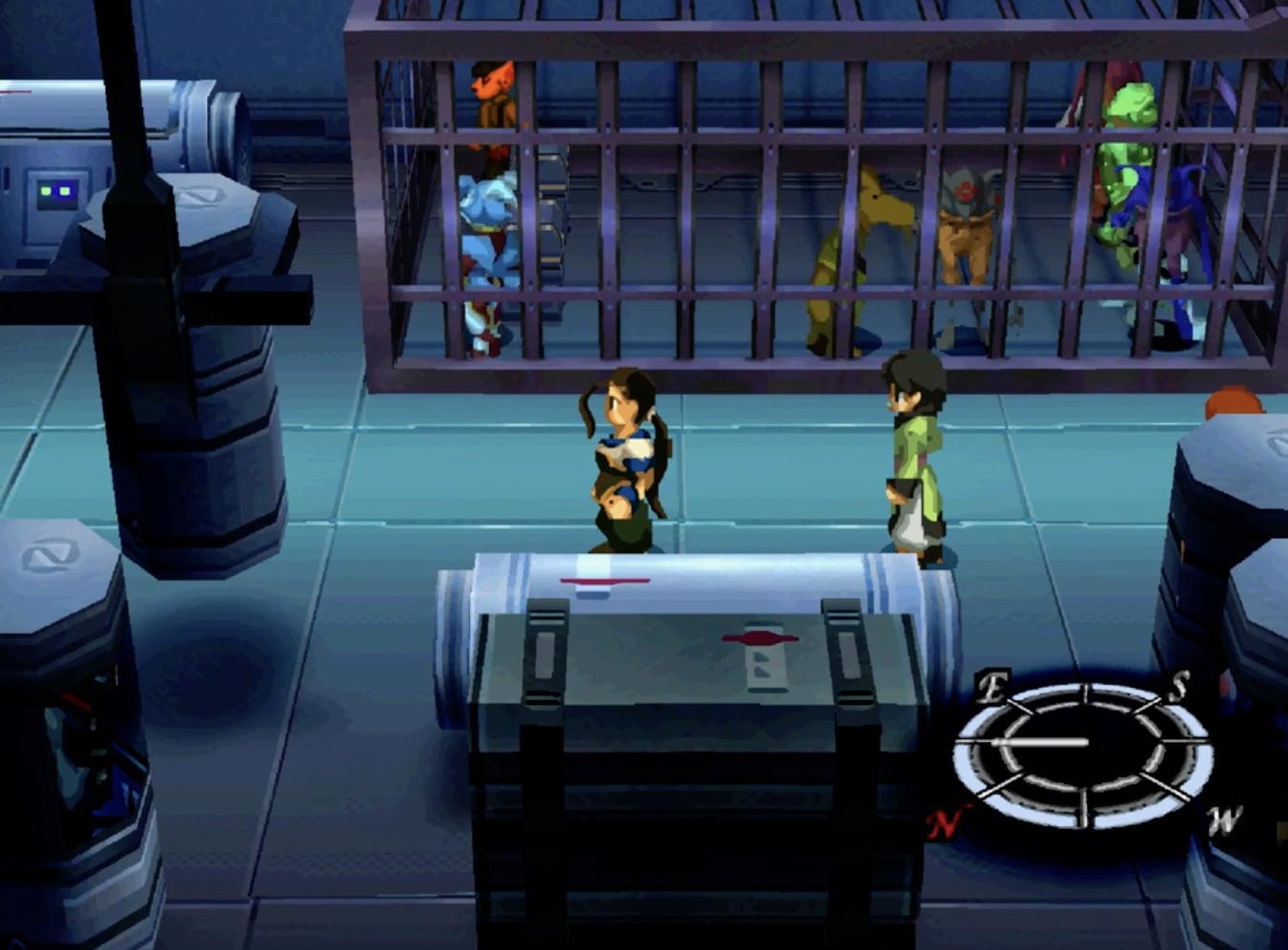
This whole section is long and easy to get lost in. But it’s also a mentally harrowing excavation of the human cost that keeps Solaris going. It’s designed to be stressful. Once they reach the end of the factory, Citan explains this facility was where humans were created 10,000 years ago. The Emperor and the Ministry were the first of the humans. But the governing ministry were killed during the Diabolos Invasion and only existed as “data in memory banks.”
The Soylent Facility was supposed to help them resurrect themselves and keep the Emperor alive, but was turned into an all-purpose enslavement center. Save spots send data to the Gazel Ministry which they can exploit. “They’re transferring and taking living data via Memory Cubes to the Ministry so they can use them to resurrect their bodies?!” Elly asks in shock. Citan confirms it. I couldn’t help but think of parallels to social media and how our uploaded data is being used.
Elly is suspicious and demands to know how Citan knows all of this as even officers at her level have no idea. As she presses her interrogation, the lights go out. Fei makes his way through the darkness, only to find himself restrained by a force ring that has cut his nerve signals. Members of the Gazel Ministry appear as digital data on big screens and confront Fei.
“You already own the world!” Fei yells at them. “What more do you want?” It’s a good question, but the answer is not what I was expecting.
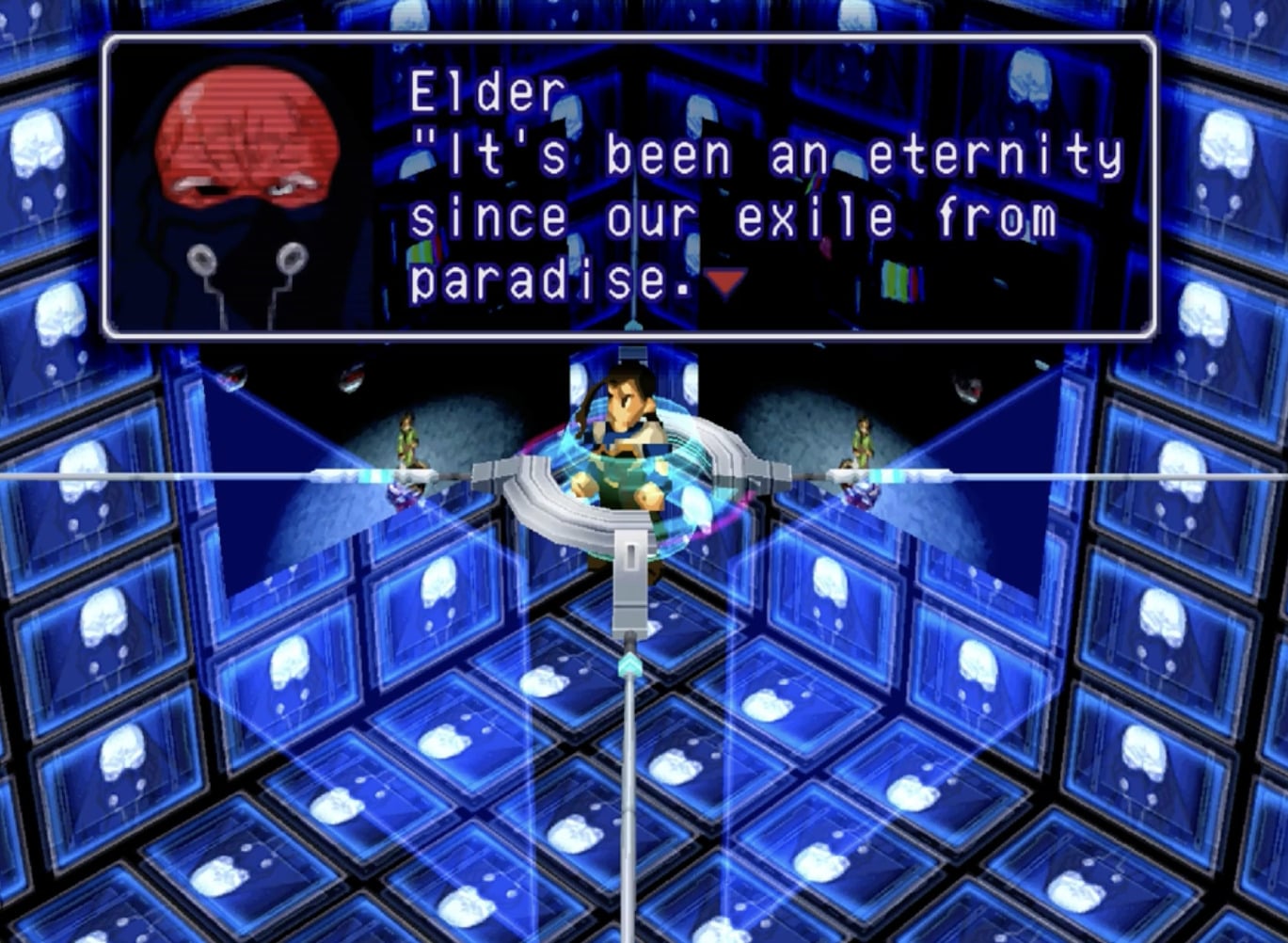
The Gazel members reveal they’re aliens, connecting them to the ship that crashed in the opening anime. They want to resurrect God, raise the ark, and return to the stars to rule over the universe. Solaris is insignificant to them, just a means to an end. They also plan on using the bodies of Bart and the other party members as vessels they can inhabit. Helping them to achieve this was their “Guardian Angel” Citan (Guardian Angel could be a reference to the short story of the same name that Childhood’s End was based on). Turns out your friend is a traitor who’s been watching you this entire time under the orders of the emperor. Or so it seems. In another twist, Citan has his own agenda that doesn’t align with the ministry. So does Krelian, who they’re counting on to help them physically resurrect themselves. Krelian checks Elly and discovers the “Urobolos Ring” in the introns of her genetic code, a reference to the Ouroboros, the giant snake that eats itself and represents the eternal cycle of life.
Xenogears is a narrative roller coaster ride. I’ll admit, even after I replayed the game three times, I had to rewatch playthroughs just to make sense of some of the plot points. This isn’t like modern day games that inundate you with glossaries and codices to explain everything in even more detail. What you experience is what you get. My love for the minutia and lore of the game is the reason I bought a memory card devoted specifically to backup saves after key points in the game.
The whole next section accelerates with even more plot twists. Ramsus, Elly’s old commander, is having a breakdown over his inability to defeat Fei. Citan reveals he’s actually working with you and double crosses the ministry. Billy and Bart try to have their limiters removed, which are mostly psychological and designed to make them defer to the Ministry and the Emperor. But then Citan reveals Elly never had a limiter (which even the citizens of Solaris get).
Fei meets up with the rest of the crew. Elly also is happy to learn that her parents were rescued by one of the shopkeepers, Hammer. Now they have to fight their way out. But once they reach the exit, Hammer betrays them. Driven by his insecurities, he’s agreed to capture Elly and take her back to Krelian. Elly’s mom steps in the way in an attempt to protect her, but gets killed. Hammer, shocked by his own action, flees. But then Grahf shows up with the Executioner. Fei and company fight hard, but Grahf is about to overpower them. Then Elly’s dad arrives in a new gear, telling Elly to escape. The Executioner/Miang blows up her dad’s gear. Elly’s furious and ether starts to flow within her. Fei also is outraged and his gear wakes up without anyone to control it. You know shit is getting real when it changes to a FMV sequence as Weltall’s true form blasts off towards the sky city.
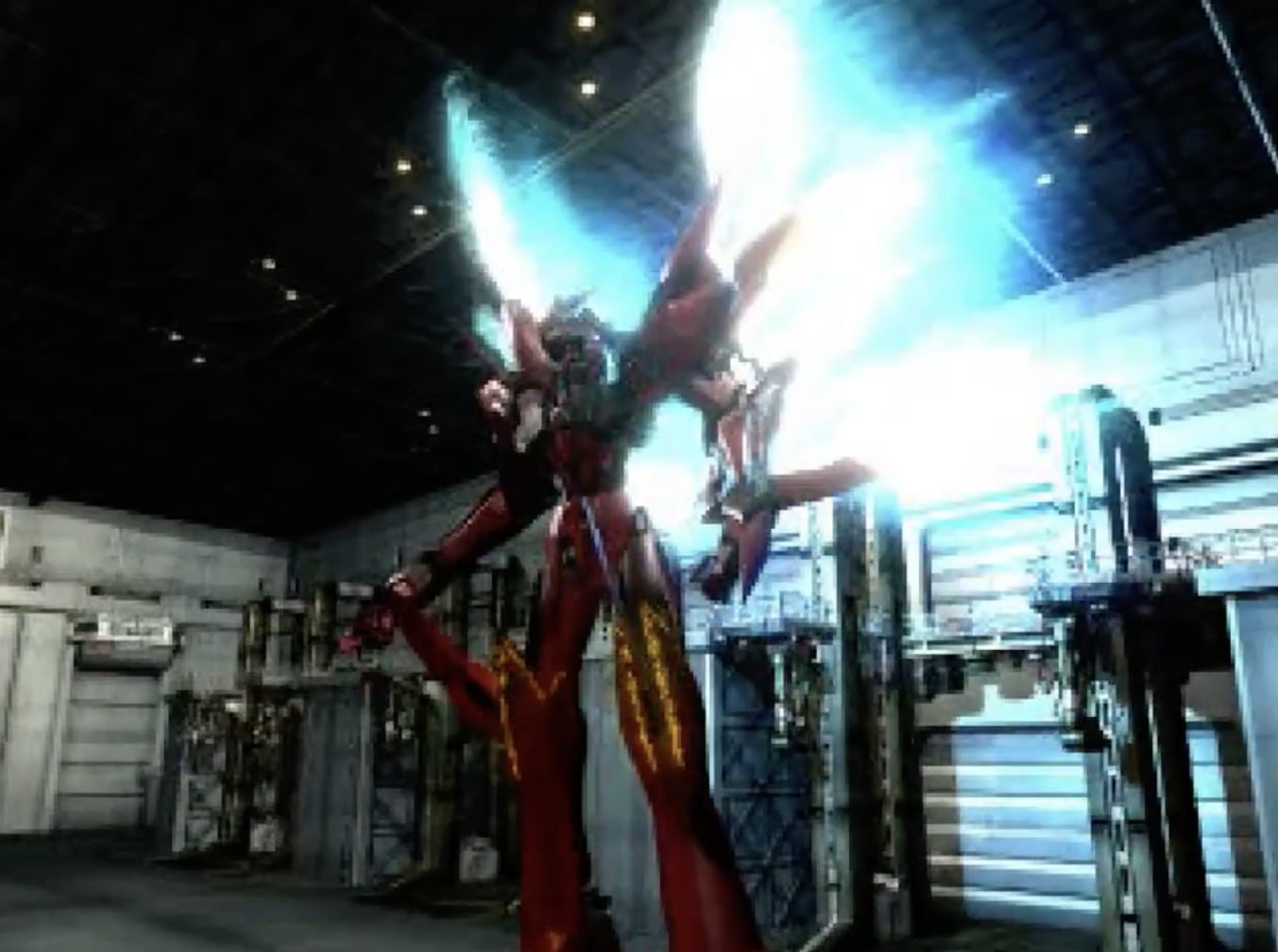
The Id, which represents the unconscious and unfiltered desires that drive humans, is unleashed in Fei. That form of Fei ends up destroying the entire city. Oops. Shouldn’t have pissed him off. Except it seems Krelian and Miang actually wanted this?
At this point, Citan explains a lot of the history of Fei, how his Id form worked for Grahf as an assassin, but their personalities are dissociated from each other. The Emperor thinks he’s Anonelbe, or a man of God. We also see the Gazel Ministry discussing future plans with Krelian. Even though we get much more insight into the situation, somehow, I was left with more questions than when I began.
The fall of Solaris marks the end of Disc 1. As those who’ve played the game know, Disc 2 changes to a visual novel format with occasional battles.
I actually liked the second disc a whole bunch, but I also knew that the change was coming. For those who didn’t, it must have been a shock. Square’s execs actually recommended the team end the game after the destruction of Solaris as they were out of time and budget. The format of the second disc was what Takahashi proposed so that he could finish the tale. I’m glad they did, but it would have made for one helluva cliffhanger if they’d gone with that original idea of ending the game here.
The Wounded Shall Advance Into the Light
I was happy to revisit Xenogears in 2026. While I’m admittedly making thematic connections on my own, I could totally see a future where the AIs of old leaders rule the world like the Ministry of Gazel without people even knowing. There’s CEOs even now who are digitally cloning themselves for the employees to interact with. The idea of “worker bees” living in terror and doing their best just to survive while a middle class thrives in indifference thanks to their commercial palliatives is also not hard to envision.
Ultimately, was it worth it for those in charge of Solaris? They wasted a whole lot of resources exploiting the population so they could get back to the stars instead of using their technology to help people. Ironically, if they’d worked together and treated them well, they probably would have had a better chance at success. All sides could have benefited and there would have been no need for all the subterfuge.
Instead, the Gazel’s belief in their own superiority led to treatment that provoked discontent, rebellion, and eventually their own annihilation. Through all the twists and turns, it comes down to power, or what they perceive to be that power. But raw Id, or human nature as symbolized by Fei’s other form, revolts against it, totally crushing their schemes. Whether it be destroying a god, or trying to become one, the struggle of egos is at the forefront of most of the game’s characters. It’s to the point where humans are devouring other humans just to survive, even though that sustenance is what keeps them leashed in the first place. In that sense, the gears with the anima are a deified physical form of humanity, unbound by the fragility of flesh. There are also religious parallels with the old ideas of Gnosticism and the Demiurge who traps people in a sleep that prevents them from recognizing their divine origins. That’s also apparent in the ministry’s attempt to “limit” Lambs and prevent them from escaping a mental and physical prison within their own bodies.
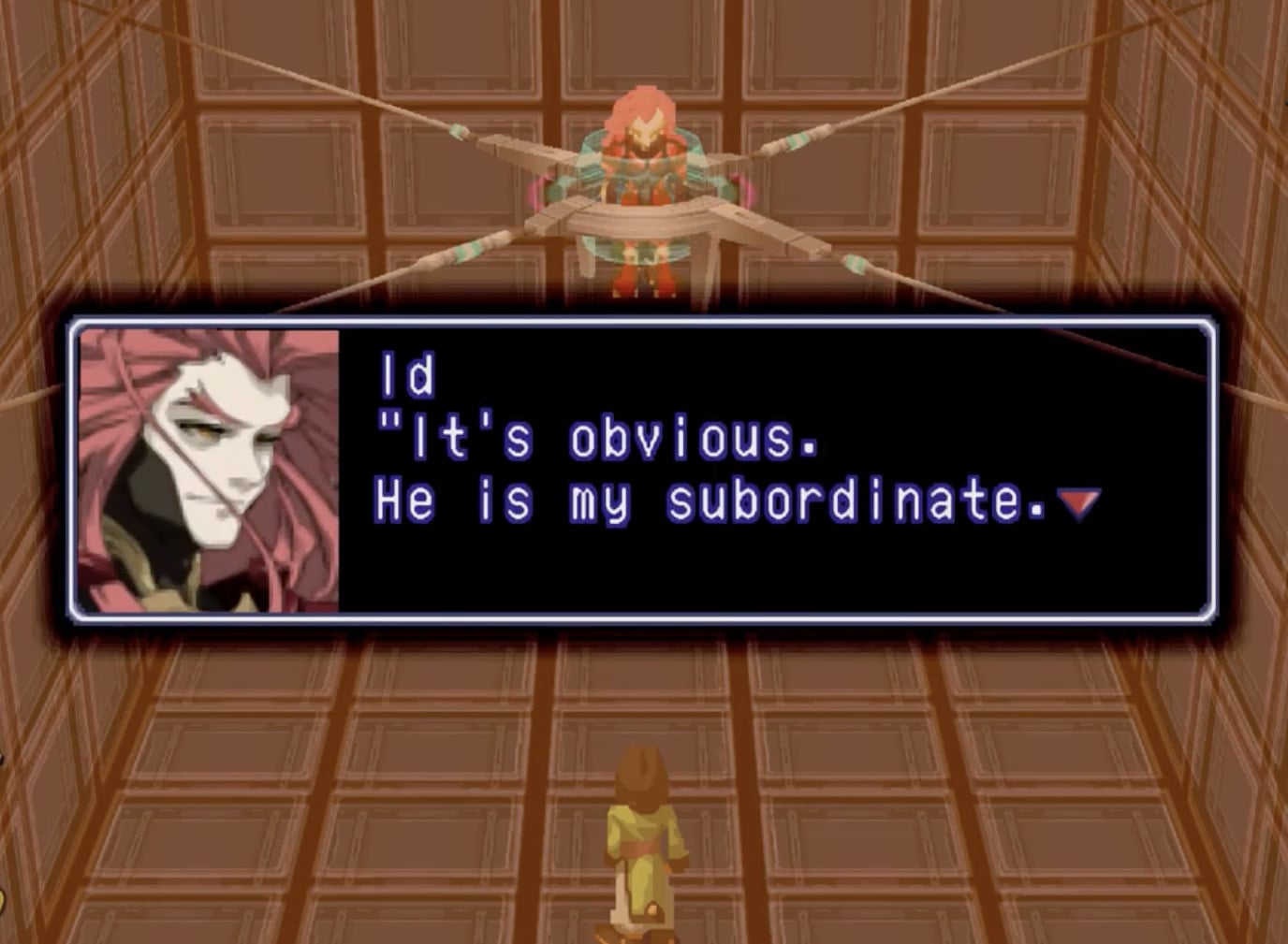
Fei’s portrayal, as a complex ziggurat of three personalities, resonates in the modern era. There’s the impulses of the unconscious, but also the social construct made by our relationships, and a final, craven “coward” traumatized by existence itself who somehow bridges the two and uses each persona as needed.
Xenogears juggles these philosophical and psychological quandaries in the same way. Fei is the “JRPG” on top of the ideas, the normal facade Takahashi wants to use to dissect the Id. Volume two is in a sense that story in its purest form. But there’s also the fear of exposing the ideas without that cover. Hence the bridge that crosses the gap. That mask is ripped away in Disc 2.
The thing I love about Xenogears is that that’s just my interpretation of events. Someone else will probably have something completely different. And that’s not just okay, but the point.
I thought a lot about the fall of Solaris, all the lives lost and how wasteful it was. If only the leaders had been more reasonable instead of pushing Fei to the breaking point. What if the people had stood up against the ministers who never cared about them to begin with? What should people do in a world where God’s existence is inextricably connected with their own destruction?
I don’t have the answers, but I recall what Citan says to Fei while he’s taken captive, an accusation that is both insightful and damning and ties in with the bigger themes of Xenogears. “It is much easier to be given a place to belong than to make one yourself. Under total surveillance, there is no need to bear the risk of maintaining one’s own individuality. They simply live under the delusion of being an ‘individual.’ What could be easier?”