





As a massive fan of Stardew Valley and Hogwarts Legacy, I’ve had my eye on Songs of Glimmerwick for a while, and having finally gotten a taste of its opening moments during a recent preview of the game, I’m ready for more. Just by looking at it, I already knew this would be the ultimate crossover between those two games, but actually putting my hands on it all but sealed that sentiment in stone. After a few hours with Songs of Glimmerwick, I can confidently say that this is precisely what would happen if Stardew Valley and Hogwarts Legacy had a baby—though its unique presentation and creative take on spellcasting mechanics make its familiar loop feel worth investing in all over again.
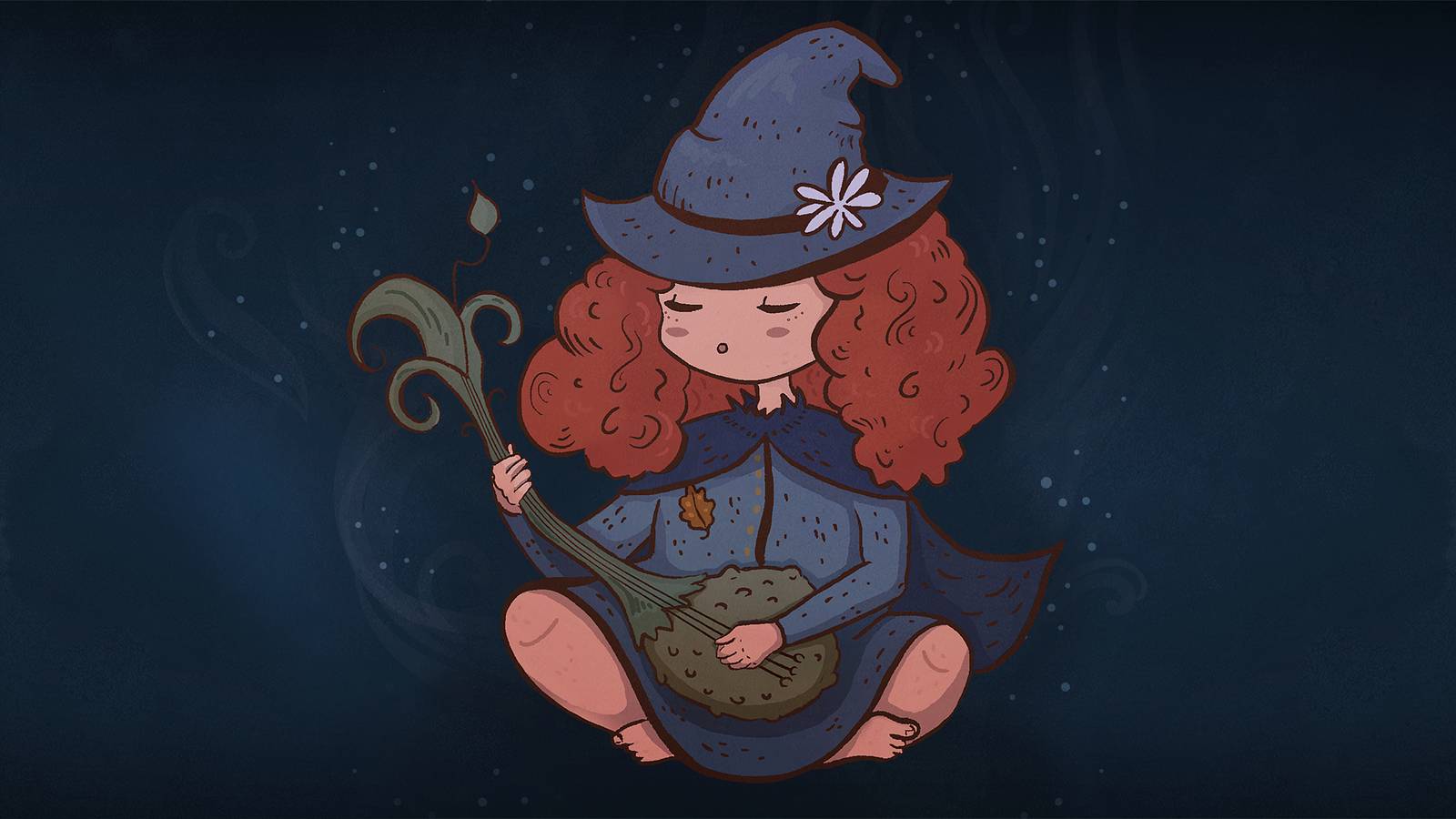
Songs of Glimmerwick is a farm-life story-driven witch academy RPG by Eastshade developer Eastshade Studios that blends life sim and adventure mechanics with music-based magic, where everyday tasks like farming, exploration, and spellcasting are all tied to learning and performing songs. My preview of the game kicked off with a character creation screen, which included several options to customize their appearance—hairstyle, facial hair, eyebrows, nose shape, and skin color to name a few. Once I was satisfied with their look, I finalized the settings, and I was officially introduced to the world of this magical, incredibly charming game, beginning with an artistic cutscene detailing the creation of its universe.
Songs of Glimmerwick’s Magical Universe Finds Its Life in Music, Its Decay in Silence
In Songs of Glimmerwick, the world’s mythology begins with a sentient universe awakening to the sound of life itself. Every living thing within it sings, and those songs carry both beauty and pain in equal measure. Unable to reconcile that tension, the universe reacts violently, unleashing a catastrophic event known as the Silence. This period of devastation wipes away the world’s song entirely, replacing expression with stillness and shaping a belief that emotion, voice, and music are inherently dangerous forces that must be controlled or suppressed.
That belief lingers four decades later, long after the Silence has ended but not fully faded. Entire communities cling to its lessons, rejecting even speech in favor of written communication, convinced that quiet is the only path to stability. Against that backdrop, the story follows a young witch who chooses to break away from that ideology, rediscovering song as something more than a source of chaos. Her journey suggests that the Silence was never a solution, but a rupture, leaving the world full of unexpressed life waiting for release. In that sense, music becomes both a literal form of magic and a thematic counterpoint to fear, positioning expression as the only way forward rather than something to be feared.
Gearing Up for the Etchery School of Magic and Melody

Once the cutscene concluded, I arrived by ferry on the Island of Glimmerwick’s Saltwind Coast and allowed my curiosity to usher me forward. Moving along the sands, I picked up random items that I was sure would come in handy at some point, before being greeted by a talking Dragon Statue whose job was apparently to welcome me to the island. After giving me a decent idea of where I was, the statue then instructed me to make my way to the Etchery School of Magic and Melody—which is essentially Songs of Glimmerwick‘s version of Hogwarts School of Witchcraft and Wizardry.
Of course, on my way to the Etchery, I allowed myself to get distracted by the surrounding nature, giving myself a moment to take it all in. There were a few more items to gather and a fluffy winged ram to pet, but I was captivated most of all by the pleasant charm of the game’s hand-drawn art style and relaxing, magical soundtrack. It wasn’t long before I was greeted by Headmistress Abigailia at the gates to the Etchery, who welcomed me to the school and informed me I would need a flute in order to conduct magic, as well as a few other supplies required for classes. It was also here I learned that I had apparently never applied to the school, even though my name was mysteriously on the list of students.

Headmistress Abigailia then directed me to a nearby “master flutemaker” after playing her own flute to clear the trees and shrubbery that were once blocking the path. Upon making my way to Bristlecone the flutemaker and speaking with him, the Harry Potter comparisons just kept piling up as I soon realized he was Songs of Glimmerwick‘s take on Ollivander. He asked me a few multiple choice questions that I assumed he would take into account for the creation of my flute, although I wasn’t aware of how the outcome would be affected. Questions like “Salted, pickled, spiced, or honeyed?” reminded me of the same obscure questions one might hear someone ask in the Wizarding World, and I immediately felt at home.
Of course, on my way to the Etchery, I allowed myself to get distracted by the surrounding nature, giving myself a moment to take it all in.
At that point, Bristlecone had everything he needed to make my flute, but it would be a while before it was finished. In the meantime, I headed toward Wisk, which, once again, has Harry Potter written all over it. This little town is essentially Songs of Glimmerwick‘s Diagon Alley, as it’s where I purchased various school supplies like a potion-making kit and my school wardrobe. However, I actually enjoyed speaking with all the NPCs in town just as much as picking up what I needed for school. Each one has a distinct personality and interesting story, and it helps that they’re all backed by some great voice acting as well.

But they weren’t just interesting to listen to either. Songs of Glimmerwick doesn’t spell everything out for you when it comes to quests. There are no exclamation points above NPC heads that tell you when they have a request, and the map is free of handholding icons as well. Instead, side quests are introduced upon speaking to those characters, and they’re so seamlessly integrated into each conversation that you might not even realize you’ve picked one up. For example, an NPC simply mentioning they could really go for a cup of tea right now might add a relevant quest to your log. It’s the kind of immersive, relational, non-task-oriented approach to quest design that games like Stardew Valley incorporate, and I’m here for it.
Upon finally retrieving all the supplies I needed for school and getting to know many of Songs of Glimmerwick‘s characters, I made my way back to the flutemaker to pick up my wand—I mean, my flute—and I was introduced to the game’s star mechanic. With the flute, I would soon be able to cast spells by playing it, but first, I needed to finally enter the Etchery School of Magic and Melody and begin my time there as one of its students.
Magical Classes, Musical Gardening, and Meticulous Potionworking

This is where Songs of Glimmerwick‘s core gameplay loop really began to take off, and honestly, it almost felt like I was playing Hogwarts Legacy in another universe—but in the best way. After heading inside the Etchery and spending time getting to know some of the other students, I went to bed to get some rest before my first real day at the school.
Days begin similarly in Songs of Glimmerwick to how they do in games like Harvest Moon and Stardew Valley, where you often wake up to new mail that offers a clue about what to do next. In this case, letters received during my first morning directed me to Dean Clary, who informed me that all new students are required to hold a job on campus while enrolled in courses, and marked Tuesday on my calendar with what would be my first class, Introductory Musical Craft: The Study of Music for Magical Purposes.
On my way to Dean Clary’s office, I checked in on my fellow peers to see what they were up to, but once I finally arrived at her desk, Songs of Glimmerwick‘s gameplay began to kick off in high gear. It was here I was asked to become the keeper of the school’s newly purchased botanical garden off campus. Meeting Dean Clary at the garden’s gate later that afternoon, she taught me my first musical spell: the “Song of Tilling.”
Songs of Glimmerwick’s Pride and Joy Is Its Music-Based Magic
Songs of Glimmerwick‘s flute mechanics are nearly identical to how Zelda: Ocarina of Time‘s ocarina system works, in that, once you learn a song, you can play the first few notes of that song to trigger the effect. However, Songs of Glimmerwick takes the concept a bit further with its Practice Mode, which functions similarly to a music rhythm games like Guitar Hero where the song plays out in full, and you’re required to input specific keys at just the right moment.

Within Practice Mode, you can achieve a one or two-star rating by meeting specific score thresholds, with a one-star rating making the spell accessible from the Quick Flute menu and a two-star “perfect” rating increasing the power of the spell. Of course, as a perfectionist myself, I simply couldn’t go on without getting that perfect rating right off the bat, even if I didn’t yet know what it meant for a spell to be more powerful.
Songs of Glimmerwick‘s flute mechanics are nearly identical to how Zelda: Ocarina of Time‘s ocarina system works, in that, once you learn a song, you can play the first few notes of that song to trigger the effect.
By playing the “Song of Tilling” in the garden, I could charm my hoe to till the ground without needing to do it manually, and from there, plant seeds. It’s possible to select multiple spots on the land at one time so the hoe can do its work while you focus on other tasks, but individual tasks require mana, so there is a limit to how much you can do at once. Fortunately, there are various consumables that will grant you mana so you can keep working a little longer, albeit for a price. I eventually learned two more songs during the preview—the “Chant of the Woodcutters” shortly after learning the “Song of Tilling,” and the “Melody of Stones” once I attended my first Musical Craft class—both of which are self-explanatory in their function.

Songs of Glimmerwick honestly has one of the most creative takes on farming in a game that I’ve ever seen, and it’s a significant part of what drew me to the game in the first place. The thought of not only using music as a farming tool but also being able to accomplish tasks passively while I’m focusing on other things makes the entire process feel less like busywork. Instead of stopping to complete every individual action, I can set things in motion and move on, which keeps the pacing from ever really slowing down. That alone goes a long way in a game like this, where there’s already so much to see, do, and uncover across the island, and it makes the idea of managing multiple responsibilities feel natural rather than overwhelming.
It also helps that Songs of Glimmerwick offers players a pretty generous skill tree where you can unlock anything from increased mana and potion scores to having free seeds delivered to your mailbox and seeing improved selling prices for goods you’ve collected. It gives that gentle RPG nudge a game like this can really benefit from, and while I couldn’t unlock more than a couple of skills during the preview, I saw plenty of potential there for what the experience could become.
Even Songs of Glimmerwick’s Potionworking Is a Blast
Shortly before my preview of Songs of Glimmerwick ended, I had the opportunity to attend Potions 101, where I was introduced to the game’s unique potionworking system. After a brief introduction to the course from the stern Professor Sylvine, I was presented with a brand-new potionworking mini-game that took me more time to grasp than I care to admit. However, once I figured it out, it was immensely satisfying, and I wanted to do more.

In this timed mini-game, you’re given a recipe that outlines the exact ingredients needed to brew a potion, along with five cauldrons where those ingredients can be placed. Your goal is to score as high as possible by completing successful brews while wasting as few ingredients as you can. The twist is that ingredients arrive in a fixed vertical order, similar to a game of Tetris, meaning you can only use what’s next in line.
Songs of Glimmerwick honestly has one of the most creative takes on farming in a game that I’ve ever seen, and it’s a significant part of what drew me to the game in the first place.
If you combine the wrong ingredients in a cauldron, the brew fails and those resources are lost, so you have to think quickly and plan ahead at the same time. To manage that, you can temporarily store ingredients in a side bowl to reach ones further down the line, but anything left in that bowl when the hourglass runs out will cost you points—although you can still use the ingredients in the side bowl at any time. There is clearly a lot going on here, and it took me several tries to master it. Even so, it was an exciting way to end my preview of Songs of Glimmerwick, as exiting the Potions class concluded my time with it.
Songs of Glimmerwick Already Feels Like a Strong Blend of Familiar Ideas and Fresh Identity

After just a few hours with Songs of Glimmerwick, it already feels like a natural meeting point between the cozy routine of something like Stardew Valley and the magic of a school like Hogwarts. The music-based spellcasting, the hands-off approach to quests, even the way something like farming is handled all feel like they’re pulling in the same direction. There are still moments where certain gameplay mechanics take a bit to click, especially early on, but nothing I ran into felt out of place or at odds with what the game is going for.
If anything, it feels like I’ve only scratched the surface, and that’s what makes it so easy to want more. If the rest of Songs of Glimmerwick continues to build on this foundation, then it has a real shot at being something special—at the very least, the Hogwarts Legacy, Stardew Valley crossover some have dreamed of.
Songs of Glimmerwick launches in 2026 and is currently available to wishlist on Steam. GameRant was provided with a Steam code for the purposes of this preview.