







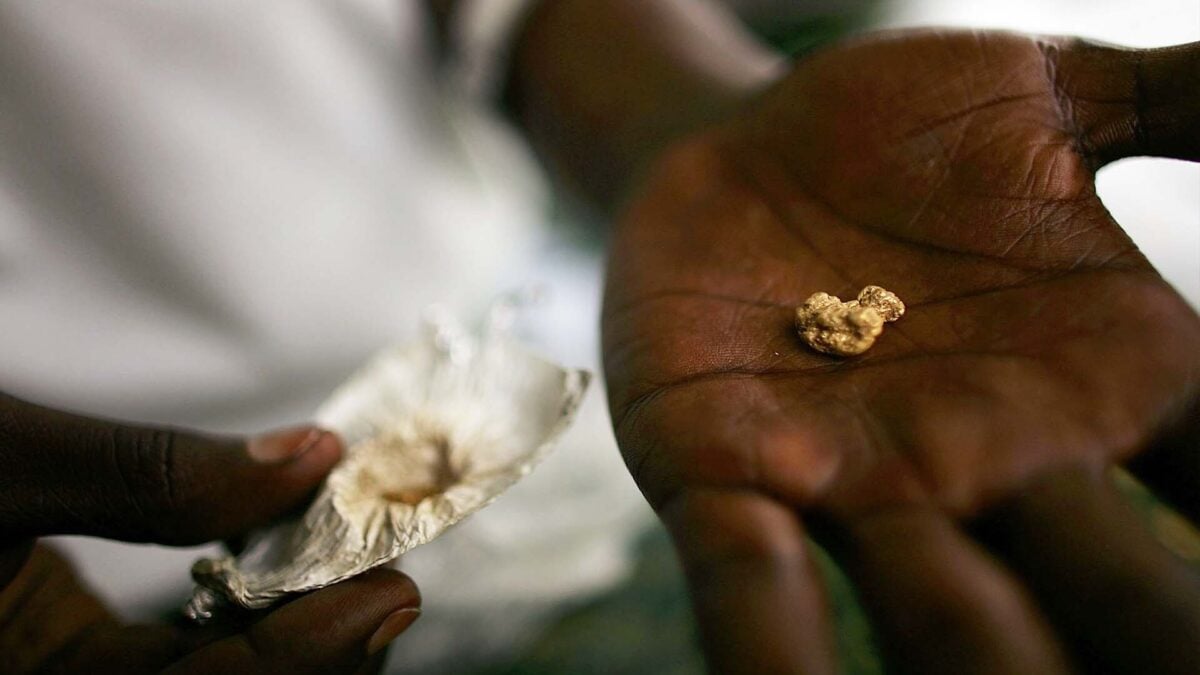
For over a decade now, myself and my former editor at GamesIndustry.biz, Brendan Sinclair, have been passing the ball of covering conflict minerals in the gaming industry back and forth each year. “Conflict minerals” is a blanket term for a collection of minerals—most commonly tin, tantalum, tungsten, and gold, which are collectively referred to by the shorthand 3TG—and primarily mined in conflict zones around the world such as the Democratic Republic of Congo, Rwanda, South Sudan, Uganda, and so on. Their mining, transport, and acquisition from these areas is often in danger of being tied to or directly funding corruption, armed conflict, violence, slave labor, and various human rights abuses.
These minerals are also required components in most video game and computer hardware. So, your Xbox, PlayStation, Switch, phone, or gaming PC.
Now it’s absolutely possible for companies to source these minerals ethically. They can be found in areas of the world where armed conflict is not prevalent, or obtained from recycled or scrap sources. They can also be retrieved from conflict zones if everyone involved is committed to careful monitoring and transparency to ensure that their acquisition isn’t tied to corrupt activities. However, that last one is understandably difficult to do: supply chains contain many, many links, and the layers of obfuscation are deep, from the people who actually mine the minerals, to the people who smelt and refine them, to those who then supply them to manufacturers who then put them into devices, to those who sell the final product. It is unfortunately all too easy for companies to simply pretend they don’t see what’s going on several layers upstream in a supply chain, and for many years, that’s just what everyone did.
Helpfully, since 2013, the Dodd-Frank Act has required publicly traded companies in the U.S. to file an annual report with the SEC demonstrating their efforts to track down the sources of any conflict minerals they might be using, including which manufacturers have undergone third-party audits to ensure their supply chain is as clean as it can be. The Dodd-Frank Act was partially repealed in 2018, but the conflict minerals disclosure requirements remained, despite the best efforts of some manufacturing groups to toss them out as well.
As long as those regulations hold, we have a window into how well major gaming hardware and accessory manufacturers are doing at making sure that when we buy an Xbox, PlayStation, Switch, PC, or an accessory for any of those, we are not inadvertently supporting conflict and human rights abuses. A group called the Responsible Mineral Initiative (RMI) has been working for years now to help companies actively and thoroughly look into these things by supplying tools and standards for third-party audits and reporting templates, and a number of companies make use of that. However, the actual requirements for filing with the SEC aren’t especially stringent, and some still get by on the bare minimum.
For this report, I did my best to track down the filings of every U.S. publicly traded company that uses conflict minerals for technology associated with video games, and attempted to summarize their often-confusing reports in a way that’s digestible to most people. A number of major video game hardware and accessory manufacturers are left out of this piece unfortunately, either because they are not publicly traded in the U.S. (HTC, Asus) and thus don’t need to file with the SEC, or because they are not publicly traded at all and have never once answered an email on this topic (Valve). Nintendo is the one exception, as it’s not publicly traded in the U.S., but it does provide a public corporate social responsibility report that goes into detail about its mineral sourcing, so I’ve included that here too.
So, without further ado: which gaming hardware and accessory companies can’t tell you whether or not they funded or perpetuated human rights abuses in 2025? Let’s find out.
Microsoft
It’s pretty easy to understand what Microsoft uses conflict minerals for in the gaming space: Xboxes. Windows PCs. Controllers, tablets, and a whole plethora of other gaming hardware that’s attached to them. The company’s track record of auditing the companies that supply and refine the minerals necessary to make all these things has been spotty over the last decade, but has seen an improvement more recently. Its reports contain significantly more detail on its requirements, processes, and due diligence than most other companies we checked, and that due diligence has proved fruitful.
Microsoft reports a total of 266 smelters and refiners in its network, of which 85 percent have actively passed a third-party audit affirming no armed conflict in the supply chain, or are in the process of undergoing one. Of the remaining 15 percent, 14 smelters and refiners were found either to have failed an audit, not yet have taken one, or to be inactive. However, Microsoft said that these smelters and refiners had sourced their minerals from outside countries where active conflict was not a concern.
As a result, Microsoft has an extremely encouraging sentence in its report: “Microsoft found no reasonable basis for concluding that any 3TG Smelter or Refiner (‘SOR’) that was identified in the Microsoft Devices supply chain for the 2025 Reporting Year sourced 3TGs in a manner that directly or indirectly financed or benefitted armed groups in a Covered Country.“ Or, in plain English, Microsoft is as confident as it can be that none of the minerals used to build its Windows PCs, Xboxes, controllers, tablets, or other gaming devices funded, or were otherwise involved in, armed conflict. While even this sounds just a little too vague, this is genuinely the closest any of these companies will legally come to guaranteeing their minerals are not funding human rights abuses. On this very specific ethical front, if not certain other ones, Microsoft is actually doing okay.

Sony
Sony, however, is another story. Naturally, Sony uses 3TG for numerous consumer electronic devices, including gaming hardware such as PlayStations and all the accessories that go with them. Unfortunately, it doesn’t have the best record when it comes to tracking down where all those minerals actually come from, and has continued to backslide year after year in letting large chunks of the smelters and refineries it uses fall out of compliance. In 2024, Sony reached an all-time low of only 68 percent of its smelters and refiners having passed an audit, which was down from 69 percent in 2023, which was down from 73 percent the year before, 75 percent before that, and so forth.
This year, 68 percent of Sony’s smelters and refiners were in compliance once again. Of the non-compliant smelters and refiners this year, Sony’s report states that it was unable to even determine the location of 45 of them. Sony claims that it’s taking steps to remediate all this, such as sending sternly worded letters or threatening to revoke its business from non-conformant sites. But Sony has made these exact promises year after year in the past, and either it’s not effectively following through, or it’s just not working for them. We’ve reached out to Sony for comment and will update when and if we hear back.

Nintendo
Nintendo is not publicly traded in the United States, and therefore does not have to file with the SEC as the other companies in this article do. However, Nintendo historically has been pretty diligent about publishing a Corporate Social Responsibility (CSR) report annually that has previously included information on its mineral sourcing, including a lot of the same stuff we’d see in a typical SEC filing.
Nintendo’s most recent report looks pretty good, if slightly confusing. It lists 266 smelters and refiners in its supply chain, 265 of which are reported to have passed a third-party audit for a 99.6-percent compliance rate. Nintendo’s description does not address the one remaining smelter, where it is located or why it’s not compliant: it could have failed an audit, it could be out of commission, or it could (this has happened before) be a typo.
It is worth pointing out here that this information is ever-so-slightly out of date, as Nintendo’s most recent report is for fiscal 2025, which ended over a year ago. Nintendo’s CSR report typically shows up on its website during the summer months, so we’ll be keeping an eye out and will update this section once it’s published and translated.
Apple
In my time covering conflict minerals for GamesIndustry.biz, I never had any issues dredging up SEC filings from companies who ought to have filed them. But this year, I have my first enigma on my hands: Apple. Apple has historically been surprisingly diligent about ensuring its supply chain is clean. From 2015 through 2023, Apple managed to reach a 100-percent rate of smelter and refiner participation in third-party audit programs, and that same year continued its streak of 100-percent audit compliance. It’s accomplished this by aggressively kicking smelters and refiners who refused to participate in these programs to the curb almost immediately year after year, suggesting that doing something other than just sending a mean letter actually produces results.
This year, weirdly, Apple’s SEC filing is missing the attached exhibit that normally breaks down the total number of smelters and refiners in its supply chain, where they are located, and (often) whether or not they participated in and passed an audit. Its filing cites the SEC’s 2017 “Statement on Cybersecurity” as the reason for a lack of exhibit, suggesting (as best I can tell) that it thinks publishing this exhibit would somehow be a cybersecurity risk.
We’ve reached out to Apple for more information on its filing, but the company did not return out request for comment. In the meantime, its filing does contain the following encouraging sentence: “Based on our due diligence, including analyzing the information provided by third-party audit programs, upstream traceability programs, independent reporting, and our suppliers, we found no reasonable basis for concluding that any smelters or refiners of 3TG identified in our supply chain as of December 31, 2025 directly or indirectly financed or benefited armed groups in the Democratic Republic of the Congo or an adjoining country (the ‘Covered Countries’).” Or, again in plain English, “Apple is as confident as it can be that none of the minerals used to build its tech and gaming products funded, or were otherwise involved in, armed conflict.” As with Microsoft, actually filing this sort of statement with the SEC is a big deal. Companies lie all the time, but this is the sort of statement you really can’t put in an SEC filing unless you’ve done the work to earn it. We’ll update when and if we hear back from Apple with more detail.
Alphabet
Alphabet, better known as Google, makes Android phones and lots of other accessories that go with them. Google’s report is one of the more detailed ones, and includes a lot of bonus information about initiatives it’s participating in to help support individuals just trying to live regular lives in regions where armed conflict is prevalent. That would all probably mean nothing if Google’s actual report on conflict minerals was garbage, but fortunately, it’s been on Apple’s heels for a few years in good supply chain diligence.
While only 72 percent of its smelters and refiners were conformant to industry standards, of the remaining 83, 7 were in the process of an audit, and 74 were not sourcing from conflicted countries at all. As for the last two, Alphabet reassures that its suppliers are working on reaching out to these locations to get them audited as well.
Meta
Meta uses 3TGs for its VR headsets, such as the Meta Quest, and more recently a dystopian line of “AI glasses” that include features like nutrition tracking (they can see what you eat) and summaries of your text messages, in case texting wasn’t a succinct enough mode of communication on its own.
93 percent of the smelters and refiners Meta uses to make these horrible headgears were compliant with a reputable minerals certification program in 2025, while three more were actively undergoing certification. A remaining 13 are either not active or non-conformant—Meta’s report does not distinguish how many of each there are. This is roughly equivalent to where Meta has sat several years in a row, but still down from earlier years where it reported 99 percent of its smelters and refiners had passed a third-party audit. It’s not great, as it could mean 13 of Meta’s mineral sources are actively funding armed conflict, or not. We just don’t know, and likely won’t until and unless Meta itself cares enough to know.
Turtle Beach
Turtle Beach produces all sorts of gaming accessories that use conflict minerals, including headsets, keyboards, mice, controllers, flight and racing sim hardware, microphones, and more. This company has had a significant turnaround from the last time this report was compiled, going from “all but 42” of its 263 smelters and refiners reported as conformant in 2023 to “all but 9” out of 223 in 2025—that’s 96 percent. Turtle Beach goes so far as to break down the remaining nine facilities, including their locations by country, revealing that none of the nine facilities are based in any of the countries identified as being at-risk for armed conflict. As such, while Turtle Beach isn’t making any guarantees about its sourcing, its products seem to be on the safer side.
Logitech
Logitech uses conflict minerals for roughly the same types of gaming accessories that Turtle Beach does, in addition to a lot of other non-gaming or gaming-adjacent tech. And fortunately, it goes into quite a bit of detail about its supply chain in its 2025 report. The company reports a total of 301 smelters and refiners in its supply chain initially for the year, but says it removed 86 that were either non-conforming or were reported in error. Of the remaining 215, 212 passed their audits. Logitech disclaims that it cannot “definitively confirm” whether minerals from the remaining three facilities are present in Logitech products, and is currently engaging in a plan with its suppliers to either bring these facilities into compliance, or remove them entirely.
Nvidia
Nvidia makes computer parts, and its GPUs, processors and modules, and loads of other little technological bits that go in, on, and around your PC use 3TGs. My former colleagues and myself haven’t done much reporting on Nvidia in the past, but it seems important to include now especially given wider global discussions about PC parts, how much they cost, and what they’re used for.
84 percent of Nvidia’s smelters and refiners for 2025 have passed a third-party audit, and of the remaining 16 percent, five of them were currently in the process of being audited. 25 more had ceased operations, one is uncertified and Nvidia is working to get it in an audit program, and a remaining 9 failed their audits, with Nvidia saying it’s working to either get them compliant or remove them from the supply chain entirely.
Amazon
Though not a console maker, Amazon nonetheless uses conflict minerals for, among other things, its own “Amazon Basics” line of gaming accessories, including headsets, mice, keyboards, cables, and other items. It also produces the Amazon Luna Controller for its gaming subscription service.
However, Amazon doesn’t seem to know precisely where all of these minerals are coming from. Though its report asserts that it has not identified any suppliers sourcing minerals in a way that benefits armed groups, some are “still working to determine country of origin and facility information.” It’s unclear how many smelters and refiners this actually includes, and while it reports a long list of known smelters and refiners it may have gotten minerals from, it also claims it is “unable to validate the accuracy” of that list. This is, for what it’s worth, about as much information as Amazon has made an effort to obtain and share about whether or not it’s inadvertently funding human rights abuses in every year prior, making Amazon the most questionable company on this entire list as regards conflict minerals ethics. We’ve reached out to Amazon for comment on this and will update when and if we hear back.
GameStop
GameStop might seem an odd inclusion for this list, but the company has completed these filings with the SEC for years due to various electronic bits and bobs it develops, manufactures, and sells. GameStop’s exact wording on which of its products may contain conflict minerals is, “a subset of our electronics, including parts used in our refurbishment business and products incorporating a circuit board module.”
GameStop has a history of rather weird, dismissive language in its filings about where the minerals used to make its electronic plastic toys come from. In 2022, its report stated that “all but 31” of its smelters and refiners were guaranteed conflict-free which, given they had 50 smelters and refiners total, is pretty damning. In 2023, GameStop dramatically increased the number of smelters and refiners in its supply chain to 205, but couldn’t get all of its suppliers to confirm where they were even getting their raw materials from, making it impossible to do a full round of audits. In 2024, things improved: no weirdly obfuscating language, and all the smelters and refiners sourcing minerals from countries with armed conflict successfully passed an audit.
For 2025, GameStop continued its diligence from 2024. It identified 173 smelters and refiners in its supply chain providing minerals for these items, only 35 of which were sourcing from countries of concern. All 35 were certified conflict-free smelters, meaning GameStop’s various gadgets are highly unlikely to be funding armed conflict.
Okay, so what does this all mean?
When I sat down to write this report, I admittedly expected it to be worse than it was. There have been some baaaad years, after all. That’s not to say that the outlook here is rosy. Amazon is still astoundingly dedicated to knowing as little as possible about its own supply chain, and Sony is actively getting worse by the year at tracking whether or not it’s inadvertently funding armed conflict. And there are still several companies on here with at least some level of ambiguity or uncertainty as to whether they are indirectly perpetuating human rights abuses.
This is also where I point out that the harms committed to obtain conflict minerals are just one set of human rights violations, and basically every one of these companies is at least loosely complicit in some other horror. Microsoft is actively complicit in atrocities in Gaza. Meta’s platform has been used to amplify and even encourage racial violence. Amazon has treated its workers so poorly that Amnesty International said it was equivalent to “human trafficking for the purpose of labor exploitation.” Everyone on this list except Nintendo has confirmed it’s experimenting with environment-destroying AI technologies. I could go on.
But with so many other things in the world related to human dignity headed downhill so fast, it just seemed inevitable to me that these reports would be vaguer than ever, or completed with far less diligence than before, or missing entirely. Instead, just about every gaming hardware company that has to report this stuff appears to have made some sort of good-faith effort to improve, even those who had horrible track records in past years, and in spite of the growing likelihood that someone will eventually repeal the laws forcing this level of accountability entirely. You don’t ever “got to hand it to” corporations, especially when human rights violations are involved, but I’ll take the small efforts to make the world a little less miserable wherever I can get them.