


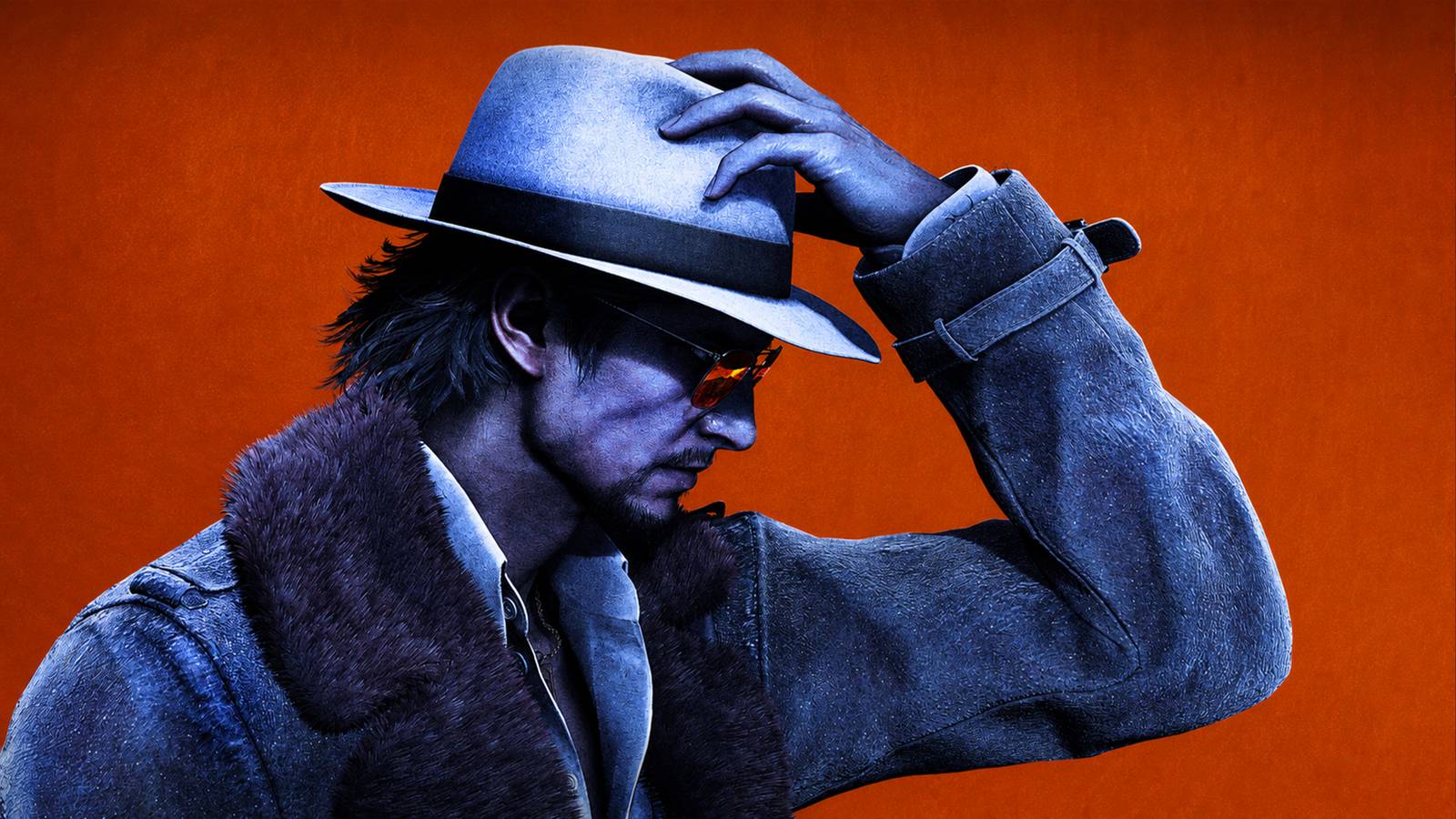
I’ve been a massive fan of RGG Studio’s Like a Dragon games for years, so I probably don’t need to explain just how excited I was when Stranger Than Heaven was first revealed. And once the developer announced that the game would take players through five different eras of Japan—specifically, from 1915 to 1965—I was even more interested. After all, RGG Studio has already given me plenty of reasons to trust it when it comes to making games with living, authentic worlds that I can spend countless hours just wandering around in, and the thought of experiencing so many different periods of Japanese history through one of its games sounded right up my alley. Needless to say, when the opportunity came along to actually get my hands on Stranger Than Heaven, I was more than happy to take it.
I recently traveled to New York for a hands-on preview of Stranger Than Heaven, where I got to play through the game’s prologue before jumping ahead to several different periods of protagonist Makoto Daito’s story. Of course, that meant I wasn’t experiencing everything in the order players eventually will, but I actually appreciated getting to see so many different parts of the game during one session. I got to spend some time getting familiar with its combat, see how the different eras look and feel, and get a taste of what RGG Studio has been working on. And while I obviously haven’t seen everything Stranger Than Heaven has to offer just yet, I certainly walked away with plenty to talk about.
Stranger Than Heaven’s Story Begins With a Fight for Belonging
My hands-on preview of Stranger Than Heaven began with the game’s prologue, which introduces players to Makoto Daito in San Francisco in 1915. Born to an American father and a Japanese mother, Makoto has spent much of his life struggling to find somewhere he belongs, largely because of the discrimination he’s faced over his mixed heritage. To make matters worse, he’s also been wrongfully accused of murder, which has understandably made his situation even more complicated. So, with little reason to stay in America, he decides to leave for Japan, hoping to find a better life in his mother’s homeland. There’s just one problem. He doesn’t have the money to get there, so he ends up sneaking aboard a ship instead.
It’s during his journey to Japan that Makoto crosses paths with Yu Shinjo, another young man who has faced similar discrimination, and a merchant named Orpheus, who is played by none other than Snoop Dogg. Getting to Japan is only the beginning of Makoto’s troubles, as he eventually discovers that the country isn’t quite as welcoming as he had hoped. I won’t get into everything that happens during the prologue, especially because there’s quite a bit of story to experience here, but it’s certainly an interesting way to introduce someone whose life we’re going to be following for the next 50 years.

I think what makes Makoto’s story particularly interesting, though, is that he isn’t necessarily setting out to accomplish some grand objective. At least initially, he’s just trying to find somewhere he can live without being treated like an outsider. And considering how much his life is going to change over the course of Stranger Than Heaven, I’m especially interested in seeing how RGG Studio develops his character as he gets older. After all, we’re meeting him at the very beginning of his journey, and he has quite a bit of living left to do.
Five Different Eras Give Stranger Than Heaven Its Unique Identity
After playing through the prologue, I got to jump ahead to several other periods of Stranger Than Heaven, which was particularly interesting considering how much of the game’s identity revolves around its different settings. RGG Studio has already made a name for itself with the Like a Dragon series and its incredibly detailed recreations of Japanese cities, but Stranger Than Heaven is approaching things a little differently. Rather than focusing on a handful of locations within a relatively modern setting, the developer is taking players through five different cities across 50 years of Japanese history. And if you’re familiar with how much there is typically to see and do in an RGG Studio game, you probably already have an idea of why that’s such an exciting prospect.

The journey begins in Kokura in 1915, a bustling industrial city known for its massive steelworks, before moving to Kure in 1929, where Japan’s naval industry plays a major role in the city’s identity. From there, the story takes players to Osaka in 1943, followed by the coastal resort town of Atami in 1951, before eventually arriving in Tokyo’s Shinjuku district in 1965. These aren’t meant to be completely historically accurate recreations of Japan, as RGG Studio has described the game’s world as a version of the country that might have existed. Nevertheless, each setting draws heavily from the period it represents, which gives the developer plenty of opportunities to make these cities feel different from one another.
Born to an American father and a Japanese mother, Makoto has spent much of his life struggling to find somewhere he belongs, largely because of the discrimination he’s faced over his mixed heritage.
I think what makes the decision to cover five different eras especially interesting, though, is that we’re following the same character through all of them. Makoto isn’t simply visiting different cities for the sake of giving players somewhere new to explore. He’s getting older as Japan itself changes around him, and the people he meets along the way will undoubtedly have an impact on who he eventually becomes. Obviously, jumping around during a hands-on preview isn’t the same as experiencing that journey from beginning to end, but it did give me a chance to see different parts of the game without having to wait until I reached them naturally.

And speaking of seeing these different parts of the game, experiencing what life was like in each of these eras was one of the highlights of the whole preview, apart from, of course, seeing Stranger Than Heaven‘s original story play out and its characters and their relationships grow over time. Most of my initial time with the game was spent with its story, but once RGG allowed us to free roam through the game’s different eras, as a fan of the studio’s past work, I immediately felt at home.
As usual in an RGG game, the world of Stranger Than Heaven feels alive, dense, and incredibly detailed. There are side quests to complete, mini-games to play, random encounters with thugs, merchants to visit, restaurants to eat at, items to find, and plenty of other random, occasionally inconsequential activities. Roaming RGG’s cities is by far one of my favorite things to do in its games, and Stranger Than Heaven certainly pulled out all the stops here to ensure it’s a major highlight of the whole experience.

But what makes that part of the experience even more engaging is how much everything changes between the different eras. Sure, the environmental design itself evolves with each decade, but so does the living world inside it. With each passing time period, new activities and encounters are added to the game, and in some cases, the world itself opens up even more than it did in a previous era—and I don’t mean in square mileage. What I mean is that in one era, I could walk into almost every single building, and even when that building didn’t house anything worth finding, it immersed me all the more in the world RGG was trying to sell me.
Stranger Than Heaven’s Combat Is a Major But Effective Departure for RGG Studio
If you’ve played any of RGG’s Like a Dragon games, you’re probably familiar with just how satisfying it can be to beat the living daylights out of a group of enemies, especially when the encounters reach a level of ridiculousness that just makes every fight that much more over the top. I’ve always thoroughly enjoyed that side of the series, so I was particularly excited to get my hands on Stranger Than Heaven’s combat system. However, the developer has taken a very different approach this time around, giving players independent control over the left and right sides of Makoto’s body, which is a pretty substantial departure from what RGG has done in the past.

Rather than relying on the more traditional button combinations found in the Like a Dragon games, Stranger Than Heaven assigns Makoto’s left and right attacks to their respective shoulder buttons and triggers. This means you can throw a quick jab with his left hand before following up with a much heavier strike from his right, or charge up an attack to deal even more damage. You can also grab enemies, tackle them to the ground, and continue beating them while they’re down. Defending yourself is a little more involved as well, since you can block an incoming attack with one arm while leaving the other free to retaliate.
It wouldn’t be an RGG game without a healthy selection of weapons, and Stranger Than Heaven certainly isn’t lacking in that department. Makoto can use everything from knives to hammers, although what’s particularly interesting is how those weapons interact with the game’s new controls. For example, when Makoto has a knife equipped in one hand, he can still use his other hand to punch an enemy, which gives you a little more freedom in how you approach each encounter. Two-handed weapons obviously work differently, and players can also switch between their available weapons during a fight rather than having to pick something up off the ground every time they want to use it.

Now, seeing Stranger Than Heaven‘s combat in action is one thing, but actually being the one on the sticks is something different entirely. In fact, I’ll say up front that Stranger Than Heaven is already proving itself to be the hardest RGG game to master in terms of combat, simply because there are so many different actions you need to be aware of in a fight. Plus, the enemies just don’t pull their punches at all, and many of them hit like a brick. I lost track of how many times I died during the preview, but I don’t consider that a negative in the slightest. I appreciate a good challenge, so long as a game’s combat system is interesting enough to make me want to pursue that challenge further—and Stranger Than Heaven‘s is.
Rather than relying on the more traditional button combinations found in the Like a Dragon games, Stranger Than Heaven assigns Makoto’s left and right attacks to their respective shoulder buttons and triggers.
Because there are so many things to keep track of during a fight, more often than not, I was hitting the wrong button and finding myself in a world of hurt. Granted, I didn’t have a lot of time to really perfect my skills in the game, and it wasn’t until just before the preview ended that I felt like I was finally getting a firm grasp on the flow of combat. At that point in the game, I had to face an incredibly challenging boss that already had demanding fights leading up to him, and with limited healing supplies and sweaty hands from unchecked nerves, he was tough. However, I walked away victorious after my second attempt, and I was pleased with the time it cost me.
There’s More to Stranger Than Heaven Than Fighting
But combat is only one part of Stranger Than Heaven, and considering this is an RGG Studio game, I think it’s safe to say there will be plenty of opportunities to get distracted by other things. One of the more interesting additions this time around is Makoto’s involvement in show business, which eventually sees him putting together musical performances of his own. During the preview, I was able to see how these performances will play out, and I was even granted the ability to arrange some of them. But RGG also said the full game will allow players to recruit musicians and singers and even create original songs using sounds they’ve collected while exploring the game’s cities.

I have to say, I’m particularly interested in this side of the game, especially because it sounds like the kind of activity I could easily spend hours messing around with. And given how much effort RGG has historically put into its side content, I’m looking forward to seeing how this all fits into Makoto’s story. What I experienced during the preview makes this out to be a cozy rhythm game of sorts that you can play for quite a bit of extra income, where your choice of musicians, stage effects, and your set list all factor into the quality of your production. Then, once the performance actually starts, you can actively increase the quality of your show by hitting the correct button at the correct time once the prompt appears.
When you aren’t performing, you can actually market your shows as well by putting up posters around town to attract an audience. I got to do a bit of this during the preview, and it gave me yet another reason to explore the game’s different cities and eras. And from there, as show business goes, it all comes down to managing income and expenses, making sure you’re not spending more than you’re making. Again, this kind of money-making activity is one of the many things RGG’s games are known for, and it’s also one of the things I enjoy the most about the studio’s games. Stranger Than Heaven is no different in that regard.
Stranger Than Heaven Hands-On Preview: Final Thoughts

Going into my hands-on preview of Stranger Than Heaven, I was already excited about what RGG Studio had in store, especially considering how much I’ve enjoyed its previous games. But after getting to spend some time with it, I’m even more excited to see how everything comes together. I thoroughly enjoyed getting to experience the different eras, and I can’t stress enough just how much fun I had simply wandering around the cities and seeing what I could find. It’s one of the things I’ve always loved most about RGG Studio’s games, and Stranger Than Heaven certainly hasn’t lost any of that appeal.
Of course, there’s still plenty I haven’t seen, and considering how much ground Makoto’s story covers, I feel like I’ve only scratched the surface of what the game has to offer. I’m also looking forward to spending more time with the combat, especially because I was only just starting to get comfortable with it by the time the preview ended. But between the story, the combat, and all the little distractions scattered throughout the world, Stranger Than Heaven is already shaping up to be another RGG Studio game I can see myself spending hundreds of hours with. And as someone who has been a fan of the studio’s work for years, I couldn’t be happier about that.

- Released
-
January 15, 2027
- ESRB
-
Mature 17+ / Blood and Gore, Intense Violence, Strong Language, Suggestive Themes, Use of Drugs, In-Game Purchases