



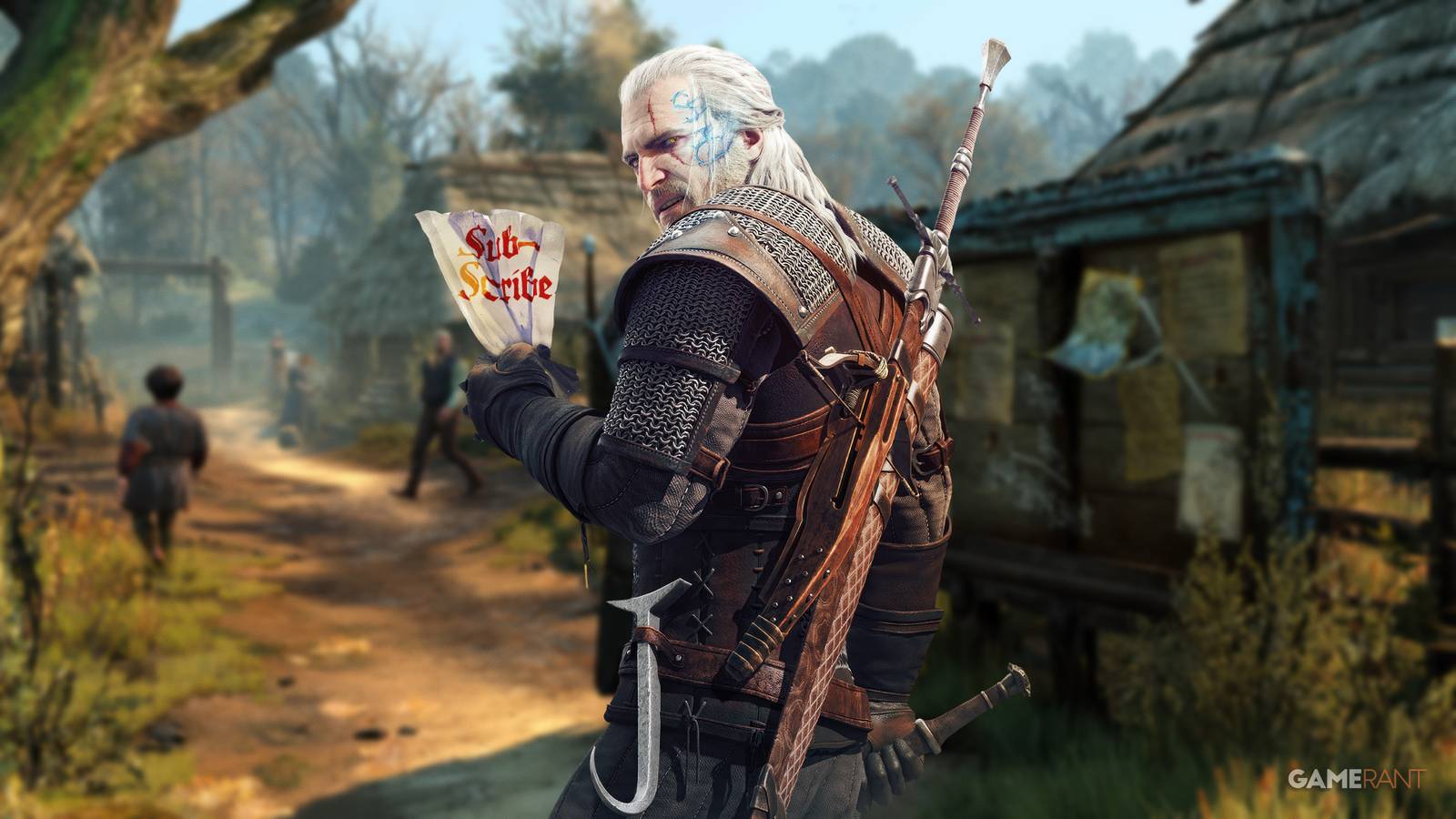
It’s hard to think of a modern RPG that’s more important and foundational than The Witcher 3: Wild Hunt, and its enduring legacy continues to prove that. While we might look back at a game like Far Cry 3 and identify it, even lovingly, as a product of its time, The Witcher 3 feels as timeless and relevant as ever, despite being over a decade old.
There are plenty of reasons for this, some more obvious than others. In the “more obvious” camp, we have The Witcher 3‘s undeniable quality. There are definitely RPGs out there with better combat, build-crafting, and exploration, but none that bring all of these elements together in such a consistently compelling way. There’s The Witcher 3‘s writing as well, which is perhaps its single most revered aspect. The game’s breadth, combined with some smart decisions from developer CD Projekt Red, has helped it achieve its unique flavor of longevity.
The Witcher 3 Shows How Long a Single-Player Game’s Legs Can Be
Released in 2015 on the PS4, Xbox One, and PC, The Witcher 3: Wild Hunt followed the predictable trajectory of a successful AAA project. That is, it vacuumed up praise and accolades for several months, keeping the momentum going with a pair of exceptional expansions:
- Hearts of Stone: released on Oct 15, 2015
- Blood and Wine: released on May 31, 2016
Both of these are widely and regularly hailed as the greatest video game DLCs of all time, with Blood and Wine in particular standing out as an ambitious, delightfully surprising chapter in CDPR’s legacy. As word of these DLCs grew, and as they began to grow more esteemed in hindsight courtesy of the low-quality bar set by many other AAA expansions, they became considered essential parts of the Witcher 3 experience, far more than merely optional content drops or mission packs.
Meaningful updates to The Witcher 3 slowed after that, but the game’s reputation, wealth of content to explore, and frequent, significant discounts ensured it maintained its relevance. In 2019, it was released once again, this time for the Nintendo Switch. Hybrid and handheld gaming machines are more commonplace today, but seven years ago, this was far more significant. Running a game like The Witcher 3 on a handheld was a novel concept, and the port was all the more momentous for it.
Then, around the start of this current console generation, CD Projekt Red turned its attention from the once-floundering Cyberpunk 2077 back to The Witcher 3. Next-gen upgrades were issued to the 2015 game, including 60FPS and 4K on PS5 and Xbox Series platforms, numerous enhancements to visual effects, and quality-of-life tweaks that helped make the game even more modern and frictionless. Indeed, The Witcher 3 post-update is arguably one of the best-looking games on modern consoles.
It’s hard to think of a modern RPG that’s more important and foundational than The Witcher 3: Wild Hunt, and its enduring legacy continues to prove that.
Continued updates, including official mod support, bolstered The Witcher 3‘s prominence in the 2020s, polished and edited enough to feel like a regularly maintained GaaS endeavor. I would argue that The Witcher 3’s updates are of a much higher quality than, say, Skyrim‘s many post-launch re-releases, but they aren’t exactly unheard-of in the single-player world. What is unheard of, and what shapes this notion of The Witcher 3 being a single-player “live service” is what’s about to happen.
The Witcher 3: Songs of the Past Launches The Game Into New Territory
I’ll get to the elephant in the room: The Witcher 3 is getting a third DLC next year, described by CD Projekt Red as being similar in scope to Blood and Wine. Again, Blood and Wine is The Witcher 3‘s biggest and most celebrated expansion, so citing it as a comparison isn’t something you do when you want to temper expectations or manage hype. Put another way, CD Projekt Red seems to be treating this new expansion, Songs of the Past, like a proper AAA DLC launch.
And this is very odd in the single-player space. Sure, a game like World of Warcraft can get an expansion ten-plus years after launch and no one bats an eye—Fortnite will probably still get fresh content once it passes the decade milestone too—but a single-player RPG is a different story. Developers usually don’t stick with a single-player game for so long, in the same way, since their sales generally have shorter tails.

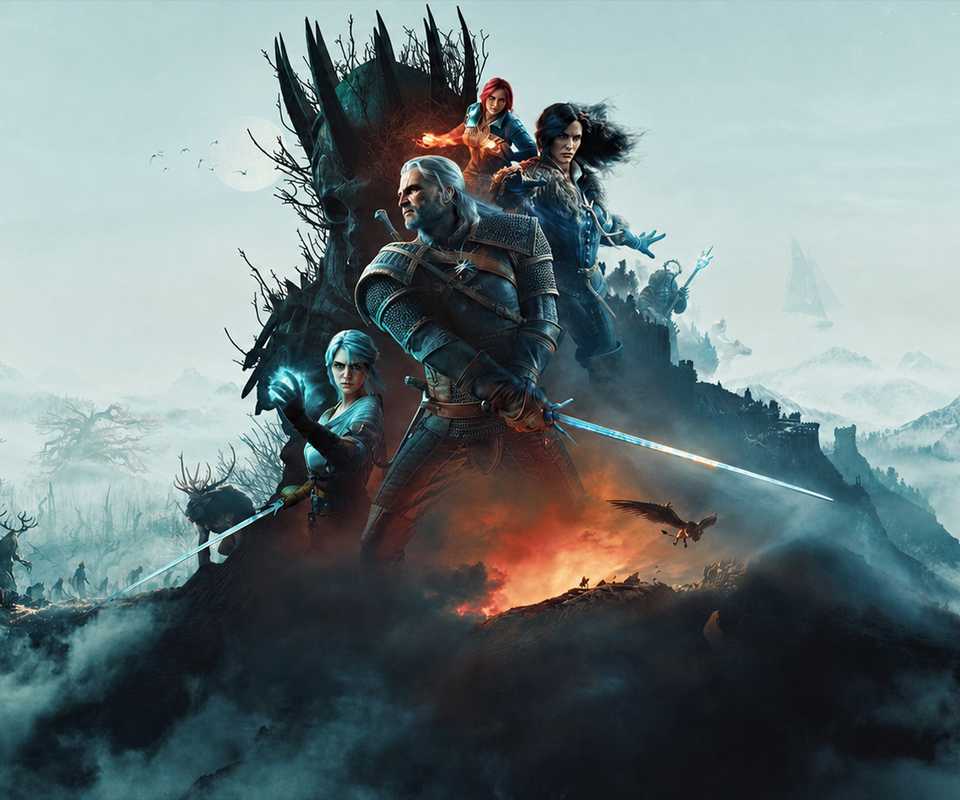
In the case of The Witcher 3, though, CD Projekt Red seems to have properly identified and leveraged a strong brand over an extended period of time. We see this kind of thing a lot, actually, though it’s not always for the best: whenever there’s an inexplicable live-service adaptation of a popular game, or the umpteenth sequel in a franchise that should have ended a long time ago, you can usually thank the concept of “brand management.” Many AAA developers and publishers are all too keen to milk an IP for all it’s worth.
CD Projekt Red seems to be treating this new expansion, Songs of the Past, like a proper AAA DLC launch.
With The Witcher 3‘s next-gen updates and the Songs of the Past expansion, CDPR is making use of the game’s nigh-unparalleled popularity to ship more units of a smaller, though hopefully still high-quality, product. This is a different approach than, say, Ubisoft’s with Assassin’s Creed. Rather than capitalizing on a generational hit by releasing myriad sequels in quick succession, CD Projekt Red is continuing to develop a single, proven success with substantial expansions. On balance, this is the exact strategy adopted by a traditional live-service game.
Assuming Songs of the Past continues CD Projekt Red’s tradition of high-quality expansions, this quasi-live-service approach could prove to be especially shrewd—it will almost certainly go a long way toward hype-building for The Witcher 4, for example. That said, it should be noted that for the overwhelming majority of single-player games, especially those in the AAA space, this is not going to be a viable strategy. It’s only because of The Witcher 3‘s sacrosanctity that such long-term, large scale support is feasible.

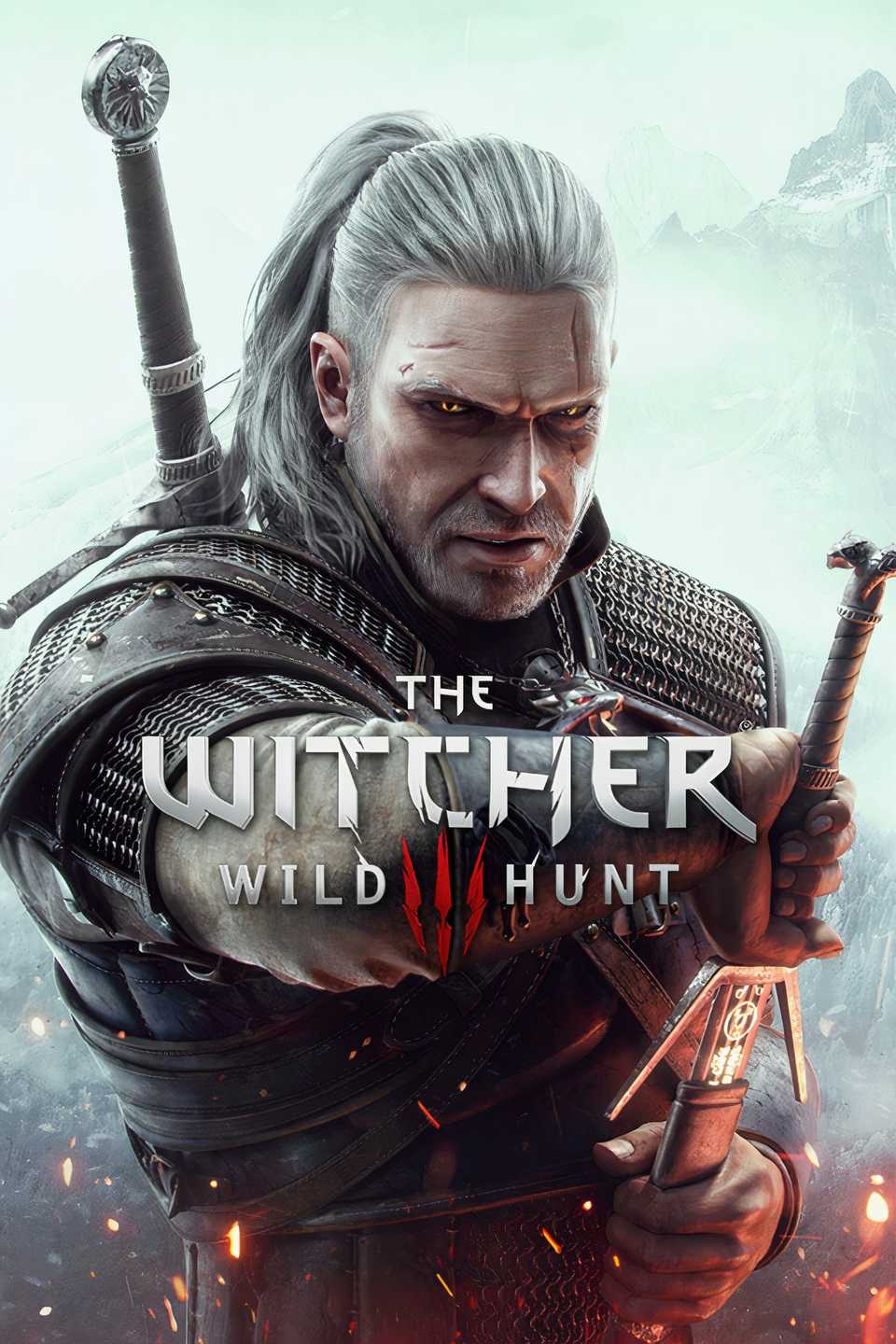
- Released
-
May 19, 2015
- ESRB
-
M for Mature: Use of Alcohol, Blood and Gore, Intense Violence, Nudity, Strong Language, Strong Sexual Content