


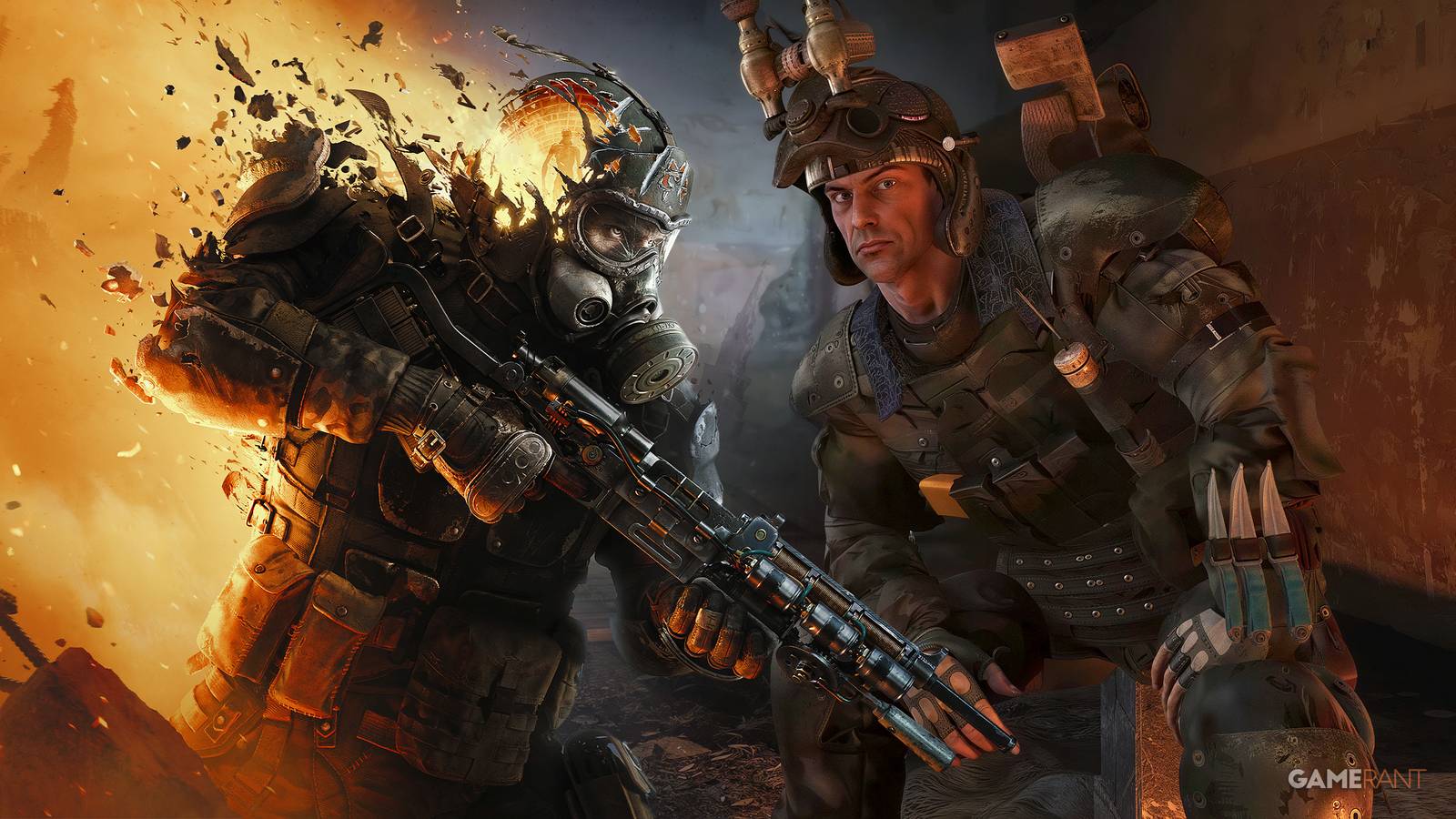
Metro has always been built around its atmosphere, where long stretches of quiet tension give way to moments of sudden chaos. Its most memorable moments rarely come from the danger itself, but from the realization of what that danger means, as its stories slowly unfold and converge into something far more unsettling than any single encounter. That’s what makes Metro 2039‘s reveal feel so on-brand for the franchise. The return to the Moscow Metro was expected. Even introducing a new protagonist feels like a natural progression. But the emergence of a unified regime under a leader Metro fans have known from the beginning makes the entire series feel like it has been building toward this moment—and Metro 2039 could have something massive up its sleeve.
That leader is none other than Hunter, the same Spartan Ranger from Metro 2033 who once stood as a symbol of order and resolve. Now, he stands as the Fuhrer of the Novoreich, ruling over a Metro that has traded its fractured survival for a system built on fear, propaganda, and absolute control. It changes his character arc in a big way, suggesting that what once looked like strength and certainty may have always been pointing toward something far more dangerous. If nothing else, it makes Metro 2039 feel like the breaking point the series has always saved for its final moments.
Metro 2039 Officially Revealed, “Changed” by Russian Invasion of Ukraine
Metro 2039 returns with a darker vision, one directly shaped by the war in Ukraine and its impact on the developers.
Hunter Was There at the Beginning
Hunter’s importance to the Metro games simply can’t be overstated, even if his screen time has always been limited. He first appeared in Metro 2033, arriving at Exhibition station as a seasoned Ranger who was both respected and feared in equal measure. It’s his presence that sets the story in motion, entrusting Artyom, the game’s protagonist, with the mission the entire game ultimately revolves around: traveling to Polis to warn the Rangers about the Dark Ones.
At the time, Hunter represented something quite rare in the Metro. He was decisive, capable, and resolute, with the brutally simple philosophy that if something threatens humanity, it must be destroyed. That mindset is captured in what is perhaps his most iconic quote, “If it’s hostile, you kill it.”
Hunter’s importance to the Metro games simply can’t be overstated, even if his screen time has always been limited.
But even in that first appearance, there was an edge to him. Hunter never appeared compassionate, nor reflective. Rather, he was a man who had survived by reducing the world to nothing but threats and allies, problems and solutions. While that undoubtedly increases the odds of his own survival and makes him an effective warrior, it also makes him potentially dangerous.
The Metro Never Gave Him a Resolution
One of the most important details about Hunter’s story, however, is that it was never truly finished. In Metro 2033, he disappears early in the narrative, heading into the tunnels to confront the Dark Ones but never returning. His fate is left deliberately unclear, with later games only referencing him through memory, rumor, or fragmented visions. In fact, the reason Artyom is tasked with traveling to Polis in Metro 2033 is because Hunter told him that if he never made it back, it was his job to inform the Rangers about the Dark Ones.
But Hunter’s absence has turned him into something of a legend rather than a side character. For Artyom and many others, he was the ideal Ranger, the standard by which survival and sacrifice were measured. But legends in the Metro are rarely accurate, and are instead influenced by fear, distance, and the need to believe in something stronger than the world allows. By the time Metro 2039 brings him back, that legend has had years to evolve. As the villain in this new story, players are potentially going to witness the collapse of the heroic myth that has long kept him alive.
Metro 2039 Makes Hunter the Enemy
Metro 2039 has already made it clear that Hunter is no longer a protector but the central antagonist. The Metro, once divided into countless factions and independent stations, has now been unified under a single regime known as the Novoreich. At its head is Hunter, now bearing the title of Fuhrer and ruling through a system built on propaganda, misinformation, and fear. Naturally, as Hunter was once the embodiment of survival at any cost, that same philosophy now directs an entire political system.
On the surface, the Novoreich promises safety and a future for the people of the Metro, but the reality is far more oppressive. Communities remain trapped underground, controlled by a regime that defines threats broadly and eliminates them without hesitation, meaning rather than abandoning his beliefs, Hunter only expanded them to cover more ground.

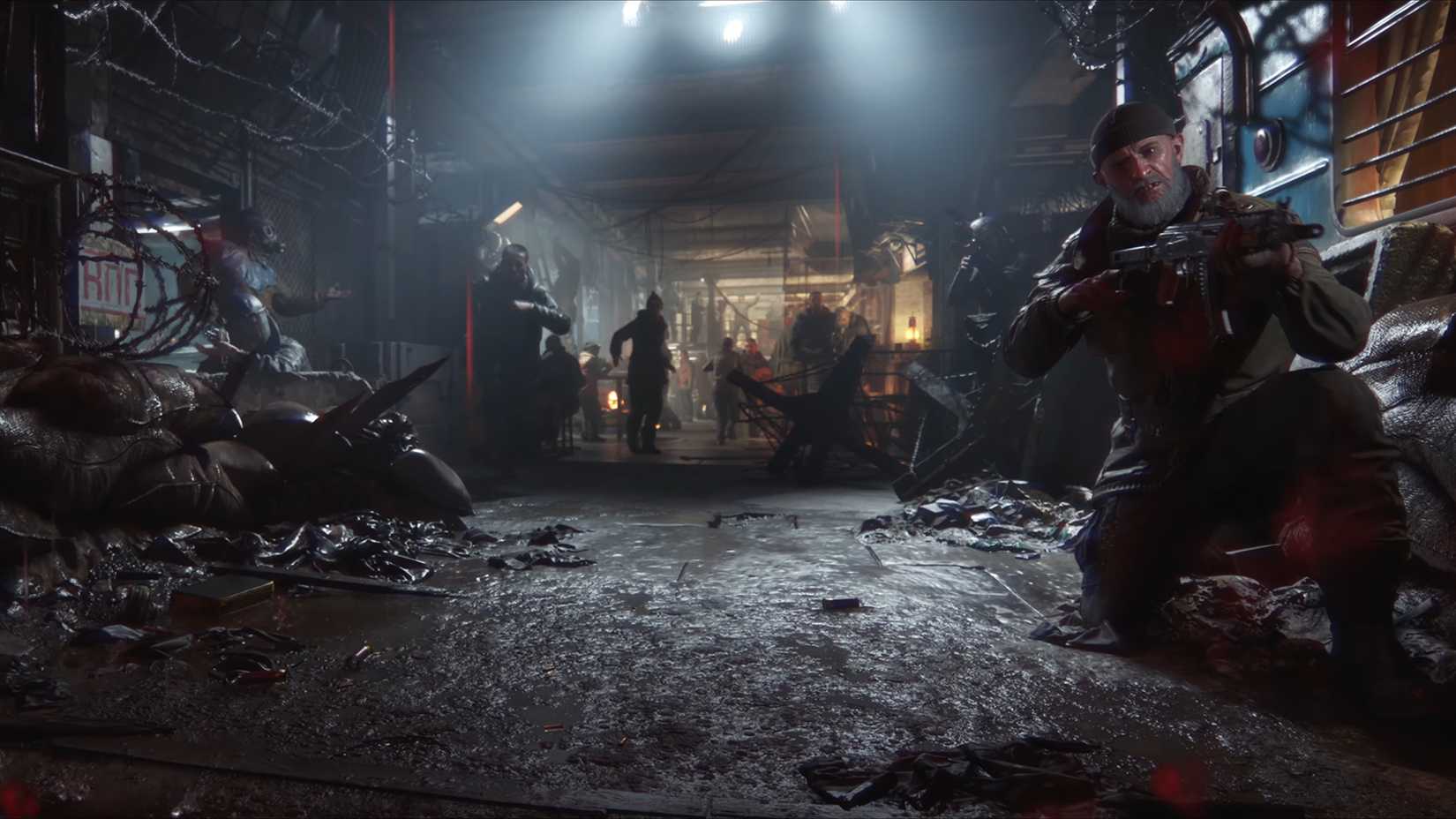
But what makes Hunter compelling as the leader of the Novoreich is that his transformation feels consistent with who he has always been. His core principle has never really changed: identify danger, remove it, and protect what remains. The problem, though, is that in the Metro, danger is everywhere. Mutants, rival factions, ideological enemies, even dissent within one’s own community can all be seen as legitimate threats by someone like Hunter.
As a result, control naturally becomes synonymous with safety, obedience becomes a necessity, and freedom becomes a liability. The Metro is no longer a collection of survivors trying to navigate uncertainty, but rather a system designed to eliminate uncertainty altogether. That’s really what makes Hunter such an effective and dangerous antagonist, as he is enforcing what he believes the Metro’s values have always required.
The Shadow of the Dark Ones Still Lingers
There’s another layer to Hunter’s transformation that can’t be ignored either. His encounter with the Dark Ones in Metro 2033 was never fully explained, but it was heavily implied to have affected him in ways that went beyond physical survival. While they are portrayed as enemies in combat, Artyom’s journey eventually reveals that they are not inherently evil, only misunderstood. Yet, Hunter clearly never reached that understanding.
What makes Hunter compelling as the leader of the Novoreich is that his transformation feels consistent with who he has always been.
If anything, his experience with the Dark Ones seemingly caused him to double down on his belief that anything unknown and even potentially hostile must be eliminated at all costs. Whether that encounter damaged him psychologically or simply confirmed his worldview, it’s nonetheless a turning point and the moment where his rigid philosophy became even more absolute. And by the time Metro 2039 begins, it’s apparently full-on doctrine.

Furthermore, as is the case with most villains, video game or not, Hunter likely doesn’t see himself as a villain. From his perspective, the Metro has been unified, chaos has been replaced with order, and threats are being eliminated before they can grow. In essence, he is doing what he has always done. The difference now, however, is that he has the power to impose that vision on everyone else, creating the kind of conflict Metro has always executed with aplomb. Rather than being a battle between good and evil in the traditional sense, Metro 2039‘s conflict is likely to be a clash between two philosophies of survival where one allows for uncertainty while the other seeks to erase it by any means possible.
Bringing Hunter back is a clear statement about what Metro 2039 is trying to explore. The series is no longer asking how people survive in a broken world but instead what kind of world someone who will stop at nothing to survive can create. Obviously, Hunter is at the center of that question. At one point, he was the man who set the story of Metro in motion, the one who trusted Artyom to carry forward a mission he couldn’t complete. Now, he is the obstacle that the new protagonist, the Stranger, has to overcome. In Metro 2039, one of the series’ most mysterious NPCs is now potentially its most dangerous one.

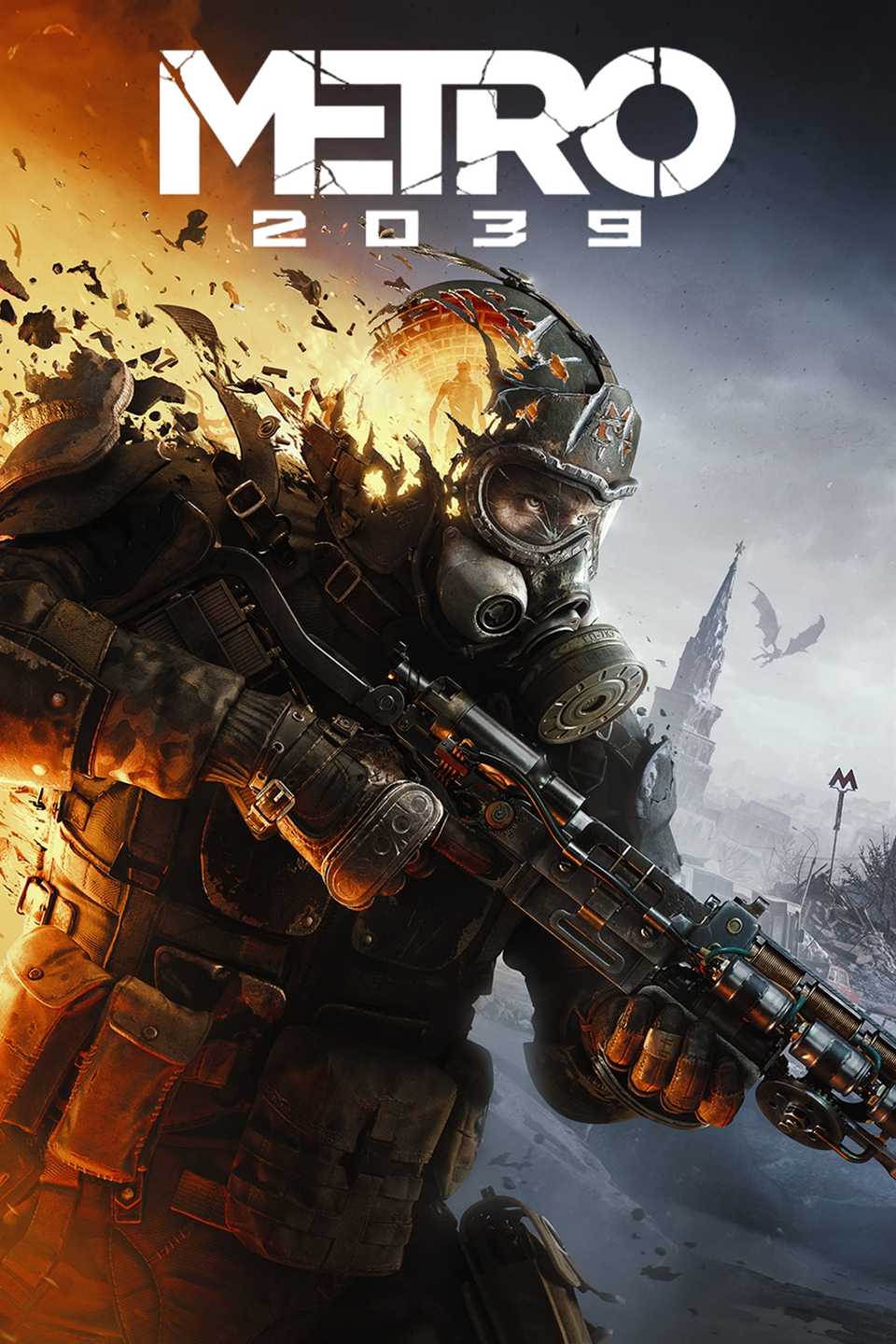
- Released
-
2026
- ESRB
-
Mature 17+ / Intense Violence, Blood, Language