







I’ve played enough city builders over the years to know that I tend to enjoy them right up until the point where I feel like I’m spending more time babysitting everything than actually building anything. I like having a plate full of things to manage, of course, because that’s a huge part of the reason I play these games in the first place, but there is definitely a line where all of that management can start to feel like work. Maybe some consider that the point of city builders—and I do, at times—but sometimes, I wouldn’t mind something a little slower. Well, after spending some time with Wild West Pioneers ahead of its Early Access launch, I never really felt like it crossed the line between work and fun. There is actually quite a bit going on here once everything starts opening up, but the pace of it all is surprisingly laid back, and I found myself settling into its rhythm much faster than I expected.
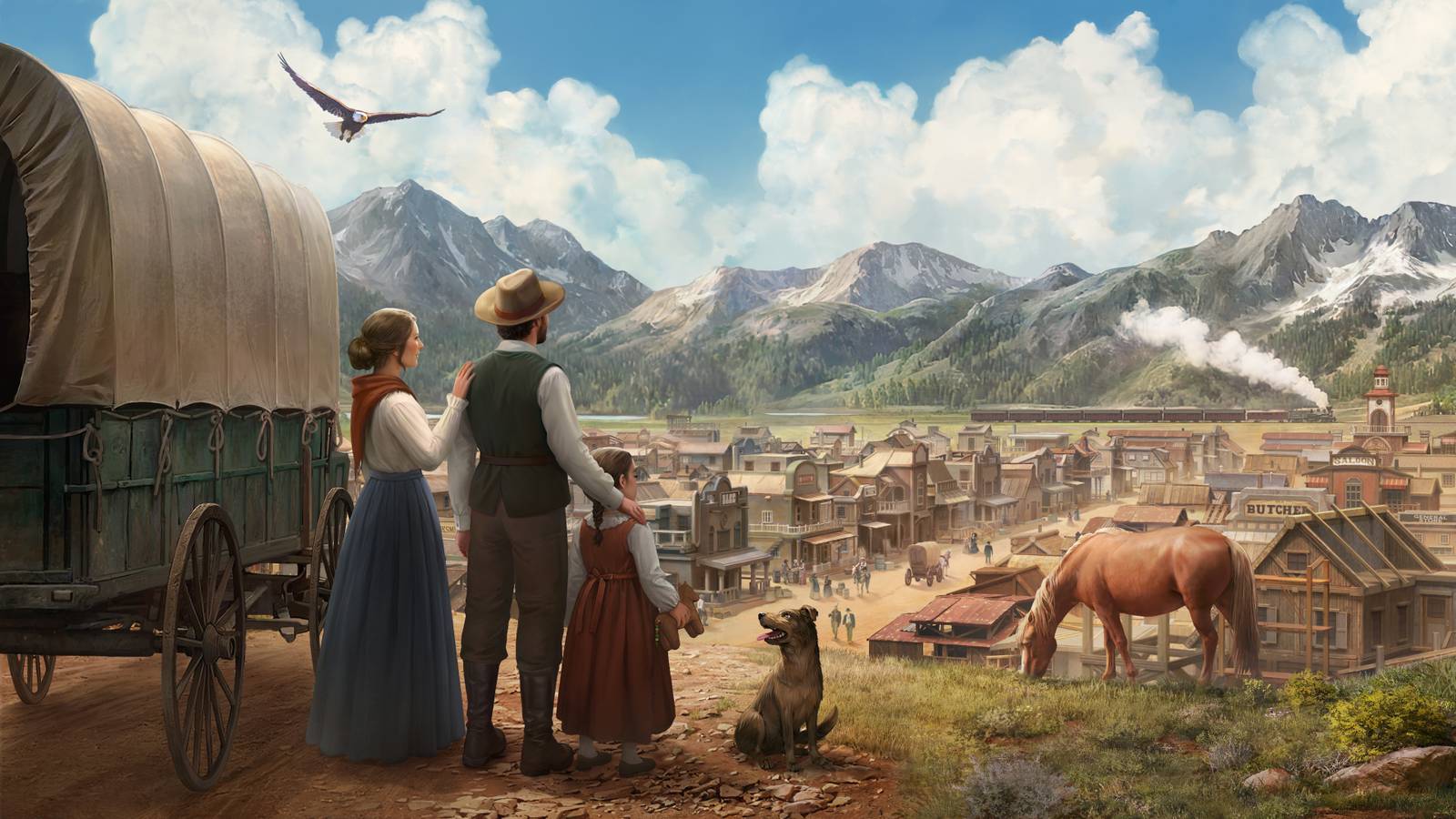
The basic idea is pretty straightforward, as Wild West Pioneers puts you in charge of a group of settlers trying to establish themselves on the American frontier, with that small beginning gradually turning into something much bigger as you unlock more of what the game has to offer. Of course, that means gathering resources and building the structures your people need, but the further I got into it, the more I started paying attention to how I was actually using the settlers themselves. That ended up becoming one of my favorite parts of the whole gameplay loop, mostly because Wild West Pioneers doesn’t treat workers like something you assign once and then completely forget about.
Wild West Pioneers Has a Surprisingly Relaxing Gameplay Loop
Check Out Wild West Pioneers on Steam
What I probably enjoyed most during my time with Wild West Pioneers was how involved I could be in managing my settlement without feeling like I needed to hover over every little thing it was doing. EmpireCraft Studios has actually talked about wanting the game’s economy to be “relaxed, but with decisions in it that actually count,” and after playing it myself, I can definitely see what the developer means. I was always doing something, even if that just meant watching production for a little while to figure out where I could make a change, but I never felt like the game was constantly trying to punish me for not being two steps ahead of it.
A big part of that comes down to how settlers are assigned to jobs, which ended up becoming this little puzzle I was solving throughout most of my playtime. Just because I had someone working somewhere didn’t mean I needed to leave them there indefinitely, so I got into the habit of regularly moving settlers around whenever one part of my production needed more attention. If I had more workers assigned to one job than I really needed at the time, I could pull somebody away from it and put them somewhere else until things caught up. Once they did, I might send that same settler right back where they came from or move them onto something entirely different.
I really liked approaching production that way because there were plenty of times when my first instinct was to think I needed another structure, only to realize the one I already had was perfectly capable of keeping up if I gave it another worker for a while. In the same way, I didn’t need every workplace operating at full capacity all the time, especially if I already had more than enough of whatever it was producing. Once I started looking at my settlers as people I could move around depending on what I needed rather than permanent employees of whatever building I first assigned them to, managing the settlement became a lot more interesting.
What I probably enjoyed most during my time with Wild West Pioneers was how involved I could be in managing my settlement without feeling like I needed to hover over every little thing it was doing.
However, Wild West Pioneers also makes sure those settlers aren’t only there to keep production moving, which is where the Whims system comes into play. As the settlement grows, residents start asking for things that have more to do with actually enjoying where they live than simply surviving there. Some might want certain amenities around town, while others might have more personal wishes involving things like pets or instruments. Fulfilling those Whims helps keep settlers happy, and I like how naturally that fits into everything else, because it gives me another reason to think about the town as an actual place people live rather than one giant production machine.

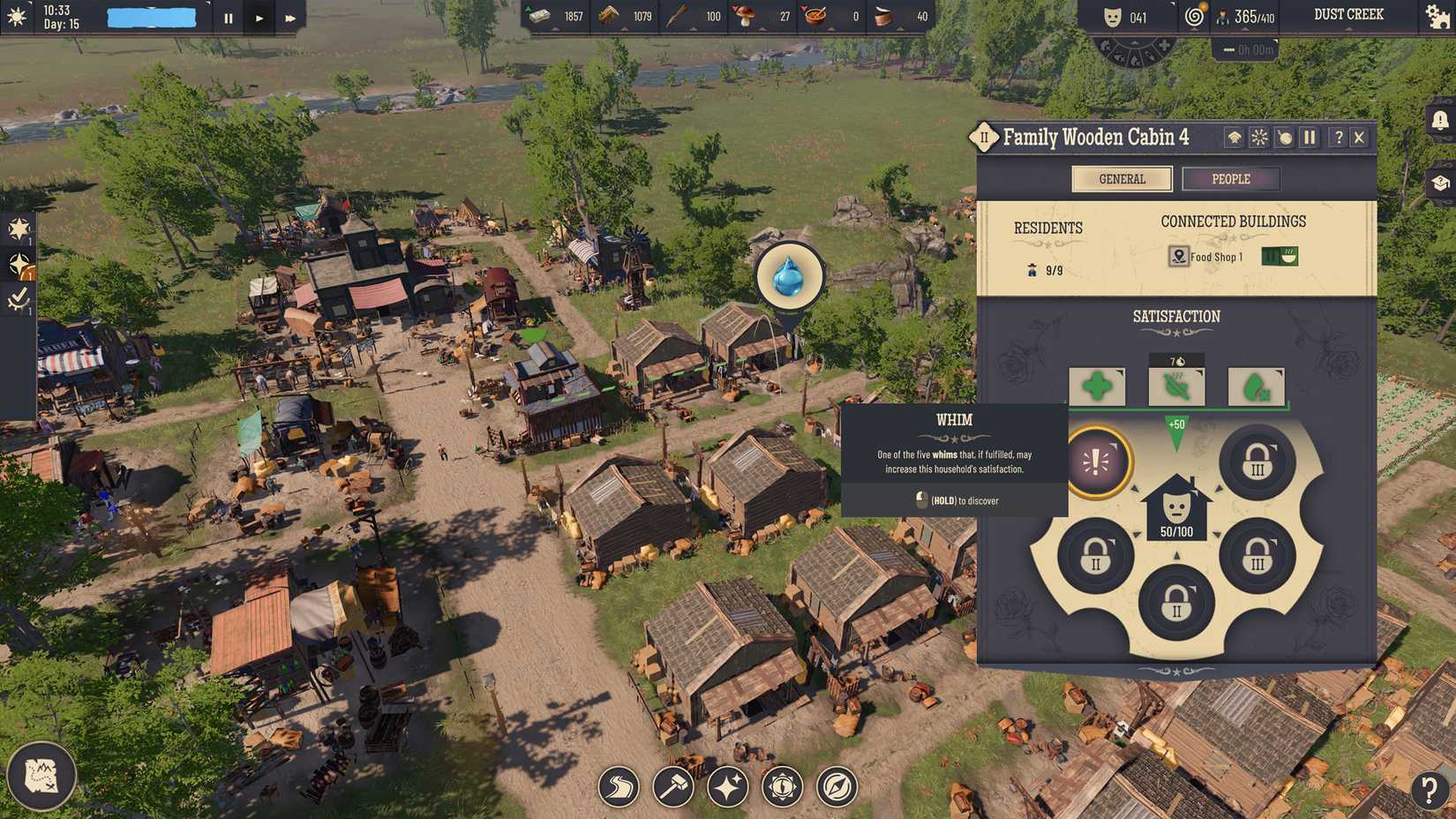
There is something satisfying about spending so much time worrying about who should be chopping wood or working somewhere else and then having those same people turn around and basically remind me that they would also like their town to be a nice place to live. It gives all of the building a little more purpose, especially once decorations and other additions start being about the people living there instead of simply making everything look better from above. Wild West Pioneers still has all the resource management I expect from a city builder, but I appreciated having reasons to occasionally think about something other than efficiency.
Wild West Pioneers’ Ideas Tree Is Huge
As my settlement grew, I also spent a lot of time poking around the Ideas tree, which is essentially where Wild West Pioneers‘ background progression system lies. New structures are unlocked there, so there is always something farther down the tree to work toward, and I was regularly opening it back up just to see what I might want next. It is pretty massive, too, especially when you first look at the whole thing and realize how many different directions the settlement can eventually go.

What I like about the Ideas tree, though, is that it isn’t only there to hand you more structures. Cash can also be spent there to unlock passive bonuses for buildings you already have, which gave me a reason to think about what I was currently using instead of only worrying about whatever I hadn’t unlocked yet. If I had a structure doing a lot of work for me, improving its efficiency could make more sense than immediately saving everything for another building farther down the tree.
Between that and the way settlers can be moved around whenever your priorities change, I rarely felt like Wild West Pioneers was forcing me toward one perfect way to play it. I could focus on what my settlement needed at the time and worry about everything else when I got there, which is probably why I found the whole thing so relaxing despite how much there eventually is to manage.
Wild West Pioneers Absolutely Nails Its Western Atmosphere
For as much as I enjoyed managing the settlement itself, I think the atmosphere is probably what made Wild West Pioneers so easy for me to lose time in. I really like the look of the game once the town starts filling out enough that it feels lived in, especially because the settlers are actually moving around and using the places you’ve built for them rather than existing as numbers behind a menu. Once I had enough happening around town, there were plenty of times when I was happy to stop messing with things for a little while and just watch everything continue without me.
Wild West Pioneers still has all of the resource management I expect from a city builder, but I appreciated having reasons to occasionally think about something other than efficiency.
The soundtrack deserves a lot of credit for that as well, because Wild West Pioneers has some incredibly relaxing Western music underneath everything, and it fits the pace of the game almost perfectly. There were stretches where I wasn’t working toward anything particularly urgent and just let the settlement run while I looked around and decided what I felt like doing next. I don’t always play city builders that way, because sooner or later, I usually feel like I’m constantly looking for whatever needs fixing next. Here, I was much more content to let things breathe for a while.

There is plenty waiting beyond the settlement whenever I do feel like moving forward, too, as scouting eventually starts opening up more of the frontier and can lead to places where additional settlements can be established. I like that the larger idea isn’t simply to build one town until you’ve filled every inch of available space, because it gives those early hours of getting everything working together somewhere to go. The first settlement feels like the beginning of the journey rather than the whole thing.
After spending time with Wild West Pioneers ahead of its September 25 Early Access launch, I think the biggest compliment I can give it right now is that I never really felt rushed while I was playing it. There are plenty of systems working underneath everything, but I didn’t feel like I was constantly trying to catch up with them. I could spend a while figuring out where my settlers needed to work, see what Whims had started popping up around town, or head into the Ideas tree and look at what I wanted to unlock next. And if I didn’t feel like doing any of that for a few minutes, I could just let that relaxing Western soundtrack play and watch my little frontier town carry on around me.




- Released
-
September 25, 2026
- Developer(s)
-
EmpireCraft Studios
- Publisher(s)
-
Toplitz Productions
- Number of Players
-
Single-player
- Steam Deck Compatibility
-
Unknown