


I don’t know that I could ever adequately explain just how much World of Warcraft has meant to me over the years. I was introduced to the MMO by my cousin before I even knew what an MMO was, during the Burning Crusade era, and from that point forward, it became such a significant part of my life that I spent far more time playing it than I probably should have. Between the countless hours I spent exploring Azeroth and the many friendships I made along the way, World of Warcraft became something much more to me than just another video game. And while my relationship with it has changed considerably since those early days, there are few other games that have impacted my life the way it has.
Unfortunately, as World of Warcraft continued to evolve with each new expansion, I gradually found myself enjoying it less and less. It wasn’t necessarily because the game was getting worse, either, but rather because it was becoming something different from the experience I had originally fallen in love with. I would occasionally return for a new expansion, hoping that somehow I might recapture some of that excitement I used to feel whenever I logged in, only to discover that it wasn’t quite the same anymore. Eventually, I reached a point where I began to wonder whether that version of World of Warcraft was simply gone for good.
Then World of Warcraft: Forever came along, and after spending just over 100 hours with its beta, I can confidently say that I haven’t enjoyed World of Warcraft this much in years. I spent much of that time experimenting with different classes, leveling several Horde characters, and simply taking my time exploring a version of WoW that felt like home in ways I hadn’t experienced for quite a while. But what surprised me most wasn’t necessarily any of the new content Blizzard had added. It was the fact that, for the first time in years, I was enjoying the process of leveling a character without constantly thinking about what I needed to do once I reached the level cap.
World of Warcraft: Forever Makes Leveling Feel Important Again
One of my biggest complaints about modern World of Warcraft is that, somewhere along the way, it seems to have lost the “world” side of its identity. Leveling gradually became little more than something to get through before reaching the endgame, where so much of the experience revolves around grinding for better equipment and completing increasingly difficult activities. I understand why Blizzard has taken that approach, particularly for players who have been developing the same characters for years, but I also think something important was lost in the process. For me, the journey through Azeroth was always just as special as anything waiting at the end of it.

But that’s where Forever immediately felt different, because even the earliest levels required me to pay attention to every single thing I was doing. Enemies posed a legitimate threat again, and rather than pulling several at once and effortlessly defeating them, I had to consider whether I could actually survive an encounter before committing to it. Even something as simple as acquiring a new ability felt rewarding, because I had spent enough time using the abilities that came before it to appreciate what it added to my character. I had forgotten just how much I enjoyed that much, much slower progression, where gaining another level actually felt like a massive accomplishment.
Then World of Warcraft: Forever came along, and after spending just over 100 hours with its beta, I can confidently say that I haven’t enjoyed World of Warcraft this much in years.
That’s also why I spent so much time experimenting with different classes instead of focusing on getting one character as far as possible. During the beta, I played an Undead Rogue, an Undead Paladin, a Tauren Warrior, a Troll Hunter, and more, and I enjoyed discovering just how differently each class approached those early encounters. With limited abilities and resources, I couldn’t necessarily rely on the same strategy for every character, which made starting over considerably more interesting than I expected. And even after reaching level 20 with several characters, I still found myself wanting to create yet another one and experience those nostalgic starting areas all over again.

What I particularly appreciated, though, was that I never felt like I was wasting my time by leveling slowly. In modern WoW, I often find myself trying to complete quests as efficiently as possible because I know the more substantial content is waiting for me at the level cap. But during my time with Forever, I was perfectly content spending an evening working through a handful of quests and making relatively little progress. It reminded me of when I first started playing World of Warcraft, before I even knew what the endgame looked like and simply enjoyed discovering what was waiting beyond the next zone.
Forever Reminded Me That World of Warcraft Is Supposed to Be Social
Another thing I hadn’t realized I missed quite so much was how naturally the original World of Warcraft encouraged me to interact with other players. Modern WoW has made it considerably easier to experience most of the game alone, and while I appreciate that convenience, I also think it has taken away some of what made Azeroth feel like a genuinely shared world. Forever brings back much of that original dependence on other players, particularly when it comes to difficult enemies and quests that aren’t always practical to complete alone. I found myself paying attention to the people around me again, rather than treating them as other characters who happened to be running through the same area or enemies I was competing with for loot and kills.

The original enemy-tagging system is a good example of that, because only the player or group that attacks an enemy first receives credit for defeating it. I know that’s something modern WoW players might find frustrating, especially when there are several people competing for the same quest objectives, but it also encourages players to group up. Rather than simply attacking enemies alongside strangers without ever communicating with them, there was actually a reason to work together. Blizzard has also adjusted how certain quest-item drops work in groups, helping make that cooperation less frustrating than it could be in the original game.
Blizzard’s new Recent Allies system is another addition that I think could make a big difference in the long run. It helps players keep track of people they’ve previously adventured with and makes it easier to encounter familiar faces again, even with Forever moving away from traditional individual servers in favor of larger ruleset-based communities. I always enjoyed recognizing other players out in the world during the early days of WoW, especially when I had previously grouped with them for a difficult quest or dungeon. Having a system that encourages those encounters to happen more frequently seems like a pretty sensible way to preserve that feeling with a much larger player population.

Then there’s the new Camping system, which I think fits particularly well with the slower experience Forever is trying to create. Players can establish campsites where other adventurers can contribute profession-crafted features that provide useful benefits, with those buffs becoming available after spending a little time resting or crafting at the camp. I like that professions have another purpose beyond making equipment or earning gold, especially when the system encourages players to stop and interact rather than constantly move toward their next objective. It’s a relatively small addition compared to some of Forever‘s new content, but I think it could have a surprisingly significant effect on how players experience the world together.
World of Warcraft: Forever Isn’t Just Another Classic Server
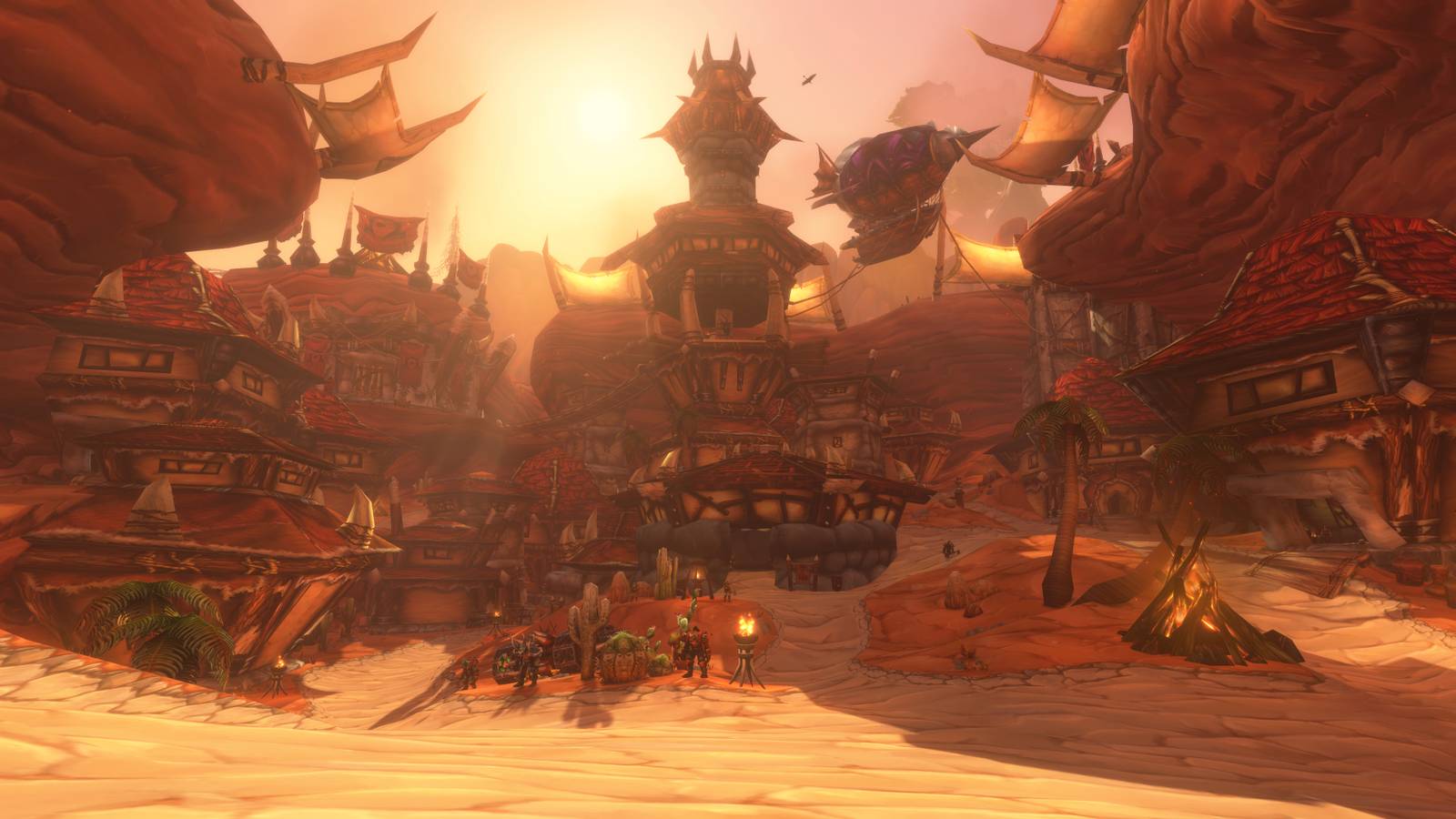
As much as I enjoyed returning to familiar zones, I think one of the most exciting things about Forever is that Blizzard isn’t simply trying to recreate the original game again. Rather than following the same expansion timeline that eventually led to The Burning Crusade and beyond, Forever is actually expanding the original version of Azeroth with new stories and locations. That means players can continue discovering things in a world they’ve already spent years exploring, without necessarily abandoning the slower progression that made those early adventures so enjoyable. And considering how much of Azeroth was left unexplored in the original game, there’s certainly plenty of room for Blizzard to expand on it.

The beta gave players an opportunity to experience some of those additions, including the new Hall of Thanes and Ruins of Lordaeron dungeons, both designed for relatively low-level characters. I particularly like that Blizzard is introducing new dungeons throughout the leveling experience rather than reserving all of its substantial additions for level 60. With nine new dungeons planned for the full game, along with more than 1,000 additional quests across Azeroth, there’s quite a bit to look forward to beyond the areas I explored during testing. Of course, I can’t speak to how well all of that content will come together just yet, since most of my time was spent with characters around level 20.
Forever brings back much of that original dependence on other players, particularly when it comes to difficult enemies and quests that aren’t always practical to complete alone.
Some of the changes I was able to appreciate immediately, though, were the new race and class combinations, particularly the ability to play an Undead Paladin. In the original version of WoW, Paladins were exclusive to the Alliance, while Shamans were exclusive to the Horde, so getting to experiment with combinations that weren’t previously possible was a welcome surprise. Forever also introduces options like Dwarf Shamans and Orc Mages, giving players more freedom without completely changing the identity of the original classes. I certainly didn’t need another excuse to start a new character, but Blizzard gave me one anyway.

There’s also the entirely new Skyborne race, which introduces a starting experience on Zephras Isle and allows players to choose between joining the Horde or Alliance. I spent most of my beta time with the more traditional races, but I think the Skyborne demonstrate just how much potential there is in expanding the original version of Azeroth rather than simply recreating it. Blizzard has also introduced updated character models, improved environmental effects, optional transmogrification, and controller support for players who prefer those conveniences. What’s important to me is that those additions don’t fundamentally change the slower style of gameplay that made the beta so enjoyable.
The new Legacy system is another feature I’m particularly interested in seeing develop as Forever progresses. It rewards players for completing different activities throughout their adventures, including leveling characters and progressing professions, with account-wide benefits that encourage continued exploration. I honestly think that’s a great way to give players something to work toward without making the endgame the only destination that matters, especially when starting new characters is already such a significant part of the experience. Whether it manages to remain rewarding once players have spent considerably more time with the full game remains to be seen, but I like what Blizzard is trying to accomplish with it.
Forever Still Has Some Things to Figure Out

Of course, I wouldn’t want to suggest that my time with the beta was perfect, because there are still some aspects of the original World of Warcraft that I’m not necessarily excited to experience again. The slower leveling and traditional enemy-tagging system, as nostalgic as they are, can be frustrating when questing areas become overcrowded, particularly when players have to compete for enemies that take a while to respawn. I think Blizzard needs to be careful about preserving those older mechanics without allowing them to become unnecessarily inconvenient. There’s a difference between making players work for their progress and making that progress difficult simply because too many people are trying to complete the same quest.
I also spent much of my time on the PvP ruleset, where Blizzard’s approach to faction balance introduces some limitations that players will need to consider. Unlike traditional servers, Forever uses larger ruleset-based communities, and players who choose PvP can only create characters belonging to one faction within that ruleset. Blizzard can also temporarily restrict character creation for whichever faction has become too populated, which should help prevent one side from completely overwhelming the other. I understand the reasoning behind that decision, but it could make things difficult for friends who don’t coordinate their faction choices before getting started.

My biggest concern, though, is what happens once the majority of players eventually reach level 60. Blizzard has already mentioned plans for additional raids, dungeons, and other endgame activities, and while I’m looking forward to experiencing those, I hope they don’t gradually become the only reason people log in. The leveling experience was easily my favorite part of the beta, and I’d hate for Forever to eventually reach the same point where the world feels like something players are simply trying to get through. If Blizzard can continue giving people a good reason to explore Azeroth beyond leveling their first character, I think the game has a much better chance of maintaining what makes it special.
World of Warcraft: Forever Gave Me Something I Thought I’d Lost
Looking back on the more than 100 hours I spent with the beta, I think what stands out most is just how much I enjoyed doing things that probably wouldn’t sound particularly exciting to someone unfamiliar with World of Warcraft. I enjoyed slowly making my way through familiar zones, acquiring new abilities, and spending time around other players who were working toward the same objectives. There were plenty of opportunities for me to start approaching the game more efficiently, but I rarely felt compelled to do so. For the first time in years, I was playing World of Warcraft because I genuinely wanted to be there, rather than hoping something would happen that might remind me of why I used to love it.

I’m sure nostalgia played some role in how much I enjoyed Forever, especially considering how much of my life has been tied to the original version of the game. But I also don’t think nostalgia alone could have kept me playing for over 100 hours, particularly when I was willingly creating new characters and repeating portions of the leveling experience. What I was enjoying wasn’t simply the opportunity to remember how World of Warcraft used to feel. I was enjoying the game itself again, and I hadn’t realized just how much I’d missed that feeling until I finally experienced it.
With World of Warcraft: Forever launching today, I’m looking forward to starting that journey again and seeing how much more of Azeroth Blizzard has prepared beyond what I experienced during the beta. There’s still plenty the game needs to prove, particularly when it comes to maintaining that sense of discovery as players move into the higher levels and eventually the endgame. But after years of returning to modern WoW and struggling to find the same enjoyment I once did, Forever has given me a reason to be excited about logging in again. And for a game that has meant as much to me as World of Warcraft has, I don’t think I could ask for much more than that.


- Released
-
November 4, 2026
- Multiplayer
-
Online Multiplayer, Online Co-Op
- Number of Players
-
Single-player
- PC Release Date
-
November 4, 2026
World of Warcraft: Forever launches on November 4, 2026 on PC. GameRant was provided with access to the pre-launch beta for the purposes of this preview.