
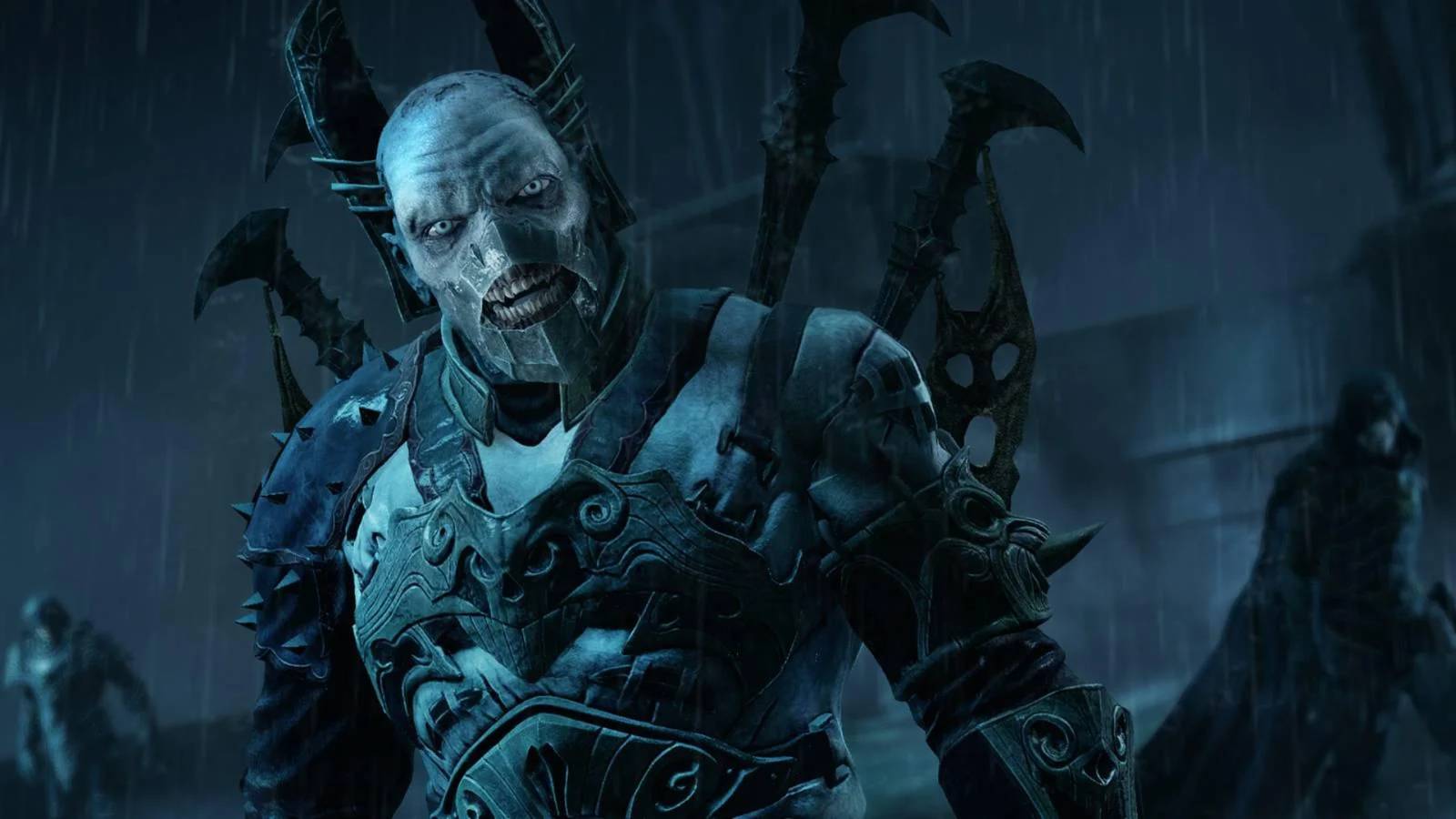


Middle-earth: Shadow of Mordor (most commonly referred to as just Shadow of Mordor) is now on the Nintendo Switch 2 alongside its sequel, Shadow of War. The games have been compiled into the “Shadow Bundle,” which also includes all previously released DLCs for both Middle-earth releases.
With a new demographic of gamers being introduced to these impressive open-world games for the first time, there’s likely to be a renewed, long-tail interest in their much-lauded Nemesis system. This system presents a hierarchy of foes, each with their own unique appearances, personalities, and combat styles, that the player can clash with at any time during the open-world, or even while in the midst of missions. The outcome of the player’s battles with these Nemesis enemies will impact their position in the hierarchy. For instance, an enemy will be promoted and grow more powerful if they kill the player, or wiped off the board entirely if the player kills them. Shadow of Mordor, and especially Shadow of War, will also throw some unexpected twists into these routines. For instance, you might decapitate an orc only to later encounter them again with their head sewn back on.
The Nemesis System Is Tragically Locked to the Middle-earth Games
For many players, myself included, the Nemesis system is what makes Shadow of Mordor and Shadow of War special. To be frank, the games suffer from some shallow combat, dull mission design, on-rails stealth, and other shortcomings, but the Nemesis system is so good that it makes up for them. Without a doubt, it’s the greatest stroke of genius in the Middle-earth duology.
Perhaps it’s not surprising, then, that publisher Warner Bros. decided to issue a patent for the Nemesis system, in what is widely regarded as one of the biggest buzzkill moments in gaming history. To clarify, this patent means that Warner Bros. could sue another game developer for infringement, if the latter designs a system too similar to Nemesis. The patent will be in effect until 2036, meaning that we have at least a decade before another studio can release a game that integrates or builds upon the Nemesis system’s particulars.
Worth noting is Warner Bros.’s considerable size and influence, which serve as extra deterrents against a possible Nemesis recreation. Most companies smaller than behemoth Warner Bros. don’t want to risk a lawsuit, even if their theoretical system were distinct enough to avoid meaningful litigation.
But there’s still more salt to add to the wound. In February 2025, Warner Bros. shocked the gaming industry by abruptly closing Monolith Productions, the studio behind the Middle-earth games. While the future of these Lord of the Rings spin-offs had been uncertain in recent years, there was an expectation that Wonder Woman, Monolith’s next game, would finally bring back the Nemesis system, letting players enjoy it in a different context. Alas, with Monolith closing its doors, Wonder Woman‘s development was scrapped, thrusting the Nemesis system back into limbo.
Don’t Worry—We Will Almost Certainly See Shadow of Mordor’s Nemesis System Again
The good news is that Middle-earth‘s Nemesis system won’t wither away in the vaults of the U.S. Patent and Trademark Office. For one thing, Warner Bros. is likely aware of how great an asset this system is, and the company still owns the patent despite Monolith’s closure. It might take a few more years, but I’d be genuinely surprised if another Warner Bros. studio doesn’t take a crack at the Nemesis formula by 2036, when the patent expires.
Like most utility patents, this Nemesis patent only lasts 20 years from the filing date, which was 2016 in this case. Once a patent expires, there’s no opportunity for renewal, meaning that the Nemesis system will be ejected from the Warner Bros. orbit and back into the public domain. Again, there’s a very good chance that Warner Bros. will want to release at least one game with the Nemesis system before this, not only to make effective use of the patent (the Nemesis system has remained unused since 2017), but also to reestablish itself as the company spearheading Nemesis-like features. It would be a smart move to effectively force the public to identify the system with Warner Bros. before other studios take a crack at it.
But in any case, the Nemesis system will make a comeback, and simply by the law of averages, it will probably be improved upon over time. The case of Warner Bros. patenting this well-regarded suite of features is an interesting one, and will probably be reflected on as a low-point for creative integrity in gaming. Protecting intellectual property is important, but at a certain point, patenting such a broad-strokes NPC system feels like knowledge-hoarding. This is especially frustrating when the company hoarding this knowledge doesn’t seem interested in using it, and in fact ditches the team that developed the knowledge in the first place.

- Released
-
September 30, 2014
- ESRB
-
M for Mature: Blood and Gore, Intense Violence