




Ah, the “evil all along” twist. Not every story needs one, and not every one pays off, but they are wildly memorable when done right. Games are better suited than any other medium to pull off this storytelling trick, forcing players to confront the mayhem they have spent the last 10 hours causing. Spec Ops: The Line and Shadow of the Colossus used this type of jaw-dropper to cement their legacies, and FPS games are well-equipped to handle the villain protagonist twist.
Considering we are talking about games that revolve around killing everything that moves, only a few titles recontextualize events to reveal that you are actually the bad guy, with most instead justifying your actions. However, the few stories that go in this direction tend to rank among the best in the genre, and the twist ensures these FPS games won’t be forgotten quickly.
Spoiler warning for the following games: Call of Juarez: Gunslinger, The Darkness 2, BioShock Infinite, Far Cry 3, and ULTRAKILL.
Call of Juarez: Gunslinger
Silas Is A Cold-Blooded Assassin Without A Single Righteous Bone In Him
- The Wild West is no place for heroes.
Right from the start, Call of Juarez: Gunslinger makes it crystal-clear that Silas Greaves, an aging bounty hunter, is an unreliable narrator. The campaign uses a clever framing device: each mission is based on a legendary story Silas recounts in a saloon. He speaks of the glorious escapades that saw him take on the likes of Billy the Kid, Jesse James, and the Dalton Gang.
Because you are playing through Silas’s memories as he tells them, you come across as a lightning-fast, righteous lawman wiping out dozens of bandits in heroic bullet-time standoffs. Silas regularly tweaks or forgets details that cause the world to morph around you, 100% confirming that what you are experiencing isn’t necessarily what actually happened. Still, you are a cool Western anti-hero bringing justice to the frontier, right?
Well, yes, but also no. Silas isn’t a mustache-twirling villain, but even describing him as an “anti-hero” is a stretch. The drunker he gets, the more his real personality begins to shine through, revealing a person driven by revenge who only occasionally carries a sense of justice. The law means nothing to Silas, and he likely killed quite a few men through dastardly means like ambushes or shots to the back.
Silas isn’t all that much better than the people he kills; he is just a great storyteller.
The Darkness 2
Jackie’s Rescue Locks Him In Hell For Eternity


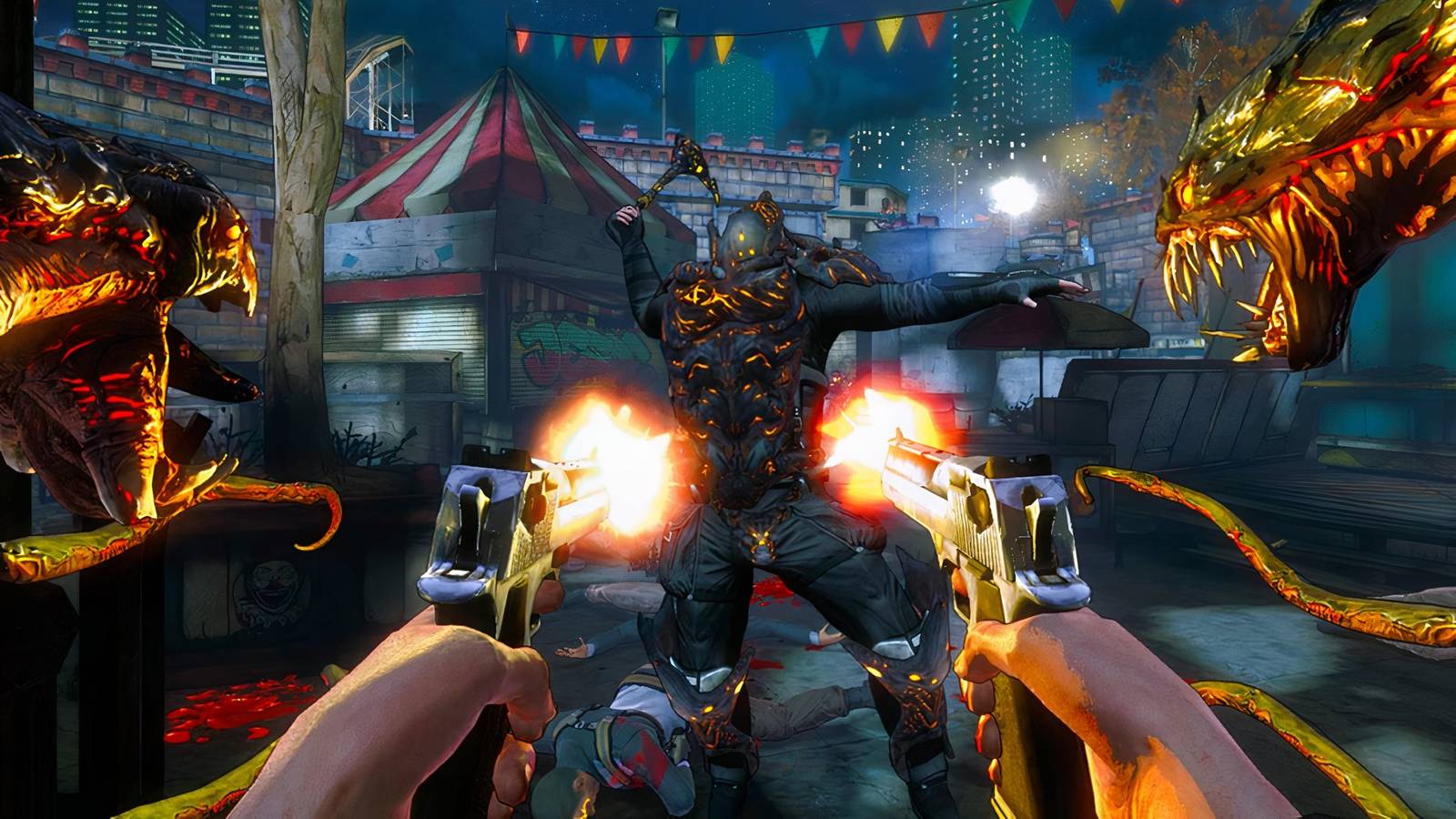
A story called The Darkness cannot feature a cookie-cutter protagonist who makes no morally questionable decisions, particularly when they are a mob don. Still, both games successfully sell Jackie Estacado as a sympathetic anti-hero driven by grief over the murder of his girlfriend, Jenny. Yes, he massacres many folks in gruesome ways, but he axes primarily gangsters with hands coated in blood.
While the first game just about keeps Jackie on the right side of things, the sequel basically turns him into a harbinger of the apocalypse who’s so blinded by his desperation to save Jackie that he completely gives in to the Darkness’s manipulation. Admittedly, nearly every other character is awful and hardly a good alternative, but Jackie causes the most damage to the world.
After completely embracing his demonic powers, Jackie goes on a rampage that leaves a mountain of bodies, en route to diving into hell to rescue Jenny. In truth, Jenny didn’t need saving and was chosen to be the host of The Angelus, the opposing force to the Darkness. Jenny locks Jackie and the Darkness in hell, as that’s the only place for them now.
BioShock Infinite
Booker Is Comstock
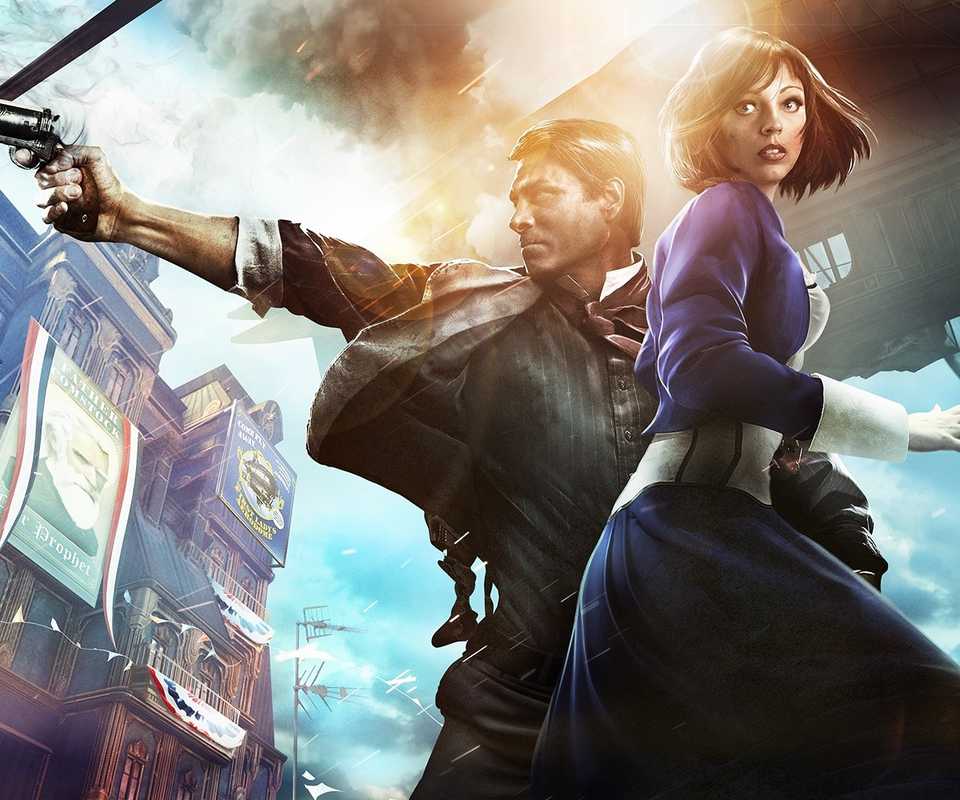
BioShock Infinite is complicated, but Booker’s initial goal is fairly simple: Bring Elizabeth and wipe away the debt.
A disgraced detective, Booker heads to the floating Columbia to save Elizabeth from the oppressive tyrant known as Zachary Comstock. A brief world-building section aside, BioShock Infinite primarily has you rampaging through the cloud-based city, killing zealots while liberating Elizabeth from her prison. Booker’s violence is completely justified in his noble rescue mission.
The twist reveals that Comstock and Booker are the same exact person, just from two timelines that split from a single moment when Booker was on the verge of a baptism. If he completed the process, he became Comstock; if he didn’t, he became a drunkard who eventually sells his own daughter.
Even though the version of Booker controlled by players isn’t truly the villain, BioShock Infinite still reveals that the main bad guy is the protagonist.
Far Cry 3
Jason Kills So Many People, He Loses Count
- Learning the definition of insanity.
Along with being utterly overshadowed by their villains, Far Cry protagonists consistently toe the line between hero and mass murderer. Far Cry 3 explores its main character’s descent into insanity more directly than any of the others, turning a California kid into the god of death. Both of the story’s endings culminate with the same message, albeit presented very differently: Jason crosses the point of no return without realizing it.
After being captured by pirates on Rook Islands, Jason is “rescued” by the Rakyat tribe and Citra, setting him on a road where escape becomes secondary to violence. With each new mission, he becomes a more efficient killer, eventually becoming straight-up addicted to it. He embraces Citra’s fanaticism, buying himself as a strange messiah designed to save the Rakyat.
Jason frames everything as an attempt to save his friends from monsters, but he ends up becoming one himself. His friends clearly see him as a psychopath under the spell of Citra, and Jason realizes too late that he walks a road that will never let him return to his past life.
ULTRAKILL
V1 Doesn’t Become Doomguy; A Unique Type Of Twist
- V1 is a killing machine willing to go to Hell to find its bloody fuel.
Let’s end things with a slightly different type of reveal, as ULTRAKILL doesn’t present V1 as a hero at any point. Right from the start, players are aware that they are a killing machine who descends into Hell to stylishly wipe out everything that moves. You know what V1 is from the very start.
ULTRAKILL envisions a reality where humanity is extinct, and V1 is a machine built during the final war. As it needs blood to survive and Earth offers none, V1 heads to hell to kill husks, demons, and fallen angels.
The twist comes from the fact that there isn’t really a twist. Despite technically taking out a few oppressive forces, ULTRAKILL never recontextualizes V1’s actions or presents him as some unlikely force for good. At best, V1 is an emotionless machine used as a plaything by truly evil beings. The arcade FPS gameplay makes you feel like an awesome badass taking out the forces of Hell, sort of like DOOM‘s protagonist; however, you are ultimately just a vacuum cleaner sucking up the last remaining fragments of existence.
If anything, you kill the few entities remaining who were attempting to maintain some semblance of order.