



When executed well, nothing beats an open-world RPG. By combining two genres built on offering ultimate player freedom in very different ways, you get a game that lets you go anywhere, be anybody, and do anything… or you get pulled into an immersive story that rewards (or punishes) every choice you make. Open-world RPGs are rare, but open-world RPG masterpieces are gaming’s holy grails.
By my count, gaming has 5 holy grails. Everybody has their definition of what constitutes a perfect game, but they must combine storytelling, exploration, world-building, graphics, and combat to create an experience that is more than the sum of its parts. Not every element needs to be perfect for a game to be a perfect masterpiece, and these open-world RPGs prove that.
I’m going to be strict with the definition of both open-world and RPG. Breath of the Wild isn’t an RPG, and Baldur’s Gate 3 isn’t open-world; hence, they are not part of this article.
1
Elden Ring Is The Most Perfect Masterpiece
FromSoftware Achieved The Exact Game It Wanted To Create
- Perfect combat, customization, boss fights, exploration, and world-building.
- Lacks a memorable story, but the lore and environmental storytelling are top-notch.
- Pretty great DLC, too, although I wouldn’t personally describe “Shadow of the Erdtree” as perfect.
- Some of the optional dungeons get samey after a while. The graphics aren’t amazing either, although the art direction is fantastic.
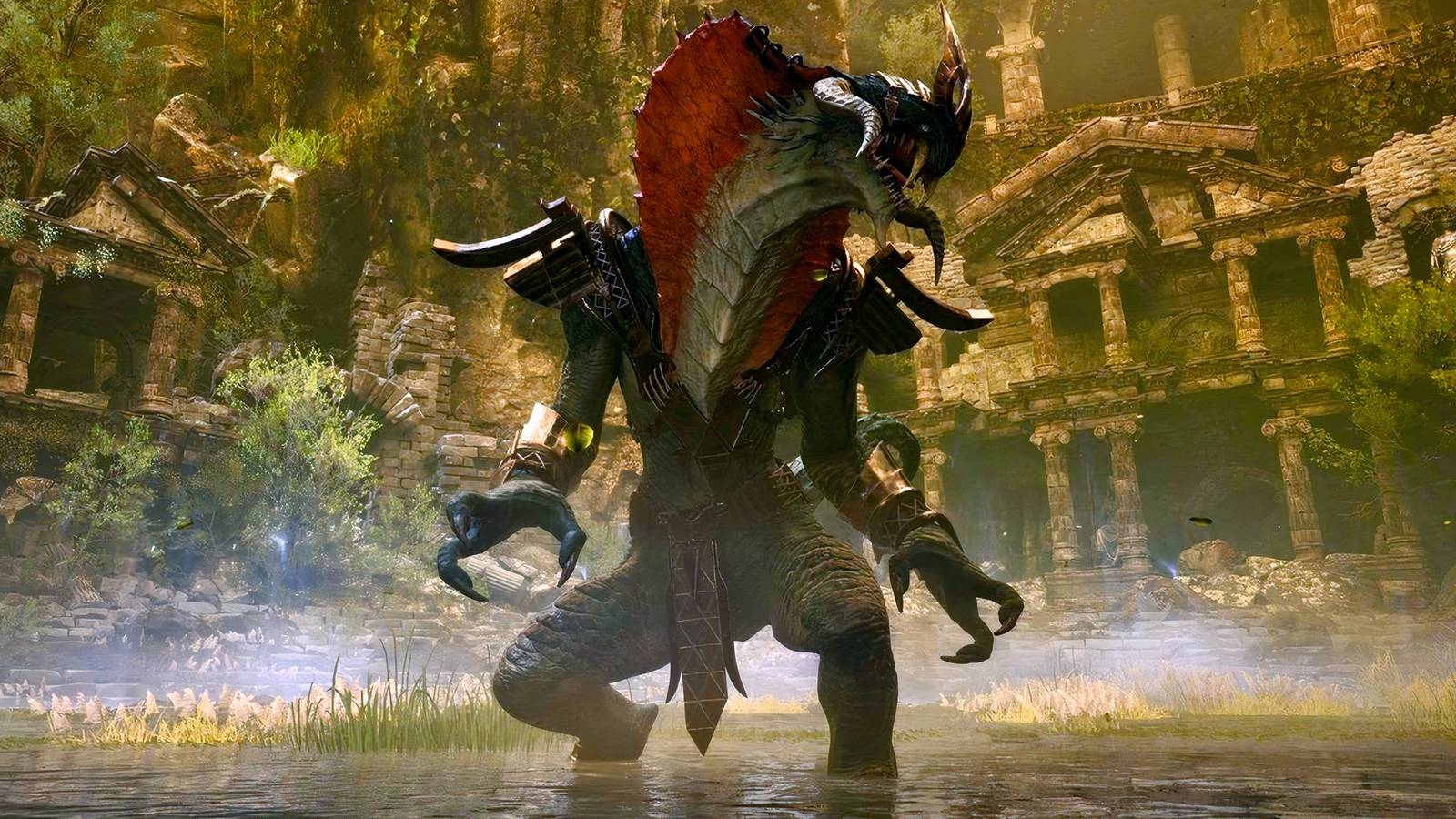
Let’s get the most obvious candidate out of the way immediately. While arguments could be made against its graphics and story, those elements don’t detract from the type of open-world RPG Elden Ring wants to be. FromSoftware set the bar so high for a Soulsborne sandbox that surpassing it might be near-impossible.
Most open-world RPGs (like modern Ubisoft titles or even The Witcher 3) rely heavily on “GPS-style” exploration: you look at a minimap, follow a dotted line, and clear a checklist of question marks. Nothing wrong with that formula, but it encourages mindless exploration to an extent, something that will straight up get you killed in The Lands Between. Elden Ring eliminates UI and map clutter, trusting the player’s natural curiosity to lead them to the Erdtree, Raya Lucaria Academy, and the Divine Towers.
Before the game’s release, many feared FromSoftware’s trademark Metroidvania design philosophy wouldn’t survive the transition into an open world; fortunately, that fear proved to be unfounded, and legacy dungeons like Stormveil Castle might as well be ripped right out of Dark Souls. Speaking of that series, Elden Ring takes a similar approach to difficulty, allowing you to craft broken builds that can curb stomp bosses (as long as you know what you are doing).
After years of being shrouded in praise and subjected to discourse, I completely get those folks who are burned out on Elden Ring. To be honest, I’m in the same spot, and I doubt I’ll be jumping in for another 100 hours anytime soon. However, the memories made in The Lands Between are eternal.
2
The Witcher 3 Is The Most Perfectly Written Open-World RPG
The Definitive Open-World RPG

Going from one over-discussed open-world game to the most over-discussed release ever, The Witcher 3 spent a decade as everyone’s default answer to “what’s a great RPG I should play?”, a position it finally surrendered last year with the release of Clair Obscur: Expedition 33. Except for combat, CD Projekt Red’s masterpiece still sets the bar for writing and consequences in the open-world RPG genre, and it probably won’t be surpassed anytime soon.
Although hardly the first game to force players to make ambiguous decisions, The Witcher 3 forces you to make decisions between two terrible options in a morally gray world, and it rarely shows you the outcome immediately. More importantly, the game doesn’t lecture you on your choices; it simply presents the bleak, logical aftermath of a world governed by prejudice, war, and political cynicism.
Over the last decade, developers and players have grown to reject the concept of “filler quests” in open-world RPGs, and that shift started with The Witcher 3. Geralt is a busy man who doesn’t work for free, so he isn’t going to hunt down 10 wolf pelts or pick up 20 flowers for a few cents; no, he only accepts missions worthy of a Witcher, and that is completely reflected by the quality of the side quests.
This attention to detail extends to the world, monsters, and approach to combat. While fights are a bit too easy on normal difficulty, the higher levels actually force you to properly prepare and use all of Geralt’s skills. That’s the way to play The Witcher 3.

Click on the game with the higher OpenCritic rating.
3
Drova Shows That Isometric Open-World RPGs Can Be 10/10s
Time For A Curve Ball

- Fantastic “zero-to-hero” progression.
- Obvious differences aside, Drova is the perfect spiritual successor to Gothic, another open-world RPG that deserves the “masterpiece” label.
- Decisions that matter.
- Great, tactical combat.
That’s right, we aren’t going with just the usual suspects. While fairly well-known on Steam, Drova – Forsaken Kin is one of those games that is hard to get without playing it or, more importantly, knowing its inspiration. Inspired by 2000s RPGs like Gothic, Drova is a brutal-as-hell RPG that starts you as a nobody and forces you to earn your place through scavenging, training, and mastery.
Like its ancestors, Drova uses its environments and NPCs to guide players on their journey, or punish those who speed through dialogue without actually reading the finer details (You know who you are!). Nothing is handed to you, but there is knowledge and strength to be found if you are willing to put in the blood, sweat, and tears.
Factions are pretty much a staple of open-world RPGs, and Drova doesn’t really do anything all that new in this area. The world features two major factions who hold fundamentally opposed views, and you must join one of them. What sets the game apart is that it forces you to stick to that commitment, locking you out of quests for the opposing faction and changing the way their NPCs react to you.
Drova is a pretty action-heavy RPG, too, so you will be spending a lot of time fighting enemies (and dying for them). Like everything else, the combat comes with a steep learning curve as you need to master stamina management and learn attack patterns. Players will feel weak in the early hours, but they will genuinely feel themselves growing stronger.
4
Fallout: New Vegas Became A Masterpiece, With Some Help
The Best “Bethesda” Game Isn’t By Bethesda

- Perfect quest branching and near-unbeatable narrative agency.
- The faction Reputation system is still brilliant.
- Non-combat skills are actually viable.
- Companions are among the best in gaming.
- The buggy vanilla version is certainly a downside, but New Vegas‘s modding community is extensive and talented.
To be honest, quite a few Bethesda or Bethesda-adjacent RPGs were on the short list for this article, and something like The Elder Scrolls 3: Morrowind was as incredible as an open-world game could be when it originally released. However, if we were talking strictly about the most “perfect” title to play right now, Fallout: New Vegas would have to be it, especially if you add a couple of mods that smooth out the rough edges.
In 2010, New Vegas‘s approach to quest interconnectivity was absolutely unmatched, operating on a massive, spiderweb-like narrative structure where almost every major questline bleeds into others. In 2026, the game isn’t quite as one-of-a-kind, but it still handles this aspect better than nearly all of its modern counterparts.
The Mojave Wasteland is home to quite a few factions, nearly all of whom are presented as flawed superpowers with clear positives and inescapable shortcomings. You will almost never find yourself making a binary “good or evil” decision, and the Reputation and Karma systems also contribute to creating an organic world that shifts with your choices.
New Vegas is the only open-world RPG in this article that has become (far) better with age. Nowadays, the game has been fine-tuned to near perfection by the community, elevating a flawed masterpiece into a perfect collective achievement.
5
Kingdom Come: Deliverance 2 Adds Polish To An Absurdly Ambitious Concept
Take KCD 2 As A Double-Pack With Its Predecessor
- Along with its predecessor, KCD 2 is comfortably the most immersive open-world RPG of all time.
- Historical authenticity over fantasy.
- Cliché as this might be, the world genuinely feels alive.
- Direction-based combat takes some getting used to, but it is far more polished than the first game’s version.
This goes for every game in this article, but Kingdom Come: Deliverance 2 really is an acquired taste.
We are talking about a historical RPG that pushes realism and authenticity above nearly everything else, telling a story that makes you feel like nobody who can barely do anything right. Henry, the protagonist of both games, is a bit more capable in the sequel, but he is still very much an amateur at most things besides blacksmithing. Yeah, not everyone wants what KCD and its sequel are selling; however, if you do want this, you will not find a better version.
Where almost all open-world RPGs rely on magic systems, mythical beasts, or heroic power fantasies, KCD2 proves that 15th-century Bohemian history is more than compelling enough to carry things on its own merits, specifically due to Warhorse’s commitment to the time period. It isn’t just the world’s environments that feel real, but also the people that walk its roads. NPCs react to Henry’s presence, remembering his past crimes and reflecting on his social standing.
Similar to Elden Ring, Kingdom Come: Deliverance 2 is one of those games that accomplishes its goal so well, it is difficult to imagine something better.