


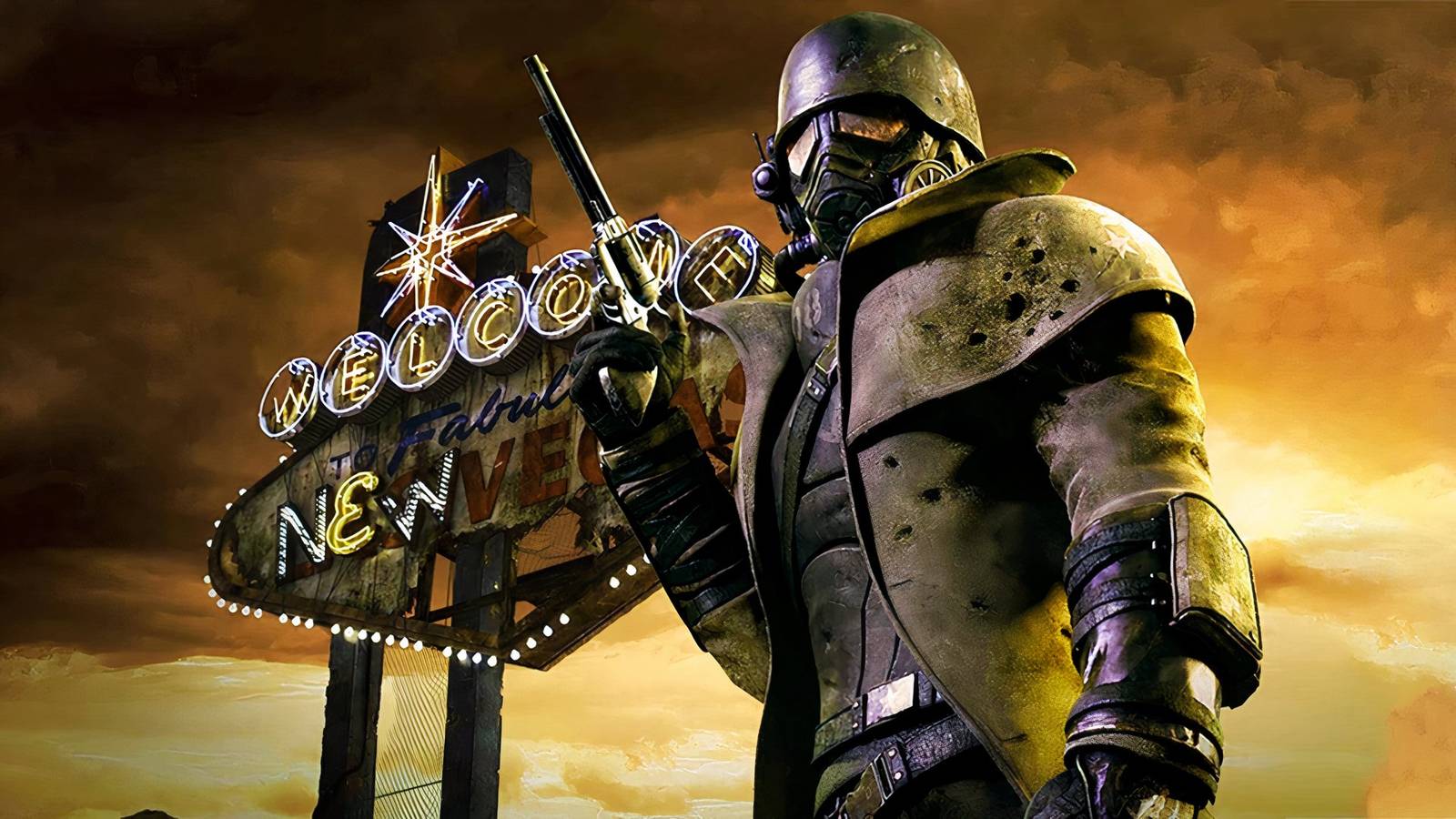
The story of how Fallout: New Vegas came to be is already legendary, but new reports suggest Bethesda was quite harsh about what it thought the game got wrong. This news has reignited long-standing debates about the partnership between these two famous RPG developers. While the public has come to love the title, the history behind Fallout: New Vegas‘ creation is filled with stories of internal friction and differing visions. As more information comes to light, it becomes clear that the relationship between the creator and the owner of the brand was far more complicated than anyone expected.
Long before modern consoles were the main focus, the Fallout franchise was a PC-only isometric role-playing game developed by Interplay and its internal team, Black Isle Studios. When that studio eventually shut down, many of the original creators formed Obsidian Entertainment. Meanwhile, Bethesda acquired the rights to the property and successfully turned it into a first-person blockbuster with its third numbered entry. Because Bethesda was busy working on The Elder Scrolls 5: Skyrim, it decided to bring in the veterans at Obsidian to create a spin-off using their existing assets, giving them an incredibly tight 18-month deadline to finish the job. Although Fallout: New Vegas was plagued by bugs at launch, it slowly grew into a cult favorite that many fans now argue is the best the series has ever been.
Fallout 5 Exclusivity Leaves Gamers Frustrated
Fallout 5’s exclusivity debate is already souring anticipation, as longtime fans face the possibility of being locked out of the series’ next chapter.
The Contentious Fallout of New Vegas
According to a recent interview with former senior designer Chris Avellone on the TKs-Mantis YouTube channel, Bethesda apparently detailed its grievances in a visual presentation. Avellone shared that the presentation covered more than just minor issues. According to him, “They had a whole PowerPoint. Not even about the DLC, they had a whole PowerPoint about all the things Obsidian did wrong.” He sarcastically described the meeting as “hugely morale-boosting,” noting that the developers felt they had provided a quality game. “I thought we did a good product for you guys that kept Fallout in the public consciousness,” Avellone stated, adding that it felt unfair since Bethesda “reaped a lot of the rewards for it” while being visibly unhappy during the review.
The technical friction went even deeper, leading to a confrontation over performance and the future of the game’s code. Avellone recalled an interview in which he was asked whether the game would hit 30 frames per second, which he believed was a basic standard. However, a tech director at Bethesda later scolded him for making that promise. “I sat there, and I smiled, and I took it,” he said, while internally wondering, “Why do you have a f—ing engine that can’t run 30 frames per second, and then call that your claim to fame?” Avellone also cast doubt on the possibility of a remaster, stating, “I don’t think Bethesda has the engineering know-how to make a remaster of New Vegas at all.” Part of this stems from a final milestone where Obsidian was supposed to deliver the source code for $10,000. “For reasons unknown to me, but I have suspicions, Feargus [Urquhart] decided not to cash out that milestone and did not deliver it,” Avellone claimed, suggesting the studio head might have felt “the New Vegas experience cheated him out of X amount of money” and wanted to limit the publisher’s future control.

Review scores also played a massive role in the souring of the relationship, specifically regarding the post-launch expansions and contract bonuses. Avellone admitted that the “Dead Money” DLC was designed with a survival horror vibe that was perhaps too far removed from the core experience for some players. “The reason I’m making these expressions and hesitations about it is because, despite what I thought would be cool as an examination of Fallout, it was so different from the core experience that it was obviously a huge turn-off for a lot of people,” he explained. Bethesda reportedly cited the lower critic scores for these expansions as a primary reason it didn’t want to continue working with Obsidian. “Bethesda used review scores against us for the DLCs for, like, why they didn’t want to keep doing things with us anyway,” he said, though he added, “Even though they didn’t wanna keep doing things with us anyway. So whatever.”
GameRant Quiz
Easy (15s)Medium (10s)Hard (5s)
Ultimately, the dreams of a sequel or a new project in a different location never came to fruition despite early creative excitement. Before the relationship cooled, the team was already dreaming up future installments. “We still thought we’d be able to do New Vegas 2, or whatever the title would be,” Avellone revealed, but he noted that those plans “quickly evaporated” once Bethesda decided to handle future games internally. One particularly exciting idea was a game set in New Orleans, inspired by a comic called Grendel. “The vibe was so cool,” Avellone recalled, stating that “as soon as I read it… I’m like: ‘Man, this makes me want to do a Fallout New Orleans so bad.'” While he remains hopeful about the location’s potential, he expressed doubt about a return to the series, saying a sequel “will not happen in the next six years at least, if ever.”

- Released
-
October 19, 2010
- ESRB
-
M for Mature: Blood and Gore, Intense Violence, Sexual Content, Strong Language, Use of Drugs
- Engine
-
Gamebryo
Source: PC Gamer