





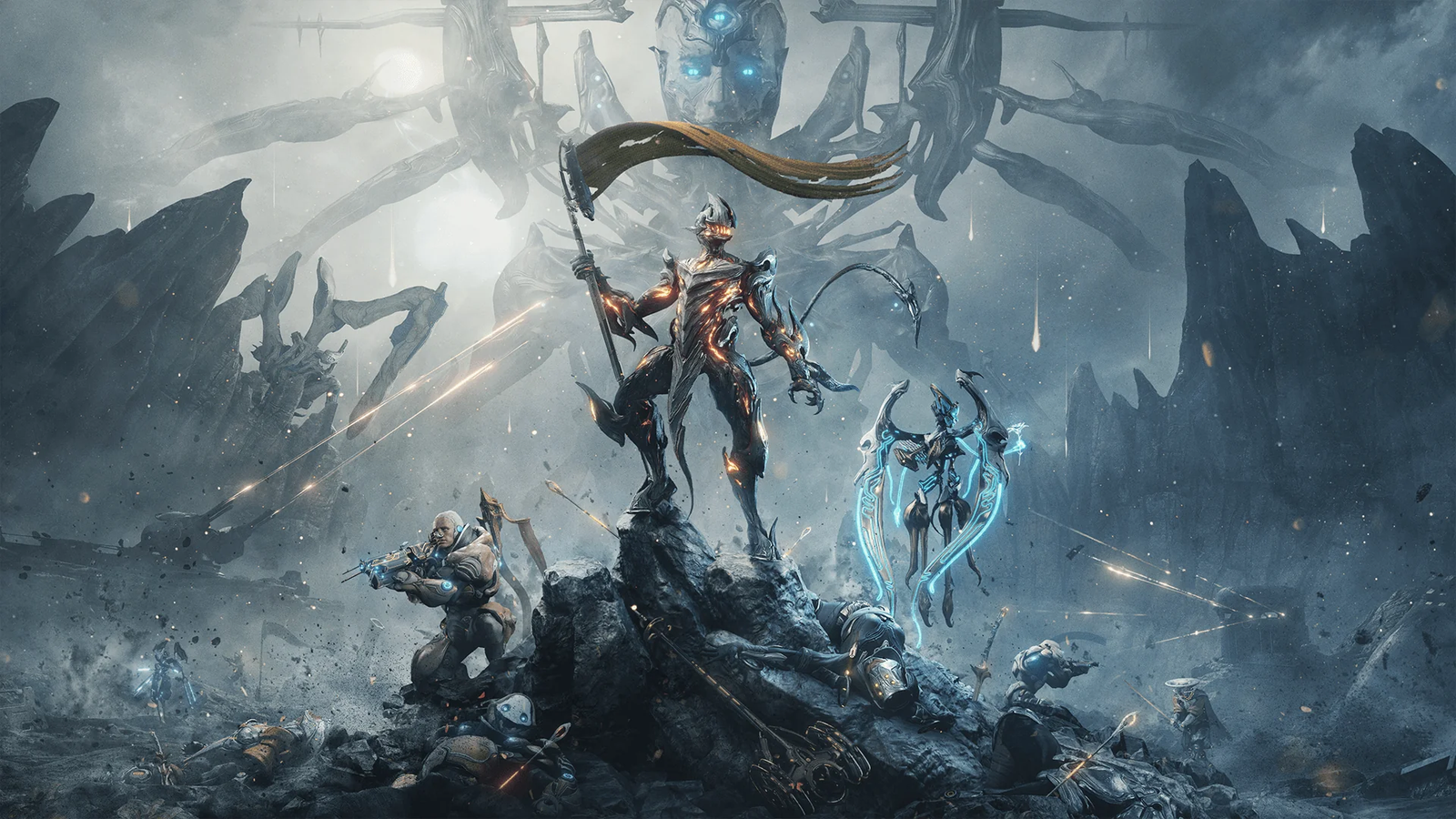
Long-running live-service action game Warframe recently made an in-game tribute to Destiny 2, which Bungie and Sony have officially ended support for. The announcement that Destiny 2 would be coming to an end was met with a mix of grief and outrage by the game’s community, a sizable portion of which having been invested in the Destiny world for well over a decade.
To clarify, Sony hasn’t indicated any plans to shut down Destiny 2’s servers or make the game unplayable, but it will stop getting new content, meaning that it’s no longer a live-service.
Warframe has been around for quite some time—before the first Destiny was even released, in fact. The free-to-play title was first launched in March 2013, months before the PS4 and Xbox One, making it one of the longest-running live-service games ever. The two games have amassed sizable, passionate playerbases over the years, cementing themselves in the gaming zeitgeist in a similar way. They have a lot of overlap, which is probably why Warframe added a new mission on Telesto (a location named after the infamous Destiny weapon), along with a new Honoria (“Make Your Own Fate”), which is a direct reference to Destiny 2. It’s a touching nod from Warframe‘s developers, but it’s also a good reminder that what made Destiny special still exists.
Why Destiny 3 Is Not a Given for Bungie’s Next Game
Destiny 3 may still be possible, but Bungie’s next chapter may depend on Marathon finding its footing after Destiny 2’s final update arrives soon.
Warframe Isn’t a Replacement for Destiny, But You Could Do a Lot Worse
Reflecting on Destiny 2‘s closure on Twitter, Warframe Creative Director Rebecca Ford says, “There is no Warframe without the legacy of Bungie games.” Despite Destiny releasing slightly after Warframe, it’s clear that the developers at Digital Extremes had nothing but respect for what was often considered one of their greatest rivals. Ford makes this clear in the same statement, calling Destiny 2 a “force of nature,” and “the only lasting pillar I had to look up to.”
Ford ends her statement by urging people to “not offer succor with comparison,” seemingly discouraging the suggestion of Warframe as an easy alternative, now that Destiny 2 is “dead.” This is certainly fair: Destiny 2 and Warframe are quite different, regardless of whatever potential impact they may have had on each other. At the same time, it’s kind of hard not to look at Warframe, that mighty titan that has stood alongside Destiny 2 for so long, and not appraise it as a potential rebound of sorts. Because depending on who you ask, Warframe might be safely considered better than Destiny 2 in some ways.
Why You Should Play Warframe, Whether You Like Destiny 2 or Not
Out of respect for both Ford and Destiny 2, I don’t want to spend too much time recommending Warframe, but I would be remiss if I didn’t at least touch on why it’s sometimes considered a good replacement. It has the same high science-fiction premise as Destiny 2, and stars uber-powerful space-warriors, with fantastic and easy-to-learn moment-to-moment gameplay. Progression, cooperative multiplayer, and customization are all major design pillars of both games as well.
Despite Destiny releasing slightly after Warframe, it’s clear that the developers at Digital Extremes had nothing but respect for what was often considered one of their greatest rivals.
That’s more or less where the similarities end, though. Fundamentally, Warframe is more of a straightforward action game than a looter-shooter like Destiny 2. Gear is important, but handled differently: new weapons and Warframes, which are basically different classes, are crafted instead of collected in the world, for instance. This makes Warframe a solid choice for those who don’t click with Destiny 2’s gear grind.
One area where Warframe is better than Destiny 2 is, fittingly, its new-player experience. Destiny 2 is notorious for being hard to get into, as its mission structure is unclear, a lot of content is blocked off, and there are massive expanses that newcomers can get lost in. Warframe isn’t perfect in this respect, but its more linear mission progression makes it much easier to digest at first. So, even if you’ve been knee-deep in Destiny 2 for a decade, you can still hop into Warframe with minimal friction.
The Passion, Soul, and Humanity That Made Destiny 2 Shine Aren’t Going Anywhere
Destiny 2 isn’t perfect, and it was never going to be, but Bungie’s outpouring of commitment and talent is what made it work as well as it did. It’s easy to hate on any game that adopts the live-service formula, but at the end of the day, a live-service’s success hinges on many of the same attributes as a traditional game’s: heart, integrity, vision, and genuine passion for the work. A studio needs these qualities if it wants to maintain a game for as long as Destiny 2 was.
And all these qualities are present in Warframe, which has cemented itself as arguably the most consumer-friendly free-to-play game of all time. Not only is its monetization surprisingly mild (you can unlock all weapons and Warframes without spending a dime), but its long-form storytelling and ever-evolving gameplay are exceptional as well. These accomplishments speak to Digital Extremes’ collaborative, sensible, and responsible nature: the studio has demonstrated remarkable poise, tact, restraint, and creativity over the course of Warframe‘s 16-year run, and will likely continue to do so.
Digital Extremes knows that Warframe means a lot to a lot of people, and acts as a sort of gardener for the game, in the sense that it guides its growth organically. Warframe has grown significantly over time, and in accordance with player feedback; it wasn’t just released in a poor state, expecting six-figure player counts out of the gate. The same can’t be said for most contemporary live-service games.
These vaguer, more essential traits are what Warframe really has in common with Destiny, and why its continued success is a glimmer of hope in these bleak times. So many live-service games either struggle to gain traction or alienate their audiences with poor support or predatory monetization, but the likes of Destiny 2 and Warframe prove that fun, engaging, respectful live-service games are possible, if treated with the right tact, patience, and skill by their developers. Even if you don’t like Warframe specifically, it may comfort you to know that there’s another Destiny-style success out there–maybe it will even inspire the next “Destiny 2,” serving as an inspirational beacon in the live-service space for years to come.

- Released
-
March 25, 2013
- ESRB
-
Mature 17+ / Blood and Gore, Language, Violence, In-Game Purchases, Users Interact