




Single-player FPS games aren’t associated with class systems, but the same doesn’t hold true for co-op and PvP shooters. So many of these releases shoehorn RPG mechanics into places they aren’t wanted, pushing players to assume specific roles rather than letting them organically find their place in a squad. However, the precious few FPS games that nail their class systems show why so many developers continue searching for gold – they are incredible when executed well.
The previous paragraph might sound harsh, but I’m not against the concept of class systems in shooters, especially since most of them emphasize skill rather than leveling up. When done well, a great class system really extends a game’s lifespan; when done poorly or just to meet a prerequisite, it can be confusing or feel completely tacked on. Classes should matter and not be included just for the sake of having them.
OK, nothing is truly “perfect,” but these games came as close as possible to achieving it.
Deep Rock Galactic Represents The Peak Of Co-Op Classes In FPS Games
We Are Unbreakable!
- Four playable classes: Scout, Engineer, Gunner, and Driller
If we are talking co-op, Deep Rock Galactic is strictly the best FPS game of the last decade, and a big contributor to its success is its handling of classes. Horde shooters often incorporate classes that focus solely on combat roles; for instance, one person shoots tanks, another focuses on crowd control, and the last squad member handles support/healing. DRG shakes things up by making traversal, lighting, and terrain manipulation just as important as raw firepower.
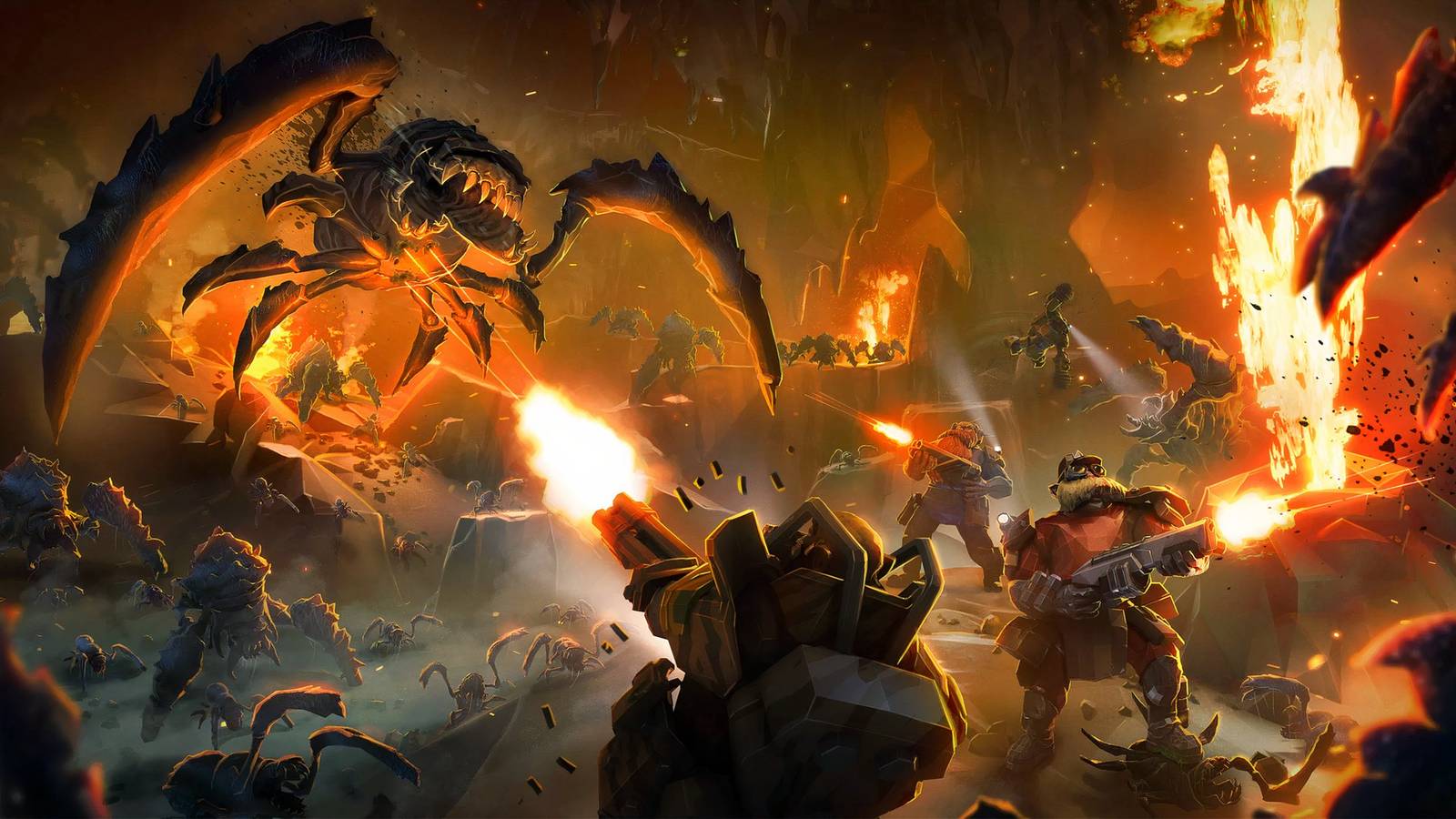
Players portray dwarves who dive into pitch-black caves in search of loot, fighting aliens along the way. No dwarf can handle an expedition on their own (even solo runners have a companion), and they need to synchronize with other classes to maximize a trip’s chances of success. The Scout lights the way and delivers the grappling hook while the Engineer focuses on defense and turrets, the Gunner brings the firepower and ziplines, and the Driller reinforces power drills and sets explosive charges.
Unlike so many FPS games with classes, DRG doesn’t have that one role that outshines everything else, and high-tier missions are arguably harder for teams who double-down on one class. You need a Driller to escape, a Scout to actually see what you are fighting, a Gunner to steamroll the aliens, and an Engineer to give you some breathing room.
Hell Let Loose Defines 50v50 Warfare Through Its Roles
Survive As One, Die As One
- Four categories: Commander, Infantry, Armor, and Recon
- 14 roles overall, all based on history.
Somewhat recently, Hell Let Loose: Vietnam‘s release date was pushed back to August 2026 following feedback on the beta, so we are in a bit of a weird situation as the community awaits the franchise’s next chapter. Vietnam has absolutely massive shoes to fill, as Hell Let Loose presents a strong argument for featuring the most complete class system in any historical shooter, outdoing the likes of Battlefield 1 or any Call of Duty.
This might sound obvious for any PvP shooter, but communication is crucial in Hell Let Loose. If you jump into a match and align with Officers who are mic-shy, then be prepared to walk into a horror show. The onboarding process isn’t forgiving either, and new players could end up taking on high-impact roles without understanding exactly what is expected of them. Hell Let Loose functions on a strict hierarchy, with each step having its own responsibilities and gameplay style.
To be honest, the class system is too complicated to explore deeply here, but what makes it so impressive is how the classes chain together and feel vital in their own way. If a Support soldier fails to drop supplies, then an Officer Squad Leader cannot construct a Garrison. If an Officer fails to do that, they are writing a death sentence for basically the whole team, as they march blindly into fire.
Within the smaller infantry squads, players also take on specific roles that don’t really overlap in function. You could be a Machine Gunner who has the firepower to pin enemies back, a Rifleman who flanks enemies and utilizes smoke grenades, or an Anti-Tank unit.
Team Fortress 2 Will Forever Be The Gold Standard
Writing The Playbook For Class And Hero Shooters
- Nine playable classes: Demoman, Engineer, Heavy, Medic, Pyro, Scout, Sniper, Soldier, Spy
- Divided into Offense, Defense, and Support.
Along with being the precursor to hero shooters, Team Fortress 2 is the most famous class-based FPS game of all time, and it wrote the formula that every other title tries to replicate. With three categories and three classes each, players have enough options to find a role that suits them. However, the whole system relies on a dynamic rock-paper-scissors balance that takes into account range, movement speed, and positioning. Each role has a mechanical counter, and everybody has a part to play.
If there’s a lesson that games like Overwatch took from Team Fortress 2, it would be the importance of crafting distinct silhouettes for all its characters. Even then, TF2 handles this better than any of its successors, due to both longevity and stability. As each class has a unique body shape, weapon position, and posture, you can make them out in poor lighting or from across the maps. This uniqueness extends to audio cues as well, as characters move differently and their guns sound different.
Warhammer: Vermintide 2 Turns Horde Killing Into A Career
The Perfect Class System For More Than Just Warhammer Fans
- 5 playable characters (each with four careers): Markus Kruber, Bardin Goreksson, Kerillian, Victor Saltzpyre, Sienna Fuegonasus
Let’s shake things up with something a tad different. Warhammer: Vermintide 2 drops you in pure grimdark fantasy goodness, and Fatshark did an absolutely fantastic job of translating class archetypes into a horde slasher/shooter akin to something like Killing Floor 2 (which also has a superb class system). While the game pushes melee to the forefront, ranged weapons are still an important part of your arsenal.
Rather than “classes,” Vermintide 2 features 5 heroes, all of whom start with a specific Career and eventually unlock two more (or three, if you purchase the DLC). Each Career completely changes that character’s playstyle, altering their active skill, traits, health, and weapons. As an example, Bounty Hunter Victor is a sniper who prefers to keep his distance; meanwhile, Zealot Victor jumps directly into the heat of battle while swinging a flail.
Wolfenstein: Enemy Territory’s Class System Was A Game-Changer
Each Role Feels Indispensable

- Five playable classes: Soldier, Medic, Engineer, Field Ops, Covert Ops
More of a historical pick than anything (although servers aren’t completely dead nowadays), Wolfenstein: Enemy Territory redefined PvP shooters in the way it emphasized objectives rather than a kill count.
Every map has an operation to complete, be it stealing documents or blowing a gate, and combat exists to facilitate reaching that goal. Progressing toward that objective requires skills only certain classes can perform, which means god-like aim means nothing if that player isn’t using their talent to aid in the group’s current goal.
To further promote an us-first mentality, each team shares a Power Bar for their abilities rather than individual cooldowns, giving further weight to each decision. The in-match XP system also rewards players for fulfilling their roles, and they get more efficient as they go up a level.
In 2003, the PvP FPS rules were still being written, and Enemy Territory proved that a shooter could force strict, uncompromising team dependency without sacrificing fast-paced, high-skill gunplay. To be honest, modern gaming hasn’t taken too many lessons from this classic, but you can draw a line between Enemy Territory and Hell Let Loose.