



While chronicling the history of RPGs, a pattern quickly emerges: turn-based battle systems began to decline in the PS2 era and never really recovered. Most of us noticed this as it happened, but the sheer drop in the number of releases between the PS2 and PS3 puts it into perspective, and things only worsened in the subsequent generations. Fortunately, turn-based RPGs age better than most other genres, so we can revisit forgotten greats that will always be absolute joys to play.
Look beyond Final Fantasy and Dragon Quest, and you will find dozens upon dozens of projects with novel combat systems, endearing characters, ambitious storytelling, and all the random encounters you could ever want. The mid-90s to the late 2000s was arguably the golden era for turn-based RPGs, so let’s explore this treasure trove to find a few neglected gems.
Breath of Fire: Dragon Quarter Was Ahead Of Its Time
Capcom’s PS2 Turn-Based RPG Holds Up Incredibly Well
- PS2 exclusive.
- Also known as Breath of Fire 5.
Except for a final 2016 game that sank like an anchor, Capcom’s Breath of Fire effectively died with Dragon Quarter, the franchise’s only PS2 release. By the early 2000s, the developer’s attention was firmly captured by Resident Evil and Monster Hunter, with Breath of Fire no longer seeming like such an important pillar. Although not hated by any stretch of the imagination, Dragon Quarter isn’t regarded as one of the series’ high points, and its shift away from colorful high-fantasy didn’t strike a chord with every long-time fan.
Viewed from a 2026 lens, Dragon Quarter serves as an ancestor for the modern survival roguelites, and a pretty darn impressive one at that. Although it doesn’t force a restart after every loss, the game uses a Scenario Overlay system that lets you reset the narrative while carrying over your XP, equipment, skills, and bank; new playthroughs even unlock cutscenes. This mechanic ties into the D-Counter, which gradually increases from 0 to 100%, culminating in a game over.
By focusing on replays, Dragon Quarter can aim for a lean 15-hour campaign, which is refreshing compared to the many PS1 and PS2 JRPGs that last a lifetime. The switch from high-fantasy to an industrial underground utopia won’t be for everyone, but it gives the game a cool vibe that sets it apart from the other entries in the series.
Resonance of Fate Hits The Bullseye In Style
A PS3 Turn-Based RPG All About Guns

- A PS3 and Xbox 360 game that was ported to PC and PS4. You can buy it on Steam.
- Also known as Edge of Eternity.
Although primarily known for Star Ocean, tri-Ace’s resume features almost exclusively underrated RPGs. I almost went with the fantastic Valkyrie Profile games for this article, but there’s just something special about Resonance of Fate. And that “something” is guns.
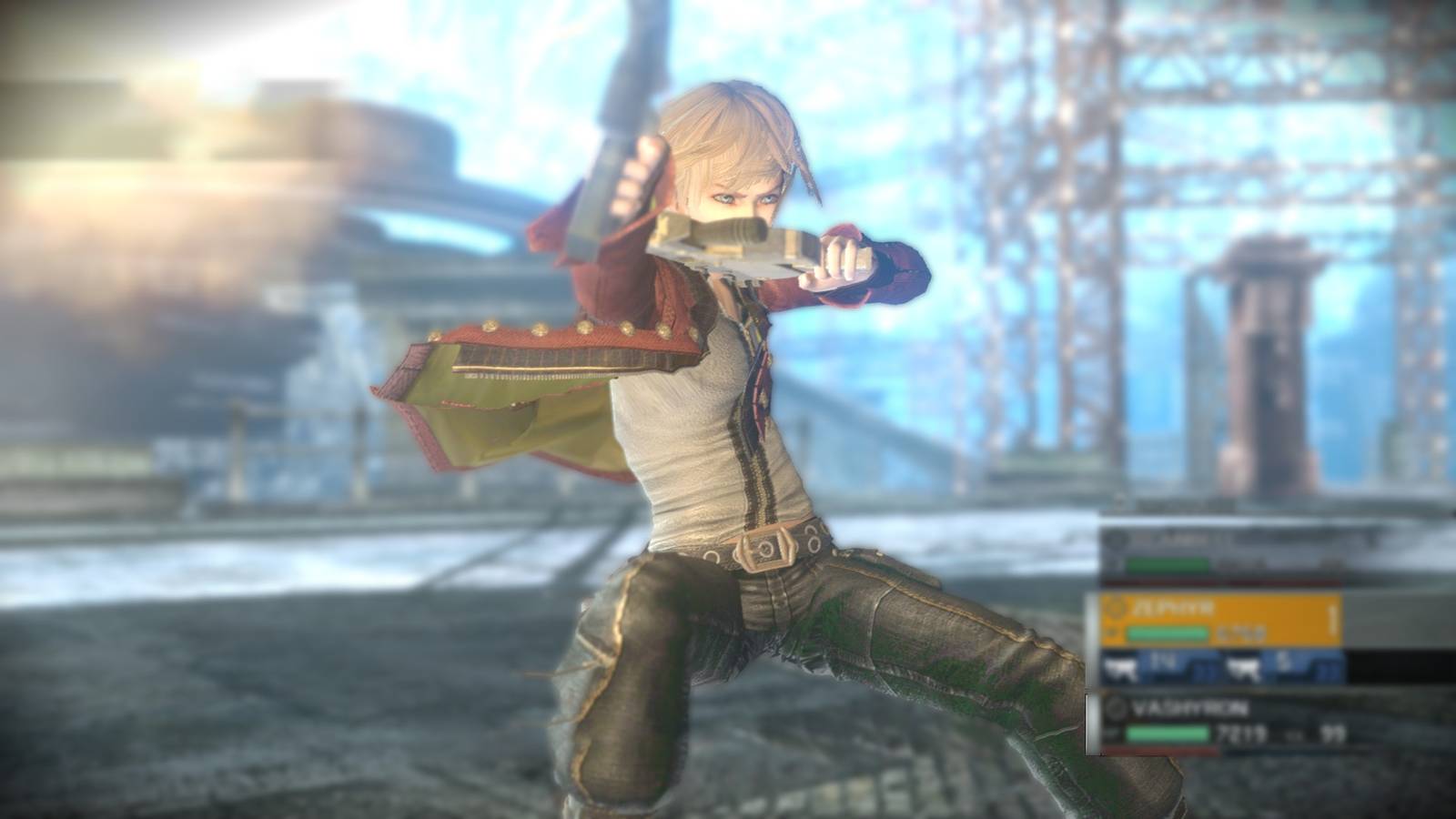
As JRPGs love their swords and magic, a game prioritizing ranged combat stands out from the crowd, and Resonance of Fate has way more to offer than just unusual weapons for the genre. The tri-Attack Battle system blends real-time movement with turn-based shooting, making fights feel fast-paced without sacrificing tactics. The combat goes much further than just that, as you have multiple damage types, hero actions, party attacks, and even a panic system.
Resonance of Fate doesn’t just use guns as a gimmick either, as you can also customize your weapons by stacking parts in a grid system. All of these elements combine to craft a battle system with a steep learning curve that is 100% worth mastering, and there’s nothing quite like it.
The Temple of Elemental Evil Proves That BG3 Isn’t DND’s Only Great Turn-Based RPG
Oh, Yeah, We Aren’t Covering Only JRPGs!

- PC exclusive.
- Based on a Dungeons & Dragons module.
- Saved by a dedicated community.
When someone envisions “turn-based RPGs,” they likely imagine old-school JRPGs, ignoring Western releases altogether. While titles like Septerra Core and Anachronox mostly aped Square Enix’s formula, a couple of Western games brought their own spin to the genre; in the case of The Temple of Elemental Evil, that spin was DnD.
A straight-up translation of the 3.5 Edition rulebook, Troika Games did an admirable job of capturing the tabletop experience of that era, which also means a combat system that can be downright overwhelming for the uninitiated. Through a radial menu, you gain access to a wide assortment of raw tactical options, and The Temple of Elemental Evil makes every buff, penalty, and attack roll visible. The game very much feels like a digital version of a module.
Look, I’m not going to pretend I’m an expert on 3.5 DnD, as most of my exposure comes from playing games like Neverwinter Nights 2; however, that doesn’t mean I cannot appreciate what The Temple of Elemental Evil tries to do, and it is still a unique experience today.
Shining the Holy Ark Sets The Stage For Greatness (While Being Great Itself)
A Forgotten Turn-Based RPG On A Forgotten Console
- A Sega Saturn exclusive.
- Part of the Shining franchise.
Roughly a billion Shining games exist, and like 80% of them are kind of forgotten. While overshadowed by the Shining Force strategy series, Shining the Holy Ark deserves way more love, and it feels like a precursor to Camelot’s Golden Sun games. Building on the traditional first-person dungeon-crawler formula, this 1996 gem injects much-needed speed to the gameplay loop, all the while shifting to a pretty impressive pseudo-3D presentation.
An argument could be made that every single Sega Saturn RPG is underappreciated, but Shining the Holy Ark is one of the few that I imagine would still hit the mark with modern players. Besides being all-around brilliant, the fast-paced combat, novel reaction-based ambush system, and variety in dungeon design through puzzles help lower the barrier to entry by keeping things constantly moving.
Suikoden Tierkreis Lives Up To Its Franchise’s Legacy
A Nintendo DS Spin-Off That Achieves Excellence
- A Nintendo DS exclusive.
- Last Suikoden game released in North America, not counting the compilation.
Apart from two Japan-only releases, Suikoden Tierkreis is the last official entry in Konami’s franchise, and it tends to be ignored like every other spin-off. For most people, the series ends with Suikoden 5, another game that doesn’t get much attention nowadays. The thing is, Suikoden Tierkreis is really not far removed from the mainline entries, both in terms of content and, more importantly, quality.
Naturally, the spin-off experiments with a couple of things, including trimming down the 6-person party to just 4, dropping the Rune system, and shifting to a multiverse world rather than the established timeline. This isn’t Suikoden 6, but Tierkreis still puts together a top-notch combat system with very little wasted time. Nintendo DS’s turn-based RPGs tend to be sluggish, but that really isn’t the case with Konami’s game.
For all its differences, the spin-off still offers an ambitious story, incredible production value, 108 recruitable characters, co-op attacks, and tactical combat. If you really miss this series and have never played Tierkreis, you are missing out.