




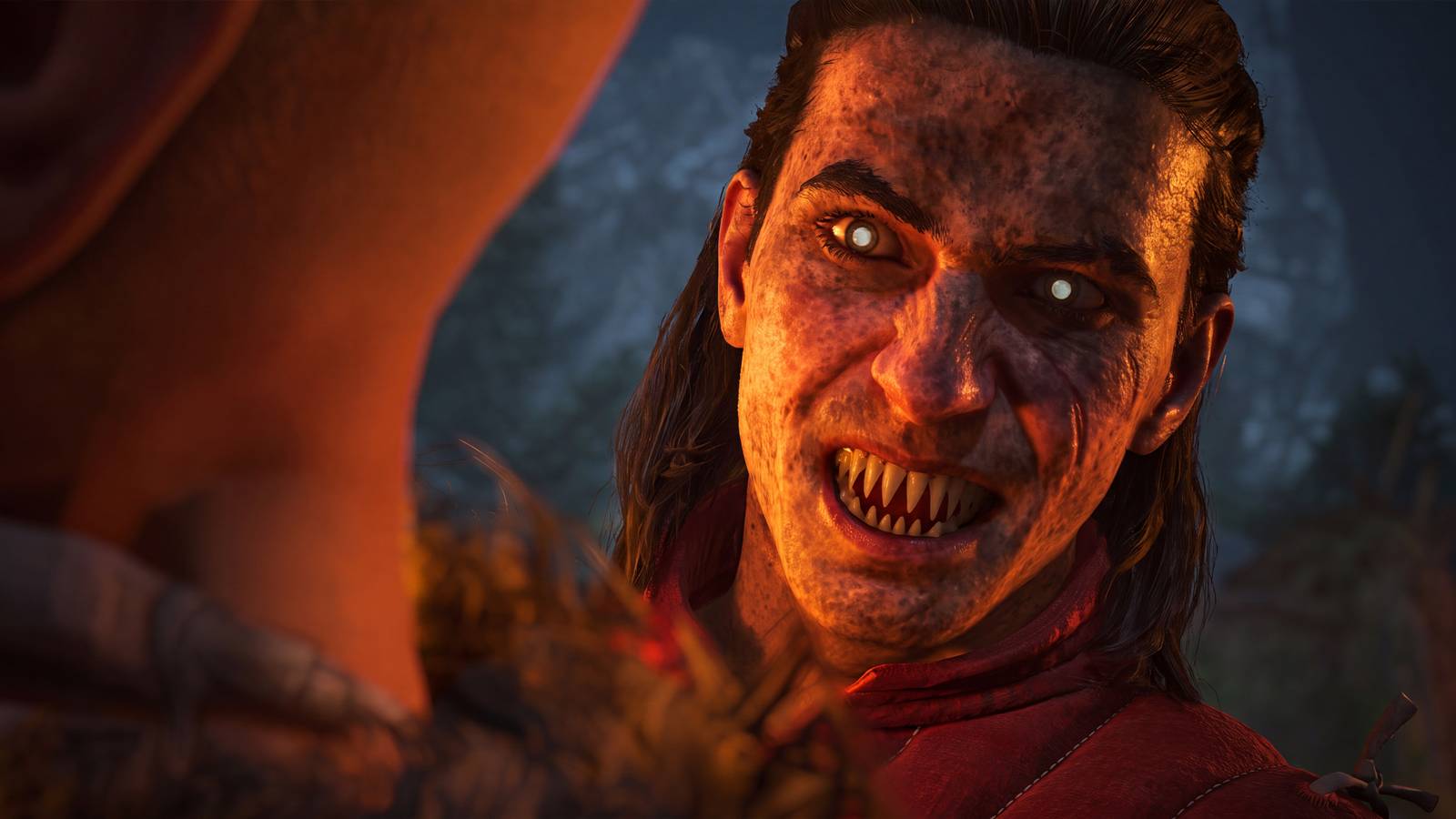
There are moments in The Blood of Dawnwalker when I can see exactly what Rebel Wolves was aiming for, and sometimes, it works incredibly well. Its opening hours hooked me almost immediately, Coen and his relationships with the people around him were exceedingly easy to care about, and the idea of spending a limited amount of time chipping away at Brencis’ vampire court piece by piece, looked like, from a safe distance, exactly the kind of open-world RPG I could lose myself in for dozens of hours. Throw in choices that can completely change how certain encounters play out, including the possibility of turning some of the game’s bosses into allies, and there is a version of The Blood of Dawnwalker hiding in here that I would probably love.
Unfortunately, actually playing The Blood of Dawnwalker regularly feels like stepping back into an era of open-world RPGs that the genre has spent the last decade trying to move away from. Its world is enormous but strangely empty and lifeless, its activities quickly begin repeating themselves, its combat loses some of its appeal once the same handful of enemies start showing up everywhere, and one of its most important mechanics is so inconsistent that I eventually stopped trying to understand the logic behind it. Add stiff character animations, awkward and infuriating platforming, questionable performance across the board, and a frankly ridiculous number of bugs to the mix, and The Blood of Dawnwalker starts feeling like it has arrived at the party about 10 years too late—at least.
The Blood of Dawnwalker’s Story Deserves Better Than Its Gameplay
The Blood of Dawnwalker wastes no time at all giving you a reason to care about Coen and the people around him, as its prologue is easily one of the strongest parts of the entire game. Watching Coen become a vampire and then struggle with his newfound urges is immensely satisfying, and the fact that it’s all happening while you’re learning the ins and outs of The Blood of Dawnwalker‘s various mechanics and systems makes it feel like you’re genuinely on this journey alongside him. Meanwhile, Brencis is established as a legitimate threat, Coen’s family gives the whole narrative some real stakes, and by the time the prologue is over, it’s easy to be just as hungry for the remainder of the story as Coen’s vampiric thirst makes him for blood.
The Blood of Dawnwalker wastes no time at all giving you a reason to care about Coen and the people around him…
Thankfully, that isn’t something The Blood of Dawnwalker completely loses once the prologue is finished. The story itself continues to be one of the game’s stronger elements, especially when it comes to Coen’s relationships with the people closest to him. His interactions with characters like Anca are easily some of the most memorable moments in the story, and most of the dialogue between the game’s primary characters is actually worth listening to rather than something I found myself impatiently skipping through. There is quite a bit of dialogue here too, but that rarely became a problem for me because the characters are generally interesting enough. Even when I felt like I could predict where a conversation or story beat was probably headed, I still wanted to hear it play out.

Many of The Blood of Dawnwalker‘s side characters get surprisingly worthwhile stories of their own as well. There were side quests I was interested in, not because of the rewards I had a feeling they’d offer, but because I wanted to see where the characters at the heart of their stories ended up. They aren’t The Witcher 3‘s side quests, mind you, and I can confidently say they miss those by a few miles. Still, this is one of the better compliments I can give an RPG like this, because The Blood of Dawnwalker does occasionally manage to make its smaller stories feel like they actually matter in the grand scheme of things. And the choices those quests made available to me made them even more interesting, especially when they affected a character’s future, their view of Coen, or where they eventually end up later on in the main narrative.
The Witcher 3 Formula Doesn’t Hit the Same Anymore
The problem, though, is that actually getting through some of those quests can feel like a slog because the gameplay is essentially the same in every single one of them—every single one. Talk to a character, go somewhere, inspect something, gather clues, fight some enemies, go somewhere else, gather more clues, fight more enemies, and so on. The dialogue never made me impatient, but the gameplay certainly did. There are only so many times I can walk into another combat encounter, deal with another group of the same enemies, search another area, or repeat some slight variation of something I have already done before it starts feeling like a fever dream I can’t get out of. Of course, those are issues deeply rooted in The Blood of Dawnwalker‘s gameplay as a whole, not necessarily with the quests themselves, which is why I have no problem praising the quests while calling out the gameplay for what it is.

What’s interesting is that, if you really wanted to call The Blood of Dawnwalker “The Witcher 3 with vampires,” you absolutely could, as it’s true in many ways. The “inspect” feature I just mentioned is basically Coen’s Witcher sense, which allows him to see clues in the environment like footprints, blood trails, symbols, and more. The way Coen swings his sword is an awful lot like the way Geralt handles his own, and even The Blood of Dawnwalker‘s soundtrack feels like something that belongs to a true Witcher 3 spin-off. But that’s where my comment that The Blood of Dawnwalker is about 10 years too late becomes criticism, because even The Witcher 3, as great as it is, was criticized for having repetitive mechanics supporting unusually strong content in 2015.
The dialogue never made me impatient, but the gameplay certainly did.
One might say, “If The Blood of Dawnwalker truly is that much like The Witcher 3, why is it a bad thing?” After all, The Witcher 3 is widely considered one of the greatest games ever made, so why not The Blood of Dawnwalker as well? The answer to that question is context. In 2015, The Witcher 3 was helping establish expectations for what a huge, story-driven open-world RPG could be. Some of its rougher qualities, therefore, were easier to overlook because everything surrounding them felt so ambitious at the time. A decade later, those same ideas aren’t ambitious anymore and are instead the starting point, as the industry has now had a full decade to iterate on that design—and The Blood of Dawnwalker just doesn’t do that.
The Blood of Dawnwalker’s Open World Gets Old Fast

One of The Blood of Dawnwalker‘s biggest weaknesses is, without a doubt, its gorgeous but empty open world. The same repetition I mentioned before shows up here in droves, and it’s exceedingly difficult to ignore. For starters, enemy variety is a serious issue here, with the bulk of enemies you fight (and you will fight them, whether you like it or not) being boars and wolves. That wouldn’t be as much of a problem if it weren’t for The Blood of Dawnwalker‘s combat-lock system, which essentially forces Coen to lock onto enemies as soon as they engage with him, and it’s incredibly frustrating trying to break that lock just so you can flee without fighting your 300th boar. And on that note, I can shapeshift into a wolf at night, which is fun, but wolves somehow still know it’s me and force me into combat if I remain in their vicinity longer than a millisecond.
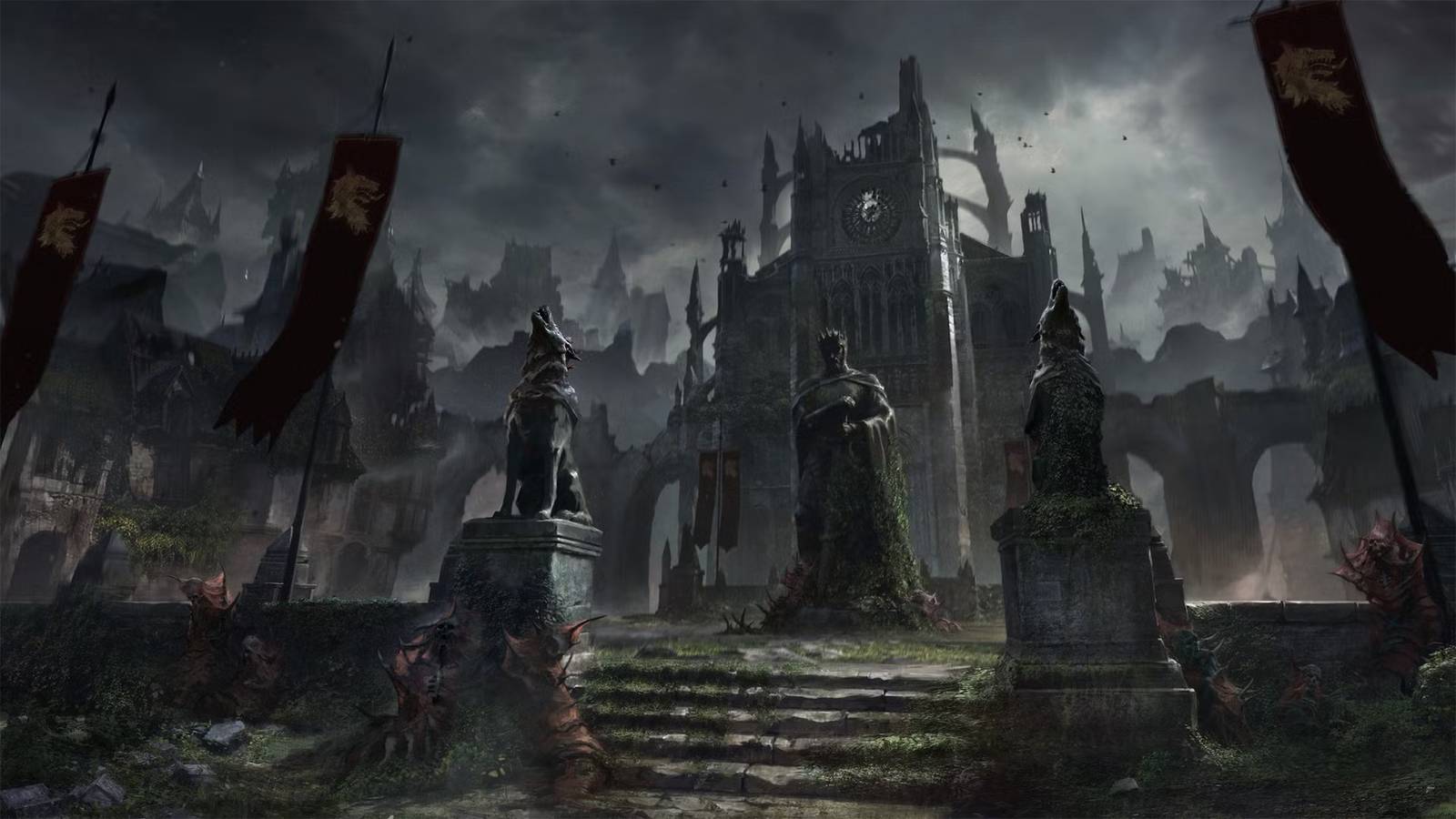
Unfortunately, that same repetition is at the heart of the world’s design. The Blood of Dawnwalker occasionally attempts some environmental storytelling, and there were certainly moments near the beginning when I stopped to look around and piece together what might have happened somewhere before I arrived, but it only took about an hour before I came to the realization that it was all the same. Come across a burned-down building and there will probably be a chest somewhere inside. Find a campfire and there’s a good chance the same three or four NPCs will be sitting around it having some variation of a conversation you’ve already heard. There are certainly exceptions, but far too much of Vale Sangora feels like one of those open worlds we saw over a decade ago that we were already growing weary of then.

And that space between everything is one of the game’s biggest problems because I spent an almost ridiculous amount of time simply running. Run to the next objective, investigate something, run somewhere else, fight a few enemies, run somewhere else again, and repeat. There were plenty of times when I would open the map, see where I needed to go, and immediately feel exhausted by the thought of getting there. Exploration in an open-world RPG should occasionally make me forget where I was originally headed because something else caught my attention along the way. In The Blood of Dawnwalker, I was usually staring at the objective marker and trying to get there as quickly as possible.
Far too much of Vale Sangora feels like one of those open worlds we saw over a decade ago that we were already growing weary of then.
Rebel Wolves seemingly anticipated some of that by covering Vale Sangora in fast-travel points, but even that feels like an overcorrection. There are so many of them, and some are so close together, that I occasionally wondered why I would bother fast traveling at all unless I was crossing a substantial portion of the map. By the time I opened the map, selected a destination, sat through the loading screen, and regained control of Coen, I could have nearly run there myself in some cases. I understand the logic behind making sure players don’t have to travel halfway across the region just to reach a shrine, but there comes a point where having so many fast-travel points starts drawing even more attention to how little there is between them. At that point, I think you just need to let players fast travel from wherever they’re at, rather than making them run to a shrine first just to do it.

It isn’t that there is literally nothing to do in Vale Sangora, because there is. There are quests, encounters, enemies, chests, notes, shrines, buildings to investigate, and plenty of other things scattered around the map. It just rarely feels like I’m discovering anything I haven’t already discovered before in some slightly different form. The open world is large, but it doesn’t feel particularly alive, and after enough hours of running through the same types of environments, fighting the same enemies, and interacting with the same kinds of activities, exploration started feeling like nothing more than the distance I had to cover before the game would let me do something mildly interesting again.
The Blood of Dawnwalker’s Biggest Systems Feel Half-Baked
That would already be enough to make The Blood of Dawnwalker‘s open world feel dated, but its most important system makes interacting with that world even stranger. The game is built around the idea that Coen only has a limited amount of time to save his family, so deciding what is actually worth doing should theoretically be one of the most interesting choices you make. Instead, I spent a surprising amount of my playthrough wondering why opening one chest could somehow be more consequential to the passage of time than traveling halfway across Vale Sangora.

The Infamy system is another good example of The Blood of Dawnwalker having a strong idea that never feels like it has as much impact as it should. The more Coen attacks Brencis’ court and soldiers, the more the world is supposed to respond, with things like increased patrols, higher prices, and heavier security making life increasingly difficult. In practice, though, I barely felt any of that until my Infamy was completely maxed out, at which point the gates to the city in the middle of the map were closed to keep me out. The problem is, I could still Shadowstep over the walls at night, and during the day I could simply fast travel directly to a point inside the city anyway. Even stranger, once I did that and dropped down from the building where the fast-travel point was located, I couldn’t find any reasonable way back out because the gates were still closed and Shadowstep wasn’t available during the day. So the system designed to keep Coen out of the city somehow did a better job of keeping me trapped inside it, which feels like a pretty good summary of how undercooked some of The Blood of Dawnwalker‘s more ambitious systems can be.
The Blood of Dawnwalker’s Time Mechanic Rarely Makes Sense
One of The Blood of Dawnwalker‘s signature mechanics is its limited-time structure, which gives Coen 30 days to rescue his family from Brencis. In theory, I love the idea, and it was initially one of the elements that piqued my interest in the game. Time is represented by hourglasses, and certain actions move the clock forward, which means you’re constantly supposed to be weighing whether something is worth doing when every decision could potentially bring Coen one step closer to running out of time. Rebel Wolves even promised ahead of release that only key activities would move time forward, which made me think I would mostly be spending time on major quests, significant choices, and other actions that felt appropriately consequential.

That’s not how it works in practice. The Blood of Dawnwalker seems to consider almost everything a key activity. Main quests cost time. Side quests cost time. Opening certain chests costs time. Picking up notes costs time. Unlocking skills costs time. Repairing fast-travel points costs time. Helping someone during a random encounter on the side of the road can cost time. At one point, I picked up a shard of an old sword and somehow lost three hourglasses for doing it. There were so many moments where I performed what felt like an ordinary RPG interaction only to watch another chunk of Coen’s limited time disappear that I eventually stopped caring about it altogether.
The stranger part is that the system isn’t even consistent about what deserves to move the clock forward. I completed legitimate side activities that resulted from choices I had made earlier in the game and didn’t lose any time at all, yet saving someone who was in trouble on the side of the road would cost me time. Picking up an object can apparently eat into the time Coen has left to save his family, but fast traveling across Vale Sangora doesn’t cost him anything. I understand that completely realistic timekeeping probably wouldn’t make for a very fun game, but there still needs to be some internal logic to a system that is constantly asking me to make decisions based on how much time I have left.

To be fair, there are moments when that logic does work. Refilling a grave that someone robbed taking time makes sense. Moving giant stones to unblock a passage taking time makes sense. Spending several hours working through a substantial quest makes sense. Those are exactly the kinds of actions that make the mechanic interesting, because I can look at what Coen is about to do and understand why it might cost him something. It’s when picking up a note or opening a chest comes with similar consequences that the whole thing starts feeling like one massive gimmick, and it completely loses me on what it’s trying to communicate and accomplish.
There were so many moments where I performed what felt like an ordinary RPG interaction only to watch another chunk of Coen’s limited time disappear that I eventually stopped caring about it altogether.
Unlocking skills makes the system even more confusing. Coen earns skill points as he levels up, but unlocking many of those abilities also costs time, which raises the question of why the game needs both systems in the first place. If I’m already spending the skill points I earned by leveling up, why am I also sacrificing some of the limited time I have to rescue Coen’s family just to use them? And if I’m trying to conserve that time, I can theoretically end up sitting on a pile of skill points that I don’t want to spend because doing so comes with another cost attached. Instead of making progression feel like a rewarding part of the choice system, it actually paralyzed me at first, to the point that I wasn’t unlocking anything until I realized I had no choice if I wanted to survive what was ahead.

I will say that I understand the time limit in The Blood of Dawnwalker only applies to Coen saving his family. In other words, once you save his family (or run out of time to do so), the time limit ceases and the world changes as a result of your actions or lack thereof. But that’s not enough to say the time limit doesn’t matter, because otherwise, it wouldn’t be in the game in the first place. The time limit is there to put pressure on your choices leading up to that climax, and it’s meant to make you thoughtfully consider how you’re using your time to prepare for your encounter with Brencis. But when nearly everything in the game seems determined to take that time away from you, and the rules for what does and doesn’t advance the clock feel so inconsistent, that pressure starts feeling incredibly arbitrary.
What frustrates me most is that there is a genuinely good idea underneath all of this. Forcing me to choose which quests, upgrades, encounters, and opportunities are worth Coen’s limited time should create some of The Blood of Dawnwalker‘s most difficult decisions. But those decisions lose much of their impact when they often have no logic to them whatsoever. I can count on one hand the number of moments in the game where I genuinely considered whether something was worth doing because of the time it required. However, more often than I would have liked, I was asking myself why the game had decided this particular thing should cost me time in the first place.
The Blood of Dawnwalker Is Too Janky for Its Own Good

For as repetitive as combat in The Blood of Dawnwalker becomes, I do genuinely love how it feels when everything is working as it should. There is a real weight behind every swing of Coen’s sword, and the combination of the game’s audio and visual feedback makes landing a clean hit feel immensely satisfying. The Kingdom Come: Deliverance-like directional combat system helps with that too, as effective attacks, blocks, and parries require you to tilt the control stick in the appropriate direction rather than simply mash buttons and hope for the best. You don’t technically have to engage with that system, but doing things the lazy way costs stamina, while using directional inputs correctly can actually restore stamina once certain skills are unlocked. It’s easily one of the better ideas in The Blood of Dawnwalker‘s combat, and when everything clicks, it feels great.
The problem is that almost every fight eventually starts feeling exactly the same. Enemy variety is already limited, and even boss encounters rarely forced me to substantially change the way I approached combat. Bosses might have a unique attack or mechanic here and there, but I was still largely fighting them the same way I fought everyone else. Eventually, I got so bored with combat that I found myself audibly sighing whenever I stumbled into an encounter I couldn’t escape, because I already knew exactly what the next few minutes were going to look like. The combat has some of the best impact I’ve felt in a game like this, but that can only carry it so far when the encounters themselves rarely give that combat anything interesting to do.

Progression doesn’t help much either. Coen has three primary skill trees in Swordmastery, Witchcraft, and Vampirism, but they aren’t remotely equal investments. Witchcraft abilities can only be used during the day, while Vampirism abilities can only be used at night. Swordmastery skills, meanwhile, are always available. Normally, that might simply encourage players to build around their preferred playstyle, but because unlocking skills also costs Coen’s limited time, investing in Witchcraft or Vampirism often felt like spending a valuable resource on something I could only use half the time. Most of my skill points consequently went into Swordmastery, not necessarily because I liked it more, but because it was inherently the better investment. When two-thirds of a game’s skill trees come with restrictions that the third doesn’t have, the choice starts making itself.
The Blood of Dawnwalker’s Vampire Fantasy Never Fully Lands
One of the strangest missed opportunities with Coen’s vampirism is the “Give in to the Hunger” mechanic, which occasionally causes him to automatically attack someone, even friends, during a conversation if his health is low enough while he’s in his vampire state. To be honest, I love the idea, as it sounds like exactly the kind of mechanic that should make playing as a vampire feel dangerous and unpredictable, especially when the story puts so much emphasis on Coen struggling with what he’s becoming. However, it’s so easy to keep Coen’s health high enough that avoiding it isn’t difficult in the slightest. Throughout my time with the game, I had only one moment where Coen couldn’t resist the urge, and it was when I was still learning how the game works. It’s a shame because that could have been one of the game’s most interesting mechanics. Instead, it became another cool idea that barely affected the way I played.

Traversal is where The Blood of Dawnwalker‘s rough edges become much harder to ignore. Coen regularly struggled to go where I wanted him to, whether that meant sliding back down terrain he looked perfectly capable of climbing, getting caught on strange geometry, or simply refusing to cooperate during platforming sections. Shadowstep should be one of the coolest abilities in the game, especially since it essentially lets Coen teleport short distances and even reach otherwise inaccessible areas at night, but actually getting it to work the way I wanted could be infuriating. There were plenty of moments where I knew exactly where I wanted to go and could see that the ability should theoretically get me there, only for the game to seemingly disagree.
When two-thirds of a game’s skill trees come with restrictions that the third doesn’t have, the choice starts making itself.
Combat and traversal can even start working against each other. If an enemy engages Coen from a position slightly above or below him, attacks can completely miss because of the difference in elevation. That wouldn’t be quite as irritating if Coen could simply jump up or down to meet them, but jumping isn’t available during combat, which can leave you awkwardly trying to find some route onto the same plane as an enemy before you can actually hit them. There were encounters where I wasn’t struggling because the enemy was difficult, but because the terrain had somehow become the most dangerous thing in the fight. Normally, I’m more forgiving of bugs and technical issues, but when they’re stacked on top of what I would consider to be poor game design, they’re incredibly hard to ignore.
The Blood of Dawnwalker Has the Right Ideas, But Not the Execution

The frustrating thing about The Blood of Dawnwalker is that I don’t think it’s a bad game at its core. There are ideas here that I genuinely love, from the pressure of Coen’s limited time to the way his choices can affect the people around him, and its characters and story regularly gave me a reason to keep going when the gameplay itself wasn’t doing the same. Combat can feel fantastic when everything comes together, some of Coen’s abilities are incredibly cool in concept, and there were plenty of moments where I caught a glimpse of the game I thought I was going to get when I first started playing. Unfortunately, those moments are surrounded by so much repetition, inconsistency, and general jank that they never get enough room to make The Blood of Dawnwalker feel as special as it occasionally threatens to be.
And that’s ultimately what I mean when I say The Blood of Dawnwalker feels about 10 years too late. It borrows heavily from an era of open-world RPG design that produced some of the greatest games ever made, but it also brings along many of the things the genre has spent the last decade learning how to do better. A repetitive open world, encounters that quickly lose their excitement, clunky traversal, systems that sound more interesting than they actually are, and a time mechanic that too often feels arbitrary might have been easier to overlook when games like The Witcher 3 were helping redefine what an open-world RPG could be. In 2026, they stand out considerably more. There is a version of The Blood of Dawnwalker buried underneath all of that I’m sure I would love, and I sincerely hope Rebel Wolves gets the chance to dig it out someday. As it stands, though, this feels less like the next step forward for the genre and more like a game arriving after the world it was built for has already moved on.

- Released
-
September 3, 2026
- ESRB
-
Mature 17+ / Blood and Gore, Intense Violence, Nudity, Strong Language, Strong Sexual Content
- Developer(s)
-
Rebel Wolves


- Strong story and compelling character relationships
- Combat has excellent weight and feedback
- Open world quickly becomes repetitive and empty
- Time mechanic feels arbitrary and inconsistent
- Combat encounters rarely offer meaningful variety
- Traversal and platforming are frustratingly janky
The Blood of Dawnwalker launches on PC, PS5, and Xbox Series X|S on September 3, 2026. GameRant was provided a PS5 code for the purposes of this review.