


As the grim echo of the demise of BioWare continues to reverberate around the world, I cannot stop thinking about what a pivotal impact the company’s extraordinary run of games had on me. The Mass Effect trilogy was obviously stunning, Dragon Age: Origins means more to me than your Lord of the Rings, and Jade Empire holds a special place for me despite being forgotten by so many. But it wasn’t any of these, or the legendary Baldur’s Gate or its sequel, that hit me the hardest. It was Star Wars: Knights of the Old Republic.
There are games I’ve played and adored and replayed, and they exist in my head as just that: wonderful games. Then there are a rare few that exceed this, that occupy a bigger, more important place, that feel far more like crucial memories, deeply influential vacations from my past that shaped me, and stay with me forever. Among them I count The Longest Journey, Firewatch, and 2003’s Knights of the Old Republic.
I think about characters like Bastila and Mission and HK-47 as friends from a previous era of my life, rather than companions in a video game. KotOR burst its banks and flooded over my life. I can completely understand why for many there’s a stronger connection to the wonderful characters from the Mass Effect series (and I concede that Garrus and Mordin have the same presence in my life), but it’s KotOR that shines brightest for me. That unique relationship between Zaalbar and Mission, the moments when HK accidentally allowed the tiniest crack in his sneering veneer, the way Bastila rolled her eyes at me so frequently, it all feels so large.
Star Wars missed me as a kid. I was pretty much the ideal age, born in the year the first movie was released, and surrounded by its all-consuming popularity in the early ’80s. But it did something very wrong: A group of friends wanted to watch A New Hope one Thursday afternoon when I was seven years old instead of playing outside, and I wanted to play outside. So I hated it. And like a dumb kid, that was enough for me to decide I just didn’t like Star Wars overall. It wasn’t until 1997 that I even watched the three films properly, when I bought the trilogy boxset in widescreen on VHS ahead of Lucas’s remastered 20th anniversary editions replacing them entirely. So it was only six years before KotOR originally came out that I finally accepted they were a bunch of fun movies, and yet I still stubbornly held on to a determination that they weren’t that good.
KotOR, meanwhile, affected me immediately. After the slightly game-y opening tutorial on the Endar Spire, your arrival on the Sith-occupied planet of Taris, set 4,000 years before the events Lucas had created, was so utterly extraordinary. It was the first time I’d experienced so much possibility in a game, so many different things to do and directions to go in and ways to approach each situation I encountered.
There was an underclass who were being denied vital medicine in this city, and I could intervene and stop the elites from hoarding a curing serum and make it available to the less fortunate, supporting a secret clinic that was aiding the poorest, but I wasn’t doing this because it was the one and only pre-determined endpoint of the quest. Rather, I had chosen to do this. but rather the choices I made. I remember this well because in 2009 I wrote a trilogy of pieces for Eurogamer for which I replayed the whole game, but this time only making the most evil decisions possible. It turns out you can blackmail the doctor running the free clinic for the poor and steal all his medpacks, and that’s just the beginning. The serum that quickly cures the disease that’s spreading throughout the undercity can be easily synthesized and distributed widely by stealing it from the Sith, but this time I instead went out of my way to prevent that and sold the sample to a Hutt crime lord who would only use it to exploit people.
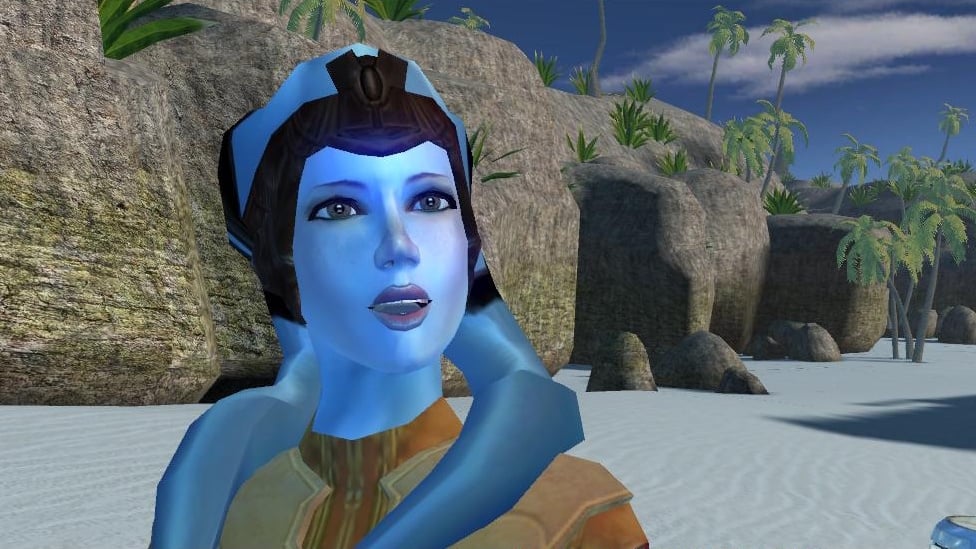
As I went about this larger quest, I was able to ruin so many people’s lives in so many unnecessarily terrible ways, spitefully destroying a Twi’lek dancer’s chances of escaping her servitude and helping an attempted rapist get away with his crime by (oh god, I don’t even want to type this) killing his victim. And then I stole her money. I share this horror to really underline just how broad the available choices were in this incredible game, and to assure you that I made not a single one of these evil choices when I played the game for the first time. That time I was so far on the Light side of the Force that my character portrait had twinkly lights of purity flickering around her.
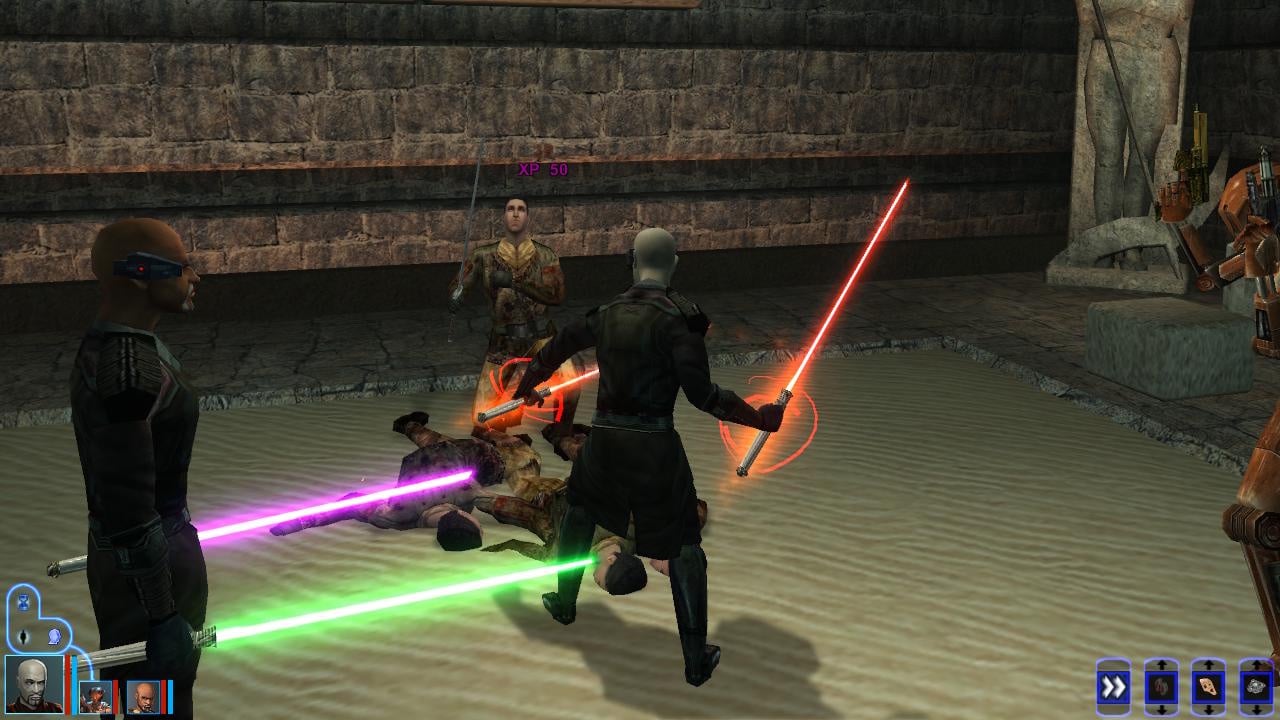
There are so many other moments that stand out to me, and almost all of them are off the beaten path of the game’s (excellent) main plot. There’s a sequence in which you can poke around a couple of neighboring houses and learn that the two families, the Sandrals and the Matales, are involved in a Romeo & Juliet-like warring situation. These two households, both alike in dignity, are convinced that the other has kidnapped one of their teenage sons, and things are getting out of hand. If you talk to these people, you’ll eventually learn that yes, one of the father figures has kidnapped a kid, one his own daughter is in love with. The ideal solution here is that you help the two youths unite and run away together, while settling the arguments between the families, and it’s so rewarding to do. The most evil outcome is you can outright lie to them all about what happened, having them turn their droids on one another, killing absolutely everyone including the two young lovebirds.
I recognize that today, in a world containing The Witcher 3 and its ilk, fascinating stories included as optional asides are far less of a notable feature, but in 2003 this was just mind-blowing. To put all this effort into something so well written, and with so much variety in how you play it out, and then just let the player ignore it if they so choose? Astonishing.
But I think all this would have had far less of an impact on me if I hadn’t cared about those companions so much. While Bastila and HK-47 are beloved by nearly all who played the game, the rest of them (apart from Carth, of course) contain multitudes, too. A lot of people instinctively disliked Mission for her crime of being a 14-year-old, and as such acting like a 14-year-old. She remains, I’d argue, the most honest depiction of a 14-year-old in all of gaming, not artificially wise beyond her years, or movingly noble thanks to the traumas she’s faced, but just a really teenage teenager. And I loved her for that! I was, at the time I played the game for the first time, splitting my life in two bizarrely different halves: as a games journalist writing primarily for PC Gamer, and as a youth worker studying for a degree in youth work and applied theology. It was an odd mix. You can see which half I stuck with. But it meant I spent a fair amount of my time in the company of middle-class teenagers, and really couldn’t have been much more familiar with the likes of Mission. I cared about Mission very much, because she was too young to be there, too immature to be coping, and I couldn’t resist bringing her along on quests just to hear her unique input. (And because it still haunts me 20 years later, I have to say that in that Bastard of the Old Republic replay I did for Eurogamer I forced the Wookiee Zaalbar, who’d sworn a life-oath to protect her, to murder her for literally no reason at the end of the game.)
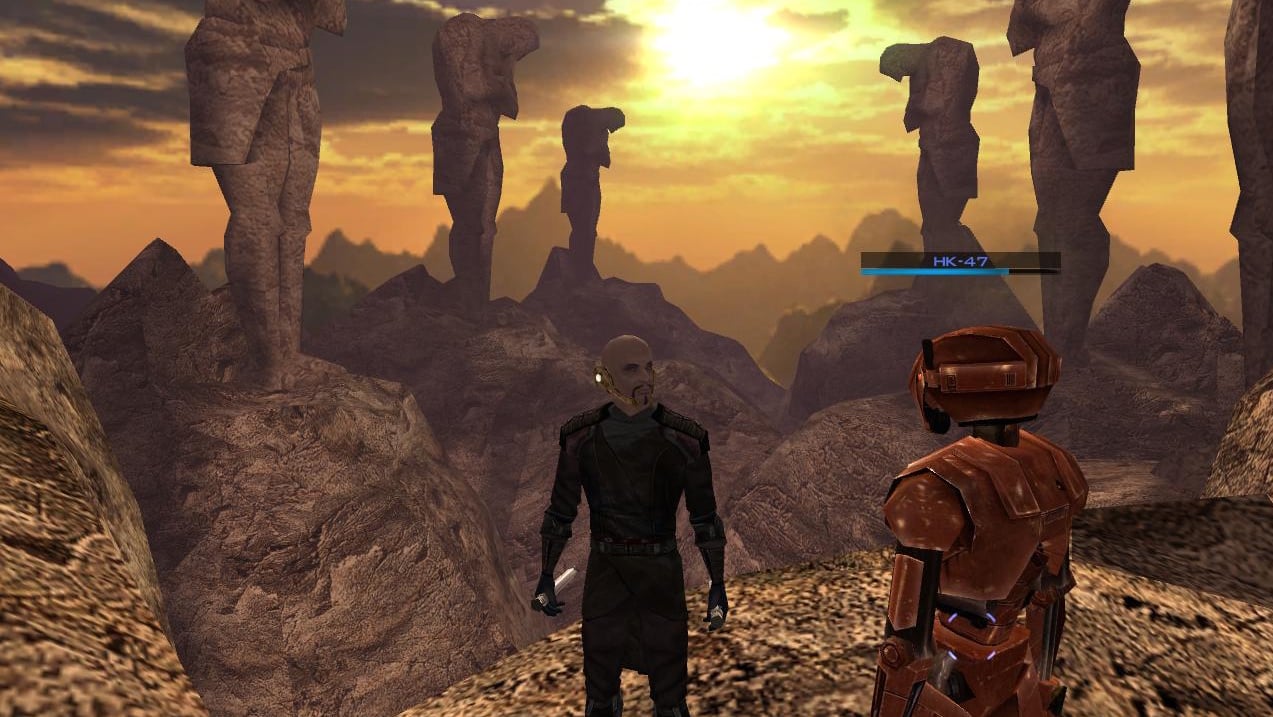
So much love went into this project, and it expressed itself in every aspect of the game. Perhaps most strikingly for me, it even affected how I saw Star Wars. The millennia of separation from the movies certainly gave BioWare more freedom (although not enough to say “damn” for some reason), but it also deeply embraced and expanded on the lore of the Jedi and the Sith, made me care about them, and sold me on the wider mythos.
If I’m being completely honest, I still don’t entirely understand how the cueing of attacks was meant to work in combat (I’ve been replaying it again recently on tablet), but it seems to forgive me spamming saber throws and then not understanding why the boxes are suddenly filled with other actions. It was never really about the fighting for me, though (Mass Effect would address this splendidly), but rather the time I spent there. It’s a core memory, a vital part of my past, and EA’s corporate vandalism, spitefully allowing this company to fall apart and eventually killing it off, hurts all the more for it. But thank goodness we still have these games to play, and the legacy they left us.