







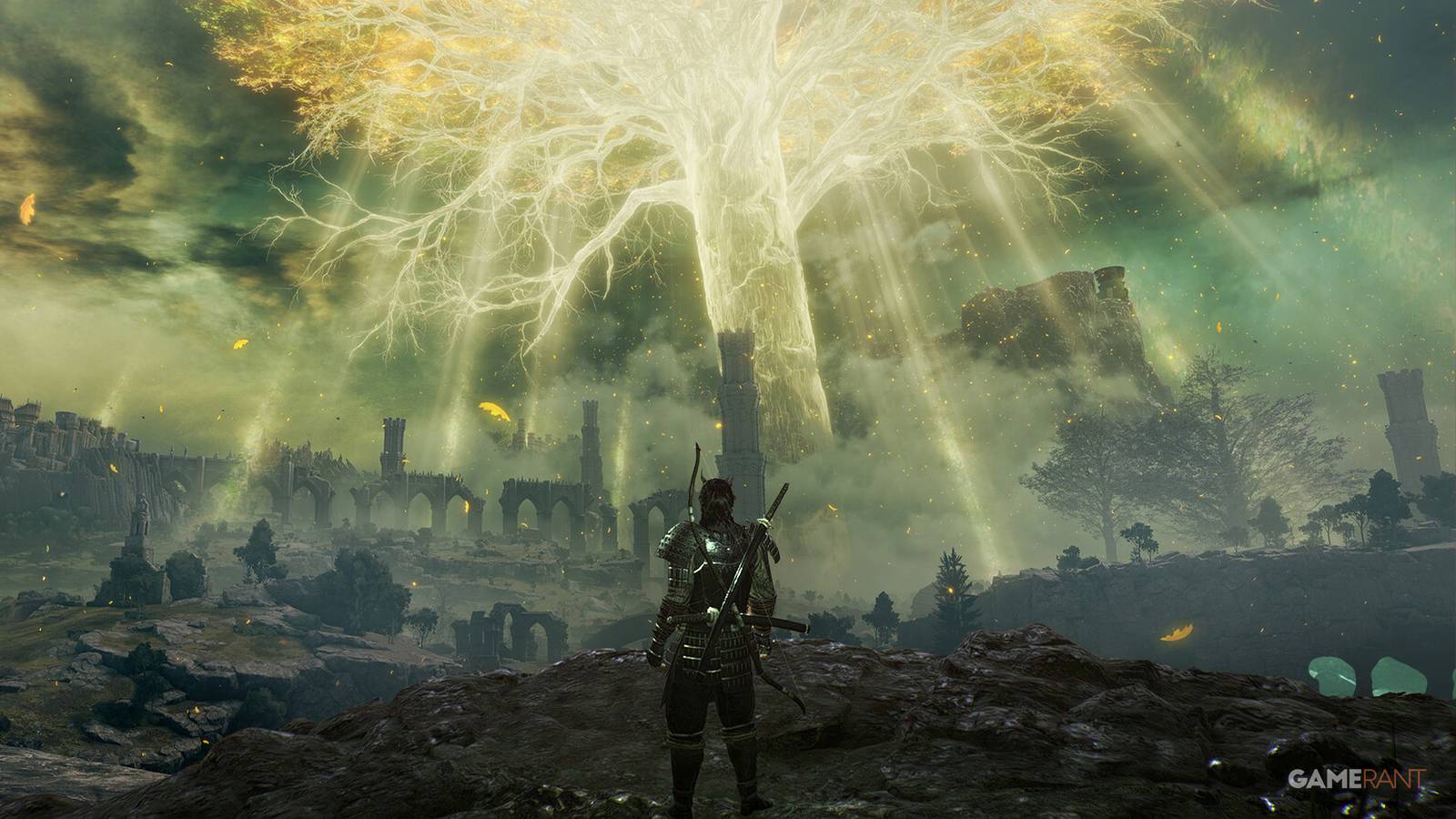
Anytime a new Soulslike comes out, it’s easy to draw comparisons between it and the games made by the subgenre’s forerunner, FromSoftware. One of the latest entries into that conversation is Team Ninja’s Nioh 3, which, at a glance, looks like it’s cut from the same cloth. It’s difficult, its combat centers around stamina management, death is punishing, and it expects players to learn through failure, all like its FromSoftware cousins. But not every Soulslike is FromSoftware-like, and that’s an important distinction to make here. Where games like Elden Ring encourage patience, spatial awareness, and discovery through the world itself, Nioh 3 tells a bit of a different story.
More than anything else, Nioh 3 feels like a different interpretation of the Soulslike idea because it doubles down on combat depth and tactical variety in places where FromSoftware’s games emphasize world interaction and pacing. Its Style Shift system lets players swap between Samurai and Ninja—two distinct playstyles that open the door wide for build customization. Exploration in Nioh 3 is composed of interconnected larger maps rather than the wide-open, discovery-first design seen in games like Elden Ring. The result is a game that challenges players more with what they do in each fight than with where they go, making Nioh 3‘s identity distinct even though it shares some similarities with its genre peers.
Nioh 3 Is Its Own Middle Ground With Its Open-Field Experience
Key Differences Between Nioh 3’s Exploration and FromSoftware Games Like Elden Ring
- NO MOUNT-BASED TRAVEL – Exploration is entirely on foot, with smaller traversal loops instead of long-distance movement.
- OPEN-FIELD ZONES, NOT OPEN WORLD – Large, self-contained areas rather than one seamless map.
- STRUCTURED EXPLORATION PATHS – Regions are designed around deliberate routes, elevation changes, and gated access.
- ABILITY-GATED BACKTRACKING – Guardian Spirits unlock traversal tools that open previously inaccessible areas.
- PROGRESSION-DRIVEN EXPLORATION – Finding shrines, chests, and bases directly feeds character growth.
- MAP-GUIDED DISCOVERY – Icons and upgrades reduce reliance on blind curiosity over time.
Nioh 3 has been referred to as “open world” by many of its spectators and even its critics, and if it truly were, it would be more comparable to Elden Ring‘s open world. However, it’s not fully open world and instead adopts what it calls an “open-field” approach to exploration. It’s not quite the interconnected, branching paths seen in classic FromSoftware games like Dark Souls, but it’s also not the wide-open, seamless world players are thrust into in Elden Ring. Rather, Nioh 3 is its own middle ground, taking players through large, open areas where there are collectibles, optional boss fights, and other activities around every corner.
It’s worth noting that while exploration in Nioh 3 is optional, it isn’t recommended, as many upgrades, blessings, and other rewards are an important part of progression.
Where Nioh 3‘s exploration differs from a game like Elden Ring, though, is in what fuels it. Whereas Elden Ring‘s map is minimal in what it reveals, thereby encouraging curiosity-driven discovery, Nioh 3‘s eventually becomes inundated with icons that are hard to ignore. It doesn’t reveal every single collectible in the game, but it does show where the most valuable things can be found. That being said, the map only reveals these things once players reach a high enough Exploration Level to trigger them. By completing major activities like finding shrines, opening chests, and capturing enemy bases, the Exploration Level of that region increases, and players gain several advantages like items and increased base stats, and the map can eventually be upgraded to display the location of collectibles and various points of interest.
Nioh 3 also handles traversal differently from games like Elden Ring. There’s no mount and no emphasis on covering massive distances. Instead, exploration is built around on-foot movement through its dense open-field zones, with climbing, elevation changes, and ability-gated paths that change how players move through each region. The series’ staple Guardian Spirits play a key role in Nioh 3 as well, unlocking traversal abilities that allow access to previously unreachable areas and encouraging backtracking across the various time periods the game is set in. These special areas generally host optional Soulslike bosses that might have been too difficult for players early on, as well as upgrades and other optional encounters, some of which are even tied to the protagonist’s backstory.
Nioh 3’s Combat Is More Approachable, Its Build-Crafting, More Complex
Key Differences Between Nioh 3’s Combat and Build-Crafting and FromSoftware Games
- MORE FORGIVING COMBAT CURVE – Challenging, but less punishing than traditional Soulsborne games.
- FASTER, PRESSURE-DRIVEN COMBAT – Emphasizes mobility and sustained offense, especially with the Ninja style.
- LESS PUNITIVE DODGE DESIGN – Dodging is discouraged when abused, but easier to recover from.
- STAMINA MANAGEMENT STILL CENTRAL – Aggression is rewarded, but overextension is consistently punished.
- FAR DEEPER BUILD-CRAFTING SYSTEM – Gear traits, sets, Guardian Spirits, Soul Cores, and magic all stack.
- CONSTANT BUILD EVOLUTION – Frequent loot drops and free respecs encourage experimentation.
- BUILDS ACTIVELY CHANGE GAMEPLAY – Status effects, Ki recovery, and stealth bonuses reshape encounters rather than just numbers.
Nioh 3’s Combat Is Generally More Forgiving Than a Typical FromSoftware Game
One other major difference between Nioh 3 and FromSoftware games is its difficulty. In fact, it falls more on the side of Elden Ring when it comes to challenge, while traditional Soulsborne games are far more difficult to conquer. Nioh 3 isn’t easy by any stretch of the imagination, as it has a pool of systems players need to familiarize themselves with before they cross the difficulty threshold between traditional FromSoftware games and Elden Ring. However, it is, by and large, a much more accessible experience than a game like Dark Souls, and it can be quite forgiving at times.
FromSoftware games are also known for featuring boss fights that have multiple phases, but almost every boss in Nioh 3 has only one phase, making those encounters even easier to manage.
Nioh 3 moves much faster than most FromSoftware games do as well, especially with its new Ninja style. FromSoftware’s signature formula is known for making players feel a bit heavier-footed in combat, where success is often achieved through patience, commitment, and precise timing rather than agility. Nioh 3, on the other hand, is closer to something like Sekiro or Bloodborne, with combat that is faster and more aggressive. Here, players are encouraged to put constant pressure on enemies rather than wait for an opening. But even then, since Nioh 3‘s combat is rooted in stamina management, players are still better off knowing when to disengage, recover Ki, and reset the fight before overextending and getting punished.
Nioh 3’s Build-Crafting Has More Complexity and Depth Than a Typical FromSoftware Game, By Far
Where Nioh 3 truly differentiates itself from Elden Ring and other FromSoftware games is in its build-crafting. The customization potential for gear in Nioh 3 has far more depth and complexity than what players typically find in a standard FromSoftware Soulsborne. That difference starts with sheer volume, as players are likely to loot thousands of gear pieces during a single playthrough—but it doesn’t end there. Between randomized gear traits, set bonuses, Guardian Spirits, Soul Cores, Ninjutsu, Onmyo Magic, Titles, and countless passive effects, builds in Nioh 3 are constantly in flux. The game encourages regular experimentation, helped along by the ability to respec almost anything for free, thereby removing the fear of committing too early.
By comparison, build-crafting in FromSoftware games tends to be more restrained, even when it offers a wide range of weapons and playstyles. Soulsborne builds usually revolve around only a handful of choices like weapon type, stat focus, and armor weight, with most of the depth coming from how the build is executed. In Nioh 3, however, builds can change the game entirely. When poison procs more often, Ki recovery helps players be more aggressive, or assassination damage turns stealth into a viable primary strategy, the game’s build-crafting really shines. That’s ultimately what gives Nioh 3‘s build-crafting an edge over the more static customization that Soulsborne veterans might be used to.
Ultimately, when comparing Nioh 3 to FromSoftware games like Elden Ring, it’s clear that Team Ninja borrows familiar Soulslike characteristics, but it builds something very different from tradition. Its open-field structure, more forgiving combat curve, and deep build-crafting all set it apart in the end. Those who prefer the more punishing style of traditional Soulsborne games might not be fond of Nioh 3‘s approach, but it’s nonetheless what gives Team Ninja’s latest its own identity and makes it stand apart within an increasingly crowded genre.



- Released
-
February 6, 2026
- ESRB
-
Mature 17+ / Blood and Gore, Suggestive Themes, Violence, In-Game Purchases, Users Interact