





In 2021, Housemarque released its most ambitious project up to that time in Returnal, a third-person shooter roguelike with fast-paced action and a dark sci-fi mystery at its core. Returnal was one of the best PS5 exclusive games at the time of launch and one of the better reasons to own Sony’s latest console. Five years later, Housemarque has delivered a Returnal successor in the form of Saros. Like Returnal before it, Saros is one of the best reasons to own a PS5.
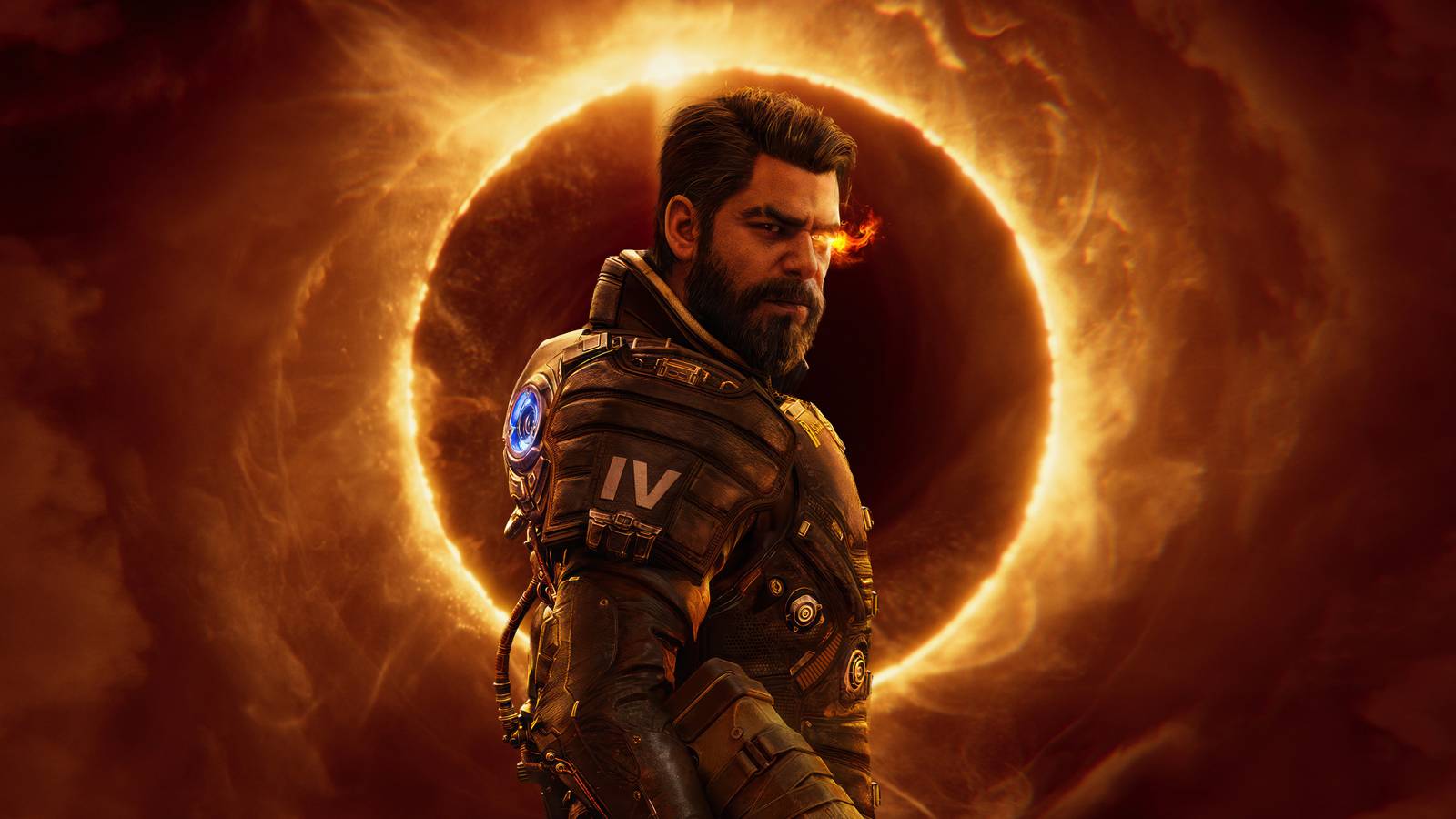
A brand-new IP, Saros stars Rahul Kohli as Arjun Devraj, an enforcer for a company called Soltari that has sent him and his team to investigate the whereabouts of a colony stationed on the strange planet Carcosa. Unfortunately for Devraj, Carcosa happens to be populated by all manner of Lovecraftian-style cosmic horrors.
Fighting Saros‘ monsters is what players are doing 90% of their time in the game, so it’s a good thing that Housemarque has crafted an addictive, rewarding, and challenging combat system. Enemies attack Devraj with brightly-colored projectiles that give the game the same kind of frantic energy found in bullet hell shooters, and learning how to deal with each enemy and their attacks is integral to success in Saros.
Devraj can dash through blue projectiles no problem or even absorb them with his shield to fuel power weapons, but red projectiles must be avoided (and later, parried). Green projectiles, meanwhile, not only damage Devraj, but also reduce his maximum health. Any given room in Saros is filled with a variety of enemies that are all unleashing their attacks at Devraj simultaneously, resulting in a game that is exciting, non-stop action from start to finish.
Saros is a More Accessible Returnal
Saros, like Returnal before it, can be brutal at times. Any given hit from an enemy is likely to deal severe damage to Devraj, and in most biomes, healing items are in short supply. Saros players are likely to die a lot as they master the game’s movement and combat mechanics, but the core gameplay is so fun that things never become frustrating.
Also staving off frustration is Saros‘ progression system, ensuring that there really are no wasted runs. Players collect currency that, along with harder-to-find collectibles, can be used to permanently upgrade Devraj. As Devraj’s health, shields, and other stats are upgraded, players should have an easier time conquering the game’s greatest challenges.
There’s also a way to make Saros even easier. Saros gives players the opportunity to tweak certain settings to give them a better shot at survival in any given run. For example, players can tune the game so they can deal more damage to enemies or reduce incoming damage. However, players can only tune the game so far in one direction, so if they make things too easy, they may have to accept some potential debuffs and other restrictions to balance things out.
Purists may scoff at Saros letting players have more control over the game’s difficulty, but I think the way it’s implemented goes a long way in ensuring that more people will be able to enjoy it for longer. There was one section of the game that required me to repeat two fairly lengthy objectives to access the boss, and the repetition was starting to grow old. Since I was only interested in beating the boss and didn’t care to use those runs to loot, I sacrificed my ability to get a super-important collectible for upgrades in exchange for boosting Devraj’s damage output, allowing me to make quick work of the enemies in my way and make a beeline straight to the boss. Of course, Saros’ Carcosan Modifiers can be completely ignored, or used to make the game even harder, so those looking for a Returnal-level challenge can still find it here.
Saros players occasionally have to activate an eclipse that transforms Carcosa, opening access to new areas and rewards, but making enemies much more dangerous in the process.
That being said, Saros is definitely more accessible than Returnal, with clearer objectives and a consistent, obvious path forward at all times. This approach may irk hardcore Returnal fans, but in the long run, it will likely mean more people can get into Saros than they were Housemarque’s previous game.
That’s great, too, because it means more people will get far enough to see Saros‘ incredible bosses. Saros boss fights are fittingly over-the-top and jaw-dropping, with a few that could have passed as the final boss in any other game. The boss fights are intense and chaotic, demanding players master whatever skills they have acquired up to that point if they hope to survive.
Saros Combat is Next-Level
I love Saros‘ boss fights for the most part, but there is one boss that is recycled as a regular enemy at certain biomes in the game, and that was a little disappointing. The smaller versions of the boss are weaker, but they still take a while to put down and have the exact same attacks, which can make the game feel a little repetitive. When players get stuck doing runs in the same area over and over again, the repetition can weigh the experience down.
For the most part, though, Saros‘ minute-to-minute gameplay is wildly entertaining. A lot of that has to do with Devraj’s abilities and the weapons he has at his disposal, with players able to find handguns, machineguns, shotguns, and more creative tools as they make their way through the game’s biomes.
Saros makes brilliant use of the PS5 DualSense’s unique features to fully immerse players in the combat. The haptic feedback had the controller shaking to the point where certain combat encounters left my hands tingly like they get after using a lawnmower. Adaptive triggers, meanwhile, are cleverly used for alt-fire. Pressing L2 halfway activates a weapon’s alt-fire (with some really cool ones, like shotgun blasts that remain suspended in the air for a few seconds before flying forward), but pressing it all the way lets players unleash whatever power weapon they have on hand. New weapons are constantly available, and while players may be tempted to grab something if it has a higher damage output than their current gun, they need to think about what the situation calls for and make their loadout decisions accordingly.
Saros’ combat is an explosive ballet of relentless action that looks absolutely fantastic. I experienced zero slowdown or graphical oddities during my time with the game, no matter how chaotic the on-screen action became. The biomes are visually distinct and beautiful in an unnerving sort of way, and the enemy designs are top-notch. Human characters are highly detailed, but facial animations outside of cut-scenes leave something to be desired. Character faces don’t always match the performance put forth by the actors, so someone can be sobbing and their character’s face doesn’t reflect that, which can be distracting.
Saros‘ human characters in general can be pointed to as a potential weak point for the game. None of them leave much of an impression, and that makes finding all the collectible audio logs and texts about them — the driving force behind much of the game’s replay value — fall a little flat. Saros‘ story also takes a little longer to get going than Returnal‘s, and I honestly wasn’t all that invested in it until the final couple of hours. Rest assured that it all pays off in the end, but I think some Returnal fans may come away a little disappointed with Saros‘ narrative overall.
Collectibles are the main reason why Saros players will want to go back through previously-completed biomes, but there is plenty of replay value, such as especially challenging optional rooms to conquer and certain areas that are inaccessible until players obtain specific tools later in the game. Saros‘ core gameplay is so fun that it’s not like players really need that much of a reason to keep playing. They’ll do it because it’s fun, and the extra stuff is simply icing on the cake.
Reaching Saros‘ end credits took me about 9.5 hours, but it can be done faster depending on skill level and use of modifiers. It can also take a lot longer, and even though you can technically “beat” the game relatively fast, there’s a ton of replay value.
Saros is an excellent, heart-pounding action game that is easily one of the PS5’s best exclusives. The combat is exhilarating and Carcosa is a blast to explore. The quality-of-life features make it more accessible than Returnal, and while that might upset some purists, it helps Saros avoid some of the frustrating pitfalls that roguelite games sometimes fall into. Saros is one of the year’s best releases and a must-have for PS5 gamers.


- Released
-
April 30, 2026
- ESRB
-
Teen / Blood, Language, Mild Suggestive Themes, Violence
- Publisher(s)
-
Sony Interactive Entertainment


- Exhilarating combat
- More accessible take on Returnal
- Makes great use of the DualSense’s unique features
- Epic boss fights
- Sometimes feels a little too repetitive
- Story and characters aren’t as memorable as Returnal’s
Saros launches April 30, exclusively for PS5. Game Rant was provided with a PS5 code for this review.