





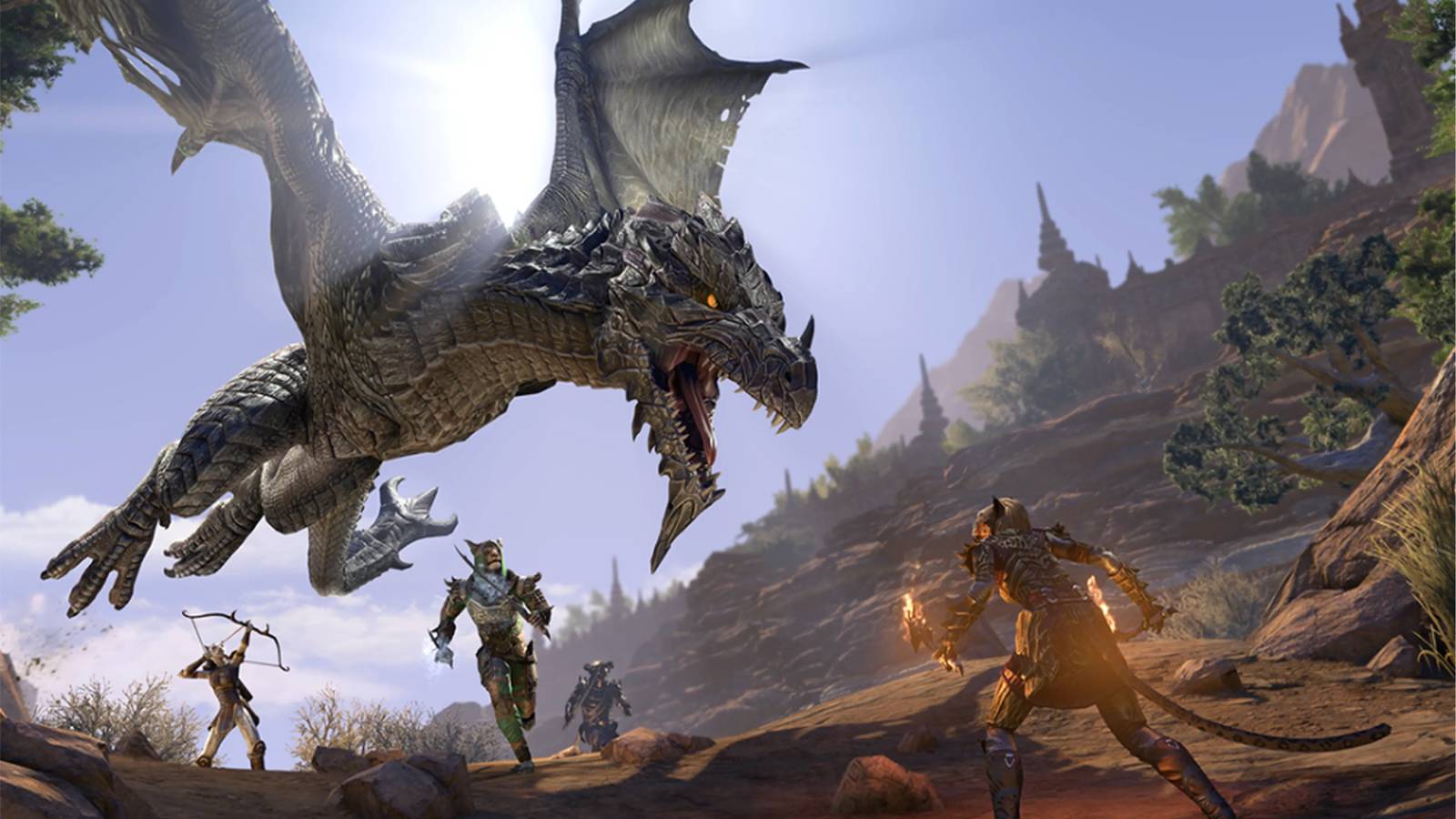
When The Elder Scrolls Online launched in 2014, it faced one of its hardest challenges in gaming: turning one of the industry’s most beloved single-player RPG franchises into an MMO without losing what made The Elder Scrolls special. The idea of sharing Tamriel with thousands of other players was initially met with skepticism, with many fans questioning whether an online world could capture the same sense of discovery, freedom, and immersion found in games like Skyrim and Oblivion. Yet 12 years later, The Elder Scrolls Online has become something far more interesting than a simple online adaptation. It has grown into a massive, constantly evolving version of Tamriel, where players can explore ancient ruins, build homes, join factions, create unique characters, and experience stories across every corner of the continent.
Now, The Elder Scrolls Online appears to be entering a new chapter. In a recent interview with GamesRadar, The Elder Scrolls Online game director Nick Giacomini described the MMO as going through a “renaissance” of sorts, and recent player numbers suggest there may be truth behind that claim, with ESO reaching a new 30-day peak on Steam, according to SteamDB. However, the game’s resurgence is not just about a temporary boost in players. After years of expansions, updates, and lessons learned, The Elder Scrolls Online is undergoing a broader transformation focused on making its enormous world more accessible, rewarding, and engaging for both veterans and newcomers. Its comeback raises a bigger question: how has a 12-year-old MMO managed to stay relevant in an industry where many live-service games struggle to survive?
For all its current momentum, The Elder Scrolls Online did not become a success overnight. Its early years were defined by uncertainty, as the game struggled to convince some players that an MMO could truly belong within The Elder Scrolls universe. The launch version of ESO felt very different from the single-player adventures that fans had grown attached to, with a more rigid MMO structure, a divisive combat system, and a world that sometimes felt redesigned around online progression rather than personal discovery. For players who wanted the quiet isolation of exploring a dungeon in Skyrim or stumbling into an unexpected quest in Oblivion, ESO initially had to prove that a shared Tamriel could still feel personal.
However, these early criticisms also pushed ZeniMax Online Studios to rethink what ESO could become. Over the years, the game gradually moved away from some of its more traditional MMO restrictions and leaned further into the strengths of the franchise. The introduction of the One Tamriel update, for example, removed level restrictions between zones and allowed players to explore Tamriel more freely, creating a world that felt closer to the open-ended adventures fans expected from The Elder Scrolls. Later expansions and updates continued that approach, adding memorable locations, deeper stories, and systems that gave players more ways to make their world their own.
The Challenge of Keeping a Decade-Old World Accessible
That evolution is a major reason ESO‘s current renaissance feels different from a simple return of players chasing nostalgia. The MMO has not survived by remaining frozen in time; it has survived because it has continually adjusted to what its audience values. At the same time, its long history has created some challenges. A game with over a decade of content can feel overwhelming to newcomers, and its many systems, currencies, and progression paths can make returning after years away feel like stepping into an entirely different world. Yet that same death is also what gives ESO its staying power.
ESO Is Finally Breaking Out of Its Own Formula
For years, The Elder Scrolls Online had a remarkably reliable formula: introduce a major chapter, add another piece of Tamriel, provide a new storyline, and repeat the process the following year. That structure helped ESO grow into an enormous MMO, but there was a downside to that consistency. After nearly a decade of annual chapters, even a game as expansive as ESO could begin to feel predictable. ZeniMax has now acknowledged as much, saying players felt the chapter-based structure had become “too formulaic,” while the studio itself wanted greater freedom to experiment.
The MMO has not survived by remaining frozen in time; it has survived because it has continually adjusted to what its audience values.
The move to Seasons in 2026 is therefore more significant than simply changing how ESO delivers content. Season Zero introduced an event zone, player-experience improvements, class and combat refreshes, Tamriel Tomes, and a new reward structure, while Season One has pushed further into experimentation with High Seas of Tamriel, including naval combat and underwater exploration. This matters because ESO‘s renaissance is not really about making more Elder Scrolls Online; it is about making the game feel less like it’s following a template. After 12 years, ZeniMax is deliberately giving itself permission to try things that might not have fitted neatly into the old chapter system.

This is not the first time ESO has reinvented itself. One Tamriel, introduced in 2016, fundamentally changed how players move through the game by removing level-gated PvE zones and alliance restrictions, allowing players to explore Tamriel in almost any order and adventure with friends regardless of level.
That update demonstrated something crucial about ESO‘s longevity: sometimes its biggest improvements have come not from adding another destination, but from reconsidering the assumptions holding the existing world back. The current seasonal overhaul is attempting something similar on a much larger scale. That history makes the “renaissance” claim considerably more interesting than a simple spike in player numbers.
The Renaissance Is Bigger Than a Player-Count Spike
A bigger player count is nice, but it is not enough to call a 12-year-old MMO reborn. The more interesting story is what those players are coming back to. ESO has spent years building an enormous catalog of quests, zones, dungeons, systems, and collectibles, but sheer volume can eventually become its own problem. Where there are hundreds of hours of content waiting in the wings, another conventional quest line does not necessarily make Tamriel feel fresh. ZeniMax’s new direction is instead giving ESO more room to surprise players, with Seasons allowing the studio to experiment with ideas that do not have to fit neatly into the old annual-chapter formula. That experimentation is already producing a much stranger and more varied ESO. The point is not that every new system will revolutionize ESO, but that the game is finally giving itself permission to be unpredictable again. After 12 years, that may be exactly what an MMO this enormous needs.

Guess the games from the emojis.
Guess the games from the emojis.
Easy (120s)Medium (90s)Hard (60s)
That idea gets to the heart of ESO‘s renaissance. In the aforementioned interview with GamesRadar, Giacomini explained that ZeniMax wanted to “excite” and “surprise” players again after 12 years of following a familiar content formula. That desire is reflected in ESO‘s new seasonal approach, which gives the studio more freedom to experiment with activities that do not have to fit neatly into the old annual chapter structure. ZeniMax is trying to make the MMO feel less predictable, which is an important distinction for a game whose sheer amount of existing content can otherwise make returning to Tamriel feel familiar rather than exciting.
ESO’s Biggest Strength Is Also Its Biggest Problem
The Elder Scrolls Online has never suffered from a lack of things to do. After 12 years, Tamriel is packed with quests, dungeons, trials, crafting, housing, collectibles, companions, PvP, antiquities, and enough side activities to swallow hundreds of hours. That sheer breadth is one reason ESO has lasted so long, but it can also make the game feel daunting. A new player is not simply entering an MMO with a few years of content behind it; they are stepping into a world that has accumulated more than a decade of systems and stories. For veterans, meanwhile, another familiar quest hub or routine activity can struggle to create the same sense of discovery it once did.
Jason Barnes is ESO‘s Associate Design Director, and his comments are particularly relevant to the game’s new direction because he has discussed how ZeniMax is balancing smaller experimental content with larger releases.
That makes ZeniMax’s current experimentation particularly important. The studio is not throwing away the enormous foundation it has spent 12 years building, nor is it abandoning the larger chapter-style releases entirely. Instead, it is trying to give players different reasons to engage with Tamriel, from the puzzle-focused Nowhere Vault to Rumors and the more experimental High Seas of Tamriel. Associate design director Jason Barnes has also made clear the larger, spectacle-driven releases still have a place in ESO‘s future. The interesting shift, then, is not from “old ESO” to “new ESO,” but from a game built around one dependable content rhythm to one willing to mix things up.
ESO’s Next Chapter Is Still a Mystery
For all the signs that The Elder Scrolls Online is enjoying a resurgence, its future is far from settled. A 12-year-old MMO has accumulated plenty of goodwill, but it also accumulated expectations, habits, and a player base with very different ideas about what should come next. ZeniMax now has the opportunity to take ESO in directions that would have seemed unlikely years ago, but experimentation always carries a risk: not every change will land.
That makes the current “renaissance” more compelling than a simple comeback story. Can ESO keep attracting new players without overwhelming them? Can it surprise veterans without losing the identity that kept them playing? And with The Elder Scrolls 6 still on the distant horizon, can ESO continue evolving without becoming a substitute for the single-player game fans have been waiting years to play?

- Released
-
April 4, 2014
- ESRB
-
M for Mature: Blood and Gore, Sexual Themes, Use of Alcohol, Violence