


Monster Hunter Wilds, as reported by PC Gamer, is soon to be permanently cutting its price 18 months since its original release. The controversially expensive game, launched at $70 despite the 195 different add-ons you can separately purchase on Steam, will eventually cost a bit less (although weirdly Capcom hasn’t said how much less) this October. That’s good, but it also firmly underlines a major problem with gaming in 2026: Price drops have overwhelmingly become the domain of occasional sales, and not an eventuality for every game. There was a time when almost every game would eventually be re-released as a budget title, and we desperately need it back.
Come, children, and sit at great-grandfather’s feet as I tell you about a time when video games were routinely re-released for a lower fee. I know it sounds like the stuff of fairy tales, but I promise not a word of my story is a lie. It was once normal for a game, perhaps six months or a year old, to be released once again at a third or even less of its original price. Whether the game was on PC or console, the whole village would rejoice at the announcement of it being made available at a price even the lowliest orphan could afford.
In fact, I credit my entire career to what were once ubiquitously known as “budget games.” In around 2000, I took over the UK edition of PC Gamer‘s budget section, called “They’re Back!”, a double-page spread in which, for each issue, I wrote shorter reviews of five games that were getting a re-release that month. And each month I’d have a broad selection of games to choose from, as PR companies would send me their lists of upcoming titles joining their specialist, discount labels. I wrote that section for 10 years; it was possibly the dumbest games writing in all of human history, and it was my pride and joy. But even by the end of that decade, I was resorting to including digital re-releases of games at lower prices as the practice began to fade.
International development
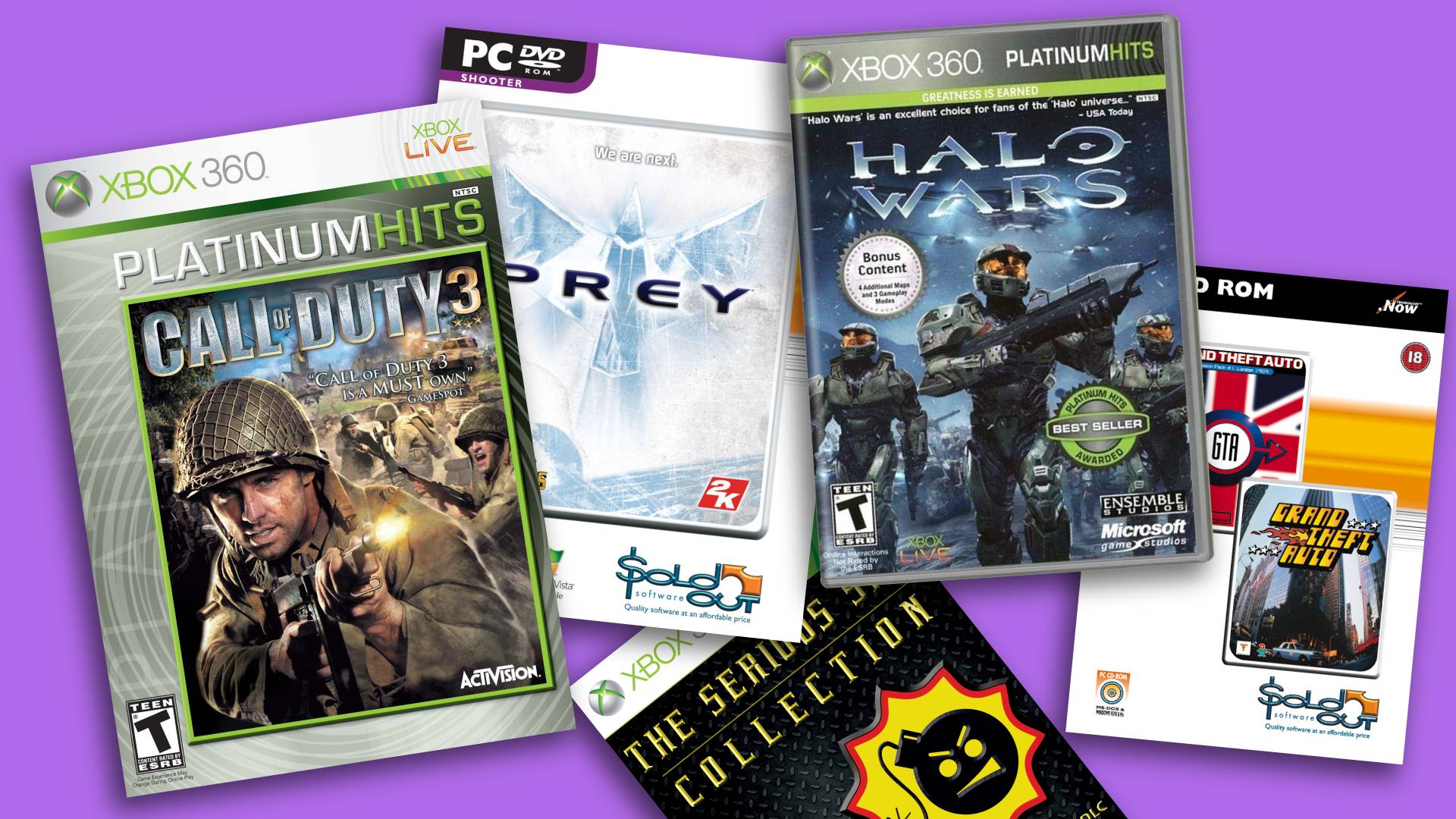
Obviously my perspective on this era is very much from a British eye, and from my research I’ve learned that while the same practice occurred in the U.S., it seems it was in a far less organized process, on PC specifically. While the UK had labels like Sold Out (by Mastertronic) and White Label (owned by Virgin), licensing big-name games like GTA and Tomb Raider from the likes of 2K, Ubisoft, EA and Activision, in the U.S. this seemed to fall more toward companies like eGames bundling compilations, or publishers themselves managing their own budget lines. But the latter were very much a thing, including EA Classics, Sierra Originals, and Interplay Classics, all labels dedicated to repackaging previously successful games for less money.
However, on consoles it was equally regimented on both sides of the Atlantic. PlayStation had its Greatest Hits/PlayStation Hits label, Nintendo had its Player’s Choice line that was later renamed Nintendo Selects, and Xbox originally would re-release games as Platinum Hits. (For extra fun and confusion, Sony originally launched its label as Platinum in the UK, while Microsoft’s was always called Xbox Classics or Best Of Classics.) This was a bog-standard habit for all the console companies, usually reserved for games that had performed well, but it ensured there was a way to pick them up around a year later for half the cost or lower.
Xbox’s range lasted from the original Xbox through to the Xbox One. PlayStation’s labels were around from the PS1 until the end of the PS4. Nintendo’s began with the SNES and lasted until the Wii U, and was officially ended in 2019.
Physical demise
The demise of physical media is very clearly central to this enormous loss. When a game was released in a box for $60, it just felt plain strange that it would sit on a shelf for a year and still cost the same. That’s not how…anything in stores worked, right? It was just a natural expectation that a year-old game would be discounted, possibly heavily. And so, yes, the big publishers obliged, securing a second wave of sales for games that had otherwise had their day. And all was well in the world.
Now look around you.
The thing is, while I completely understand that the push toward games-as-a-service affects pricing dramatically, and that there’s confusion added into the mix by free-to-play models, I still strongly believe that re-releasing games at a discounted price would be financially beneficial for absolutely everyone involved.
There are exceptions, a few rare games that continue to sell in extraordinary numbers for years after release, and good for them. But basic economics says that if your sales are tailing off, it’s time to lower prices. It’s not because the game is worth less, it’s because you already supplied the product to the audience that was willing to buy it at that initial price. When you re-launch a game at half the price or less (and emphatically not at a pissy little 20 percent off), you then reach a whole new crowd of people who always wanted to buy it but could or would not.
March with me!
I’m pretty confident that everyone who wanted to pick up Ghost of Yōtei did so during its first six months on sale. It was a great game, in some ways spectacular, and sold a very impressive 4.8 million copies. Now, I’m not an (officially licensed) soothsayer so I cannot claim to know the future, but I’m pretty certain it’s not going to sell another 4.8 million copies before the end of 2026. Yet there it still is on the PlayStation Store for a massive $70. 4.8 million copies at $70 is exceptional, and kudos to all involved. Now let’s see how many more you can sell for $30 on a revived PlayStation Classics label.
Instead, we get sale after sale after sale, these games discounted 30, maybe 40 percent, in the hope that such lower-tier purchasers grab it in that moment. Then that game’s right back up to $70!
God, if the PS5 had a store section for PlayStation Classics that would be updated each month with new, permanently discounted games, I’d remember to turn the console on every now and then. Or what if there were a big bold banner label on Steam for when a game was entered into the Steam Value range?
Not only does this open up a game whose sales are flagging to a whole new buying audience, but it also drives conversation! If one of the biggest games of 2025 was announced as becoming an Xbox Platinum release, Kotaku would post about that to let people know! It’d be important news for our audience! It’s a second wave of media attention on a game, and of course also brings in a whole new raft of people who are far more likely to want to invest in the next full-price sequel.
Come on, everyone’s convinced, right? Shall we just make this happen? Also, I’d start They’re Back again.