


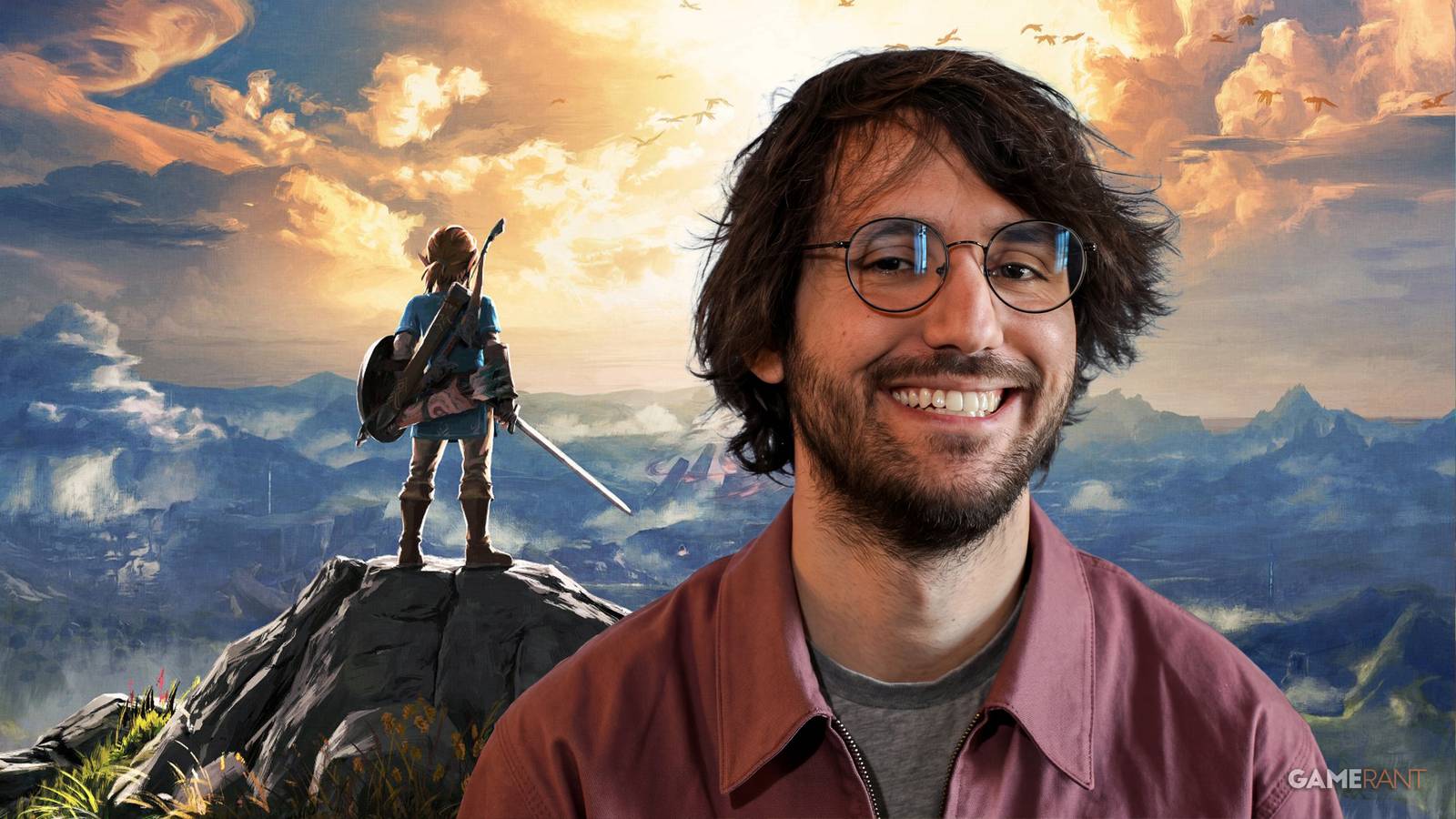
Guillaume Broche, rising industry star and creative lead for the incredible Clair Obscur: Expedition 33, recently had some glowing words about The Legend of Zelda: Breath of the Wild. Broche’s praise for the 2017 hit isn’t exactly groundbreaking—Breath of the Wild is near-universally acclaimed, after all—but it’s interesting given how candidly the director has spoken about other popular franchises, famously disavowing the likes of GTA as “boring.”
Broche’s comments are also a timely reminder of the broader significance of The Legend of Zelda: Breath of the Wild, especially as Nintendo moves forward with other Zelda projects like the Ocarina of Time remake. It can be easy to sideline Breath of the Wild in the wake of other incredible open-world releases like Elden Ring, and even BotW sequel Tears of the Kingdom, which some may argue is simply a superior version of its predecessor. But such comparisons are beside the point, which is that Breath of the Wild effectively revolutionized the open-world genre at a time when it was oversaturated, formulaic, and workmanlike, defined by frivolous tasks, abundant map markers, and painfully uninspired exploration mechanics. Breath of the Wild was a breath of fresh air (no pun intended), and still outshines many AAA open-world titles today, nearly a decade later.
7 Open-World Games That Mastered The Art Of Slow Exploration
There have been some truly breathtaking open-world games over the years, and these titles let you explore at your own pace.
“It’s Truly Exceptional”—Clair Obscur Director’s Breath of the Wild Praise Is Right On the Money
In a June 2026 interview with Jeux Video Club, Guillaume Broche offered his thoughts on Breath of the Wild‘s place in gaming:
It’s truly exceptional. In my opinion, it’s the first open-world game that actually delivered on the promise of an open world – of simply not having a minimap. You have a big map, but you really get that sense of exploration. You see something, and you want to go there.
Broche tends to be concise and matter-of-fact, and these Breath of the Wild comments are no different. Calling BotW “the first open-world game that actually delivered on the promise of an open-world” is certainly a strong statement, but when you think about the ambitions and pitfalls of the open-world genre, it’s actually quite reasonable.
Take The Elder Scrolls 5: Skyrim, an RPG that is often cited as another “best open-world game of all time.” Skyrim was relentlessly hyped as the next step in open-world exploration, with director Todd Howard infamously touting its “see that landmark, go to that landmark” freedom ahead of its release. And while Skyrim does have strong open-world design in some respects, it’s bogged down by restrictive quest design, waypoint-driven discovery, and environment design that discourages deviating from the beaten, or otherwise predetermined, path.
Calling BotW “the first open-world game that actually delivered on the promise of an open-world” is certainly a strong statement, but when you think about the ambitions and pitfalls of the open-world genre, it’s actually quite reasonable.
Meanwhile, there are almost no beaten paths in Breath of the Wild, whose vast, natural world effectively requires a more freeform, flexible exploration style. Moreover, discovery is driven by organic means, since locating Shrines, villages, secrets, and other points of interest almost always comes down to the player’s own innate sense of curiosity. You might choose to ignore the map markers and quests in Skyrim in favor of a similar exploration approach, but in Breath of the Wild, you’re forced to get by without such guardrails. In Skyrim, Far Cry, Assassin’s Creed, and other, lesser open-world games, you can go to nearly every point of interest. In Breath of the Wild, as Broche says, you actually want to visit these places.
What Other Games Can Learn From Breath of the Wild’s Open-World Construction
Unsurprisingly, there have been many post-2017 games that have attempted to copy Breath of the Wild‘s success. For instance, Ubisoft melded its signature open-world design and BotW‘s with 2020’s Immortals Fenyx Rising, and the results were surprisingly good. It’s still got plenty of Ubisoft’s DNA, and it’s definitely not on the same level of quality and ingenuity as Breath of the Wild, but it’s clearly a step in the right direction. Other open-world games, like Ghost of Tsushima and Elden Ring, also take clear cues from Breath of the Wild‘s organic design philosophy.
But less direct applications can be seen as well. Pivoting back to Clair Obscur for a moment, Broche’s aforementioned comments communicate a reverence for Breath of the Wild that likely didn’t escape Sandfall during the development process. Of course, Clair Obscur is most definitely not an open-world game, at least not in the same sense as Breath of the Wild, but the general philosophy of the latter seems to have influenced the former in some way.
A good example of this would be in Clair Obscur‘s endgame side content, which gives players the ability to fly through the hub zone and engage with its “spokes” in a new way. The game actually hides a great deal of meaningful content at this point, showing players seemingly unremarkable new landmarks that actually give way to major boss battles, story beats, and so on. This demonstrates a sort of confidence, not only in the appeal of Clair Obscur‘s exploration and progress, but also in the intellect and tenacity of the game’s players. It entices them, gesturing toward intrinsically satisfying discovery, rather than railroading them through obnoxious map markers or waypoints that rob the experience of its mystery.
Unsurprisingly, there have been many post-2017 games that have attempted to copy Breath of the Wild‘s success.
In this way, Clair Obscur is inspired by Breath of the Wild in the same way that The Witcher 3 is inspired by Dark Souls: CD Projekt Red clearly drew inspiration from FromSoftware’s melee combat and punishing RPG design, even though The Witcher 3 itself is clearly more akin to other western RPGs. Clair Obscur‘s most significant gaming influences are turn-based JRPGs like Final Fantasy 10, but its curiosity-driven exploration and willingness to hide important content in optional areas indicate a kind of kinship with BotW. Sandfall Interactive may not have set out to be explicitly Breath of the Wild-inspired, but the Breath of the Wild strengths that Broche seems to prize, those more ambiguous mechanical details surrounding exploration, seem to have bled into Clair Obscur‘s design philosophy regardless.


- Released
-
March 3, 2017
- ESRB
-
E for Everyone: Fantasy Violence, Use of Alcohol, Mild Suggestive Themes
- Developer(s)
-
Nintendo EPD
- Publisher(s)
-
Nintendo