





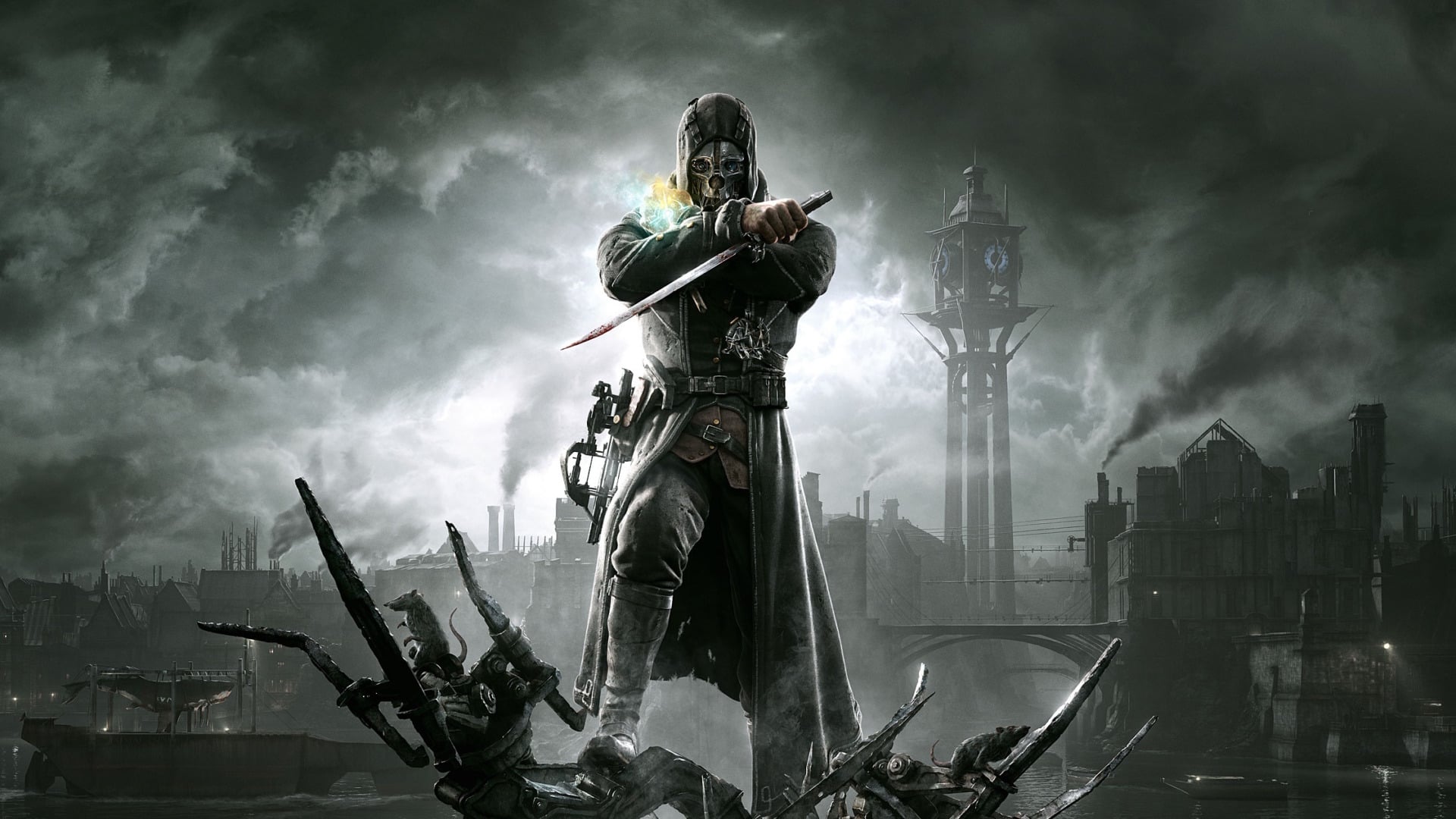
Last month, Dishonored creator Harvey Smith and Arkane’s former production director Ben Horne announced that they had established a new studio, Black Pony Immersive, with the sole purpose of creating a new immersive sim in the lineage of Deus Ex, Thief, Prey, and System Shock. Insistent on learning more about how the studio came to be and its ambitions for the future, we sat down with Smith and Horne to talk about defying the odds in a precarious gaming industry, the rebellious act of developing in a genre that publishers are afraid to touch, and the deliciousness of mystery. Oh, and what it’s like when you have a limited budget for chairs.
When Arkane Austin was closed by Microsoft in 2024, Harvey Smith and Ben Horne were both beyond devastated. But even among the carnage and sadness, they knew what they were going to do next. Both were of a single mind. In the aftermath of the awful news, Horne came to Smith and said, “You know what we should do?”
“I think I’m going to complete your sentence for you,” Smith replied at the time. “What if we start a studio?”
It wouldn’t be until a year later that Black Pony Immersive was officially formed, and then another year before the studio was unveiled to the public. So what took place in that first year?
“Just talking to every person that we thought might be able to fund us,” says Harvey Smith. “You talk to VCs and they start talking about NFTs or AI, and we’re like, ‘Guys, best of luck.’ You talk to some and they’re like, ‘No, no, we’re not into that at all. We like what you’re about, the fundamentals of your game, but our people are hoping to see, uh, times one thousand return within two years.’”
“You hear a lot of ‘no’s from people,” adds Horne. People asked them, are you guys leveraging any bleeding-edge technology? Or, are we going to get a return on investment super-quickly? “It really sharpened our focus around who are the right partners for us. Not just, ‘how can we get off the ground as quickly as possible?’, which in our hearts is what we wanted to do. We just burned to make this thing, to make this kind of game with these people. But we learned so much about what really matters to us, what we’re willing to accept.”
Eventually, something (and we don’t know what) worked out, leading to Black Pony Immersive receiving enough funding to establish a 26-person studio. “Pretty much no-strings-attached,” adds Smith. “We’re just doing what we think is right every day.”
Of course, this is a far tighter budget than either had been used to after many years as a subsidiary of Bethesda, which is owned by Microsoft. “The downside is you don’t have endless money,” explains Smith. “If you need more money or more people or better chairs, you can’t just snap your fingers and do that. We don’t have any of that, we’re fully remote.” Smith then gestures to the lack of any furniture beneath him. “Uh, I’m standing up.”
“We’re a scrappy little team,” Smith continues, “and we hope to pull off what Looking Glass did, or what Origin did, or what Ion Storm did, or what Arkane and Raphael [Colantonio] certainly did.”
But isn’t there a kind of hubris to this? How many developers have created their own AA team and set out to make the sorts of games they’ve previously achieved under AAA publishers and come up short? “I think my nature…we’re kind of humble,” says Smith in response. “I’ve failed hard a couple of times. Maybe three, depending on how you count it. And it teaches you more than success. Everybody calling you brilliant and loving your shit doesn’t really teach you anything, other than it feels good to be called brilliant.” But then, perhaps there needs to be some boldness too, Smith says. “I don’t want to call it arrogance,” he adds, “but it’s not fair to call it confidence. I’m not the most confident person. It’s some sort of defiance. It’s an act of rebellion to try to do something hopeful in times like this.”
A guiding spirit
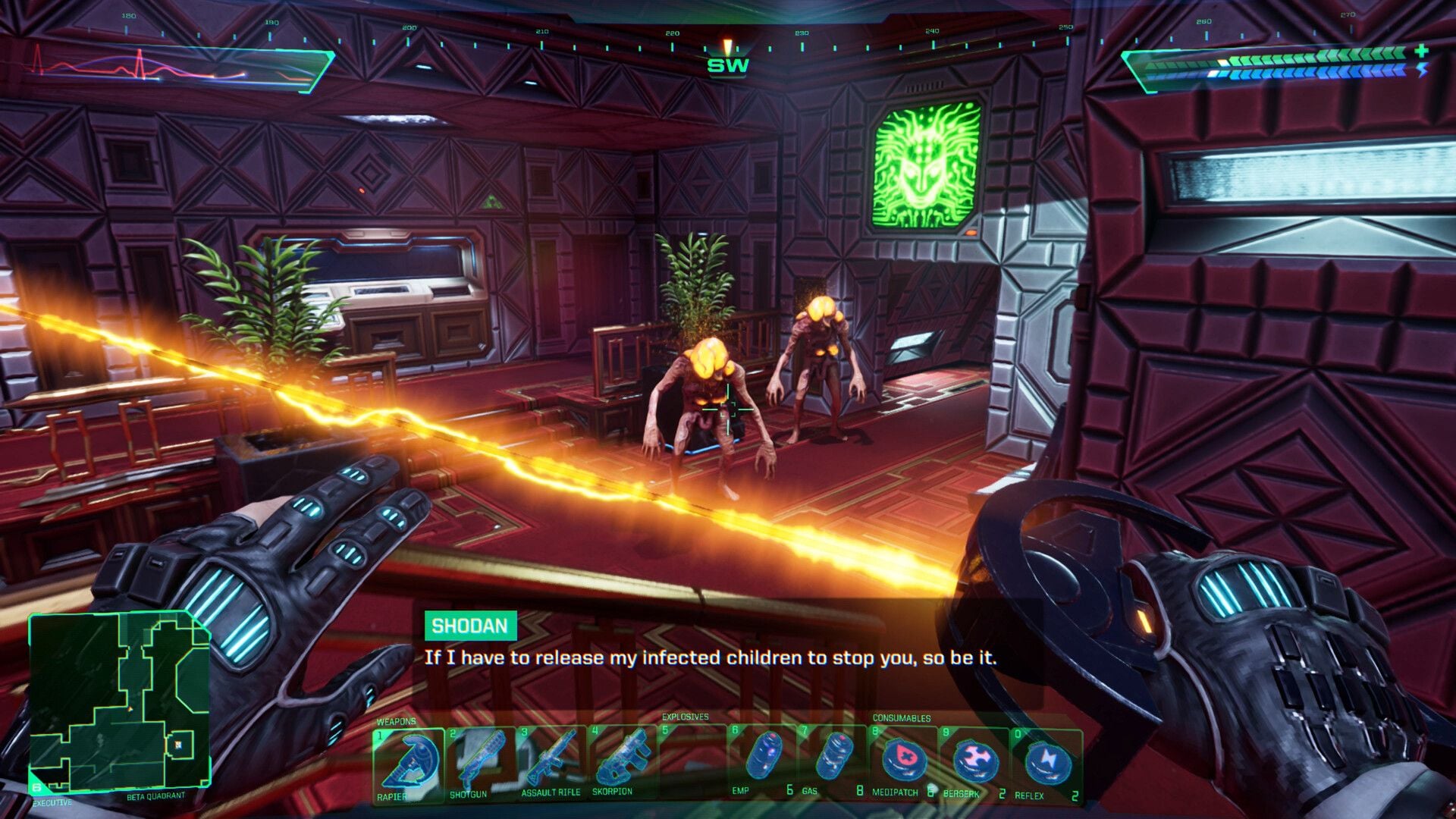
There was something unexpectedly poignant about the announcement of Black Pony Immersive. The date of the reveal was planned long in advance, but what no one expected was that the day before, Warren Spector would announce his retirement. Spector, seen by many as the father of the immersive sim genre, has been a close friend and mentor of Harvey Smith’s ever since the latter’s first job as lead tester on System Shock. The pair went on to work together for nine years. The two announcements back to back was, I commented, like a death and a birth.
“I have all these incredible texts back and forth from Warren,” says Smith, immediately emotional. “We’re going to lunch soon to talk about all this, but we did not coordinate this. God, I have such weird feelings about this, because on one hand, well deserved! And watching the whole industry go through turmoil is so hard on the soul, right? Trying to go to bat over and over and having a tidal wave hit you is very difficult. But, at the same time, it’s sad too, because you want to see people keep doing what they do well forever. He’s amazing.”
“And the guy’s 70,” I interject. “True,” says Smith. “I never could have asked for a more patient, exuberant mentor. And I learned so much. I’m eternally thankful to Warren.”

When the Heart speaks
One of Harvey Smith’s driving passions is to create games that stay with players long after they’ve finished them, games that “get into their fucking heads, and they talk about for 10, 20 years, and you can see the delight, the cartharis. I have so many letters, I save all those…we had a fucking wedding.”
A wedding?
“For Dishonored. These two amazing people wanted to get married, someone reached out and said they want to theme it all Dishonored, it’s all going to be in costumes.”
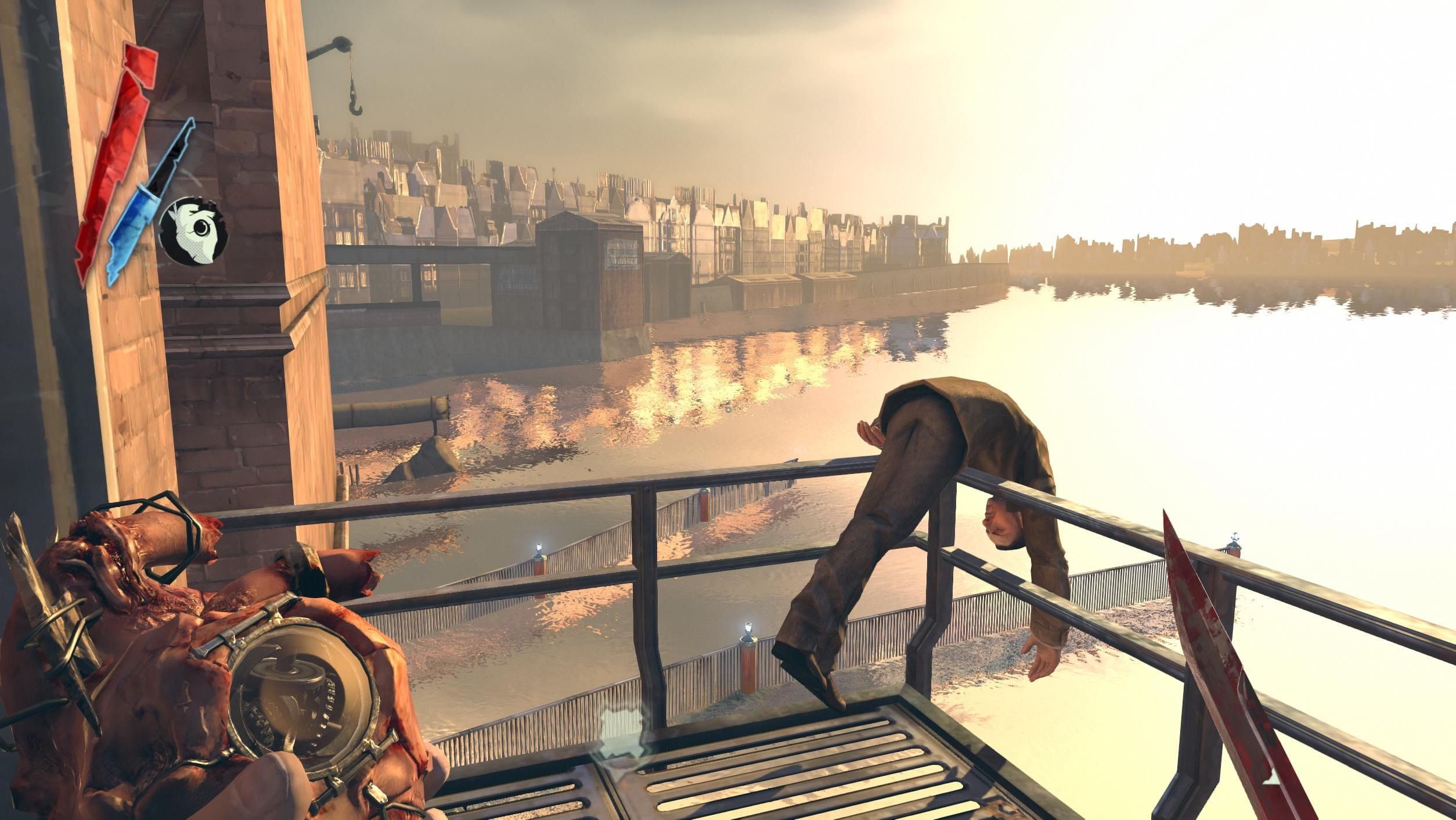
The PR team in London told Smith about this and asked if he’d write a few lines for the Heart. Something for the couple to have read out at their wedding. The Heart was one of the most fascinating parts of Dishonored, a literal heart, once belonging to Jessamine Kaldwin, that you could hold and that would offer poetic insights into the NPCs in the game’s world, a wholly optional feature that gave the setting of Dunwall so much more color.
Smith continues, “I sat down and immediately wrote a bunch of lines from the perspective of the Heart. I texted April Stewart who did the voice for Jessamine and the Heart [and also plays Cartman’s mom on South Park] and I explained what was happening. She was like, ‘Oh my God, I’m gonna go to the kitchen right now, my partner and I are going to record these lines on my iPhone.’”
It didn’t stop there. “I went to Thomas Mitton and said, ‘Hey dude, we’ve gotta do some more Heart lines.’ He’s like, ‘But we’re not working on a project!’ [I said] ‘I know, I know, but check it out!’”
Mitton was also immediately on board. “So all the reverb and wind sounds and the heart beating and the echoing voice and all that shit, he recorded them, and so we sent them to the PR team, and they were like, ‘What the fuck?!’”
At the wedding, one member of the couple held up a Dishonored Heart that someone had made, and they played the lines over the speakers. The lines were written from the perspective of one person analyzing the other person to see if they were the right match.”
All the way through this anecdote, Ben Horne was audibly gasping, sitting more and more upright in his chair as the tale went on. Even he’d never heard about this before. Smith explains, “There’s more lucrative stuff to do, there’s saner stuff, and there’s stuff that hurts less when it goes bad. But the reason you do it—cynical people call it parasocial, but it’s this connection with the audience, and if you’re a musician or a writer or a filmmaker, a video game maker—if you know you know. It’s very powerful because you’re not doing this shit for yourself. Nobody’s writing a novel and then pitching it into the fucking fireplace. It’s so hard to write a book, and it’s so hard to make a game. So you’re doing it for this connection between humans.”

Embracing the mystery
Black Pony Immersive is not ready to talk about the game it’s working on, but I wanted to get an idea of why it’s working on one. What is the ambition behind the project?
“You know, the longer you’re in games,” Smith muses, “the more you see the same model play out over and over. And then somebody suddenly does something that feels fresh. Like [2021’s creepy deckbuilder] Inscryption, it had a sense of mystery in it, and I so rarely see mystery in games. Real mystery. Games are about systems and UI and pointers to the player, and helping the player understand what’s happening in this weird tech that you’re interacting with, right? So technology works against mystery. And Inscryption came out, and it had this feeling of mystery that I loved so much; it was delicious.”
Around the same time, Smith points out, Elden Ring also came out. “I had bounced off all the Souls games, but in Elden Ring you just wander around Limgrave and you hear that music, and you’re just constantly possessed with ‘what is around the corner?’” He tails off for a moment, and then reminds himself he can’t get into any specifics. “Doing something that is magical like that, that even if you’ve played games for 30, 40, 50 years, it feels novel in some way, it feels special, it feels like someone loved this and gave it their all, it feels like it has a voice, people still talk about it in 10 years. That would make me feel successful.”
Smith remembers sitting next to the FTL designers at an awards show, and wanting to spend the entire evening telling them not just why he loved their game, but stories from it, anecdotes about specific adventures.
He then recalls a line from Doug Church, the project lead on System Shock, who said, “When a game really works, people get together later and tell stories as if it actually happened. As if they played football, or went to war, together.”
Smith says this is what he wants from his game. “That joy, that magic between people.”
