



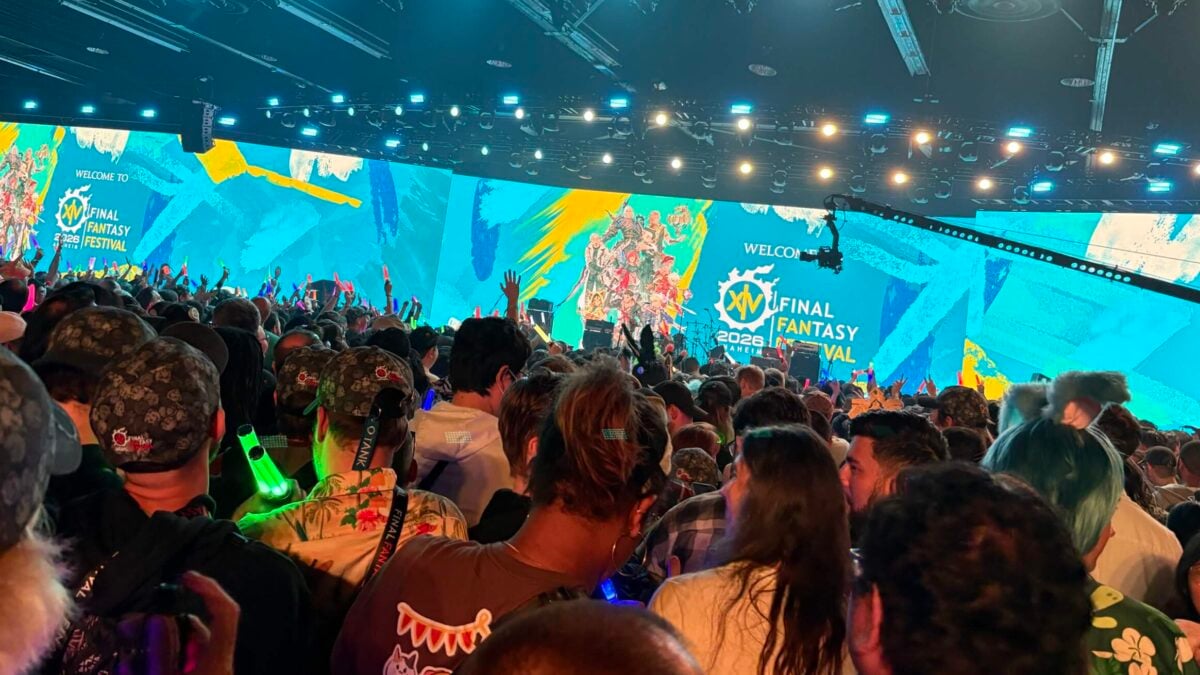
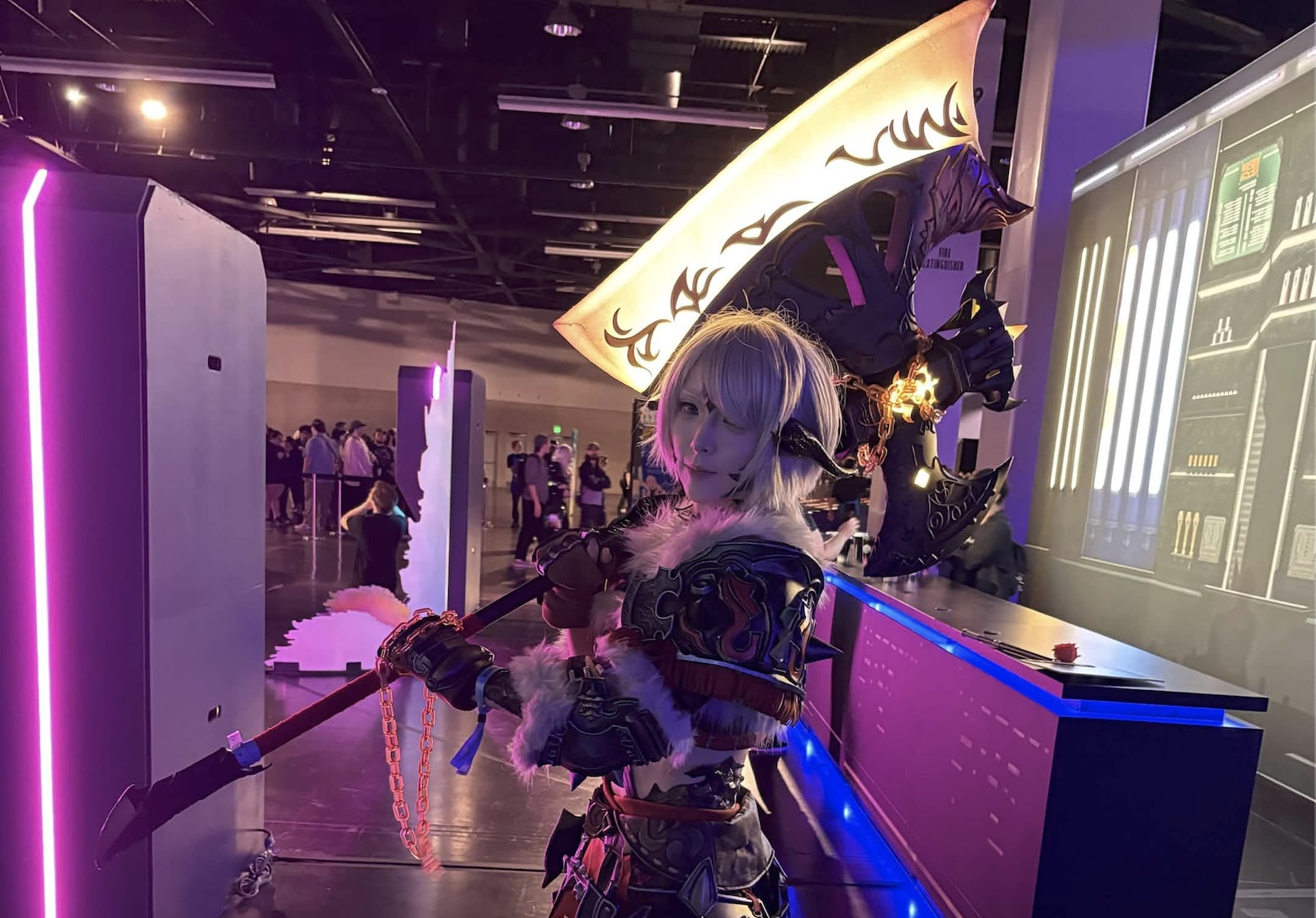
The morning sun in Anaheim was muted but warm as I made my approach to the convention center where Final Fantasy 14’s latest “Fan Fest” was about to kick off. A line of eager fans, some dressed casually and others bearing awe-inspiring costumes, stretched on around the block. As I slipped towards the media entrance, a deafening roar erupted from the crowd. Game Director Naoki Yoshida had just arrived on the scene with an entourage of developers.
Yoshida, called “Yoshi-P” by fans, waved confidently at the crowd. Turns out he had good cause to be confident; in a few hours he would outline a swathe of game-altering changes to fans that would radically adjust Square-Enix’s titan MMORPG. While fans might have been left with some lingering questions and concerns, nearly all I spoke to in the wake of these announcements said they felt excited about what was to come. At a time when Final Fantasy 14 has found itself on something of a backfoot, it seems this convention did what was needed: it breathed much-needed magic back into the fantasy. The future, it seems, is bright. It’s also cold!
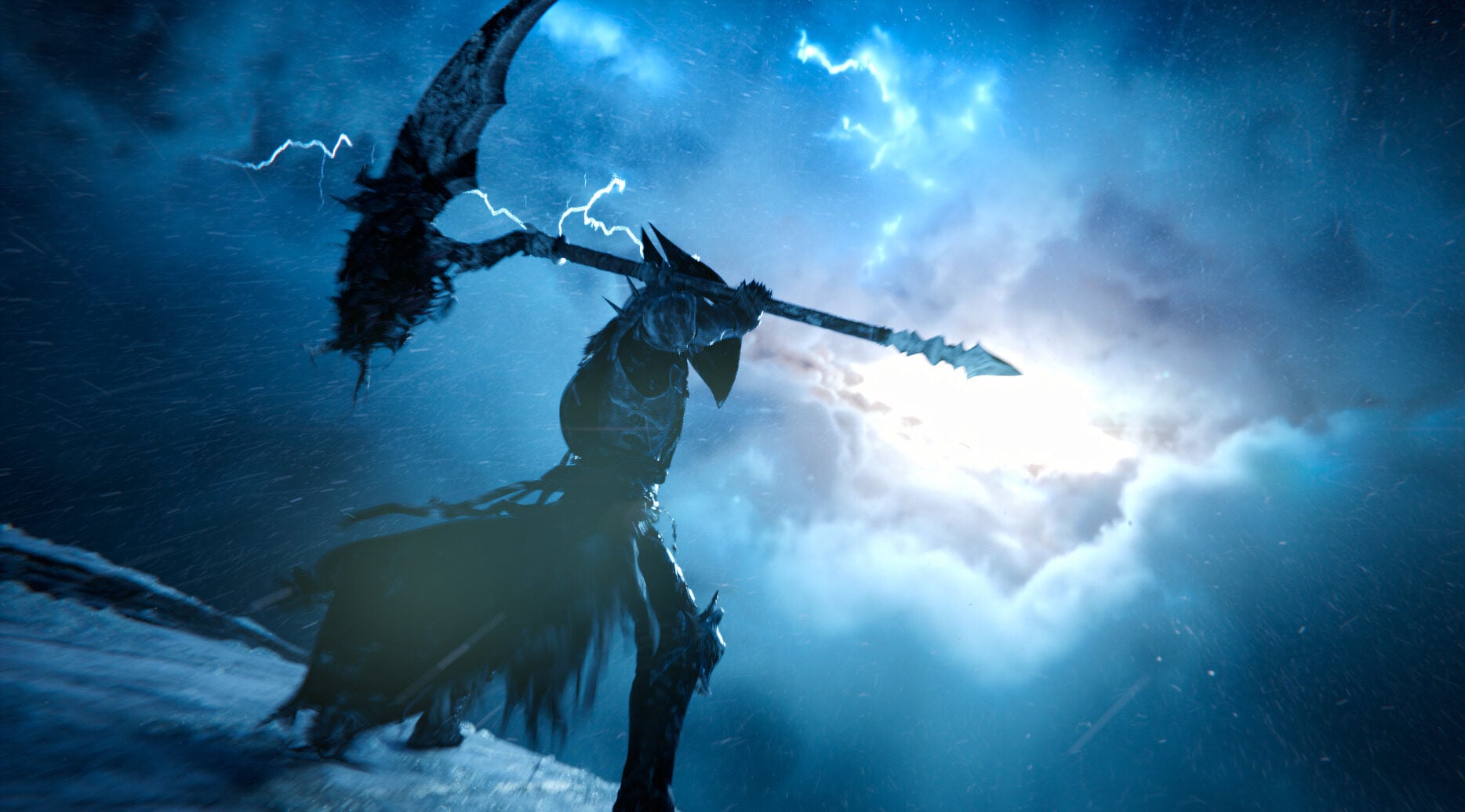
This weekend’s festivities marked the announcement of Evercold, the sixth expansion to Final Fantasy XIV. This was to be expected from Fan Fest; it’s the place you go to hear about new expansions and new jobs for your characters to leap into battle with. But the announcement of Evercold, an adventure that will take players into a parallel “shard” realm dominated by an eternal winter, was far from your typical Fan Fest reveal. Yoshida and his team didn’t simply promise a new adventure and new foes to defeat. They offered a radical new vision for the hit MMORPG, one focused on bringing things into the modern age and preparing it for the next decade.
I spent my time at Fan Fest speaking directly to players and asking their thoughts about these grand changes. A great many systems are going to change in Evercold, which is exciting but also causing some anxiety among players who are not entirely sure how everything might shake out. Most seemed excited and eager to see the game catch up with the times.
“Gaming’s changed a lot over the years,” a player named Linday told me. She spends her time in-game adventuring under the name V’hesko Tia, having hit maximum level with every in-game job. “I think that a change of pace to the game will help the game stay alive longer.”
And let’s be clear: the pace really is set to drastically change in Evercold.
A New Adventure With New Ways To Play
Evercold isn’t going to simply raise the level cap, add a few areas to explore with bosses to kill, and call it a day. In his keynote speech, Yoshida outlined a handful of grand changes to how the game will be played when the expansion is released in January of next year. Two changes stand out above the rest. The first is a change to the “daily” reward structure of the game, which encourages players to log in each day to earn various currencies that are spent on important pieces of gear and other progression items. Evercold is doing away with this structure entirely, instead moving to an “Adventurer Activity” format that emphasizes gradual progress over the course of a week. Players will be able to complete various tasks, be they boss fights and PvP battles or even smaller side activities like treasure hunting and fishing, to unlock progress toward important treasures and gear. The goal is to allow people to play at their own pace.
Ash and Kelso are a pair of healers who raid together in game. I caught them outside of the convention center on a quick smoke break. Among the changes that excited them the most were the alterations to progression and the shift to a weekly, self-directed form of play.
“That new weekly system for the missions and rewards is gonna be so much nicer because I work a 40-hour work week,” Ash told me excitedly. Their healing partner, Kelso, was similarly excited, encouraged further by an additional change: jobs will not require separate gear grinds.
All jobs at their maximum level will have their “item level,” a metric of strength determined by your most powerful pieces of gear, synced in Evercold. This means that if you have been gearing your tank but still want to leap into a raid on a damage class such as Ninja, you will not need to waste time gathering the necessary gear. You’ll be able to join the content if you want.
It’s a change that will hopefully help all players across age demographics. For years now, Square-Enix developers including Yoshida himself have been candid about the ways in which Final Fantasy has slowed down as a series. Longer dev times between mainline titles have made it difficult for the series to bring in younger fans, leaving a playerbase that skews older. These players, job-holders and parents, can’t log in every day. Conversely, younger players in the medium are finding their attention split by competition outside of games, be it social media or gambling apps. Changes to the pace of play are presumably a crucial step toward allowing Final Fantasy XIV to keep trucking along as the wider attention economy shifts.
“The thing that made this game cool to begin with was that you could choose to play different classes whenever you wanted,” Kelso stressed. “Sometimes, though, it felt like you needed to make sacrifices. You’re asked to heal for a raid tier? Good luck if you want to play DPS on the side. Now I can just do what I want. I think it’s a step in the right direction.”
This change to progression also comes alongside a massive change to how the game will be played. Under the guidance of battle system planner Hikaru Tamaik (dubbed “Mr. Prime” by the community), there will now be two ways to play a job: Reborn Mode and Evolved Mode. The former keeps things the way players know and love. The latter reduces the amount of skill needed, makes many different battle commands contextual to the situation, and is meant to provide a more active and modern feel to combat, one which will help players feel more engaged.
That means a lot of work for the development team. Evercold adds two new jobs, though they are currently unannounced, which will only use the “Evolved” style. That leaves 21 pre-existing jobs to not simply rework into a new mode but which the team needs to also properly balance the classic “Reborn” style for. But for fans, Final Fantasy XIV’s combat had fallen into a kind of repetitive pattern. Fights were fun but the structure was starting to become obvious. This shift in styles offers a chance for a new design philosophy to take root. Even if change can be scary.
Still, in spite of uncertainties, most players I spoke to were excited about this grand redesign. I ran into a pair of brothers, Joshua and Eli, who had two very different but compelling explanations for why they were excited to see Evolved Mode come to the game.
“I have an 8-year-old son that’s been asking me to get into this game,” Joshua, age 33, told me when I asked about the new modes. “Sometimes I don’t even know what I’m doing in the game so I worry it’s too hard for him. With the new mode and the simpler rotations I think it’ll be a lot more accessible for him to get into the game so we can play together.”
“I think people are worried that it might end up too easy but I don’t think that’s the idea,” his brother Eli added. “I think the idea is that you can simplify your rotation so you can focus on the mechanics and the moment itself. I’m excited but I do want to see more details.”
Some of those details emerged later on the first day in a development panel where Yoshida and Tamaki showed off a few of the new Evolved mode versions of classic jobs like Paladin and Bard. Among the topics of discussion in that panel was hope that these new styles, which will get rid of party-buffing abilities, will allow boss fight designers to move away from something that the community has dubbed the “two minute meta” which has defined gameplay for many years.
Simply put, ever since the end of Shadowbringers, fights in Final Fantasy XIV were built on an understanding that players would time their party buffs (usually kept on 60, 90 and 120-second cooldowns) to align during two-minute periods. This allowed for reliable burst damage from your team but also meant keeping your rotations strict and being very careful to avoid mis-timing and thus “drifting” your buffs out of that key window. For boss fights, this also meant there were obvious points where enemies would be available to attack or, conversely, run off to indicate downtime. Over the last three to five years, this made fights (while still often challenging) very predictable. Doing away with this format is, to many players, essential to the game’s health.
“I think things were a little stale but I think it also dictated so much about the game,” a fan named Patrick told me while we waited for our planes in John Wayne Airport. “Fights were designed around it but I think this will spice things up in a way that’s desperately needed.”
Enthusiasm Is High But Some /doubts Remain
There are, however, some lingering questions about what such large changes realistically mean for the game. Yoshida and his team were keen to emphasize that the choice was there for players to use whatever style they wanted and any mode could be used to clear content. However, in a small aside during the keynote, he also admitted that, looking at the numbers, Evolved Mode did seem a bit more optimal. And some MMO players really love to optimize.
On the second day of Fan Fest, I ran into a raiding friend of mine who goes by the name “Male Man” in the game. We’ve played together since at least Shadowbringers, him being the somewhat more hardcore player, and while he was impressed at the team’s decision to manage so many jobs and distinct player styles, he thinks that raiders have already made up their minds.
“The moment they said one was stronger, that was a done deal,” he told me as we chatted outside the convention center. “You know the majority of raiders will be switching and I think the big thing we’re going to see is people low-key mandating that people use Evolved Mode.”
While Final Fantasy XIV does not officially allow in-game tools like DPS-trackers, the raiding community has turned to them for years now to track player skill and fine-tune their performance to the razor’s edge of optimization. Choice is good and many players will stick to what they already know but if one mode proves to be much better than the other, will folks be made to feel wrong for using what they love? Beyond this, if one of these modes proves to be more widely played by the playerbase, will one simply go away? It’s a lot of work to update so many classes!
“I think I would be okay with [Reborn Mode going away] and I think it’s to be expected,” Patrick told me shortly before boarding a flight back to the East Coast. “Reborn Mode is only there as a way to say ‘If you don’t want change, this is for you,’ but with new jobs only having Evolved Mode, that seems like the new normal. You have a few years to get used to it or you’re out of luck.”
Male Man agreed, noting that the fact that the new jobs only use Evolved Mode seems, to him, a signal of developer intent. “That’s a death knell to the existing system,” he said. “I think it’s basically a done and dusted system and we’ll see Reborn Mode go away in 9.0 or even sooner.”
At the end of the first night of festivities, Square Enix invited press and influencers to a private question-and-answer session with Yoshida. No one-on-one interview time was given to anyone and all questions were screened ahead of time. Among my submitted questions was one asking about the future of Reborn Mode and if it would eventually be phased out of the game if Evolved Mode proved more powerful and popular. This question was not selected to be answered.
Meanwhile, the shift to Adventurer Activity temporarily brought up a sudden anxiety in players as the mock-up design for the system that was shown off, sleek and modern, bore some resemblance to the various battle pass systems that are now the de facto monetization method of most online experiences. When first revealed in the keynote, many people around me reacted with shock and worry.
Yoshida quickly assured players that this was not a secondary system where players spent money. His explanation of the system seems to have eased worries but the implementation of additional changes such as ability “skins” that will allow people to augment and change what some of their core abilities look like (something third-party modders have often done, releasing intense full-animation replacement packages) did leave some players worried that Yoshida and his team might face executive pressure to bring extra monetization to Final Fantasy XIV.
“I know there was chatter in the crowd when they mentioned gameplay ‘seasons,’” Lindsay recalled candidly to me. “They assuaged our fears, told us that it wasn’t a battle pass and I’m hoping that because [Square Enix CEO] Takashi Kiryu was back there, I hope he heard that.”
Putting The Fantasy Back In Final Fantasy
Talking about this moment is difficult without also discussing Dawntrail, the game’s previous expansion which launched to a mixed reaction and contentious chatter. Some of this is due to online provocateurs who attacked the expansion on a variety of ideological grounds. However, even acknowledging those unfair attacks, many of the community members I spoke to at Fan Fest are leaving the expansion with mixed thoughts. While the expansion is well-liked for battle content, it struggled to leave an impression as a story. In a game renowned for best-in-genre storytelling, even the smallest inconsistencies can leave die-hard fans disappointed.
Sending players to the continent of Tural, the expansion was marketed as a kind of summer vacation but it quickly gave way to a larger science-fiction plot with interdimensional drama and cyberpunk-inspired locales. This change of visual identity also came with a risky gamble from the writers: casting players as a mentor to another character in the story. Throughout Dawntrail, players acted as the wise expert adventurer aiding the young, less confident (if still very likable) Wuk Lamat on a journey to teach her about what it means to be a hero and help others. Some players liked the new approach, others craved more action.
Taylor is an excitable young player I met during the convention who traveled all the way to the Fan Fest from northern Canada. When we met, they were wearing the distinct lizard horns and tail of their in-game character, eyes sparkling with impressive white contact lenses. Describing their character as “a battle-junkie,” they explained that while they loved the gameplay of Dawntrail, they didn’t like how often their own character wasn’t the one in the spotlight.
“Let me fight!” they insisted. “Why is my character standing there when they could be taking action right then and there? I was very upset about that in Dawntrail. Let me fight already!”
It’s a fair criticism to some extent, one which is complicated by the fact that Dawntrail needed to take a lot of time to draw players into new settings and slowly build up a cast of villains to be confronted down the road, like how players clashed with the fan-favorite Emet-Selch in Shadowbringers or had a grand final battle with the blood-hungry Zenos in Endwalker. Focusing on a more personal story about what it means to be a hero allowed writers to set the stage for whatever conflicts might arise in Evercold but to some players it was all set-up, no punchline.
“I will say the story hit a low point for me but I think it was still fun,” Male Man told me when I asked for his thoughts on Dawntrail. “I understood the concerns people had though. What people are pining for are the experiences you got from Shadowbringers.”
Evercold seems poised to pay off much of Dawntrail’s set up, the later patches of which have been focused on revealing a new set of villains and upping the stakes. Fans eager for a Shadowbringers-scale adventure might be getting what they’re looking for as they jump into a frosty new world of giants and myth. If anything else, there’s probably going to be less techwear.
“It looks high fantasy and that’s gorgeous,” Ash told me “It looks like a weird blend of Heavensward and Shadowbringers and that’s exciting because those are my two favorites.”
“They’ve done a good job building intrigue,” Kelso added.
That shift towards new lands, new experiences, and new ways to play could not have come at a better time for Final Fantasy XIV. A confluence of once-in-a-lifetime situations including the end of a ten-year-long story arc and the worldwide pandemic had placed the game at the top of the pile during Endwalker, leaving Dawntrail’s more contested run with a lot of difficult work. Paired with Evercold, these two expansions seem really poised to bring players into what could be another ten years of excitement. Even so, there’s a few things people want to see in order for the game to truly reach the heights they crave. Some are big, some are small.
“I’ve entered more housing lotteries than I’d like to admit to,” Ash confided, referring to the game’s somewhat archaic method of allotting domiciles to players. “I can’t get one and I see housing wards taken up by entire Free Companies. Something needs to be done.”
It’s one of the remaining large systems that didn’t get any announced changes. To get a house in Final Fantasy XIV, you need to find an empty lot in one of the game’s limited neighborhoods and enter a lottery in the hopes of winning it. As competitor World of Warcraft finally implemented personal houses with its successful Midnight expansion, this is one of the few areas where Final Fantasy XIV’s more archaic side shows and it’s something many players told me they want addressed. Even if they know it may take a lot of work.
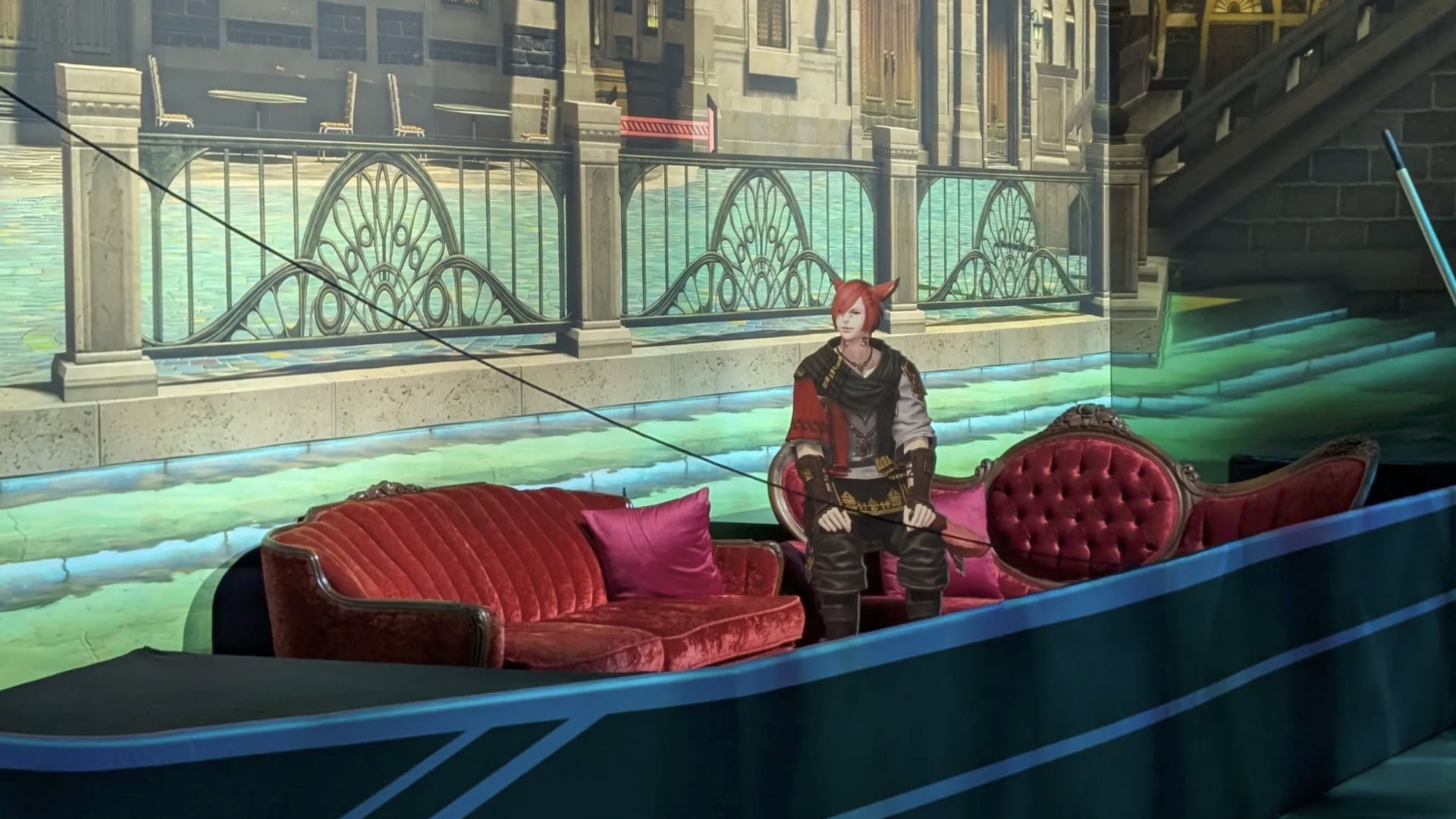
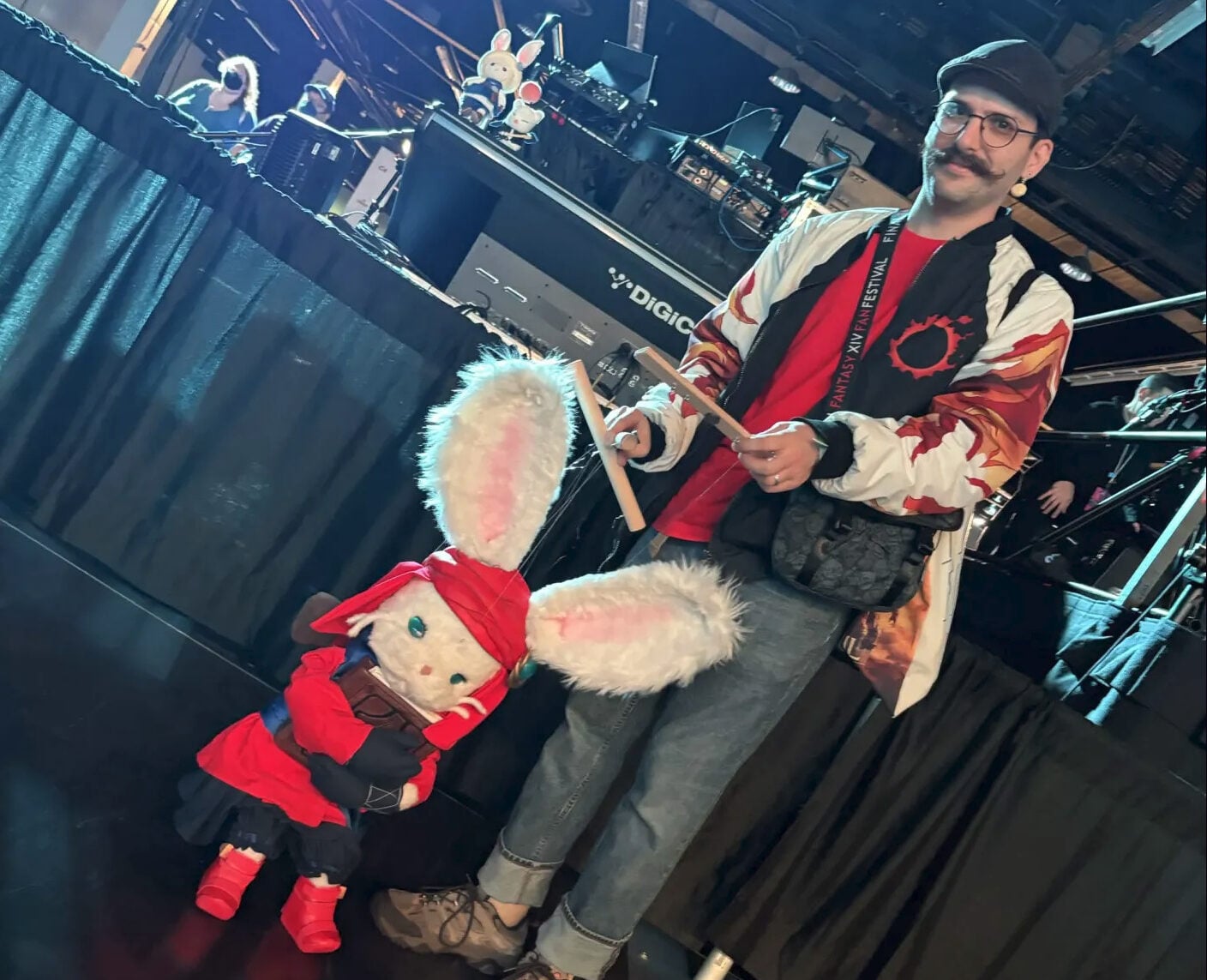
Some of the responses I got to the question of what the game needs were a bit more playful. Lindsay’s idea was simple: let players romance G’raha Tia, the fan-favorite catboy voiced by Bridgerton’s Jonathan Bailey, who won over many players’ hearts in Shadowbringers. Indeed, one of the most consistently long lines in the convention was for a photo opportunity where players could sit and take pictures with a G’raha cutout aboard a magical gondola, itself a recreation of one of the most beloved, personal moments of character writing in Dawntrail.
Even with these lingerings desires unaddressed and a few small questions remaining about the impact of Evercold’s sweeping changes, it does seem that this Fan Fest achieved exactly what one must imagine Yoshida and his team wanted: it brought a fresh wave of excitement and confidence to a player base struggling with the fear that their favorite game had gone stale.
“I was blown away at the number of problems that I’m seeing get solved in real time,” Male Man told me at the end of festivities. “I may have lingering doubts here and there but so many of my core problems were addressed and it makes me think that they are really listening.”
Ash and Kelso recalled meeting Yoshida at the end of the first day. While he certainly was busy, he found extra time to chat with fans during meet-and-greets and other surprise moments.
“He took some extra time to stay and talk to us,” Kelso recounted. “It really made me feel like I was heard. I’ve felt the entire time I’ve been here, there’s been a lot of care for fans.”