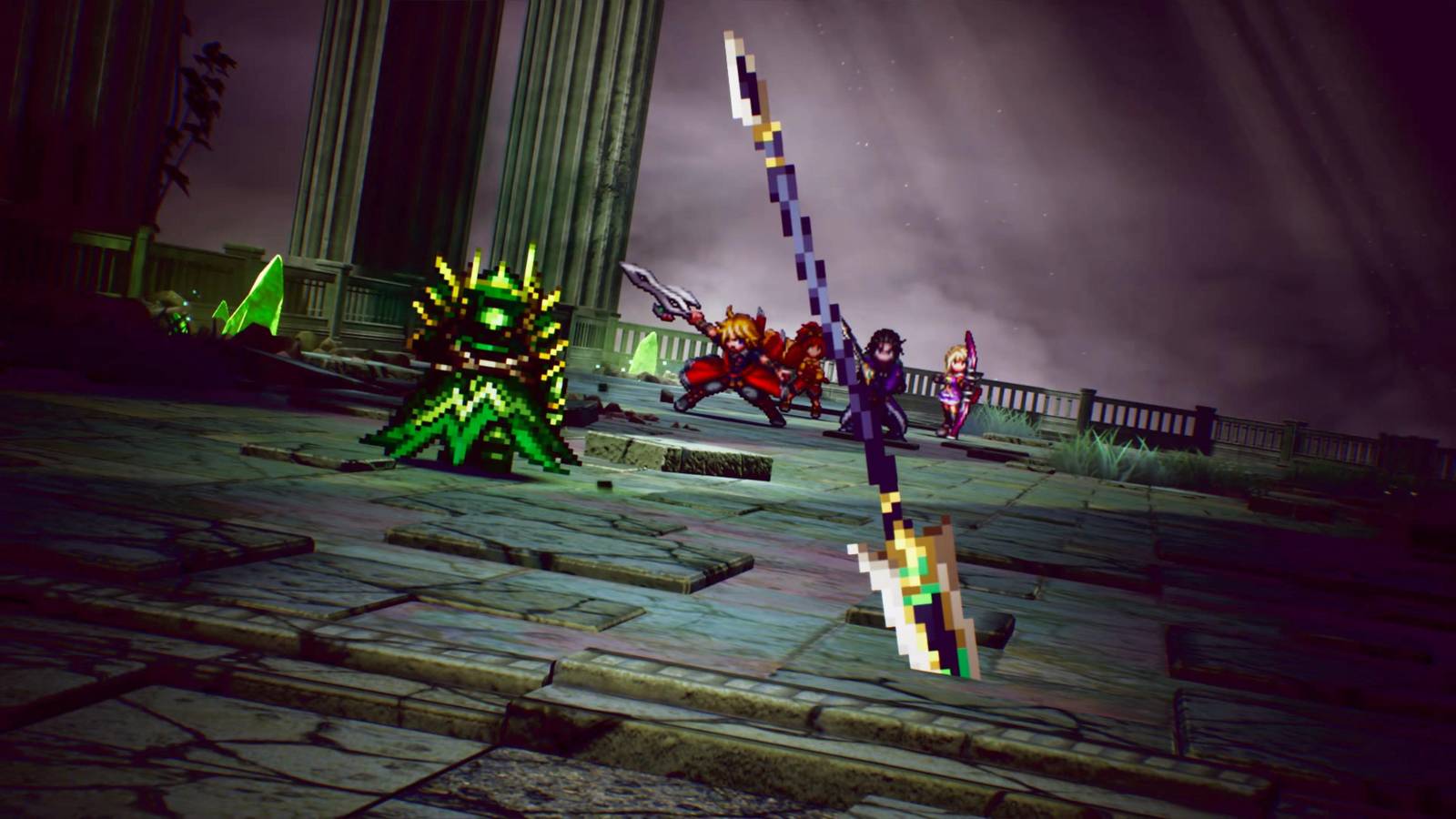



As much as I’m glad to see Final Fantasy Resonance getting the kind of reception it has been getting since its release in October, I find it interesting that even the people responsible for making it didn’t anticipate this much enthusiasm for a turn-based Final Fantasy game. In a recent interview with Game*Spark (via Automaton), Final Fantasy Resonance producer Keisuke Nakashima expressed his surprise at how many people, both in Japan and overseas, still have an appetite for the kind of Final Fantasy games Square Enix was making several decades ago. I would argue, however, that those players never really went anywhere. Rather, it was Final Fantasy itself that gradually moved away from much of what those players enjoyed about it, at least as far as its numbered entries are concerned.
What’s especially interesting about Nakashima’s comments is that the team behind Final Fantasy Resonance went into its development with fans of Final Fantasy 5 and Final Fantasy 6 specifically in mind, despite the game being based on the mobile game Final Fantasy Brave Exvius. Even so, director Hiroto Furuya apparently expected opinions on the game to be somewhat divided, given the rather unconventional circumstances surrounding its development. Instead, not only has Final Fantasy Resonance maintained an Overwhelmingly Positive rating on Steam since its release, but it has also managed to accomplish something on the platform that even Square Enix’s considerably more ambitious Final Fantasy 7 Rebirth couldn’t.
Final Fantasy Resonance Is Giving Longtime Fans Something the Mainline Series Hasn’t in Years

According to SteamDB, Final Fantasy Resonance reached a peak of 42,885 concurrent players just a few days after its release, surpassing Final Fantasy 7 Rebirth‘s peak of 40,564 and establishing a new record for a single-player Final Fantasy game on Steam. Of course, it’s worth acknowledging that Final Fantasy 7 Rebirth had already been available on PS5 for nearly a year by the time it made its way to PC, so I wouldn’t necessarily use those numbers to suggest more people were interested in Final Fantasy Resonance than Final Fantasy 7 Rebirth. Nevertheless, considering just how much Square Enix has done to modernize one of its most beloved games with its Final Fantasy 7 remake project, I think there’s something to be said for a game inspired by some of the franchise’s even older entries garnering that much interest while retaining many of the qualities those games had in the 1990s.
CHECK IT
OUT
To Square Enix’s credit, it’s not as though the developer hasn’t been making turn-based RPGs over the last several years, with games like Octopath Traveler 2 and Bravely Default 2 arguably doing some of the most interesting things with turn-based combat of any games released this decade. At the same time, I find it a little strange that Square Enix has apparently been willing to experiment with and improve upon the kind of combat that helped establish Final Fantasy as one of the biggest RPG franchises in gaming, just not to the same extent within the mainline Final Fantasy series itself. As much as someone who grew up playing Final Fantasy 5 might enjoy the job system in Bravely Default 2, I don’t think that’s quite the same as getting another numbered Final Fantasy game that gives them the freedom to customize their party in a similar way.

Back in 2022, Final Fantasy 16 producer Naoki Yoshida actually addressed some of the reasoning behind the game’s departure from turn-based combat in an interview with Famitsu, explaining that the team wanted to make a Final Fantasy game that would appeal to younger players who weren’t necessarily accustomed to playing turn-based RPGs. I can certainly appreciate Square Enix wanting to introduce more people to Final Fantasy, particularly given how much older a good portion of its original audience is getting. However, I think the success of games like Baldur’s Gate 3 and Clair Obscur: Expedition 33 has since made it considerably more difficult to argue that making a turn-based RPG necessarily limits the kind of audience a developer can reach.
It was Final Fantasy itself that gradually moved away from much of what those players enjoyed about it, at least as far as its numbered entries are concerned.
Interestingly enough, Nakashima and Furuya were already discussing the renewed popularity of turn-based RPGs shortly after Final Fantasy Resonance was revealed in June. In an interview with IGN, Nakashima expressed his belief that modern technology could allow developers to continue improving upon pixel-art RPGs without those games feeling dated, while Furuya attributed some of the renewed interest in them to the popularity of handheld gaming. I think that makes their surprise at the reception of Final Fantasy Resonance even more significant, as they were already aware of the growing interest in these types of games and still underestimated how many people wanted another Final Fantasy like this.
Final Fantasy Resonance’s Success Should Have Some Bearing on Final Fantasy 17

I don’t necessarily need Final Fantasy 17 to look anything like Final Fantasy Resonance, nor do I think Square Enix needs to abandon everything it has accomplished with real-time combat over the last several years. However, I would love to see what the developer could do with a turn-based combat system if it were given the kind of resources and attention Square Enix generally reserves for a new numbered Final Fantasy game. Considering how much turn-based combat has evolved outside the mainline series since Final Fantasy 10, I doubt such a game would play much like the Final Fantasy games Square Enix moved away from anyway.
I’m certainly glad Final Fantasy Resonance exists, and I wouldn’t mind seeing Square Enix continue making HD-2D Final Fantasy games independently of its numbered entries. However, I’d hate for the company to come away from the success of Final Fantasy Resonance believing that making games specifically for fans of its older titles is all it needs to do to accommodate that audience. Those older Final Fantasy games were once among the most ambitious games Square was making, and I don’t see why a turn-based Final Fantasy game couldn’t be one of the most ambitious games Square Enix makes today.

- Released
-
October 22, 2026
- ESRB
-
Everyone 10+ / Alcohol Reference, Fantasy Violence, Language, Suggestive Themes