




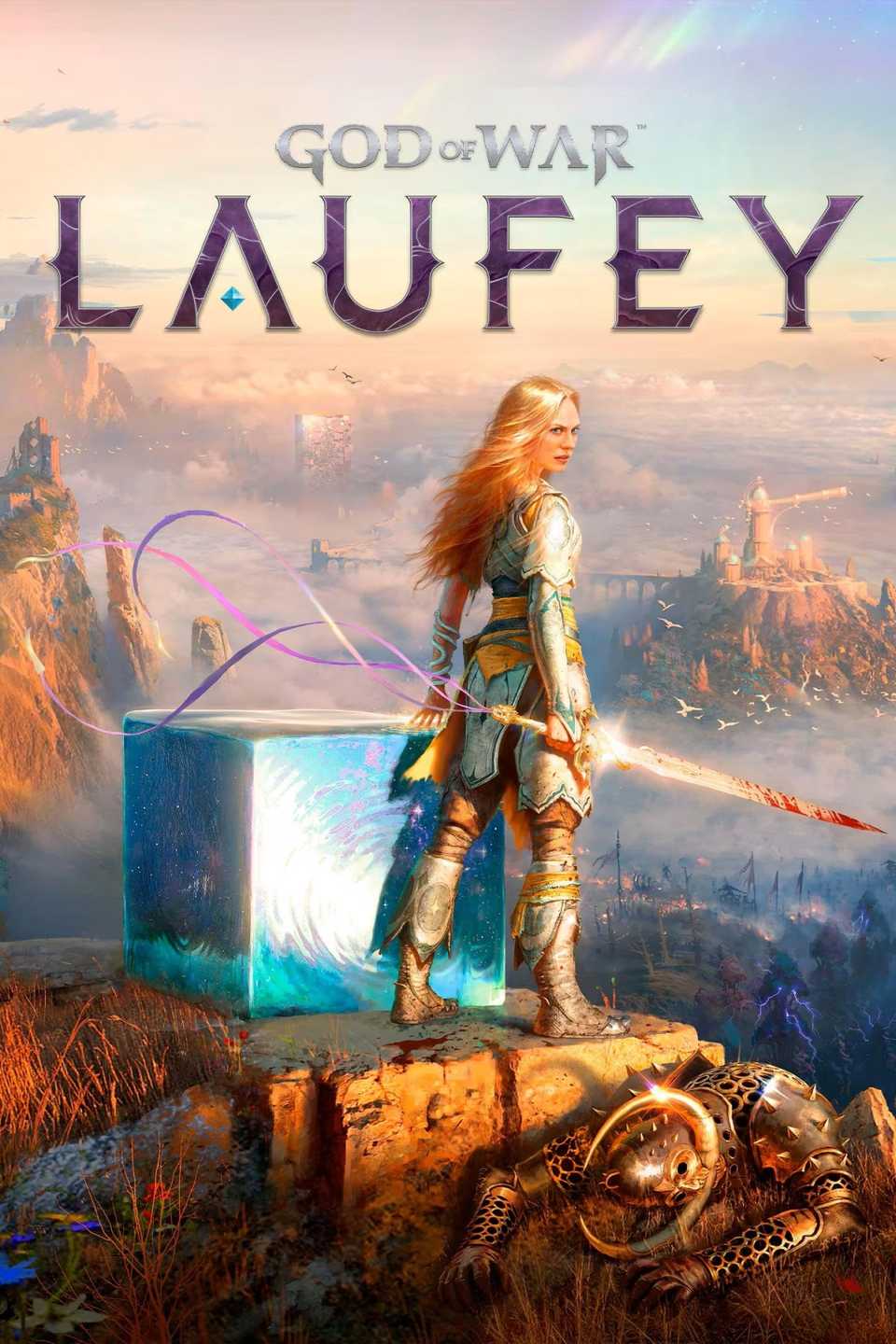
With God of War Laufey, Santa Monica Studio is properly and definitively introducing Egyptian mythology to the series. Fans—even those first introduced to God of War through its 2018 reboot—have been waiting for the Egyptian shoe to drop for years now, as the series has made heavy-handed references to the sacred lands of North Africa in many entries.
Speculation about Egyptian mythology entering God of War really only kicked off after the release of the 2018 game, which set the precedent for mythology-hopping; the previous God of War titles all took place in Ancient Greece. But fans may be surprised to learn that Ancient Egypt and its godly pantheon have brushed shoulders with God of War since its very first entry, sparking a long-running fixation that seems to be culminating in God of War Laufey.
Every God Of War Game, Ranked
Santa Monica Studio’s God of War has produced many great games. Naturally, some of Kratos’ bloody PlayStation adventures are better than others.
God of War (2005)
The first God of War established much of the franchise’s tone and lore, defined by Greek mythology, which would be entrenched for the next several entries. Kratos is a born-and-bred Greek (he’s literally the son of Zeus himself), and his adventure is focused squarely in the realms of the Greek gods. As such, there’s not much concern for the goings-on of the real world—we don’t even know when the first God of War is meant to take place, though we can assume it’s set during the Ancient Greece period (approximately 11,000 BCE to 600 CE).


Build your perfect top ten one reveal at a time.
Swap two picks?
Pick two spots to swap before locking in your final ranking.
Build your perfect top ten one reveal at a time.
Pick two spots to swap before locking in your final ranking.
Greece and Egypt were known to have a significant economic, cultural, and political relationship for much of this era, which doesn’t go unnoticed by the largely anachronistic God of War. The Gates of Athens level hones in especially on the commercial relationship between the two empires: Gates of Athens is heavily implied to be a trading port, and it contains walls with Egyptian hieroglyphs, including one that references the Egyptian god Aton. This would indicate some kind of cultural or religious exchange between Egypt and Greece in the God of War timeline.
God of War: Ascension
While traveling to the Oracle of Delphi in God of War: Ascension, players can come across a note that reads: “I have come from the Land of the Pharaoh. It is so cold here. If I return home without seeing her, it will mean my death.” Obviously, the “Land of the Pharaoh” is meant to be Egypt. An Egyptian, likely a public official of some kind, traveling to Greece to see the Oracle of Delphi, buttresses the connection intimated in the first God of War:
Granted, this reference doesn’t explicitly mention Egyptian mythology, just the country itself. However, the fact that an Egyptian public servant would travel so far to see an oracle suggests that the spiritual and supernatural are very much real in that country as well as Greece. And really, it wouldn’t make sense for Greece to be the only country with “real” gods in the God of War universe, even before God of War (2018) officially disabused audiences of such notions.
God of War (2018)
God of War’s soft reboot in 2018 brought Kratos to the Norse realms, proving beyond doubt that the Greeks don’t have the only gods in the God of War world. This only made the game’s fleeting references to Egypt more tantalizing, as each one held the promise of a potential pivot to that pantheon in the future. That said, this game’s Egyptian elements are still fairly cursory: at one point in their journey, Kratos and Atreus come upon several Egyptian artifacts, including a scarab (amulet), pschent (pharaoh’s crown), the Eye of Ra, and a crook and flail, icons that are associated with both rulers and the god Osiris. More significant than the objects themselves are where they are located: within the temple of Tyr, indicating that the Norse God of War personally visited Egypt at some point.
God of War Ragnarok
The ankh, an easily recognized Egyptian symbol meaning “life,” can be found as a Stolen Treasure collectible in God of War Ragnarok. If you read the item’s codex entry, which is penned by the lovable Mimir, it reveals that Egypt is “said to be both ancient AND technologically advanced” during this time, and that the country worships gods that are half-human and half-animal. He also writes that he longs to visit these lands, and that “one should never trust gossip—ESPECIALLY not when it comes to gods.”
God of War Ragnarok: Valhalla
The excellent God of War Ragnarok: Valhalla DLC circles back to the aforementioned Egyptian references in Tyr’s Temple. Whenever Kratos fights Tyr at the end of the roguelike loop, the latter has a weapon from a different mythology, indicating the wide span of his pilgrimage. Unsurprisingly, one of these is a khopesh, a kind of Egyptian sword.
The God of War Novels and Comics


Like so many high-profile gaming IP, God of War has received a smattering of mixed-media tie-ins, with some of them making significant nods to Egyptian mythology. In 2021, Dark Horse Comics released God of War: Fallen God, a four-issue comic series that takes place between God of War 3 and God of War (2018). In it, Kratos travels to Egypt and fights to save a village, guided by the Egyptian God of Wisdom, Thoth. The comic is the series’ most explicit link to Egypt and Egyptian gods, rivaled perhaps only by God of Laufey.
Finally, we have the official novelizations of God of War (2005) and God of War 2. In the novel based on the first game, Zeus briefly mentions that Ares is “wreaking havoc” in Egypt, though this isn’t expanded upon. In the second novel, it’s revealed that Hermes exiled himself to the Egyptian desert.
What’s That Weapon?


Identify the silhouettes before time runs out.
Identify the silhouettes before time runs out.
Easy (7.5s)Medium (5.0s)Hard (2.5s)Permadeath (2.5s)
All told, Egypt is the most referenced mythology in the God of War franchise, behind only that of Greece and Scandinavia. The full, in-game introduction of a character from these Egyptian lands has been a long time coming, so here’s hoping God of War Laufey delivers with its depiction of Sekhmet and other Egyptian concepts.



- Publisher(s)
-
Sony Interactive Entertainment
- Number of Players
-
Single-player