



Over the last several years, Hasbro has been talking a big game around video games.
In 2022, the company touted the creation of six brand new, internal game studios. Atomic Arcade was working on a GI Joe game. Skeleton Key, which we later learned was working on “something spooky,” still hasn’t announced its project. There was an unnamed studio in Washington state, Archtype Entertainment with a new sci-fi RPG franchise called Exodus, and Tuque Games in Montreal (renamed to Invoke Studios) working on a Dungeons & Dragons project we now know as Warlock. And of course, the MTG Arena team.
It didn’t start off great. In 2023, despite the explosive success of its licensed Baldur’s Gate 3 and Monopoly Go! releases, Hasbro nonetheless canceled five internal video game projects and laid off, at first, just a handful of people, and then, many, many more at the end of the year. Senior vice president of digital strategy and licensing Eugene Evans told Game File this wasn’t unusual. “It became a narrative of, like, ‘Oh, they canceled a bunch of projects,’” he said. “And it’s like, ‘Yeah, we do that all the time, like everybody else.’”
But in 2024, head of digital product development Dan Ayoub once again talked about the company’s strategy for building up internal development studios. He said that so far, Hasbro had invested over $1 billion in game development across just four studios: Invoke, Archtype, Skeleton Key, and Atomic Arcade.
“Video games is an integral part of Hasbro’s strategy going into the next 100 years,” Ayoub said in the 2024 interview, “and we have to make sure that everything that comes out is top quality, is authentic, and is something we can build upon, because we’re talking about a couple studios and a couple games right now, but we have much larger ambitions for that.”
In the following months and years, Hasbro reiterated this strategy in interview after interview. In 2025, at a a panel at something called Brandweek, it loudly pronounced that it would be developing its own video games in 2026, a thing we already knew was happening from all of the past interviews. Just this past May, Ayoub reappeared in an interview with The Game Business with a really nice-sounding pitch: not a single one of those six internal studios was making a game-as-a-service. They were focused, he said, on more traditional PC and console games, even as the broader company would continue working with external partners for casual, mobile, and (inexplicably) VR games.
“We’ll be building games mostly around D&D, Magic, Transformers, maybe some of our other properties, maybe selectively some new stuff,” Ayoub said. “It’ll be very focused on action-adventure and role-playing games for PC and console. And then, we’ll partner with the best in the business on more casual games, mobile games, new and emerging platforms like VR, et cetera. I think we’re the number one digital games licenser in the world by a fairly large margin. That’s pretty lucrative business. It also really helps us reach a lot of different gamers, and helps to fund those efforts in building out our first-party capabilities.”
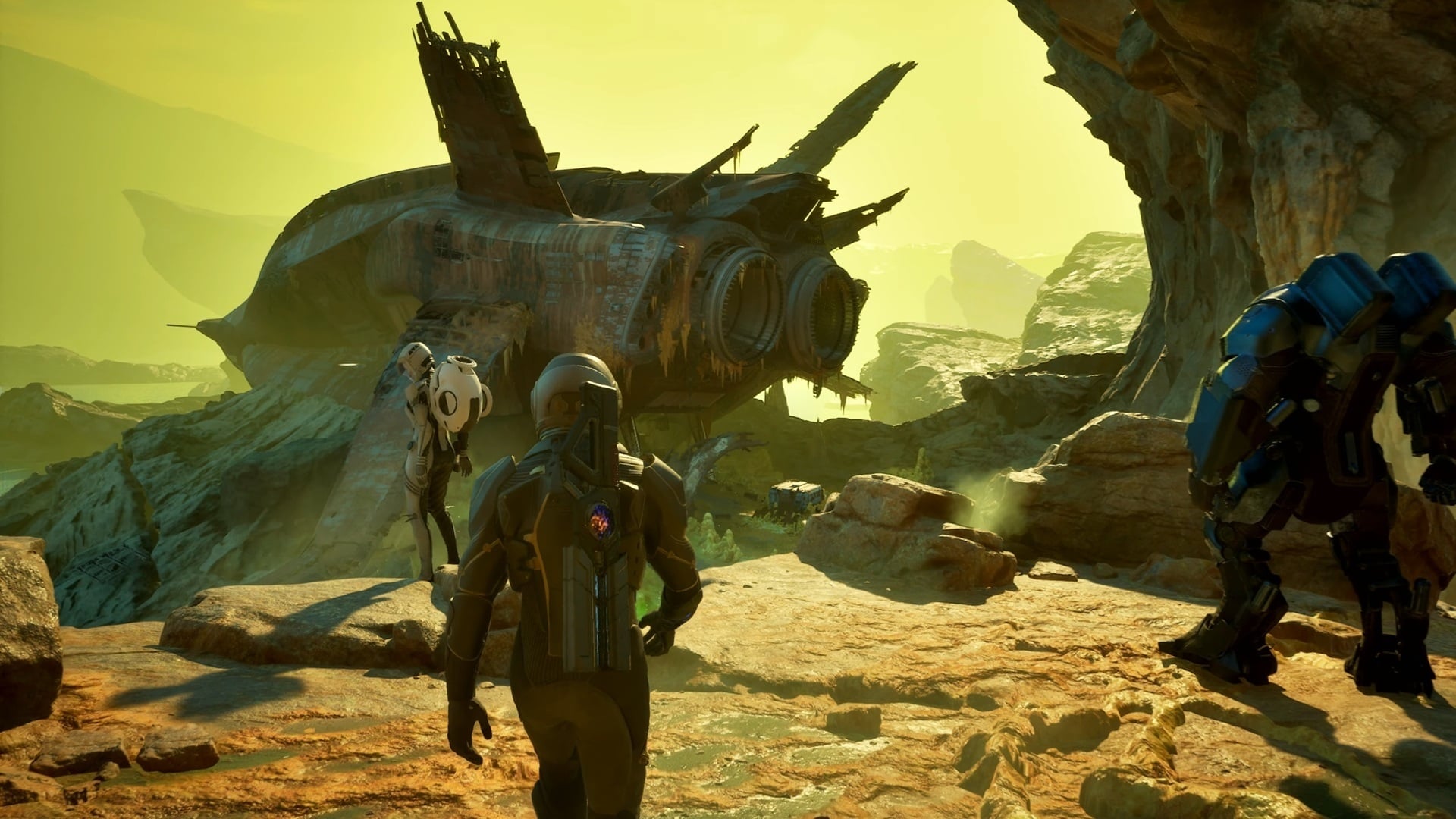
Exodus
Today, however, the strategy seems to have hit another snag. Hasbro just shared its second quarter earnings results, which included a $56 million impairment charge “related to the Company’s refocused Digital Games portfolio for 2028 and beyond.”
Impairment charges are effectively a company writing off an asset it possesses when it’s found it to be worth significantly less than what the company previously valued it at. In this case, the impairment charge was taken because Hasbro “cancel[ed] several games scheduled for release in 2028 and beyond,” indicating that Hasbro’s investment in those games (and studios) is no longer worth what it thought it was originally.
What games did Hasbro cancel? It’s not specifying. We can make some educated guesses. Both Exodus and Hasbro’s upcoming DnD universe game Warlock were confirmed later on the call to still be in development and planned for 2027. I checked in on Skeleton Key this morning, and it appears to be actively recruiting for an environment artist for its Montreal studio. It was also discussed on the Hasbro call that the company wants to focus development on “lower cost regions” with Montreal specifically called out, so it seems like Skeleton Key’s project is probably fine.
However, GI Joe game studio Atomic Arcade underwent layoffs earlier this year. At the time, Hasbro shared a statement saying that “The Snake Eyes game is not cancelled.” It continued, “The team is currently taking time to evaluate the path forward for the game. While decisions haven’t been finalized, we’re committed to providing updates as soon as we’re able.” However, at least one employee posted on their social media that the studio was being shut down, and we haven’t heard any updates since then.
I’m also not sure what ever became of that unnamed studio in Washington state. It’s also possible the canceled projects were licensed ones with external partners, though I’m less sure on that given what went on in the rest of the earnings call. Kotaku reached out to Hasbro for clarification, and received the following statement:
“We regularly evaluate our digital games portfolio to ensure we’re investing behind the titles and platforms with the clearest path to long-term success. As part of that ongoing work, we’ve made the decision to no longer proceed with select Digital Games projects, reflecting our refocused portfolio for 2028 and beyond.
“We remain highly confident in our digital games portfolio. Exodus and Warlock, slated for 2027, both meet the bar we are setting for owned publishing: big audience potential, strong genre fit, franchise potential and meaningful opportunities beyond the initial game.”
Fewer, bigger, better
The impairment charges and canceled projects are one thing. It’s not good news, but it’s also pretty normal. Every gaming company out there is dealing with this. But what really suggested to me that Hasbro’s strategy was changing was a series of statements made elsewhere during the earnings call. Despite past declarations by Hasbro about a heavier focus on internally-developed PC and console franchises, it now sounds like it’s shifting back away from those. Hasbro, executives said, is moving toward co-development and co-publishing, especially with “lower-cost partners,” focusing most heavily on trading card games and RPGs with properties it already owns, and with the intent of building trans-media franchises where possible. Hasbro is also reducing its gaming investment after 2026.
“We are focusing our digital investment behind the franchises, platforms, and partners where we see the clearest upside and where Hasbro has the strongest right to win,” CEO Chris Cocks said on the call.
It’s also going to lean more on partner studios. Hasbro apparently has over 200 projects in some form of active development across “mobile, casino gaming, console, and PC,” including partnerships with “Scopely, Aristocrat, Tripledot, Marmalade, Gameberry Labs, Ubisoft, and Gameloft.” Scopely, Marmalade, Gameberry, and Tripledot are largely focused on mobile games. Aristocrat makes gambling games.
Previously, Hasbro was saying that from 2027 onward, it would have one to two significant game releases per year. That’s still true, Cocks says, but the composition, level of spending, and how they take those games to market is going to change. Hasbro will still do big games, but “I think those won’t be every year,” he says. Instead, it will be a combination of big games, “more service-oriented games, and potentially some smaller, more focused content bets inside of games as well.”
To me, this all reads like Hasbro is slowly going to back away from gaming after all. It’s not giving up on its biggest swings, Exodus and Warlock, which it’s invested a lot of money in, and which seem to be close to launch anyway. But I get the sense that Hasbro’s first-party portfolio beyond that is no longer targeting a robust slate of annual AAA hits like it once was. Instead, we appear to be going back to the old partnership and licensing model from before, the one that brought Hasbro hits like Monopoly Go! (which Scopely says is set to reach $8 billion in revenue later this year) and Baldur’s Gate 3.
It’s unclear what took place internally to shift Hasbro’s viewpoint so dramatically over seemingly just a few months’ space, but I suppose it was only a matter of time before Hasbro joined the rest of the industry in freaking out about overspending on projects that were not going to rake in billions in returns. So much for larger ambitions.