



I strongly believe that 1987’s Hellraiser deserves to stand right alongside genre-defining classics like A Nightmare on Elm Street, Friday the 13th, and Halloween. The rest of the franchise, I’m not so sure about. Hellraiser has had a notoriously tumultuous history, with many of its entries being straight-to-DVD duds that lack any of the charm or wonderfully grotesque intrigue of the first few movies.
As its name suggests, Saber Interactive’s Hellraiser: Revival intends to be a rejuvenation of the entire franchise, returning the series to its basics with an interactive love letter to Clive Barker’s original work. After seeing this first-person survival horror entry through to its completion, I can safely say that this is the Hellraiser comeback fans have been waiting decades for. It just comes with a few caveats of its own.
We Have Such Sights to Show You

Officially rated M by the ESRB, Hellraiser: Revival wastes no time in throwing players right into the deep end, and it keeps their head bobbing just above the blood-soaked surface for its entire eight-hour runtime. Hellraiser: Revival begins with a lengthy cutscene depicting player-character Aidan Lynch and girlfriend Sunny being intimate, and in classic Hellraiser fashion, the couple’s taste is a bit on the wilder side. Aidan reaches for a familiar-looking metallic puzzle box and uses it to draw blood from Sunny, which summons the iconic demons/angels of sensation, the Cenobites. These monstrous humanoids take Sunny into their hellish domain, known as the Labyrinth, and thus begins Aidan’s quest to rescue his girlfriend, no matter the cost.
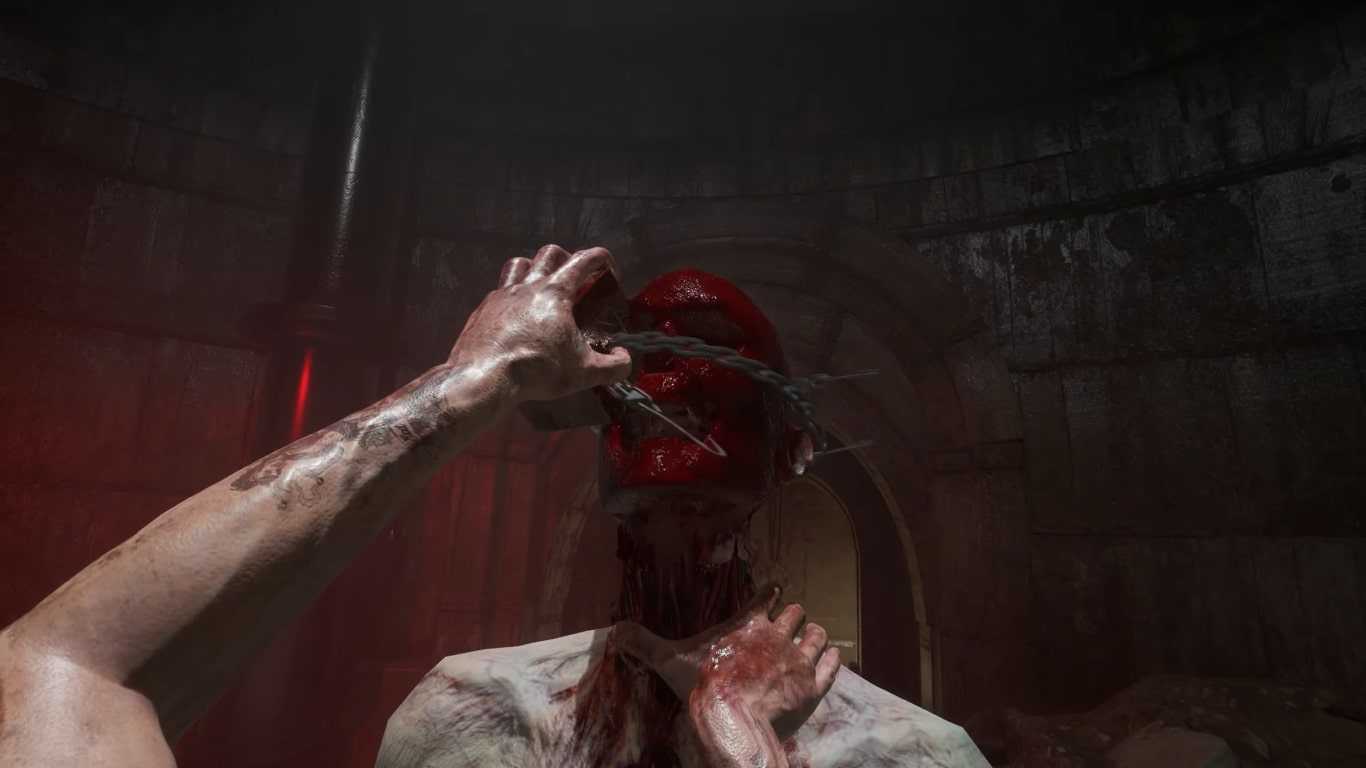
It’s extremely important to state upfront that Hellraiser: Revival is not for the faint of heart. There’s full-frontal nudity, graphic sex, explicit scenes of torture, copious amounts of blood and viscera, and that’s just in the first 20 minutes of the game. Things only get progressively worse as the game goes on, with drug use, BDSM imagery, references to sexual violence, and a lot else being on full display during the course of Hellraiser: Revival.
For someone who’s never seen a Hellraiser movie before, this immediate and continued onslaught of graphic content could easily turn them away, and they wouldn’t be wrong for thinking that it all feels a bit relentless. But for long-time fans of Hellraiser, this might sound like exactly what they’re looking for. At its very core, Hellraiser is a series that revolves around pain, pleasure, and humanity’s relationship to both. While those core tenets have been taken at surface value for decades, Hellraiser: Revival understands that there needs to be a purpose behind it all — that the sex and gore can be used for more than just shock value if it’s wrapped around the right character motivations and given compelling narrative context.
-
 Image via Saber Interactive
 -
-
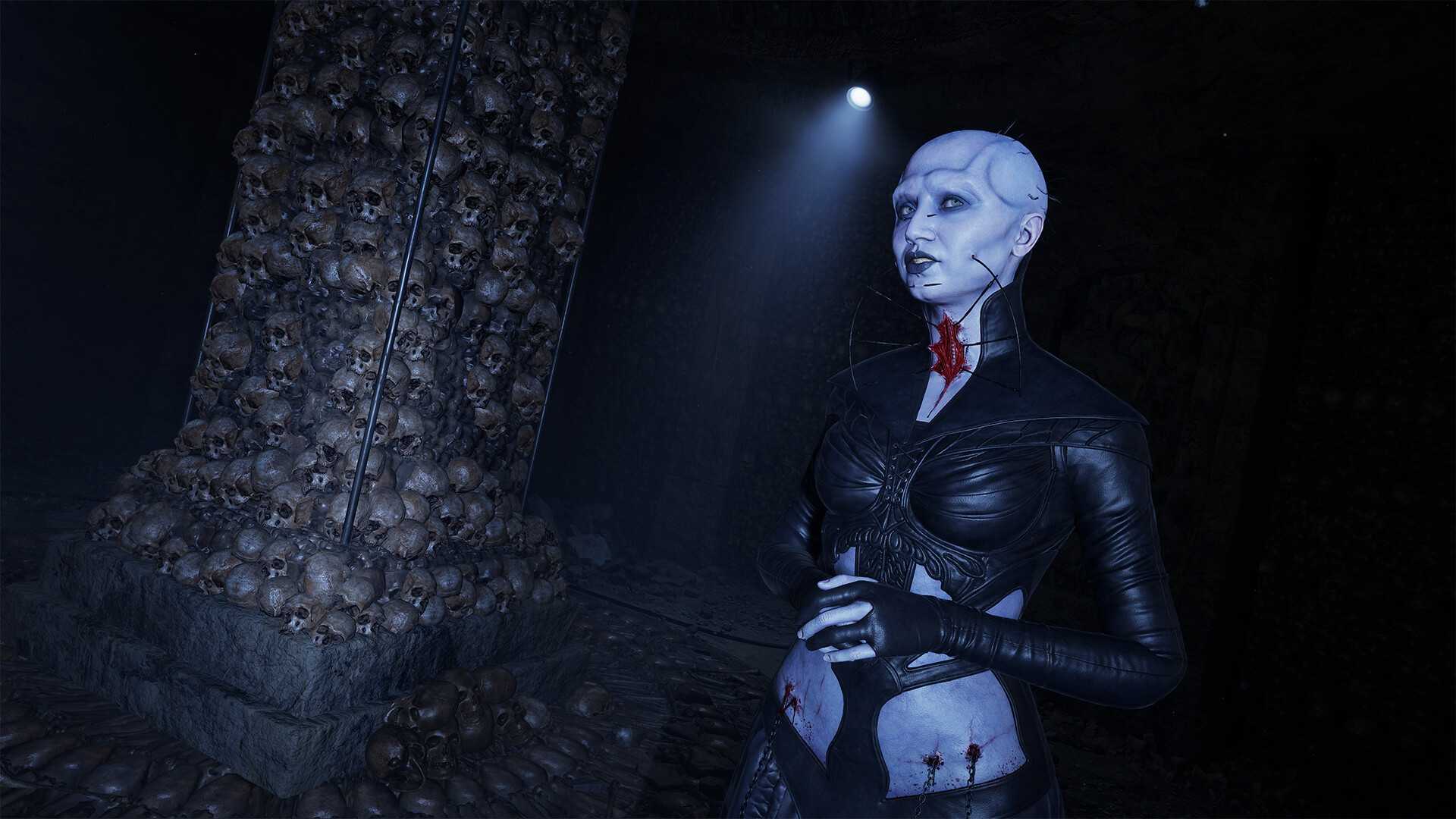 Image via Saber Interactive.
Hellraiser: Revival‘s story isn’t genre-defining, its characters aren’t the most complex, and its ending feels rather abrupt. But it does deliver some intriguing twists and turns. It keeps a tight focus on its overarching narrative, and most importantly, it stays true to the core values and themes of its source material while being able to give them enough depth to justify their otherwise inherently off-putting existence. In fact, I’d argue that Hellraiser: Revival is the most authentic entry in the series since the 90s.
On top of understanding that the series’ trademark graphic content needs to be grounded in personal stakes and elevated with light explorations into theology and humanity, Hellraiser: Revival harbors a metric ton of fan service, the vast majority of which feels earned. The original set of four Cenobites is back, looking and sounding exactly how they did in the first two Hellraiser movies, as does the Labyrinth and the Leviathan. There are countless visual and text references to the events of the whole franchise, and there are even some deep-cut references to the lore established in the Hellraiser Epic comics. Without spoiling anything, Hellraiser: Revival also makes plenty of its own well-written additions to the universe, all of which fit perfectly with the pre-established lore while at the same time offering something new and genuinely interesting for long-time fans.
An Experience (Not Quite) Beyond Limits

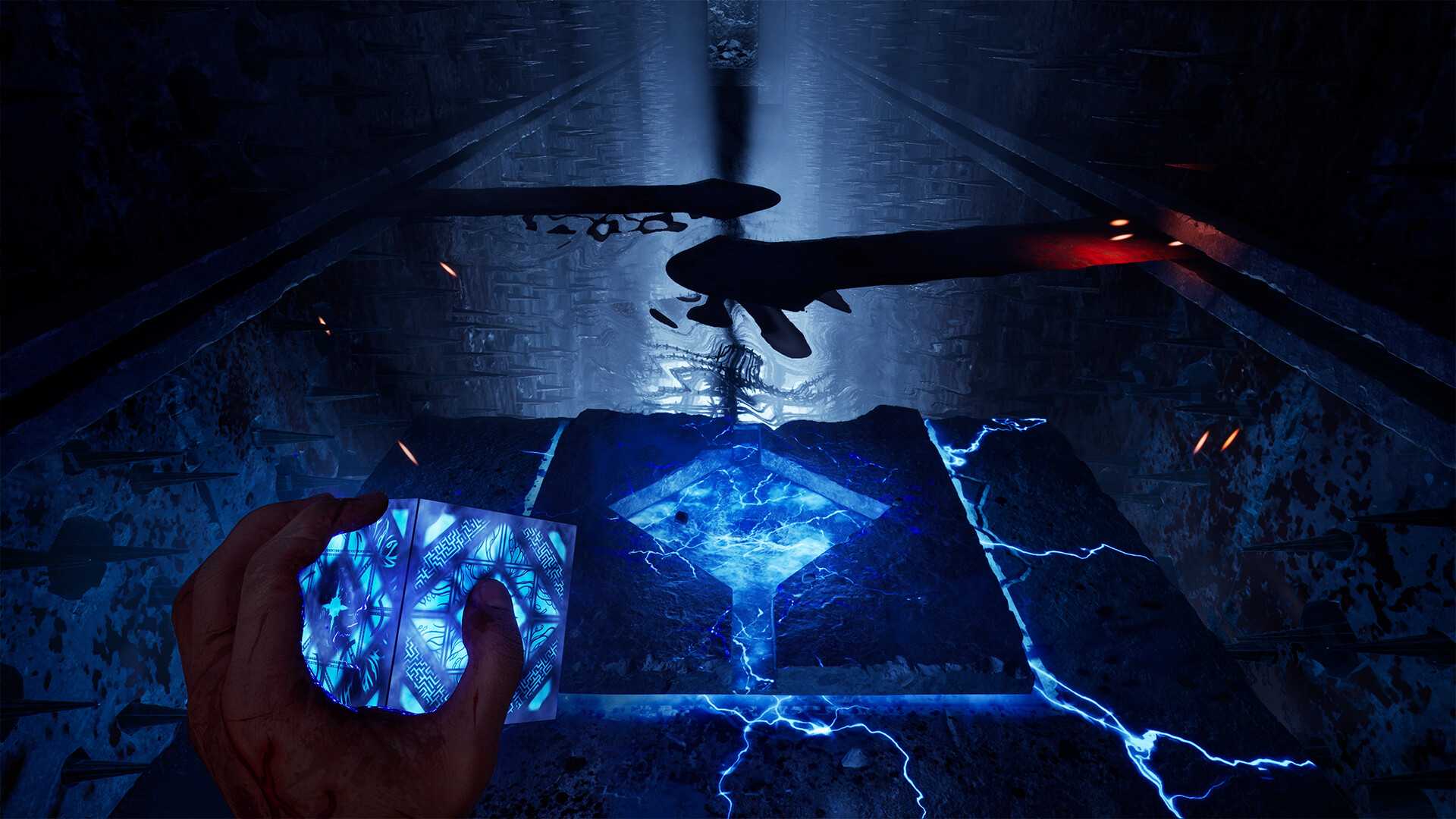
From a gameplay standpoint, Hellraiser: Revival is essentially a game of two very complementary halves. One half of Revival‘s runtime is dedicated to exploring the otherworldly Labyrinth. Players must navigate shifting corridors, escape mind-bending rooms designed to play on Aidan’s deepest fears, and solve environmental puzzles using the Genesis Configuration, this game’s unique variation of the series’ iconic puzzle box.
These Labyrinth sequences always look visually impressive thanks to some excellent lighting and fog effects that capture and modernize the look and feel of Hellraiser 2‘s M. C. Escher-esque landscape. While the gameplay in these sequences is often very simple, it never feels repetitive due to the engaging narrative hooks that lead players through the maze.
Hellraiser: Revival‘s Labyrinth is also home to some of the most riveting chase sequences I’ve experienced in a first-person survival horror game. At unpredictable points in Hellraiser: Revival‘s story, players will come face to face with the Cenobite known as Chatterer, the scariest of the original four Cenobites, at least in my opinion. The Chatterer’s distinguishing feature is his set of exposed teeth that rapidly clink together, causing a continuous clicking sound. During these chase sequences, the Chatterer slowly stalks the player through the Labyrinth, the visceral sound of his teeth echoing off the stone walls and providing players with a constant reminder of his deadly presence. An already intense sequence is made even better through the creative use of the Labyrinth’s shifting nature and the Chatterer’s ability to teleport in a flash of blinding light, which forces players to remain vigilant at all times.
-
 Image via Saber Interactive.
 -
-
 Image via Saber Interactive.
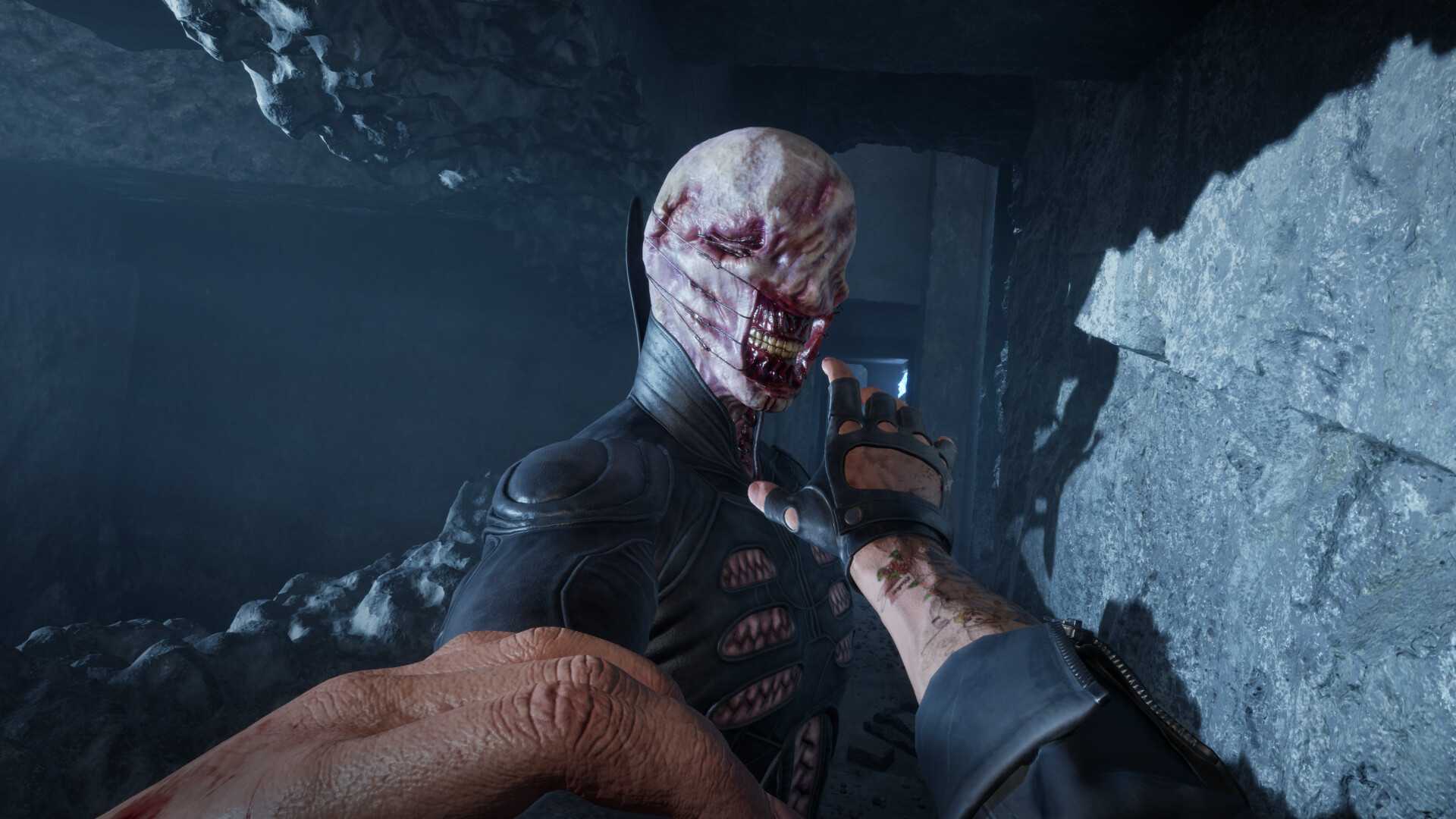
The other half of Hellraiser: Revival‘s gameplay loop is a survival action-horror experience that follows a very familiar formula. In the real world, Aidan must sneak his way through an elaborate compound operated by the Scarlet Church, a murderous cult obsessed with the Cenobites and the Leviathan/Revealer.
Gameplay here sees players carefully making their way through a series of eerie, well-detailed, and varied environments, scouring each corner of the level for new melee weapons, ammunition, crafting materials, and other useful resources that have become staples of the survival horror genre over the last three decades. Most of Hellraiser: Revival‘s real-world segments see players exploring an interconnected area, finding key items to progress. There’s nothing revolutionary about these levels, but they’re mostly fun to explore and a Resident Evil 4-like merchant provides a strong incentive to check every inch of each level. The overall balance of Labyrinth to real-world sequences — and the visual and gameplay variety found in each — gives Hellraiser: Revival a very engaging, natural pacing.
-
-
 Image via Saber Interactive.
 -
 Image via Saber Interactive.
Unfortunately, Hellraiser: Revival‘s combat isn’t nearly as refined as its level design and exploration. As a survival action-horror game, Hellraiser: Revival gives players access to a full arsenal of melee weapons and guns. On the whole, these weapons feel satisfying to use, with bladed and blunt weapons feeling weighty and responsive, and ranged weapons feeling suitably powerful against human cult members. The Genesis Configuration’s telekinesis powers also pave the way for some satisfying moments in all-out combat.
Stealth-oriented gameplay, however, feels incredibly rough. Most encounters in Hellraiser: Revival allow players to remain undetected and stealthily eliminate enemies with a takedown to gain the advantage. Revival‘s enemy AI shatters that intention almost immediately. Being spotted by an enemy will instantly reveal your position to every enemy in the building, regardless of sightlines or if they’re even in the same room. One enemy discovering a dead body has the same effect. Even stepping on a single pixel of broken glass will have enemies from across the building turning on a dime and raining bullets down on your exact location with no hesitation. This extremely sudden change in enemy AI behavior and the wonky detection mechanics often had me wondering why I even attempted stealth to begin with.
Another major criticism I have with Hellraiser: Revival‘s combat is the game’s small but significant collection of boss fights. All of Hellraiser: Revival‘s boss fights are bullet sponges designed to steal all of your hard-earned resources. That might be standard for a survival horror game, but it’s the lack of creativity that weighs these encounters down. While the various monsters all look fittingly grotesque, their fights all boil down to the same two-attack cycle that’s either extremely easy or nigh-on impossible to dodge. This leads to boss fights either feeling incredibly repetitive and dull, where players just strafe side to side slowly and blast away for five minutes straight, or them feeling bizarrely frustrating, with the boss moving so erratically that its attacks are strangely difficult to perceive and react to. And that’s before any bugs rear their head.
A Waste of Good Suffering

Put bluntly, Hellraiser: Revival is one of the buggiest games I’ve played in quite some time. While the first third of Revival felt very well-polished and high quality in terms of technical performance on a base PS5, the rest of the game was plagued by visual and audio issues.
The most common issue I experienced during my playthrough of Hellraiser: Revival was the audio suddenly cutting out. Heavy metal doors that required clear physical exertion from Aidan would be opened silently, walking through water would sometimes elicit no sound, and there’s one specific enemy type that never made a peep during any of its standard attacks or grabs all four times I fought it. Hellraiser: Revival also suffered from repeat audio syncing issues, where sound effects and dialogue would play a second or two after they were meant to. These consistent audio issues repeatedly broke my immersion and often completely removed any tension from an otherwise very atmospheric and intense sequence.

Plenty of visual glitches were on display in the latter half of the game as well. Interactable objects would often float in midair after using telekinesis, wall textures wouldn’t line up with the adjoining texture and would flash noticeably, and Aidan would frequently lose his fingers and weapon in first-person cutscenes, and occasionally lose his hair in third-person cinematics. The Cenobites’ cloth physics were also bugged in almost every cutscene.
My base PlayStation 5 playthrough also lacked any controller vibrations for the vast majority of its duration, which became especially noticeable when using weapons that are supposed to have strong feedback, such as the SMG and shotgun. Proper DualSense integration sometimes comes right before players get their hands on the game, but this felt unintentional, as the Haptic Feedback Intensity setting was set to 100% in the game’s own menu.
Of course, all of these issues could be fixed with a day-one patch or in a series of post-launch updates. But I can only review the build I was given, and I’d be lying if I said these bugs didn’t severely impact my moment-to-moment enjoyment of two-thirds of the game.

I have complicated feelings about Hellraiser: Revival. At its heart, Hellraiser: Revival is a well-paced, competently-made survival horror experience that feels incredibly authentic to its gritty source material. But it’s also an experience that’s currently hampered by immersion-breaking bugs, enemy AI issues, and uninspired boss fights. As a Hellraiser fan, Revival had more than enough underlying substance and quality to pull me through its labyrinth, but I’m not sure I’d be so ready to recommend the journey to a series newcomer.